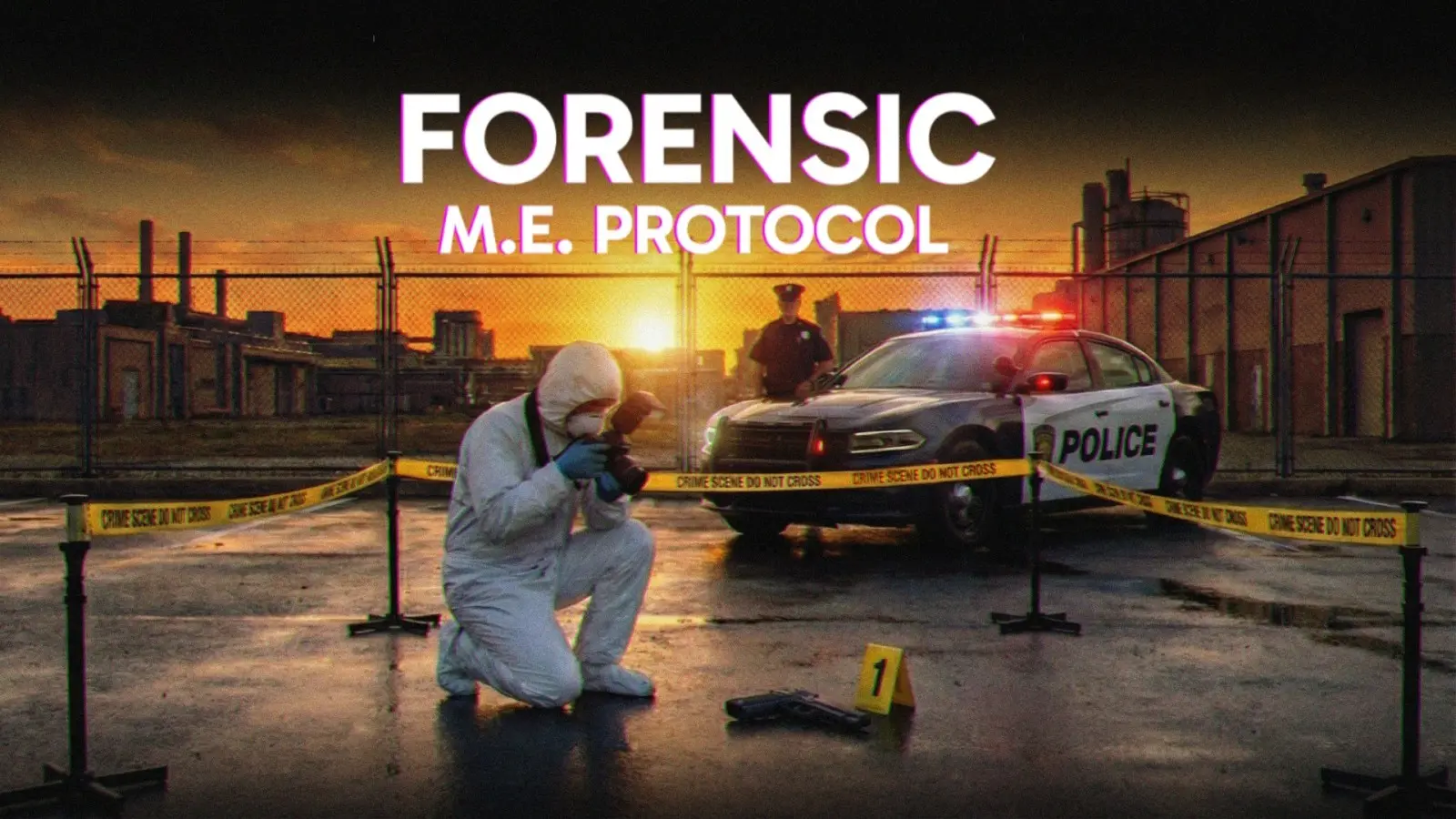
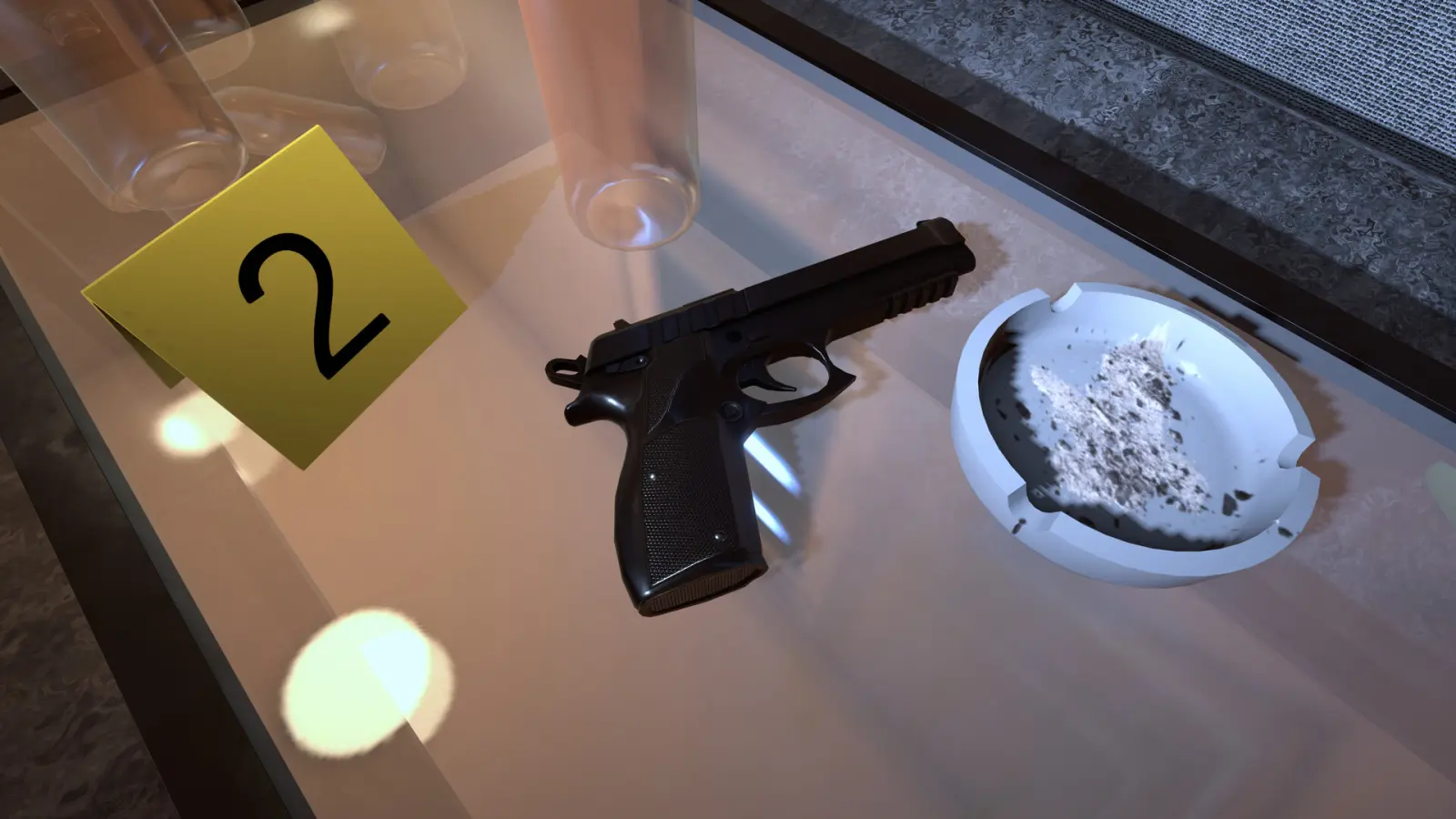
Forensics: Crime Scene Detective takes a different approach to crime games, focusing on forensic work, evidence collection, and drawing conclusions based on facts rather than action or predetermined solutions. Players investigate crime scenes, document traces, use tools for fingerprint analysis, DNA evidence, digital devices, and ballistics, and then connect evidence in the laboratory to better understand what may have happened.
Ahead of the game’s release, we spoke with the development team about the collaboration with the German criminal police office LKA RLP, the process of adapting real forensic procedures into a video game, and what Forensics: Crime Scene Detective wants players to better understand about the work of forensic experts.
How did the collaboration with LKA RLP influence the design of the cases and gameplay mechanics, especially when it comes to realistic evidence collection and interpretation?
The collaboration with the Landeskriminalamt Rheinland-Pfalz had a major influence on how we approached both the cases and the gameplay mechanics. From the beginning, we did not want to create a crime fantasy where forensic work is reduced to a few dramatic shortcuts. We wanted the game to feel grounded in real procedures.
The experts at LKA RLP gave us insights into how evidence is secured, documented and interpreted. That affected very practical parts of the game: placing evidence markers, photographing evidence, maintaining a chain of custody, collecting fingerprints, securing DNA traces, working with digital devices and comparing ballistic evidence.
It was also very valuable for the writing of the cases. The cases in the game are fictional or altered, but they are designed in a way that they could plausibly happen. We were able to discuss scenarios, traces and procedures with people who deal with forensic work professionally. That helped us avoid many of the typical clichés you often see in crime fiction.
At the same time, Binary Impact developed the game. The LKA supported the project with forensic expertise and feedback, but the game design, implementation and creative decisions remained with us as a studio.
How did you balance an authentic portrayal of forensic work with the need to keep the game engaging, accessible, and dynamic for a wider audience?
That balance was probably one of the biggest challenges of the project. Real forensic work is highly precise, process-driven and often slow. A lot of it is about documentation, waiting, checking, re-checking and making sure that every step is done properly. That is important in the real world, but it would not always make for a good game if we simulated every detail exactly as it happens.
So we made a clear decision: Forensics: Crime Scene Detective is an entertainment product. It is a video game, not professional training software. But it is a game that takes its subject seriously.
We kept the core logic of the work intact. Players collect evidence, document it, analyze traces and provide facts that can support or contradict assumptions in a case. But we compressed time, simplified some tools and reduced certain processes so they remain understandable and playable.
A good example is DNA analysis. In reality, creating a DNA profile takes far longer than it does in the game. In Forensics, the process is represented in a shorter, more game-friendly way. The same applies to fingerprint work: in reality, there are many different powders, surfaces and lifting methods. In the game, we simplify that into a more accessible interaction without removing the basic idea behind the procedure.
Since the cases are inspired by real-world scenarios, what kinds of procedures or details had to be adapted or simplified to work within a video game format?
The biggest adaptations were time, complexity and operational detail.
Time is the most obvious one. Many forensic procedures can take hours, days or even longer in reality. In a game, players need feedback within a reasonable timeframe. So we compressed waiting times and turned long processes into interactive steps or readable results.
Complexity was another important point. Real forensic work is much more detailed than a game can reasonably show. For example, fingerprint analysis involves many different materials, surfaces and methods. Ballistics and digital forensics are also extremely complex fields. We focused on four core areas: fingerprints, DNA, digital forensics and ammunition or ballistic traces. That gave us enough depth without overwhelming players.
We also deliberately avoided showing certain technical details too precisely. Especially in areas like digital forensics, there are things you do not want to turn into a practical instruction manual. On request and in close coordination with the LKA, we abstracted some processes. The goal was to show what kind of work forensic experts do, without providing guidance that could be misused.
The cases themselves are fictional or altered. They are not direct retellings of real criminal cases. But they are built from patterns, situations and forensic logic that feel plausible.
What would you like players to learn or better understand about forensic work and criminal investigations after playing Forensics: Crime Scene Detective?
The most important thing is probably the value of careful, clean work.
Forensic work is not about having a sudden brilliant idea and solving everything in one dramatic moment. It is about precision. It is about documenting evidence properly, preserving the chain of custody, asking what a trace really proves and what it does not prove.
In the real world, mistakes in forensic work can have serious consequences. Evidence can become unusable. A guilty person might not be convicted. An innocent person could be put under suspicion. Of course, Forensics is still a game and not a real simulator in that sense. But we wanted players to understand that every step matters.
We also hope players get a better sense of what forensic experts actually do. They are not action heroes chasing suspects. They provide facts. They help clarify what may have happened at a crime scene by carefully collecting, analyzing and interpreting traces.
That is why the core loop of the game is not "catch the killer". It is: collect evidence, analyze traces and provide facts.
We would like to thank the development team for their time and answers. A review of Forensics: Crime Scene Detective will also be published on Virus.hr soon.



























-hero.webp)