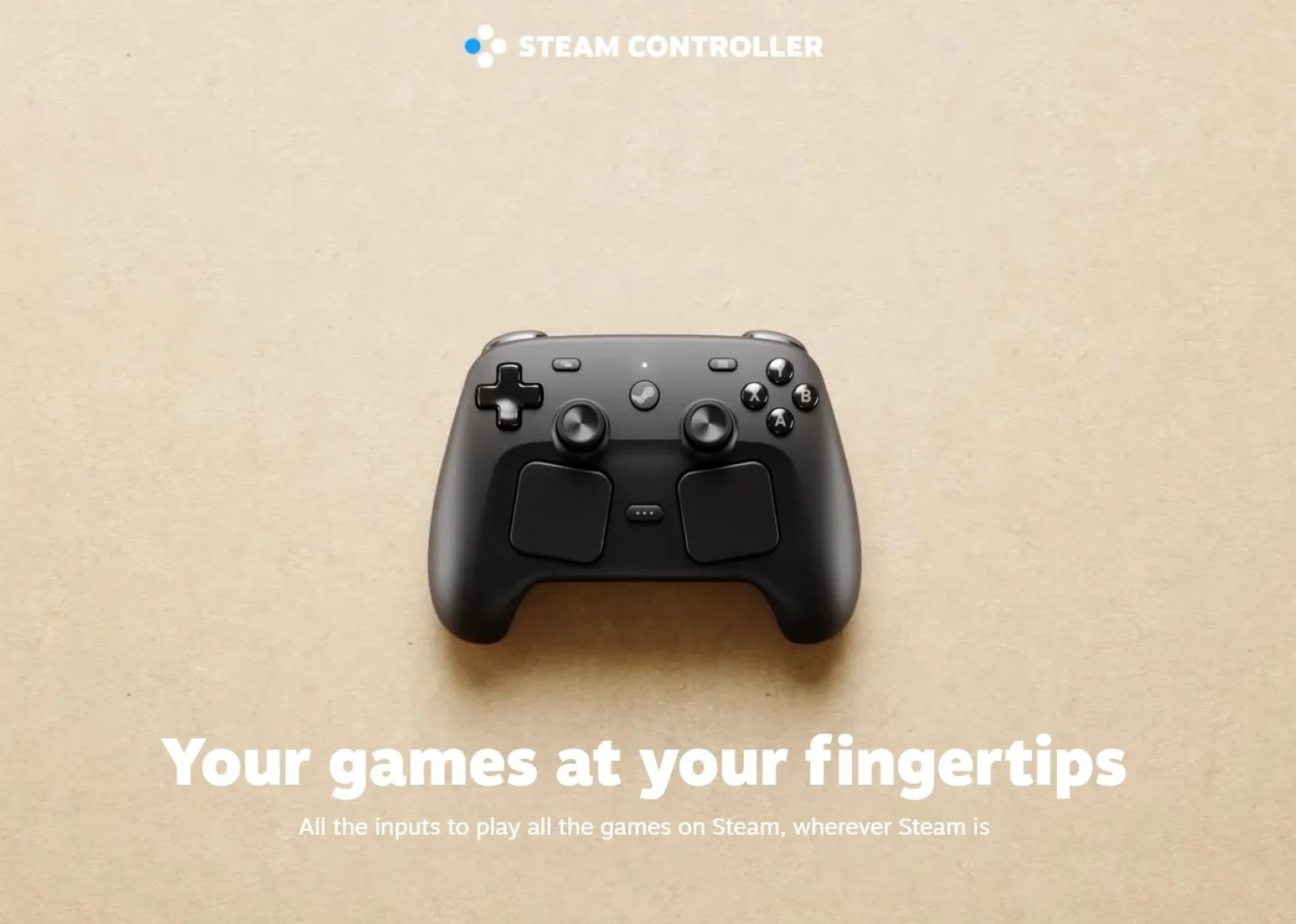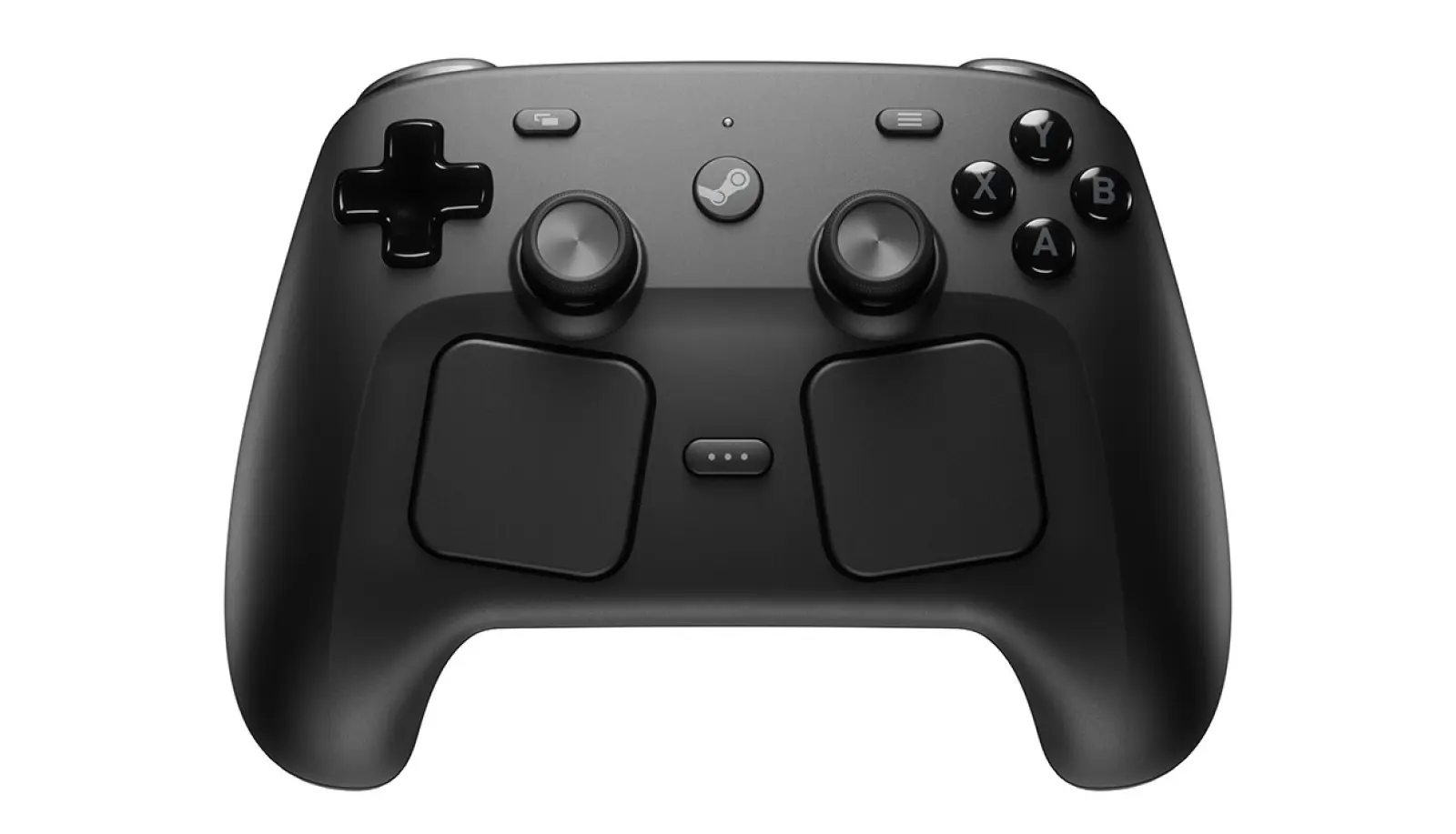
Valve today revealed new details about its Steam Machine console, a compact gaming device designed for playing Steam games on the television. It is a small SteamOS computer that behaves like a console but retains the key advantage of the PC platform: access to the existing Steam library, a more open system, and the ability to use various controllers, peripherals, and Steam features.
Steam Machine is not intended as a regular box for streaming games from a PC, but as a standalone gaming device. It features its own AMD processor, separate AMD graphics, system memory, video memory, NVMe SSD storage, and the SteamOS operating system. In other words, this is a compact gaming PC for the living room, packaged in a console format.
Steam console for the living room
The main idea behind the Steam Machine is simple: the user connects the device to the television, logs into their Steam account, and plays titles they already have in their library. With this, Valve aims to take Steam out of the classic desktop environment and bring it closer to users who want to play from the couch, without building a gaming PC, configuring Windows, or keeping a large case next to the television.
Unlike PlayStation and Xbox, the Steam Machine is not a closed console with a separate ecosystem. Games are not purchased in a special store for the Steam Machine, but rather the existing Steam account is used. If you already have a large Steam library, that is the biggest advantage of this device.
Valve states that the Steam Machine delivers more than six times the graphical power of the Steam Deck. This does not make it a replacement for a high-end gaming PC, but it clearly positions it above the handheld class and closer to home consoles and smaller desktop gaming computers.
Processor: AMD Zen 4 with 6 cores and 12 threads
At the heart of the Steam Machine is a semi-custom AMD Zen 4 processor with 6 cores and 12 threads. The maximum clock speed of the processor goes up to 4.8 GHz, and the TDP is around 30 W.
This is a serious leap compared to the Steam Deck, which uses the older Zen 2 architecture and a significantly weaker power profile. Zen 4 brings better performance per core, higher clock speeds, and more headroom for modern games that rely on the CPU, especially open-world titles, simulations, and games with a larger number of NPCs or physics calculations.
Six cores and twelve threads in 2026 is not a high-end configuration, but it is reasonable for a device of this class. Valve is clearly not targeting enthusiasts who want to replace an RTX 4080 or RTX 4090 PC, but rather users who want a stable gaming device for the TV, with a good balance of consumption, noise, and price.
Graphics: AMD RDNA 3 with 28 compute units
The graphics are handled by a semi-custom AMD RDNA 3 GPU with 28 compute units. The graphics chip operates up to approximately 2.45 GHz and has 8 GB GDDR6 video memory.
This is the most important part of the device. The Steam Machine is not just an APU in the style of a handheld console, but uses desktop-class CPU and GPU in a compact case. This means that the graphics part has its own video memory, which is important for modern games, higher quality textures, and playing at higher resolutions.
Valve aims for gaming on the big screen, including 4K at 60 fps using AMD FSR upscaling technology. This does not mean that every modern AAA game will natively run at 4K resolution at 60 frames per second. It is more realistic to expect that more demanding games will use a lower internal resolution, such as 1080p or 1440p, which is then upscaled to 4K display using FSR.
In other words, the Steam Machine relies on the same philosophy as modern consoles: a combination of optimized hardware, upscaling, and adjustment of graphical settings. For less demanding games, indie titles, and esports games, 4K performance will be significantly easier to achieve. For the most demanding AAA games, expect a compromise between display quality, resolution, and frame rate.
Memory: 16 GB DDR5 RAM and 8 GB GDDR6 VRAM
The Steam Machine comes with 16 GB DDR5 system memory and an additional 8 GB GDDR6 video memory for graphics.
This is a significant difference compared to the Steam Deck, which uses a shared memory pool. The Steam Machine has a PC-like approach: system RAM is used by the operating system, applications, and games, while the graphics card has its own memory for textures, frame buffer, and graphical data.
For most Steam games, 16 GB of RAM is still sufficient, especially in a device that is primarily focused on gaming rather than serious multitasking. However, 8 GB of VRAM could be a limitation in future AAA games at ultra textures and high resolutions. Therefore, the Steam Machine should be viewed as an optimized mid-to-high-end gaming device, rather than a no-compromise high-end PC.
Interestingly, due to the state of the memory market, there is mention of the possibility of different memory configurations, including single-channel and dual-channel implementations of system RAM, depending on component availability. Valve claims that the difference in actual gaming performance should not be dramatic, but dual-channel configuration is technically preferable.
Storage: 512 GB or 2 TB NVMe SSD
The Steam Machine comes in two basic storage versions:
512 GB NVMe SSD
2 TB NVMe SSD
Both versions use fast NVMe storage, which means quick loading of games, faster system boot-up, and a better experience in titles that frequently load large amounts of data. In practice, 512 GB is the entry-level configuration, but it will quickly become tight for a large number of users. Today's AAA games often take up between 80 and 150 GB, with some even more.
The 2 TB version is realistically a better choice for users who want to have a larger Steam library installed locally. Additionally, the Steam Machine supports storage expansion via microSD card, which is useful for less demanding games, indie titles, older games, or transferring content between the Steam Deck and the Steam Machine.
MicroSD will not be as fast as the internal NVMe SSD, but it is a practical addition. For modern AAA games, it is still smarter to use the internal SSD, while microSD makes more sense for cataloging older or lighter games.
Dimensions and Design
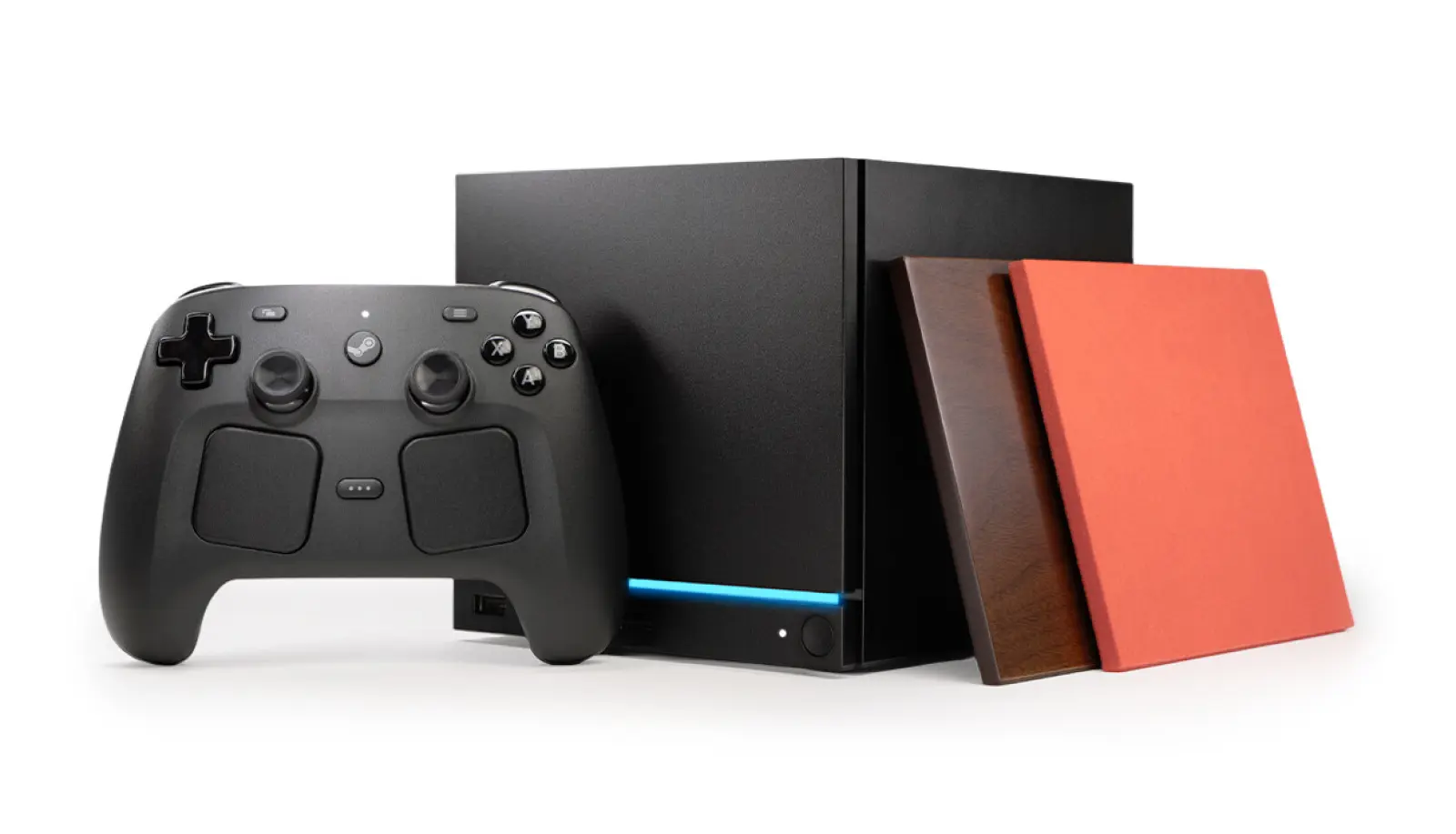
The Steam Machine is a compact device in the shape of a small cube. Its dimensions are approximately 156 × 162.4 × 152 mm, and it weighs around 2.6 kg. This makes it significantly smaller than a traditional gaming PC and compact enough for a TV cabinet, shelf, or desk.
Valve has built the power supply into the case, which means there’s no large external “brick” like with some consoles, laptops, or mini PCs. This is a good move for the living room as it reduces clutter around the TV.
The front of the device features an interchangeable faceplate and a light strip. Models with 2 TB of storage come with additional front faceplates, including a red fabric and a solid walnut variant, along with the standard black faceplate. The Steam Machine is therefore not just a technical device, but also a piece of hardware that Valve has clearly designed for a visible spot in the living room.
Ports and Connectivity
The Steam Machine has a pretty serious set of ports for a device of this size. Available are:
HDMI 2.0
DisplayPort 1.4
USB-C 3.2 Gen 2 with speeds up to 10 Gb/s
two front USB-A ports
two rear USB-A ports
Gigabit Ethernet
microSD slot
HDMI 2.0 allows connection to TVs and monitors, including 4K display at high refresh rates, depending on settings and the display. DisplayPort 1.4 further makes it useful for traditional PC monitors, meaning the Steam Machine doesn’t have to be exclusively a living room device. It can also function as a compact desktop gaming PC.
USB-C and USB-A ports allow for connecting a keyboard, mouse, external storage, headphones, controllers, webcams, or other PC peripherals. This is an important difference compared to traditional consoles, as the Steam Machine is not locked to just one official controller.
Wireless Connectivity: Wi-Fi 6E, Bluetooth 5.3, and Steam Controller Radio
For wireless connectivity, the Steam Machine supports Wi-Fi 6E and Bluetooth 5.3. Wi-Fi 6E is important because it uses the 6 GHz spectrum, which can mean less congestion and better stability in homes with many devices, of course provided the user has a compatible router.
The device also has a built-in 2.4 GHz radio for the Steam Controller. This means that Valve's new controller can connect directly to the device without an additional USB dongle. The goal is lower latency and a simpler experience, similar to consoles.
The Steam Machine is not locked to just the Steam Controller. Users can also use other controllers, including popular Xbox and PlayStation controllers, as well as classic PC peripherals like a keyboard and mouse.
SteamOS: Console Interface on PC Foundations
The Steam Machine runs on SteamOS, Valve's Linux operating system optimized for gaming. This is the same direction Valve has already proven with the Steam Deck, but here the system is tailored for TV, controller, and stationary gaming.
SteamOS uses a Steam interface adapted for large screens, supports Steam Cloud saves, suspend and resume functions, Steam Input, Remote Play, family sharing features, and access to the Steam store. The user does not have to go through the classic desktop if they do not want to. The device can be used like a console: you turn it on, select a game, and play.
In the background, however, there is a Linux system. This means that the Steam Machine retains the flexibility of a PC. SteamOS through Proton allows for running a large number of Windows games on Linux, which is a key technology behind the success of the Steam Deck. Still, one must be realistic: some games with aggressive anti-cheat systems may still have issues or may not work at all on SteamOS.
How strong is this really?
The Steam Machine should not be viewed as the most powerful gaming PC in a small case. Its strength lies in the combination of hardware, SteamOS, and the Steam library. The device is multiple times stronger than the Steam Deck, but it won't outperform more expensive desktop computers with modern high-end graphics cards.
The most realistic scenario is as follows: esports games, indie titles, and older PC games will run very well, often at high resolutions. Modern AAA titles will likely be played with a combination of optimized settings, FSR upscaling, and targeting 60 fps where possible.
For a user who already has a Steam library and wants to play on a TV, this can be a very good compromise. For a user expecting the absolute maximum graphics, native 4K, and ultra settings in all new games, this is not the device.
Prices and models
Valve will offer the Steam Machine in several configurations, depending on storage capacity and whether the device comes bundled with a Steam Controller.
Steam Machine 512 GB — $1,049 / €1,039
Steam Machine 512 GB + Steam Controller — $1,128 / €1,108
Steam Machine 2 TB — $1,349 / €1,359
Steam Machine 2 TB + Steam Controller — $1,428 / €1,428
The Steam Controller can be purchased separately, but Valve clearly promotes it as a natural addition to the Steam Machine. The controller is designed for the Steam ecosystem and works with the Steam Machine, Steam Deck, PC, laptop, and other Steam devices.
Why is it more expensive than PlayStation and Xbox?
The starting price of $1,049 means that the Steam Machine is not a cheap console. In fact, it is more expensive than the PlayStation 5, Xbox Series X, and PlayStation 5 Pro. This will be the biggest barrier for a wider audience.
Valve claims that the device is not sold at a subsidized price. Traditional console manufacturers can often price hardware more aggressively because they later earn through a closed ecosystem, subscriptions, game licensing, and their own store. Valve is trying a different model here: to sell the device closer to the actual cost of components and maintain a more open PC philosophy.
The price is further affected by more expensive components, especially memory and SSD storage. The RAM and NAND memory market has not been favorable to hardware manufacturers in recent months, and this directly translates to the final price of the device.
The advantage is the existing Steam library
The biggest asset of the Steam Machine is not just the hardware, but the fact that the user does not start from scratch. If you have been buying games on Steam for years, this console makes immediate sense. You don't need to repurchase games, you don't have to wait for special console versions, and you don't enter a new closed ecosystem.
This is the main difference compared to traditional consoles. The Steam Machine does not try to sell a new library, but a new way to play an existing library. For PC gamers who want to play from the living room, this is a very strong message.
Who is the Steam Machine for?
The Steam Machine makes the most sense for three groups of users.
The first are existing Steam users with a large library of games who want simple gaming on a TV. The second are users who want PC gaming but do not want to build a computer themselves, choose components, and configure the system. The third are owners of the Steam Deck who want a more powerful home device but want to stay within the same SteamOS ecosystem.
On the other hand, this is not a device for everyone. If you want the cheapest possible entry into gaming, the PlayStation 5 or Xbox Series X are still more affordable. If you want maximum performance, a classic gaming PC will be a better choice. The Steam Machine is in between these two worlds: more expensive than a console, simpler than a PC, and more open than both console ecosystems.
Conclusion
The Steam Machine is Valve's most concrete attempt to seriously bring Steam into living rooms. This is not just another mini PC, but it is not a classic console either. It is a SteamOS gaming computer designed for the TV, controller, and existing Steam library.
Technically speaking, the device delivers a solid package: an AMD Zen 4 processor with 6 cores, RDNA 3 graphics with 28 compute units, 16 GB of DDR5 RAM, 8 GB of GDDR6 video memory, NVMe SSD, microSD expansion, HDMI, DisplayPort, USB-C, USB-A, Wi-Fi 6E, Bluetooth 5.3, and an integrated radio for the Steam Controller.
The biggest problem will be the price. The Steam Machine is not cheap, and comparisons with PlayStation and Xbox will be inevitable. But Valve is not playing the same game as Sony and Microsoft. Instead of a closed console, it offers a compact PC for the living room that relies on SteamOS, Proton, and the existing Steam library.
If Valve manages to deliver a sufficiently stable, quiet, and simple experience, the Steam Machine could become the most interesting gaming hardware of the year. Not because it is the cheapest or the strongest, but because it tries to combine the best of both worlds: the simplicity of a console and the flexibility of a PC.