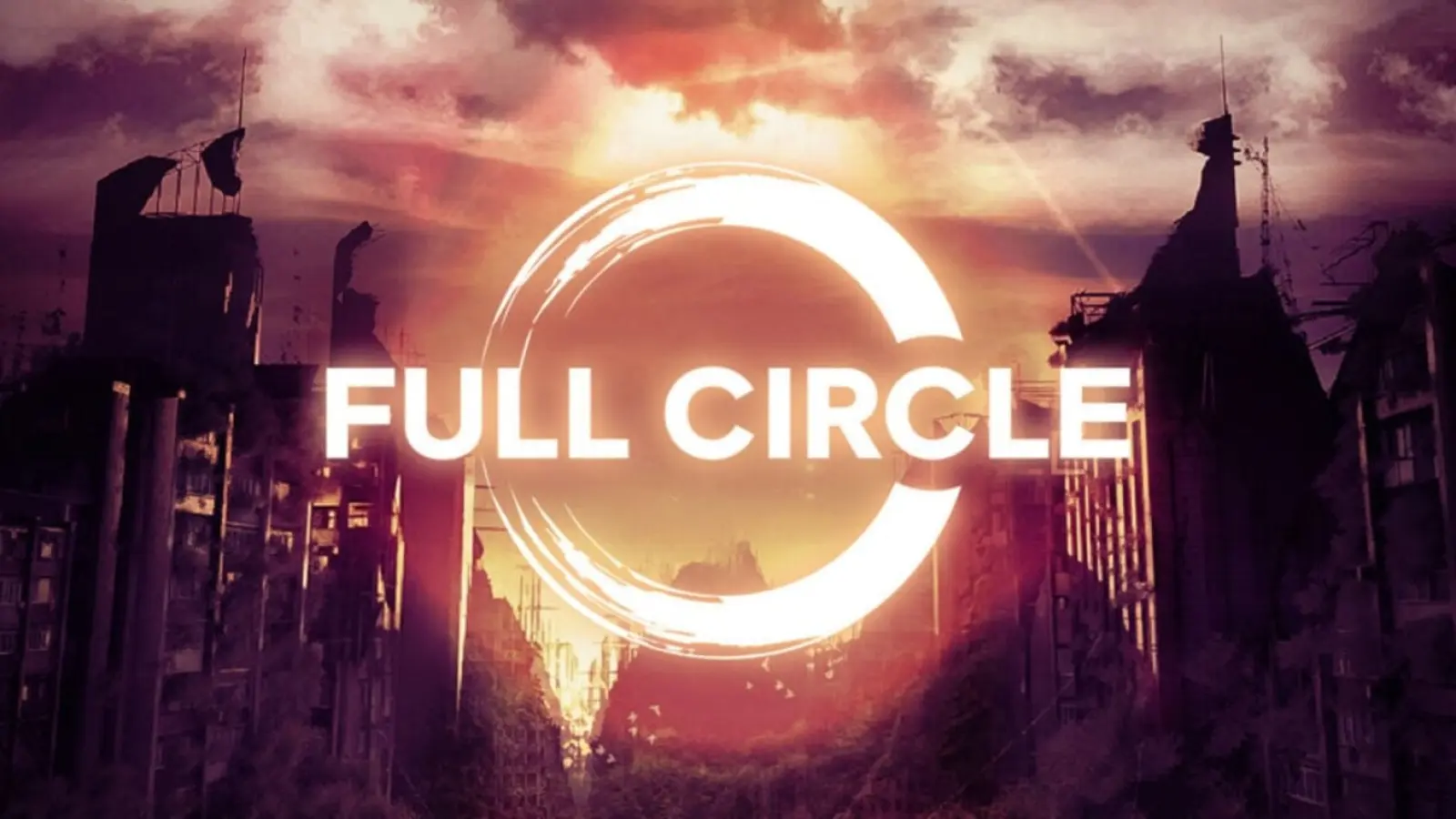
Full Circle immediately caught our attention as one of those indie projects that does not hide its inspirations but tries to filter them through a more modern visual and design approach. It is a 2.5HD JRPG inspired by classics from the era of the first PlayStation, featuring turn-based battles, a post-apocalyptic world, flying cities, and a group of young heroes who slowly discover that the world around them is not what they were taught.
After the game's announcement and confirmation that the first playable demo will be showcased later this year at Gamescom, we spoke with Adolf Juan Fernando Gazza Castañeda, the solo developer behind Full Circle. In the interview, he revealed more about the game's creation, JRPG inspirations, combat system, world-building, and the challenges of creating an ambitious indie RPG that aims to capture the spirit of classics but not remain trapped in the past.
1. Full Circle is described as a love letter to classic JRPGs from the PlayStation era. Which specific design lessons from games like Lunar, Breath of Fire, early Final Fantasy titles, or Legend of Dragoon influenced the project the most?
Answer: It's true that I grew up with them and I love JRPGs, but something that in my opinion makes them so special is that they weren't trying to forcefully fit into what made a JRPG. They were innovating, creating, experimenting with new ideas, and that's the spirit I want to capture. Not necessarily replicate existing systems, but take what specific aspects of those games made me feel, and give them my own creative spin. I feel that the further removed your background is from what you're trying to create, the more new things can come out of it. Now, there are design elements from the games you mention that I do think are worth bringing up. For example, the organic party banter from Lunar's characters, which makes them feel like real people. The art of Breath of Fire and those incredible sprites were Capcom at their finest. Final Fantasy always trying to reinvent itself and expanding its narrative capacity with each entry. And Legend of Dragoon, while not the first to include QTEs, wasn't afraid to make them the heart of its game, perfectly capturing the spirit of the Super Sentai franchise. In short, I take away the lesson of not being afraid to experiment.
2. The game uses a 2.5HD pixel-art style. How did you approach balancing nostalgic visuals with modern expectations for animation, readability, and presentation?
Answer: Honestly I don't know whether to call it 2.5HD, 2DHD, or something else haha. For me it's 2D sprites in a 3D world with modern post-processing. But the starting point was always to capture how I remember the games I grew up with, not how they actually looked. My childhood memory saw them as much “better” than they were, and Full Circle is my interpretation of that. Now, behind that decision there are concrete reasons. The camera for me is a character in itself, it helps communicate points of interest, emotions, and in a purely 2D game that's very limited. So then why didn't I go with 3D characters as well? That's where the aesthetic argument comes in: I love pixel art especially for one specific reason, which is that your mind is what finishes generating the image. It's like impressionism, where colors and brushstrokes communicate perfectly what they want without the need for too much detail. If the characters were 3D I feel the level of animations and the environment would need to be much higher, and that would be very difficult to achieve as a solo dev. Modern post-processing helps blend the 2D sprites with the 3D world and gives it that cinematic aesthetic. Also, when I was little I swore that if I ever make a game it would look like Breath of Fire 3, and that's basically what this is, just with post-processing and a dynamic camera haha.
3. Full Circle is set in a post-apocalyptic world where humanity survives in flying cities. What was the original idea behind this setting, and how does it shape the story and exploration?
Answer: I love this question, I'll try to answer without spoiling too much. The game started being created during the pandemic, where we were all sheltering in our homes from a threat. And at the same time my country was going through a political crisis since there were presidential elections coming up. In the news and on social media nobody knew what was going to happen, everything was uncertain, nobody knew what to trust. Let's say that influenced the "isolation" setting in the game a lot. However, the entire concept and message behind it comes from ideas I've been putting together for many years. And the game's exploration takes place mostly on the surface, although flying cities are visited in different contexts. I'd love to go into more detail but I'd be entering spoiler territory. I hope that once you can play the game these questions will be answered.
4. The battle system combines turn-based combat with real-time timing elements. How deep will this system go, and what kind of player skill do you want it to reward?
Answer: The system rewards experimentation above all. Since part of the core is the order of actions to execute, which actions to execute and with which characters, I'd say it's a fairly deep system since you can discover different combinations throughout the game. The main idea is to form combinations that trigger chain attacks between characters. The timing elements are tied to this concept since a perfect QTE not only gives an occasional bonus but also delays the enemy's turn, reorganizing the action queue and giving a new chance to discover a new combination.
5. Players will be able to use four active party members and four reserve characters. How important are party composition, character synergy, and mid-battle switching in the overall combat strategy?
Answer: Expanding on the previous answer, since action combinations also consider the characters themselves, switching characters mid-battle is important, as it opens up a whole new range of possible combinations. At the same time, reserve characters aren't just sitting on the bench. They have what are called support skills, active or passive, which can basically be buffs for the active party or interventions in specific situations. Say, a "healing aid" skill could trigger automatically from the reserves if an active character's HP drops dangerously low. So formation matters.
6.Each character will have abilities useful both in combat and during exploration. Can you share an example of how these abilities might change the way players interact with the world?
Answer: Each character has abilities that help with exploration. For example, one has a grappling hook that lets them reach places inaccessible to the others. However, they can carry party members one by one with the grappling hook. Or maybe the player notices a wall that can be knocked down on the inaccessible side and has the grappling hook character carry over the character who can break walls, and that way the whole party can cross. Other characters have abilities to hack doors with cybernetic locks while others can interpret ancient text that nobody else can read, among others. Regarding combat abilities, each one further expands the battle system. We have support turrets, transmutations, support beasts, among other systems that add variety to the battle system and the strategy the player wants to employ to come out victorious.
7. The game includes creature taming, ancient technology, hidden quests, and different settlements. How much freedom will players have to explore optional content outside the main story?
Answer: There's content outside the main story. On the world map there are secret locations that aren't tied to the narrative and that the player can discover on their own. As for sidequests, there are two types: the ones in the mission log and the more organic ones, like in the old games where things weren't explicitly written out but just happened spontaneously in the world. You talk to NPCs, they tell you stories, give you hints, and if you decide to follow the thread you eventually find something. Regarding creatures and everything that could be considered collectible, the idea is for them to work more like achievements than missions themselves. I don't want to break the game's immersion with things that feel too gamey.
8.Full Circle will be playable later this year at Gamescom. What kind of feedback are you hoping to receive from players during that first public demo?
Answer: I've been working on the game for a long time now. And for a nearly equally long time my publisher has supported me. There was quite a long stretch in between where I wasn't really able to work on the game, because I had a day job with my own company. An audio company here in Peru. And at some point I wanted to work full time on the game and my publisher made that possible. So what you've seen in the trailer has mostly been created within the last year and a half. With underlying mechanics created much earlier, refactoring and all that... we've all been working on this for such a long time that I want to see with fresh eyes if what I'm building connects the way I hope it does. So yeah, that's what I'm personally looking forward to. Seeing players experience the demo we have (or will still prepare) for the show. Seeing their reactions, learning if certain mechanics work exactly the way we want them to. Reassuring myself that I'm still on the right track.
Thank you for taking the time for this conversation. We wish you the best of luck with the further development of Full Circle and look forward to seeing how the game progresses towards its release.
-hero.webp)
-hero.webp)


-hero.webp)
-hero.webp)