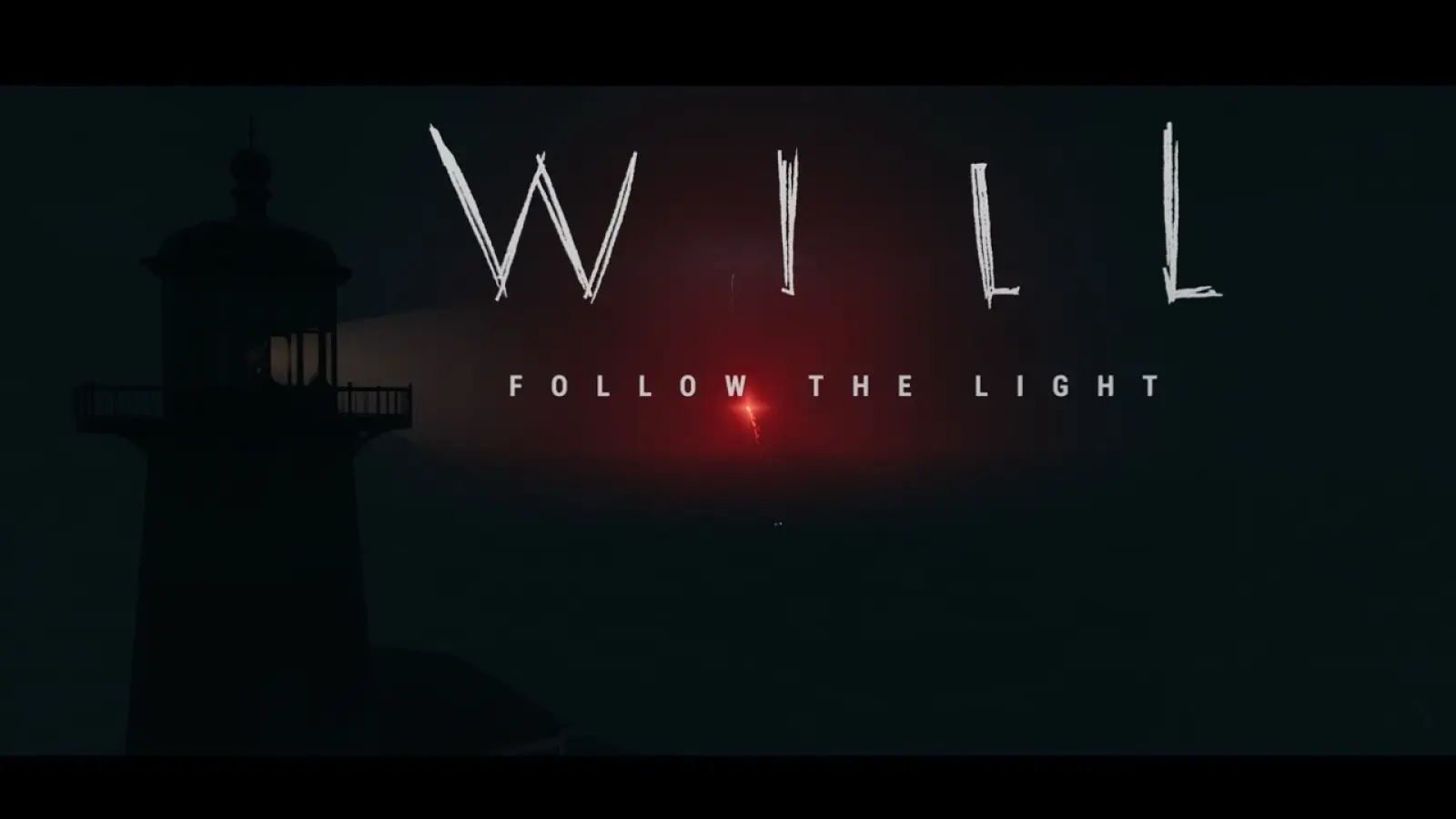
WILL: Follow The Light
✅ Prednosti
- vizualni dojam
- velik broj aktivnosti
❌ Nedostaci
- zagonetke
- usporeni gameplay
WILL: Follow The Light is a game developed and published by TomorrowHead Studio, and it is available on Xbox Series X/S, PlayStation 5, PC, and on portable devices. It is a story-driven game, from a first-person perspective, that combines adventure and puzzles about a dangerous personal journey through the harsh northern latitudes. To find peace and reconnect with his family, Will must sail the endless waters, face numerous challenges, and ultimately discover himself.
In the game, we are Will, a lighthouse keeper on a remote island in the northern seas. The story begins during one of your typically lonely shifts when an unexpected radio message breaks the routine. Thus, the story starts during what was expected to be a usual work night, when an unexpected radio message changes the course of your shift. Suddenly, disaster strikes your hometown, and your only son is missing. You cannot find any information about where your son is, who was last seen with his grandfather. Determined to find him, you must set out on a quest on your sailboat, Molly, navigating the treacherous northern seas. Throughout his perilous journey, Will's stories about his family and past come to light as he explores stormy seas and snowy mountains, all in an effort to find his son.
The more you search for your son, the more questions arise. What hidden truths lie in your relationship with your own father? Where is your beloved wife? What happened to your family? The answers are scattered across the unforgiving northern environments you explore - an abandoned island accessible only by sea, a mountain range that can be crossed by dog sleds, and your home now standing among the ruins and accessible only on foot.
The core setup of the game is strong. A lighthouse keeper searching for his son after a natural disaster has an immediate emotional weight, and the game understands the premise of loneliness. You spend a lot of time wandering through quiet places (so much that this game could also be called a walking simulation), reading notes, listening to people, and switching from one main character to another. The routines around the lighthouse, radio conversations, details of a small village, and the way the sea always seems present, all contribute to the narrative of this game. The game clearly wants to touch on themes of grief, guilt, family trauma, and the ways parents repeat the same mistakes their parents made. Will's relationship with his father seems key to this. There is a sense that he may be doing to his son what his father did to him, emotionally abandoning him while hiding behind duty and distance. This could have been powerful, but the story never fully comes together.
Sailing is definitely one of the best parts. Will travels on his sailboat Molly, and in those moments you can literally enjoy managing the sails and maintaining the wind. This gives movement on the sea a tactile rhythm. You adjust, observe the wind, and let the boat cut through the waves. When crossing through storms and choppy seas, you really feel that urgent sense and danger, especially playing the entire game in first-person as the heavy rain hits your face and the waves crash against your boat. Sailing is more relaxing than demanding. There aren’t many real failures while at sea, and the game even allows you to completely skip sailing if you don’t want to deal with it. That’s a good option, but it also undermines the system. When the best mechanics can be almost entirely bypassed, it starts to feel more like an addition than a fundamental part of the game.
Solving puzzles can be fun, but sometimes also tedious. Part of a lighthouse keeper's job is knowing how to perform maintenance, repairs, electrical work, and much more, and the puzzles are all related to that. Some puzzles are simple, but they become increasingly challenging by rotating shapes to connect power, flipping switches in a specific order, and aligning wave frequencies. Other puzzles involve assembling parts of machines and equipment like a jigsaw puzzle. These are the puzzles that seem tedious because you'll mostly be guessing the order in which the parts go, with all the screws, nuts, shafts, gears, and much more. The easiest way to solve them is to simply pick things until they fit somewhere in place, but that makes them ungrateful and unnecessary. There are instructions you can look at, but they are just a picture of what the item looks like when assembled, and they don't go into detail. Fortunately, all the shortcomings in completing tasks and solving puzzles are not bad enough to ruin the whole experience; the story, sailing, and later dog sledding are what will keep players engaged in the game.
Visually, the game looks incredible, and you will definitely want to stop and admire the oceans, clouds, stars, and much more. The graphics also help to enhance the experience.
The game also features a wide range of accents when it comes to NPCs in the world. Irish, British, Canadian, Scottish, and plain American. All these different dialects are present, but given the world in which WILL: Follow the Light takes place, it makes sense. Many individuals in the game have come to this region for a job very specific job - lighthouse maintenance. Maritime, fishing, scientific research: all spheres of life have found their way into this corner of the world.
WILL: Follow the Light starts slowly, but eventually presents an emotional journey filled with sensitive themes, including grief and alienation. It's not long, but the weight of this touching story is worth every penny. The game has certain shortcomings, but considering this is the debut game for TomorrowHead Studio, we expect a lot from them in the future!
A copy of the Xbox version of the game for review purposes was provided by the development studio TomorrowHead Studio
-(1)-hero.webp)



















-hero.webp)