Farthest Frontier
✅ Prednosti
- Complex farming system
- Feeling of a living organism in the city
- Adjustable difficulty options
- Good visual and sound design
- Stable performance after early access
❌ Nedostaci
- Slow game, requires patience
- Difficulty in problem overview
- Micromanagement can be tedious
- Survival elements can be frustrating
- Sometimes too convincingly simulates societal management
Farthest Frontier starts innocently, welcoming you with a small group of settlers, a forest, a few deer, some stone, and that familiar city-builder feeling: “This will be peaceful. I’ll build a few houses, plant some carrots, let the people live.” Twenty minutes later, someone is hungry, someone has no shoes, wolves are circling a hunter, food is spoiling, winter is coming, and you realize you’ve once again become the digital mayor of disaster.
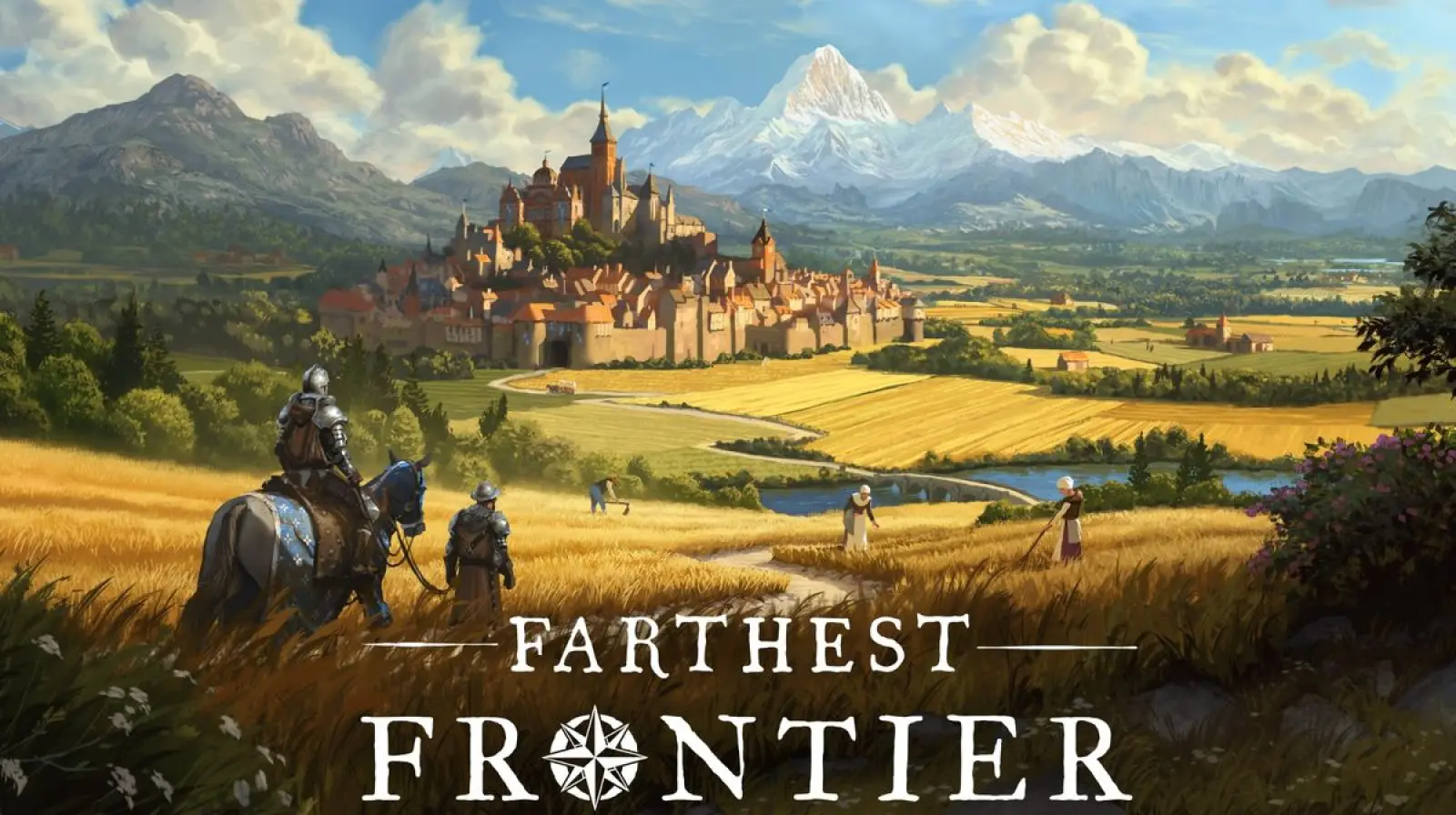
Farthest Frontier is a medieval survival city-builder from Crate Entertainment, known for Grim Dawn. The game officially released on October 23, 2025, after a long early access period. In short, it’s not a small experiment sneaking through the genre, but one of the more substantial city-builders in recent years.
From mud to civilization, and back to mud
The basic idea is familiar: you lead a group of settlers on the edge of the known world and try to build a functional settlement from nothing. You cut down trees, gather stone, hunt game, fish, plant crops, build houses, warehouses, workshops, markets, schools, defensive structures, and all those little gears that slowly turn a shabby hut into a serious town.
However, Farthest Frontier doesn’t settle for being just a pretty medieval SimCity with cows. Its main strength lies in the fact that almost every system has weight. Food is not just a number that goes up and down. It spoils. People don’t just need houses, but also firewood, clothing, shoes, medicine, clean water, a cemetery, defense, and a smart enough leader not to build a farm three kilometers from the nearest warehouse. Of course, that leader is you.
The game includes the collection and processing of 16 types of resources, 19 types of food, 12 different crops, over 190 buildings, a large technology tree, advanced simulation of goods transport, randomly generated maps, diseases, raiders, and the option to play in pacifist mode if you don’t want someone coming to burn all your hard work every few years.
Agriculture on steroids
One of the best parts of the game is agriculture. In most city-builders, farming is a simple task: you mark a field, choose a crop, and let the people work. Here, it’s almost a mini-game in itself. You have to watch out for soil fertility, stones, weeds, moisture, crop resistance to heat, cold, and diseases, and then plan crop rotation over several years. If you’ve ever wanted to feel what it’s like to be an agronomist under the pressure of hunger and winter, here’s your chance.
The good thing is that this system isn’t just complication for complication's sake. Once you establish a good crop rotation and see the town finally has stable food production, the feeling is truly satisfying. There’s no quick dopamine hit like when someone’s helmet flies off in an action game, but there’s that quiet, sickly pleasant feeling that you’ve outsmarted the land.
The problem is that the game can be slow. Especially in the early stages, when you’re waiting for resources to accumulate, workers to bring materials, something to be built, or the population to grow. Farthest Frontier demands patience. It’s not a game for someone who wants instant gratification every ten seconds. This is a game where victory sometimes looks like “no one died this winter, yay!” Minimalism, but with more dysentery. It doesn’t help that even when you speed up the game to make it go by faster, it’s still quite slow.
Production chain as a small industrial nightmare
As the town grows, Farthest Frontier transforms into an increasingly complex network of production chains. Wood becomes planks. Grain becomes flour. Flour becomes bread. Hides become clothing. Honey, wax, fruit, meat, fish, clay, bricks, medicine, weapons, furniture, luxury goods… everything somehow connects, everything has to be stored somewhere, everything has to be transported by someone, and everything can break if you forget one trivial thing somewhere at the beginning of the chain.
This is the best and worst part of the game. When the system works, the town feels alive. You see people carrying goods, filling warehouses, tending fields, going to mines, returning from hunts, bringing water, and constantly doing little tasks. Farthest Frontier has a very good sense of a living organism. It’s not just a grid of boxes, but a place that breathes.
However, micromanagement can sometimes become tedious. The game has plenty of tools, but as the town grows, it can easily happen that you are no longer making big strategic decisions, but chasing why there are no tools somewhere, why the warehouse isn’t receiving what it needs, why people travel half a year for one piece of goods, and why, of course, there is again a food shortage even though you had a surplus yesterday. The classic managerial dream: everyone is working, nothing is functioning.
The survival aspect is dangerous
What sets Farthest Frontier apart from more relaxed city-builders is the survival component. Winter is not just decoration. Diseases are not just flavor text. Wild animals are not just cute fauna. Raiders are not a gentle reminder to build a tower. All of this can seriously disrupt the settlement.
The game mentions diseases like dysentery, cholera, scurvy, tetanus, rabies, frostbite, and even the plague, along with systems for clean water, nutrition, clothing, medicine, and rat control. This works excellently in the game because it forces you to view the town not just as a construction puzzle, but as a place where people actually have to survive.
Raider attacks further increase the tension. As the town becomes wealthier, it also becomes more attractive. This is a very realistic message: as soon as you build something, someone will appear with a torch and bad intentions. Defense thus becomes an important part of planning. Palisades, walls, towers, barracks, and equipping soldiers are not just decoration but the difference between surviving an attack and a burned-down town.
The good thing is that the game offers adjustable difficulty options, including a pacifist approach for those who want to build without fighting. This is smart, as Farthest Frontier can be both a relaxing building sandbox and a stressful medieval logistics simulator, depending on how much of a masochist you are.
Presentation and atmosphere
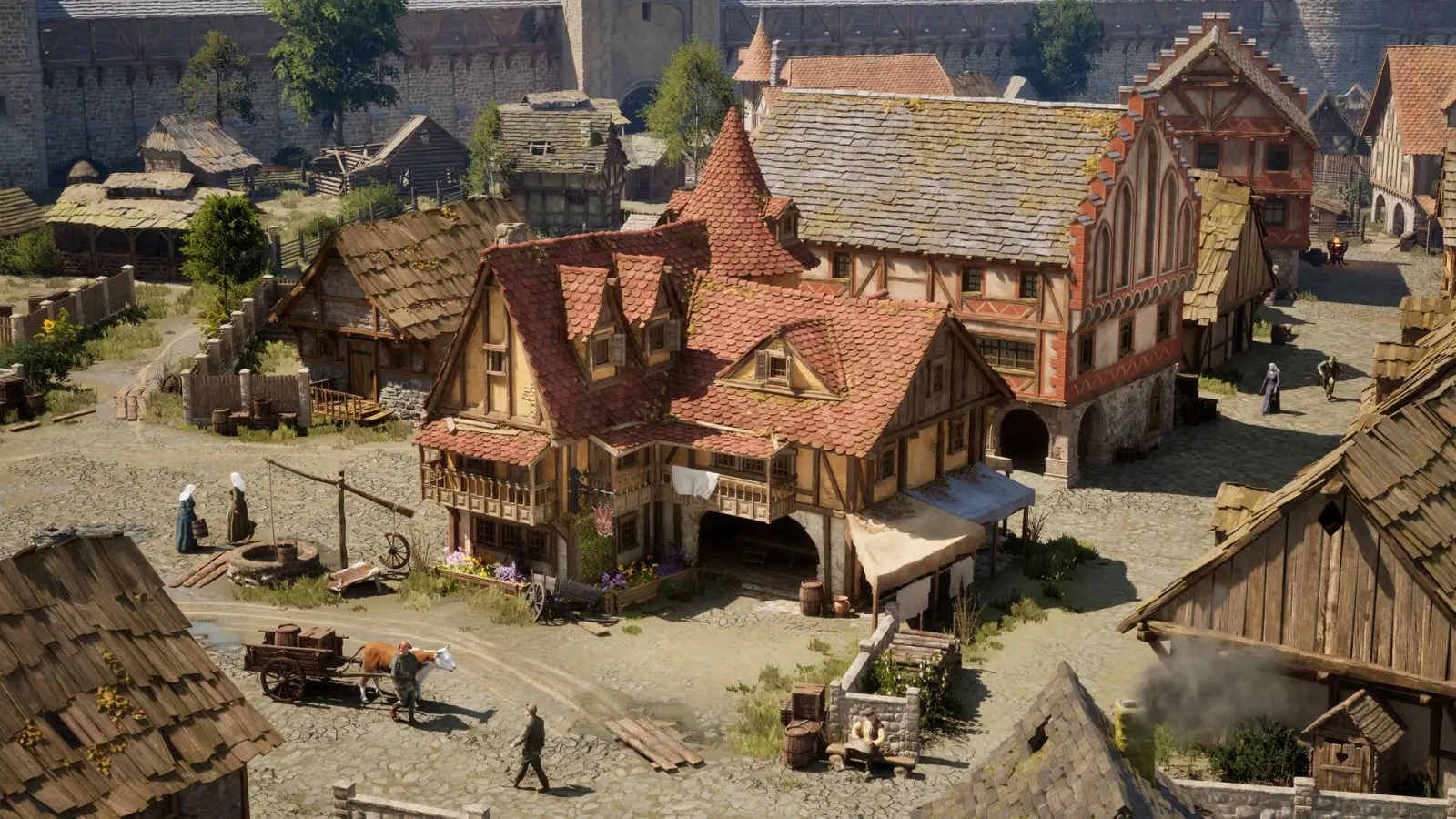
Visually, Farthest Frontier is not a game that will blow you away. There are no spectacles, cinematic shots, or graphic exhibitionism. But it looks pleasant, readable, and functional. It looks best when you step back a bit and see the town growing from nothing: the first huts, muddy roads, fields, smoke from chimneys, warehouses, markets, defensive walls, and more and more little lives moving through the space.
The sound and music are unobtrusive but support the atmosphere well. This is not a game that wants to emotionally overwhelm you with its soundtrack. It gradually draws you into the rhythm of work, waiting, planning, and small disasters. And then comes the notification that food supplies are low, and the music no longer matters because you are once again a bad feudal father.
Technically, the game feels mature after leaving early access, but let's be realistic: city-builders of this kind often suffer the most when cities grow. Larger settlements, many inhabitants, many routes, a lot of goods, and a lot of simulation can lead to performance drops or a slower pace, depending on the hardware. It's not unplayable, but it's not completely invisible either. Farthest Frontier is more stable and fuller than it was in earlier stages, but it is still a complex simulation, and complex simulations tend to occasionally choke the computer.
What’s wrong?
The biggest complaint is the pace. Farthest Frontier can be slow, especially if you don't like waiting for systems to develop naturally. If you're coming from fast-paced strategies or expect something big to happen constantly, the game will occasionally leave you in a phase of watching people carry logs. Digital zen, I guess.
The second problem is clarity. As the city grows, it becomes harder to clearly see where exactly the problem arises. Is food a production, storage, transport, spoilage, or labor issue? Why is there a shortage of tools? Why aren't workers carrying something? Why does some object seem inefficient? The game gives you information, but sometimes you have to search for it more than you should.
Although the survival systems are excellent, some may feel like constant fire-fighting. One year the problem is food, then disease, then raiders, then a lack of workers… Farthest Frontier simulates the development of settlements very well, but sometimes it too convincingly simulates the feeling that managing a society isn't fun. Who would have thought.
Conclusion
Farthest Frontier is one of those city-builders that doesn't try to win you over with one big trick, but rather with the depth of its systems. It's not the fastest, easiest, or most relaxing game in the genre, but it's extremely satisfying once you get into its rhythm. The city grows slowly, often painfully, with many small decisions that after a few hours turn into the difference between a stable settlement and a cold graveyard by the road.
It will appeal most to players who enjoy planning, production chains, survival pressure, and a gradual sense of progress. If you want a city-builder where every house, farm, warehouse, and workshop has its place in the bigger picture, there's plenty of substance here. If you're looking for something fast, light, and visually spectacular, this might not be for you after all.
A game where you can be destroyed by poor crop rotation, a hungry winter, rabies, raiders, or a lack of shoes may not sound like an escape from reality, but in a strange way, that's exactly why it works.
A copy of the PC version of the game for review purposes was provided by the development studio Crate Entertainment













-hero.webp)