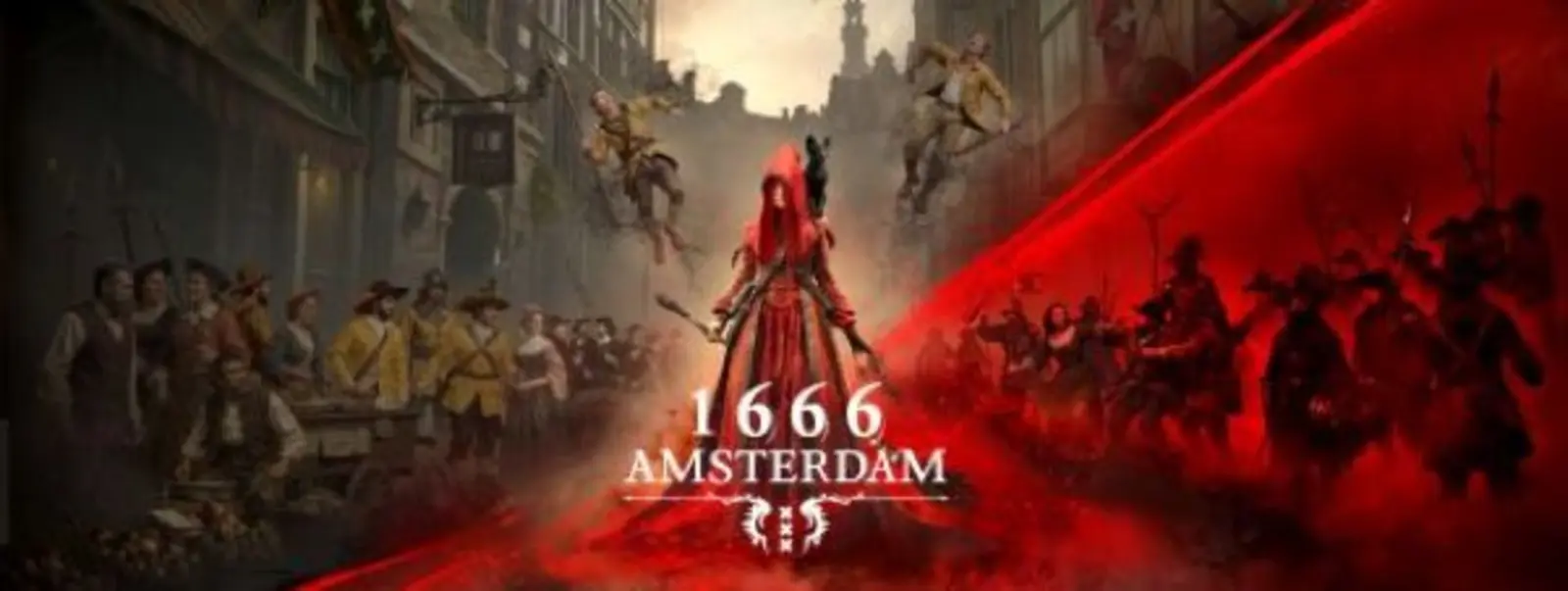
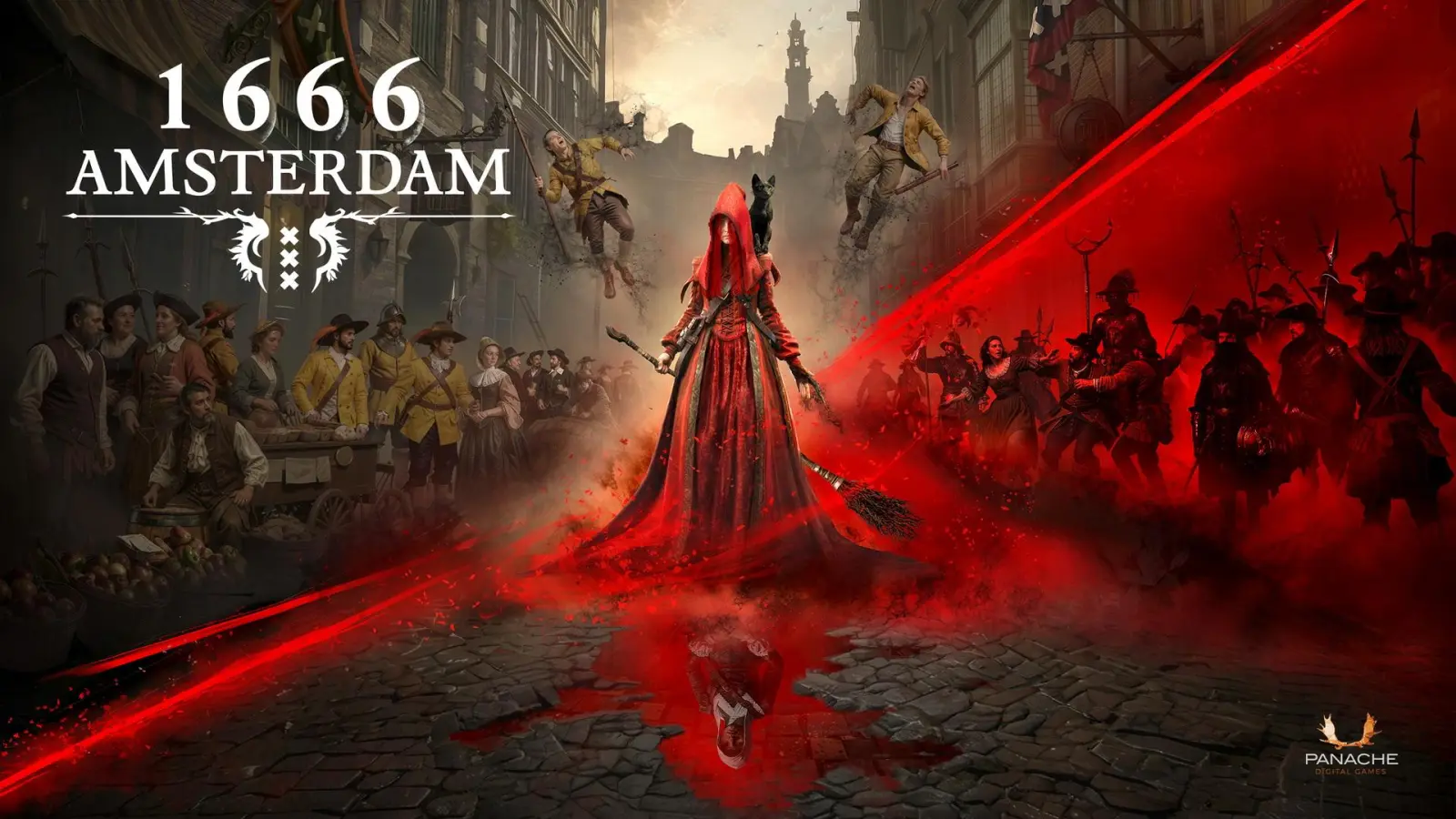
Panache Digital Games showcased 1666: Amsterdam during tonight's Summer Games Fest presentation, a dark action-adventure by Patrice Désilets that will arrive on PC in Early Access in 2026.
Panache Digital Games, the studio known for Ancestors: The Humankind Odyssey, presented 1666: Amsterdam, a third-person dark action-adventure led by Patrice Désilets, the creative director of the original Assassin’s Creed. The game was showcased during the Summer Game Fest, and alongside the announcement trailer, a free prologue for PC was also released.
The prologue is available on Steam and the Epic Games Store, lasts about 30 minutes, and serves as a standalone introduction to the world, characters, and main mystery of the game. The full version of 1666: Amsterdam is expected to launch in Early Access on PC in 2026, while versions for current consoles will be released later.
This is not a completely new project that appeared out of nowhere. The original version of 1666: Amsterdam was in development at THQ Montreal, where Désilets worked on a new ambitious game with a team of about fifty people after leaving Ubisoft. Following THQ's bankruptcy in late 2012, THQ Montreal was sold to Ubisoft in January 2013, and the project ended up under Ubisoft's wing. Désilets left Ubisoft the same year after a dispute with the company, while 1666: Amsterdam remained in limbo. It wasn't until 2016 that Désilets regained creative rights to the project, paving the way for the game to potentially return one day.
Due to such a history, 1666: Amsterdam has had a near-mythical status among fans of the original Assassin’s Creed games for years before they became major open-world titles with RPG elements. The game has long been referred to as a lost project or a spiritual successor to Assassin’s Creed, a title that could have become something great but vanished amid the business turmoil between THQ, Ubisoft, and Désilets. That is why the new presentation at the Summer Game Fest was more than just an ordinary announcement; it was a return of a game that many thought had long become a lost title.
The game's plot is set in Amsterdam in 1666, but the story spans multiple time periods. At its center are the mysterious Originals, beings who have lived among humans for centuries and wield the power they acquired long ago. This power is now coming due, and the player takes on the role of Noa Brooklyn, a girl born as a Collector and raised for a purpose she did not choose herself.
One of the key elements of the story is Aaron, a character drawn from 1999 who now observes the world through the eyes of a cat. The prologue shows players Noa's Commencement, the moment she begins to understand the role she must take on. Right from the start, players need to choose a companion who will walk alongside her, which is expected to play an important role in the further development of the story.
Panache Digital Games announces the story through three timelines: 1666, 1999, and the present. Each period will reveal parts of a larger mystery, while a hidden history shaped by centuries of invisible influence gradually unfolds behind the familiar world.
Patrice Désilets emphasized that the development of the game took six years and that a team of nearly 70 developers in Montreal was solely focused on the game itself. He particularly highlighted that the prologue is not a fake representation or a marketing vertical slice, but a genuinely playable experience that has been developed through numerous internal versions.
1666: Amsterdam is now returning in a concrete form, with a playable prologue and a clear plan for Early Access release in 2026. After more than a decade of uncertainty, Patrice Désilets' project is back in front of players, this time as a dark narrative action adventure with one of the more interesting development paths in the modern video game industry.















-hero.webp)

-hero.webp)