When a project is backed by Patrice Désilets, a man many still associate with the creation of the Assassin's Creed series, expectations automatically jump several notches higher. That’s why 1666: Amsterdam is one of those titles that managed to attract attention even before we saw more concrete gameplay. Fortunately or unfortunately, the Prologue demo did not come to answer all questions, but rather raised even more.
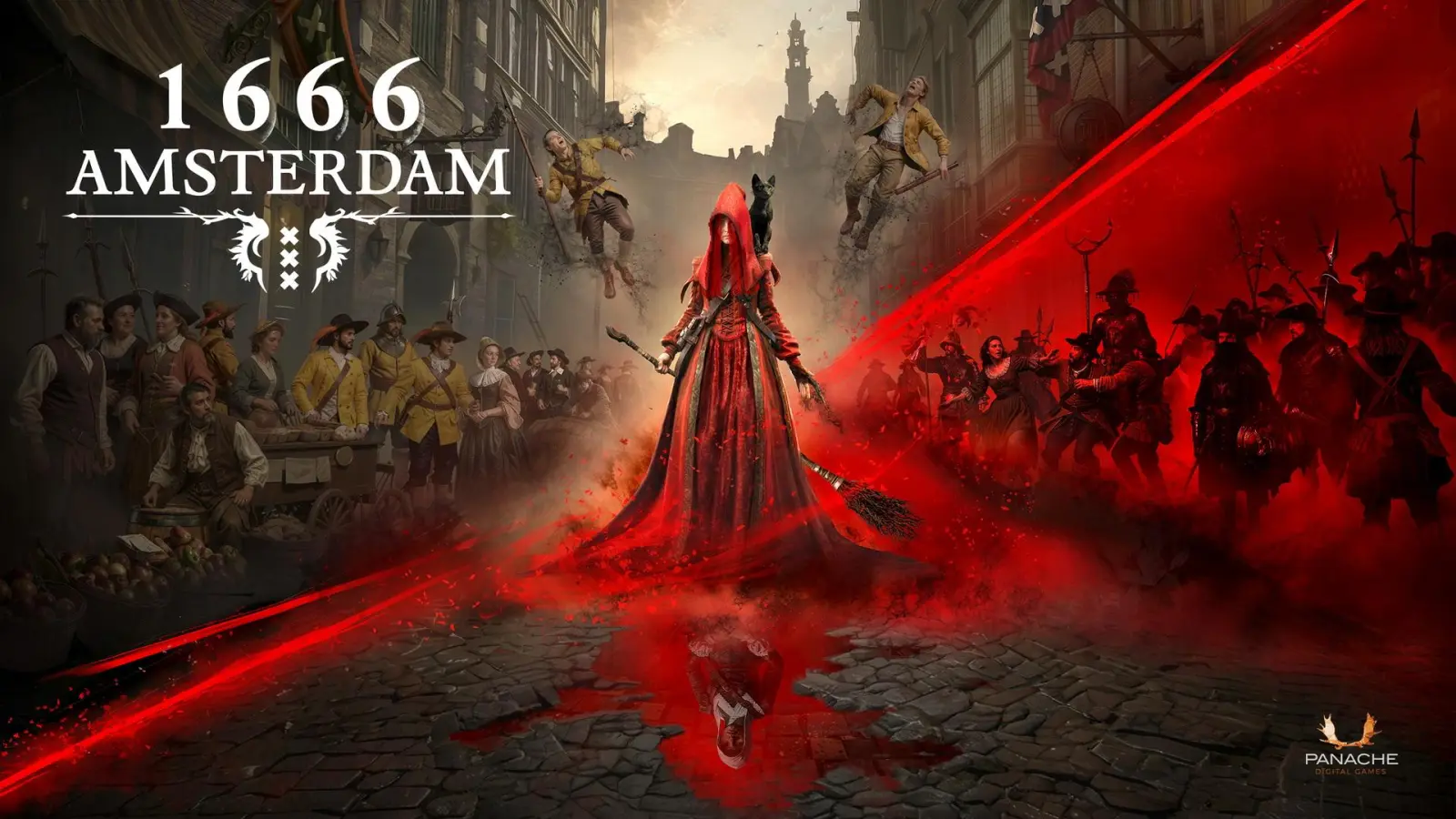
Right from the first minutes, it is clear that Panache Digital Games is not aiming for a classic action-adventure. Instead of an explosive introduction and a demonstration of mechanics, we received nearly half an hour of narrative experience that serves as a sort of introduction to the game’s world, its mythology, and main characters. The focus is on Noa Brooklyn, a mysterious "Collector" connected to supernatural forces, while her feline companion also plays a significant role. Yes, cats here are much more than mere decoration.
The atmosphere is undoubtedly the biggest asset of this prologue. 17th century Amsterdam looks intriguing enough that you want to explore every dark corner of it. Gothic elements, occultism, witchcraft, and the unusual connection between the past and modern times create a very interesting identity. At times, the game gives the impression that you are observing a blend of Assassin's Creed, a paranormal thriller, and a European folk-horror story. It’s not hard to understand why many immediately drew comparisons to the upcoming Assassin's Creed Hexe.
However, this is where we come to the biggest problem. As a prologue, this works quite solidly. As a demo, somewhat less so. A large portion of the time is spent in conversations, exploring the environment, and getting to know the world, while concrete gameplay systems are almost nonexistent. Combat is practically absent, exploratory mechanics are only hinted at, and many elements suggested by the trailer remain hidden for the full version of the game. Because of this, it is difficult to assess how fun it will actually be to play 1666: Amsterdam when the full gameplay loop opens up.
The technical side also leaves mixed impressions. The visual style and art design have character, but animations occasionally feel stiff, the camera can be awkward, and some players reported performance and optimization issues. On the other hand, there were those who did not encounter serious technical difficulties, suggesting that the final impression will largely depend on the computer configuration.
What kept me engaged until the end was not the gameplay but curiosity. I wanted to learn more about the world, the rules of this unusual universe, and the characters that are just beginning to develop. This may be the best indicator that there is something worth paying attention to here. The problem is that the demo ends just at the moment when you feel the game should finally show its true face.
1666: Amsterdam (Prologue) is not a demo that will blow you away or convince you to open your wallet immediately. But as an introduction to a potentially very interesting world, it manages to spark curiosity. If the goal was to present the atmosphere, tone, and mystery, the task is mostly fulfilled. If the goal was to show why the actual game will be fun to play, we will have to wait for the Early Access release for that answer. For now, the impression remains that behind all those dark streets, witches, and supernatural secrets lies something special, but still too much remains hidden in the fog of the Amsterdam night.