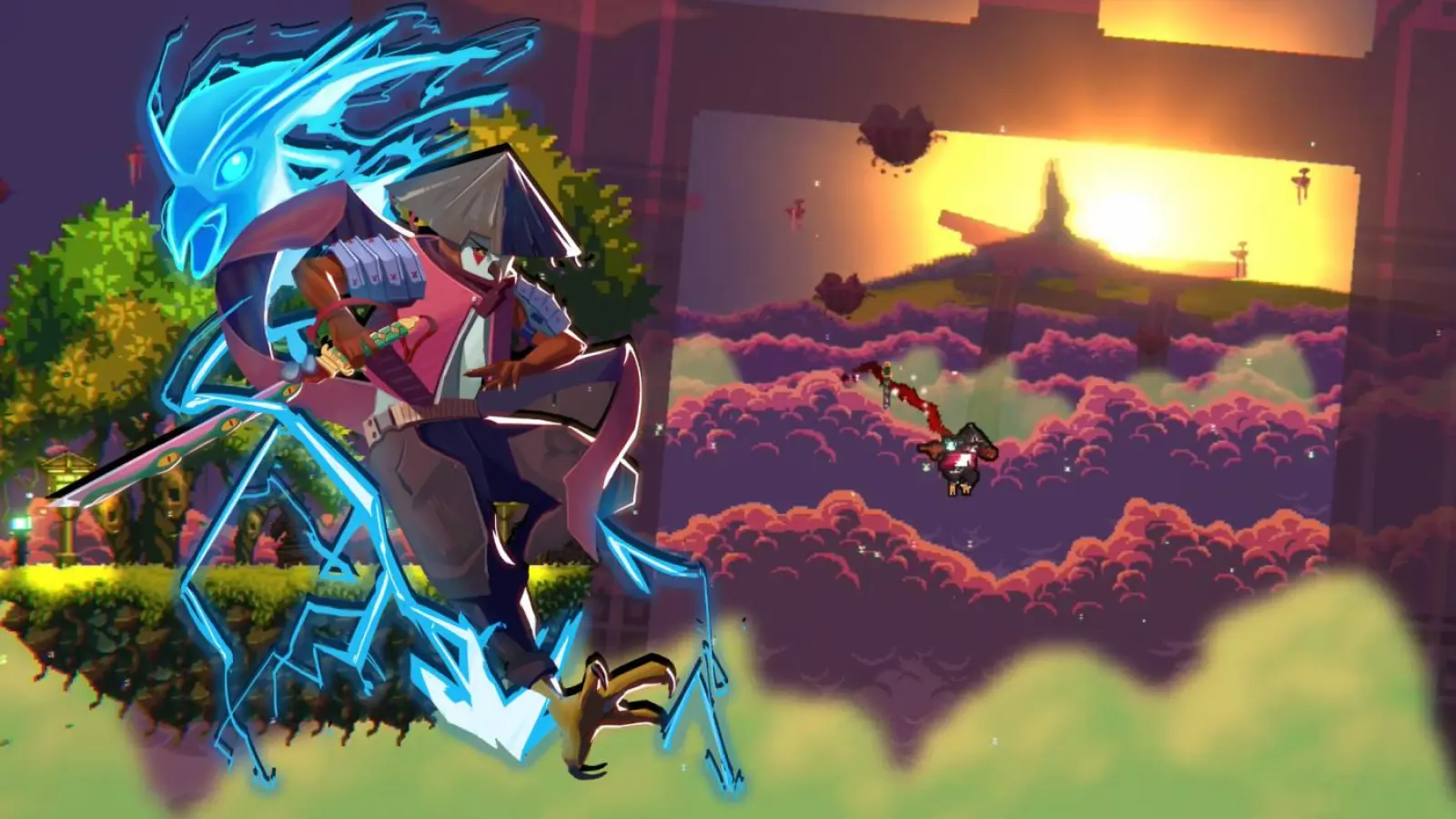
Atomic Owl presents an interesting blend of roguelite mechanics, precise platforming, and retro aesthetics that clearly draws inspiration from classics of the nineties. The game follows Hidalgo Bladewing, a warrior-owl who embarks on a mission to save his allies from the sinister Omega Wing after a two-year absence. The game attempts to combine the speed of modern action games with the nostalgia of old side-scrolling platformers, and this combination is its greatest strength.
The visual identity of the game leaves a strong first impression. The pixel art is detailed, the animations are fluid, and the character and enemy designs are distinctive enough that each new zone feels fresh and different. The neon aesthetic of the world of Judanesta particularly stands out, successfully combining a dark fantasy tone with a synthwave atmosphere. Although the indie scene has been filled with retro titles in recent years, Atomic Owl manages to avoid a sense of genericness thanks to its own style and unusual bird mythology. Some enemies appear almost grotesque, while others remind one of anime interpretations of feudal warriors. The gameplay focuses on fast movement, precise jumps, and dynamic combat. Hidalgo uses various types of weapons during his adventure, including swords, hammers, and whips, each of which changes the way you play. The combat is fast-paced and requires constant movement, which will particularly appeal to players who enjoy challenging action platformers like Dead Cells or Mega Man.
The game does not forgive mistakes often, but this sense of risk and reward makes every victory satisfying. The progression system based on trial and error also works solidly as the player gradually becomes stronger and unlocks new abilities after each defeat. One of the more interesting elements of the game is the talkative demonic sword that accompanies the main character. The dialogues between the weapon and the protagonist add a dose of humor and break the more serious tone of the story. Although the narrative is not revolutionary, it is interesting enough to motivate the player to continue exploring. The voice acting further elevates the quality of the presentation, which is not always the case with smaller indie projects.
The story of betrayal, corruption, and redemption may not be original, but it is told with enough charm to leave a positive impression. The music is another important aspect of the game. The soundtrack combines synthwave rhythms and JRPG inspirations, creating an energetic atmosphere that perfectly complements the fast action on screen. During intense battles, the music heightens the sense of adrenaline, while the calmer parts offer a brief respite before new challenges. It is precisely the audiovisual presentation that gives the game a character that makes it easily memorable even after a short playthrough.
However, Atomic Owl is not without its flaws. The roguelite structure can sometimes feel repetitive, especially for players who are not fans of constantly repeating the same zones after death. The difficulty can also be uneven; some boss encounters feel excellently balanced, while others are more frustrating than they provide a sense of fair challenge. Occasionally, it can feel like the game is trying to combine too many ideas at once. Platforming, hack-and-slash combat, roguelite progression, and metroidvania elements mean that certain segments do not get enough space for full development. On the positive side, the developers later added a No Roguelite mode that allows for a more linear experience for players who want a more classic approach to platformers. This decision shows an understanding of the audience and a desire for the game to be more accessible to a wider range of players.
Ultimately, Atomic Owl leaves the impression of an ambitious and creative indie title that successfully blends retro inspirations with modern design. The game may not revolutionize the genre, but it offers enough character, challenge, and visual identity to stand out among numerous similar projects. Fans of fast-paced action platformers and roguelite games will find plenty of reasons to enjoy it, while players seeking a more relaxed experience may struggle with its more demanding pace. Regardless, Atomic Owl demonstrates how much the indie scene can still offer original and stylistically striking projects.
A copy of the PlayStation 5 version of the game for review purposes was provided by the publisher EastAsiaSoft






-hero.webp)





-hero.webp)