We played Solarpunk as part of the XBOX Game Pass subscription
✅ Prednosti
- Relaxed sandbox survival game
- Ability to build creative structures
- Exploring distant islands in an airship
- Symbiosis with animals in the game
- Dedicated duo of developers
❌ Nedostaci
- Lack of feedback during actions
- Sparse tutorial that slows down progress
- Lack of customizable video settings
- Underdeveloped or neglected aspects of the game
- Sustainability issues with materials
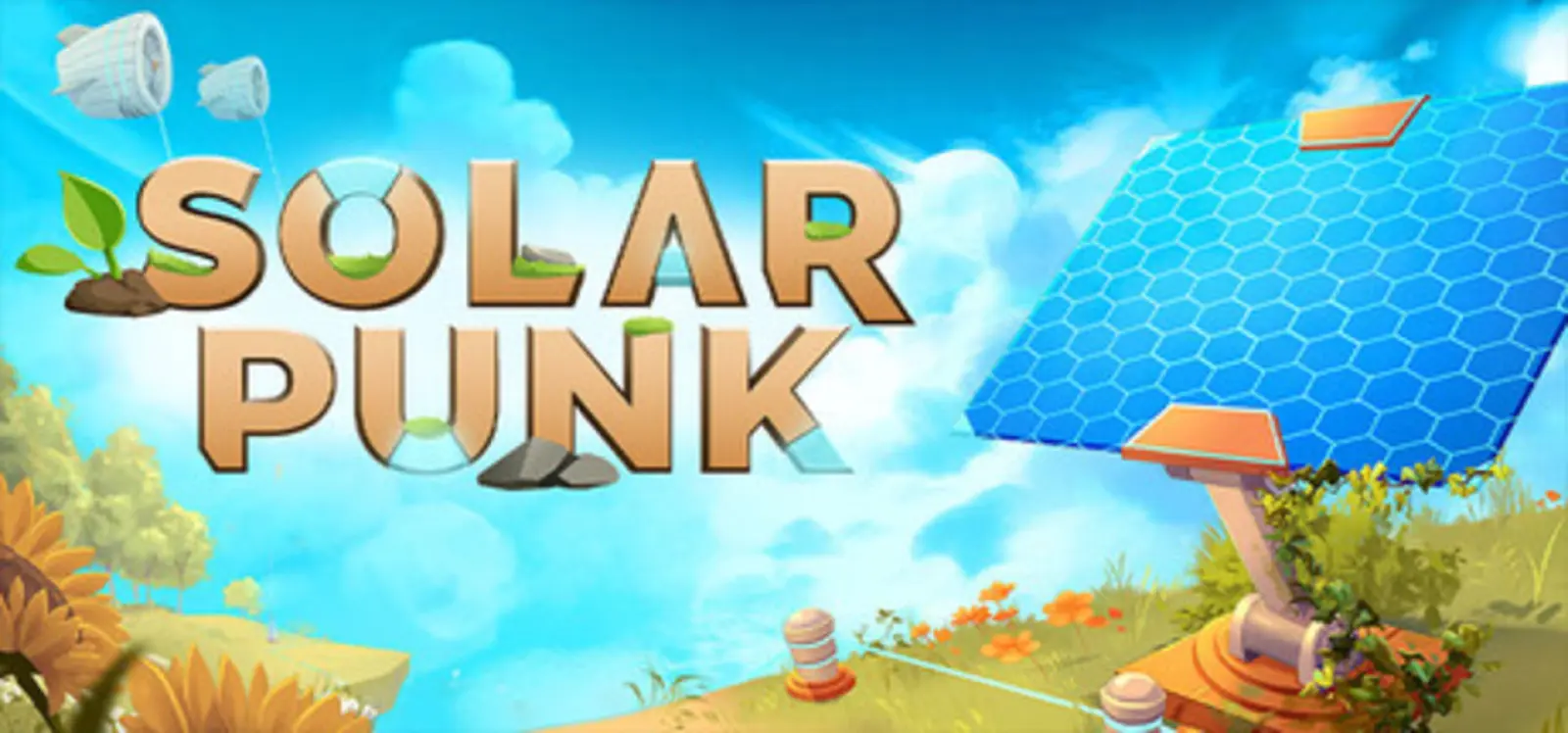
Solarpunk was developed by Cyberwave, Mi'pu'mi Games, and published by rokaplay. The game is available from this month, and you can also play it as part of the XBOX Game Pass Ultimate and XBOX Game Pass PC subscription.
Solarpunk is a relaxed sandbox survival game, handcrafted by just two developers. Alone or together with friends, you can build creative structures, decorate your home with a vast selection of furniture and items, grow and cook food, craft devices, and explore distant islands in your own airship.
The core features of the game are:
use sunlight and wind to create an energy system and automate your processes, such as resource gathering and watering plants
build freely: design your dream base with a wide range of materials and decorations. You are free to create cozy spaces, adding little details
energy system: generate electricity using wind and solar energy. Weather conditions affect the amount of energy you produce, so you'll need to plan ahead. Store energy in batteries and use wireless power to keep your base running smoothly.
multiplayer: Play solo or with friends. Everyone has their own inventory, and you can decide whether to build something together or create your own little corner in the sky.
animals and farming: in Solarpunk, you live in symbiosis with animals. There is no exploitation, only coexistence. Pigs, for example, will dig for truffles if treated well. Growing fruits and vegetables is your main source of food. Plant seeds in the ground and harvest them when fully grown.
automation: automate your tasks using transport drones for resource collection, giving you more time to build and explore your home in the sky.
airship: each player can build their own airship. Use it to travel to nearby islands and discover new resources
Inspired by classics like Minecraft, Stardew Valley, and Worlds Adrift, Solarpunk is a cozy survival game developed by a small independent studio based in Germany. Without combat and mysteries to uncover, Solarpunk focuses on creating a personalized base and farm, using renewable automation combined with light exploration.
As a first-person adventure, you won't see yourself; however, through online cooperative mode, others will. So, you have the opportunity to customize your avatar. It's not extensive, but enough to give you some kind of identity. You can also choose between a standard world or a 'soft' one, which has the added benefit of not being struck (and thus injured) by lightning, you won't lose inventory upon death, and you'll reduce hunger and thirst. After naming your world and deciding whether to share your progress or not, you're ready to start your Solarpunk adventure.
You wake up on a small sky island, with a collection of items in your inventory: a nearly broken axe, a bit of bread with honey, a little watermelon juice, and a handful of raspberries. If you chose to display the tutorial, you have a helpful task list in the upper right corner in 5 stages. After crafting a pickaxe, you will be guided to gather berries, chop wood, and mine stone. The landscape in Solarpunk is lush, vibrant, and welcoming.
In the quick menu, you can create some basic tools and a crafting table. However, to make the most of that crafting table, you will need a research table to create blueprints. Just like the equipment you will eventually craft, creating blueprints also requires resources. The research table can be upgraded to unlock more ideas for equipment and decorations, and the requirements for unlocking the next level serve as a guide if you're struggling and don't know what to do next.
Solarpunk is a game that requires a lot of resources: you gather and harvest a lot. Fortunately, crops and trees grow quite quickly. The downside is that they rarely drop more than one seed, and in the early stages of the game, you cannot craft seeds. Therefore, it is important to ensure that every collected seed or sprout is planted as soon as possible to ensure a continuous flow of materials.
There are various ores to mine, as well as stone, clay, and sand. Most of these resources can be smelted to create building materials.
As you explore the numerous islands in the world of Solarpunk, you will quickly realize that your growth depends on what you find in the sky. This means searching for specific materials, such as new crops or ores on other islands in the distance.
The problem with a game that heavily relies on exploring other islands is that when you can't reach them, you may encounter sustainability issues with your own materials. We had a significant problem while playing Solarpunk where we needed processed materials to craft the airship required to access other islands. However, since we had already found all naturally growing samples of those materials, our only option was to farm the remaining resources.
We believe that one aspect that is important to master in a game like Solarpunk is the general feedback you feel while performing actions. Does the tree lose chunks of wood when you hit it? Do the rocks crack more as you break them down? In the case of Solarpunk, unfortunately, this is almost never the case. For example, chopping a bush with an axe provides no real feedback. There is no visible particle effect to visually show what you just did. Basic mechanics, such as item descriptions, also feel somewhat absent, often leaving you unsure whether you are looking at a stone or wood.
The tutorial is also quite sparse. While it will certainly help you navigate the game's progress, it feels somewhat slow. I think Solarpunk could really benefit from having a friendly NPC that appears occasionally. It would help connect a face to an otherwise faceless world when you start (until you meet others). The settings menu also leaves a lot to be desired. It may not matter to some players, but I would say it is an integral part of any game, especially on PC.
There is also a noticeable lack of adjustable video settings. Instead, you get a general quality selection without specific details. While this is a convenient detail for users with weaker hardware, if you want, say, to turn off vegetation, you won't find that level of freedom here.
The game is a solid start for this studio, no doubt about it. Unfortunately, various aspects of the game feel either underdeveloped or completely neglected. Fortunately, Solarpunk has a dedicated duo of developers behind it. Surely, we expect improvements in the future.