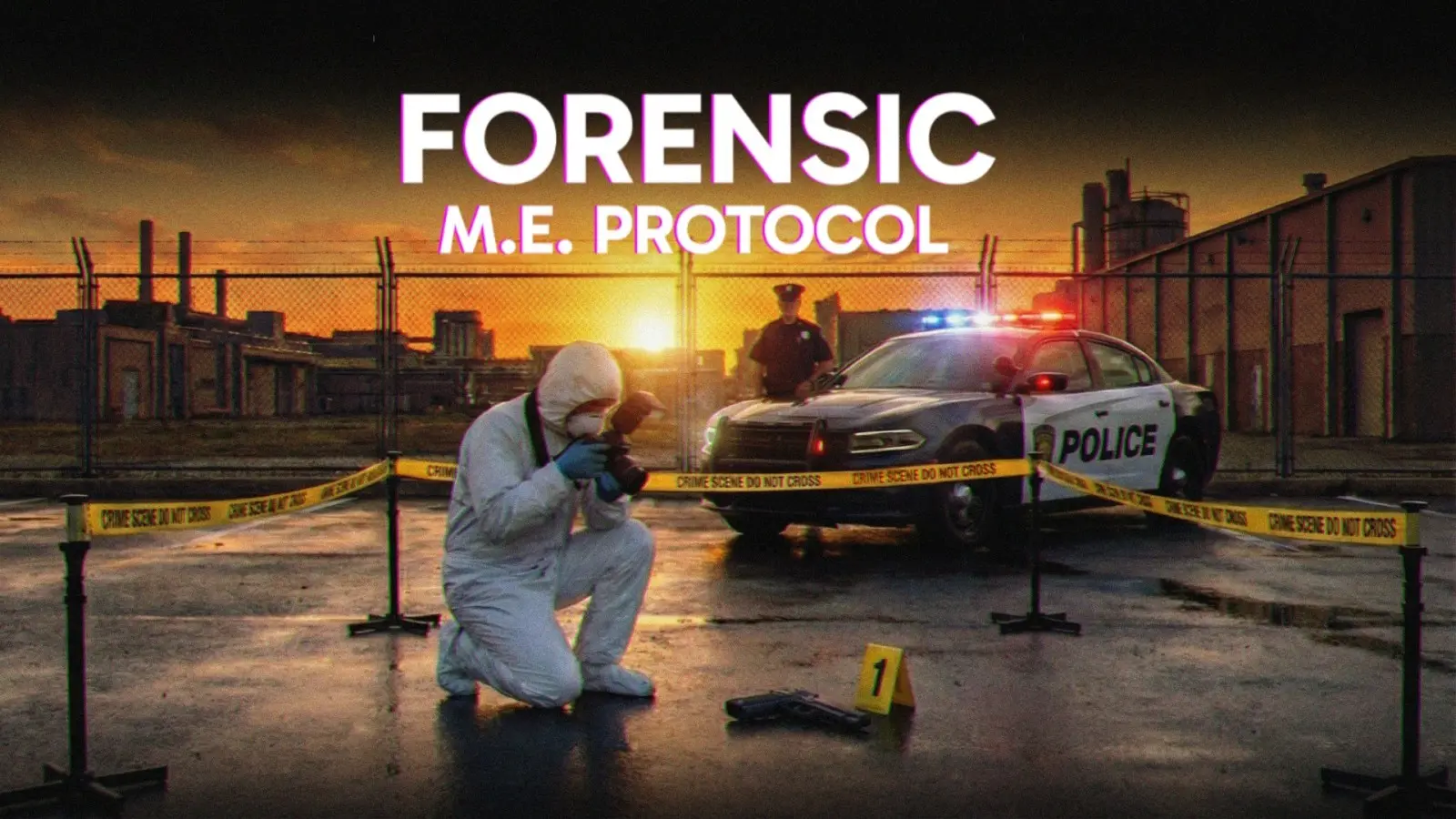
FORENSIC – M.E. Protocol
✅ Prednosti
- Focus on forensics and investigation
- Sense of satisfaction from own observation
- Exploration without artificial pressure
- Detailed locations that support investigation
- Interesting idea and concept of the game
❌ Nedostaci
- Sparse tutorial and insufficiently explained mechanics
- Clumsy controls when using equipment
- Some clues nearly invisible in the dark
- Lack of action and dynamism
- Lower quality of voice acting
If you've ever watched CSI, NCIS, or any of the numerous crime series and thought how interesting it would be to investigate a crime scene on your own, FORENSIC – M.E. Protocol tries to turn that into a video game. Instead of gunfights, car chases, and action scenes that we often see in detective games, the focus here is solely on forensics, observation, and connecting the dots. The result is an unusual experience that won't suit everyone, but will provide several very interesting hours for fans of slower and more thoughtful investigation.
In the role of a forensic investigator, we get nine separate cases that take us from dark alleys and abandoned warehouses to seemingly ordinary family homes. Each case hides its own story, and the game quickly makes it clear that nothing is as it seems at first glance. Murders, kidnappings, confrontations, and other dark themes are gradually revealed through the evidence we find in the field.
The greatest strength of the game lies precisely in the investigation itself. There are no big arrows showing you where to go, nor does the game hold your hand through every step. You need to examine rooms, photograph clues, analyze evidence, and use various tools like drones, robots for exploring hard-to-reach locations, and chemical analysis. When you finally piece together the entire mosaic of events, the feeling of satisfaction is truly present because you arrived at the solution through your own observation and logic.
However, this freedom also represents the game's biggest problem. There is a tutorial, but it is quite sparse, and many mechanics remain insufficiently explained. You will often learn through trial and error, and some key clues blend so well with the environment that you may wonder if you missed evidence or if the game simply doesn't want to cooperate. The controls can also feel somewhat clumsy, especially when using specialized equipment.
Visually, FORENSIC – M.E. Protocol is not a title that will push the technical boundaries of the industry, but it performs its task quite adequately. The locations are detailed enough to support exploration, and the darker atmosphere successfully builds a sense of discomfort and uncertainty. Sometimes perhaps even too successfully, as some clues become almost invisible in the dark. The sound follows a similar philosophy – it is unobtrusive, atmospheric, and serves to create the impression that you are truly alone at the crime scene. Voice acting, on the other hand, is not always of the same quality level.
What I particularly liked is the fact that the game never creates artificial pressure. There is no countdown timer, no penalties for slowness, and no frustrating "game over" screens. You can explore at your own pace and carefully examine every corner of the location. This will be relaxing for some, while others may wish for a more dynamic rhythm.
FORENSIC – M.E. Protocol is not a revolutionary detective game, but it manages to fill a niche that we rarely see. If you are looking for action, spectacular twists, and Hollywood presentation, you will probably be disappointed. However, if the idea of spending an hour analyzing a crime scene to find a single key clue appeals to you, this game has something to offer. Its shortcomings, primarily poorly explained mechanics and occasionally clumsy controls, prevent it from reaching its full potential, but the core idea is interesting enough for the experience to remain worth recommending. This game may not end up on the list of the best detective games of all time, but it will certainly find its audience among players who prefer to use their brains rather than the trigger.