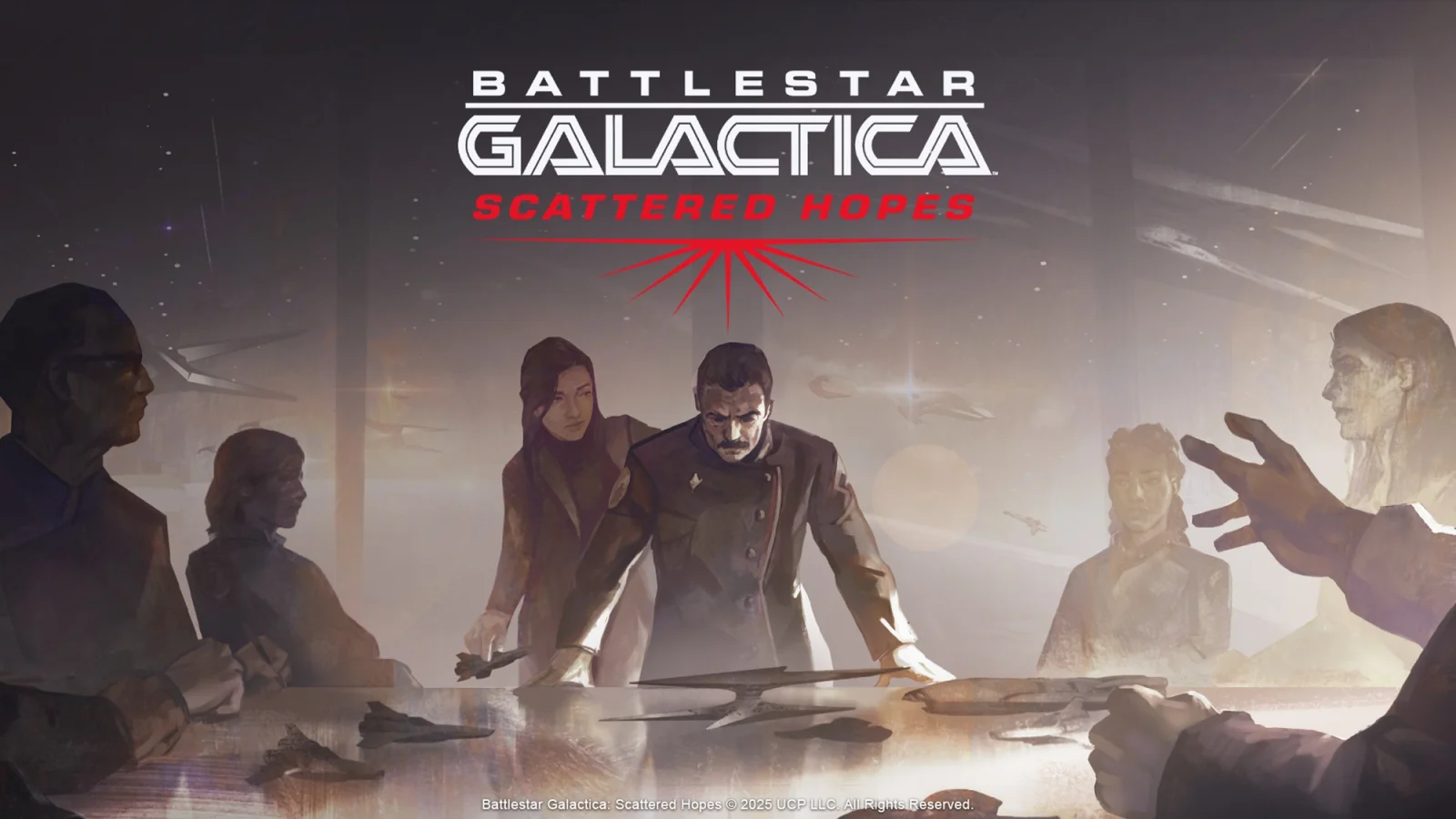
Battlestar Galactica: Scattered Hopes – when the universe doesn't give you a moment's peace
✅ Prednosti
- Fast and readable battles
- Good tutorial explaining systems
- Narrative events add weight to the game
- Excellent combination of combat and management
❌ Nedostaci
- Long-term repetitiveness may become an issue
- No voice acting
- Visual styles are not fully cohesive
- Not a game for those wanting quick action
I will admit right at the beginning: I am not a Battlestar Galactica fan. I haven't watched the series and I won't pretend that I've been waiting my whole life for a game that will make me shout "So say we all."
Perhaps that's why Battlestar Galactica: Scattered Hopes is an interesting game to review, because this is not necessarily just a title for fans who will recognize every ship, every reference, and every depressing gaze into the distance. This is primarily a strategic roguelite about the survival of a fleet in space, where something is always falling apart, someone is looking for something, resources are disappearing, and the hostile Cylons, a robotic civilization that has rebelled against humans, are relentlessly hunting you through the galaxy.
Scattered Hopes puts you in the role of the commander of a fleet of survivors trying to reach the Battlestar Galactica. So: gather resources, repair ships, explore locations, make decisions, and survive attacks. It sounds simple, but in practice, the game quickly becomes one big pot of stress where you constantly have to ask yourself what the least bad decision is at the moment.
Between battles, you find yourself in a fleet management phase. Ships break down, people panic, factions have their interests, someone wants resources for a personal project, someone is looking for a political concession, someone wants to strike... All of this comes while you try to keep the fleet alive, explore the surroundings, gather supplies, repair damage, and develop technology. It's a good kind of stress, the kind that makes you think and act accordingly.
What I particularly liked is that the game quickly creates a feeling that you never have enough time. There are always more resources needed, more repairs to be done. It would always be good to explore one more location, invest in one more upgrade, but then the Cylons get closer and the game reminds you that planning sounds great until missiles are flying towards civilian ships.
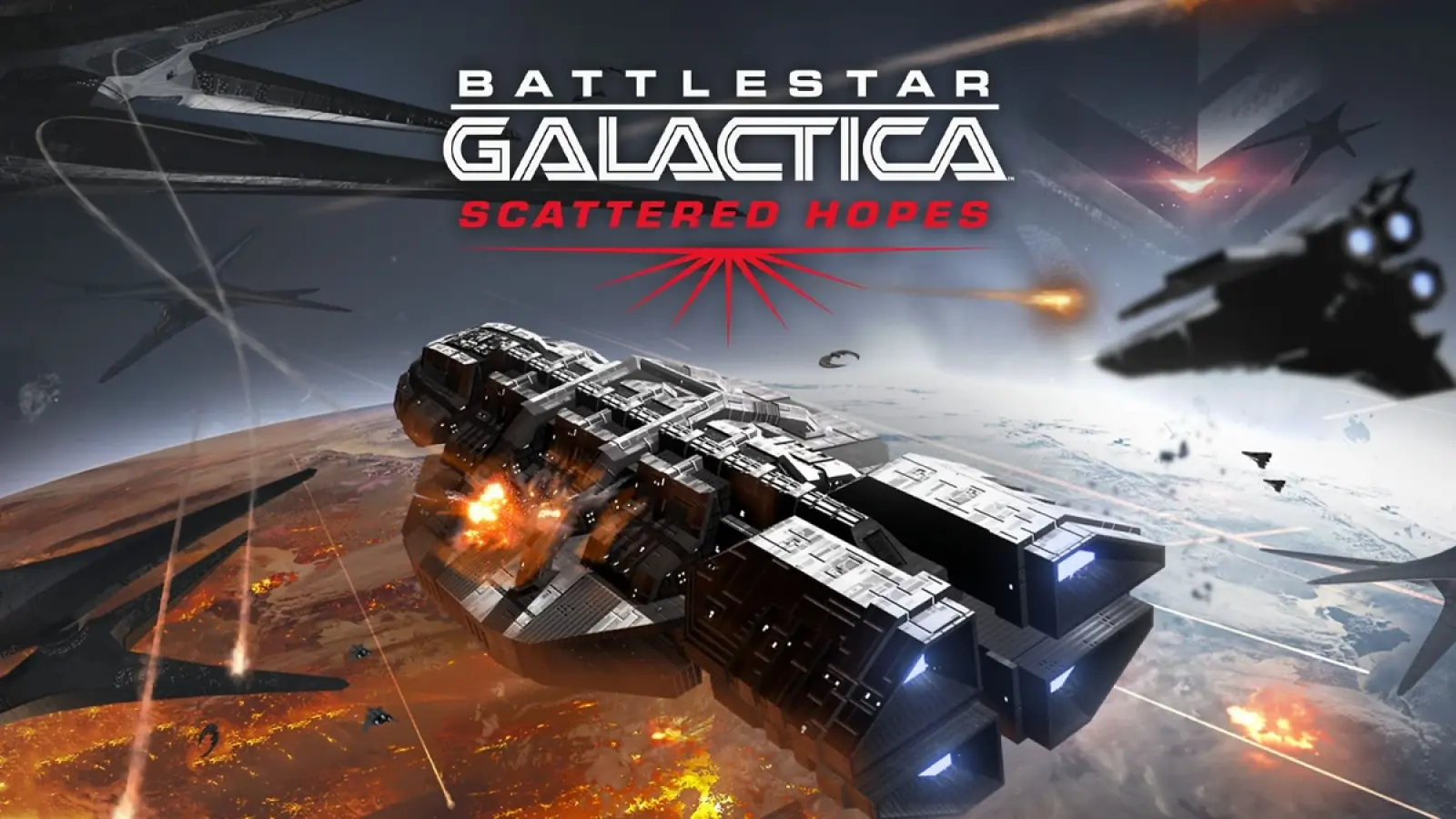
The battles might be the most pleasant surprise. They are not long, they are not tedious, and they do not try to be a huge tactical simulator where you have to study every parameter. They are fast, readable, and it doesn't take long for them to become chaotic in a good way. The goal is not to destroy everything in front of you. The goal is to survive long enough for the fleet to prepare a jump and escape. This changes the entire feel of the battle. You don't feel like a conqueror, but rather like someone holding the door while the rest of the team escapes from a burning building.
Tactical pause is key here. At first, you might think you can keep track of everything in real-time, but then chaos ensues, enemy ships and projectiles come from multiple directions, civilian ships are in danger, your units are doing their thing, and you quickly realize that pausing is often your best friend. Pause, assess the situation, send units, use abilities, and try to outsmart the AI before everything turns into space barbecue.
The tutorial is also quite good. The game has a lot of systems, but it explains them clearly enough that you don't feel like you've accidentally stumbled into a PhD program in space logistics. Of course, this is a roguelite strategy, so part of the learning will come through mistakes, but at least you have the feeling that you know why you are doing something.
Narrative events and factions give the game additional weight. The people in the fleet have their needs, goals, and frustrations, and decisions often mean that you will make someone happy and someone else angry. The game captures well the feeling that you are not just managing ships, but a bunch of surviving people trying not to fall apart mentally and politically.
Visually, the game is interesting, but not completely consistent. When you visit the interiors of ships and talk to people, the game uses a stylized, almost pixel-art aesthetic and character portraits in dialogues. In space, however, you see 3D models of ships and battles that have a different visual impression. None of this is ugly; on the contrary, the game has character, but the transition between these styles can feel a bit mismatched. There is no voice acting, which is a shame because dramatic dialogues and crisis meetings would certainly gain additional weight. As it is, everything relies on text, portraits, and atmosphere.
The greatest strength of the game lies in the battles and management. The rhythm between preparation, making tough decisions, and the sudden adrenaline rush when the Cylons attack works very well. There is that good roguelite feeling that every decision can help, but also complicate things in the long run. It’s not a game for those who want pure action, but it’s not too dry a strategy for people who get excited about resource tables. It’s somewhere in between, and most of the time, it maintains that balance well.
The biggest problem could be long-term repetitiveness. Since the game relies on crisis events, faction demands, and repetitive combat situations, the question is how long it will keep you engaged after several runs. The first impression is strong, the systems are fun, and the battles have enough pace, but it’s not hard to imagine that after a while, certain situations start to repeat. This isn’t necessarily a disaster, as roguelite games thrive on repetition anyway, but here that feeling can be more pronounced because the runs are slower and resemble small campaigns rather than short parties for “just one more round.”
I would recommend Battlestar Galactica: Scattered Hopes primarily to fans of the series, lovers of roguelite strategies, and anyone who enjoys science fiction where survival feels like a constant balancing act on the edge. You don’t have to be a fan of Battlestar Galactica to enjoy it. If it sounds fun to lead a fleet through political crises, malfunctions, attacks, and decisions where no one is ever completely happy, you might like this.
However, if you want fast, loud, and simple space action, this is not that ship. Here, you don’t save the galaxy with spectacular heroism. Here, you patch up the fleet with duct tape, put out fires, and hope to survive another jump.
So say we all, I guess. I don’t know, I haven’t watched the series. Don’t hate me.