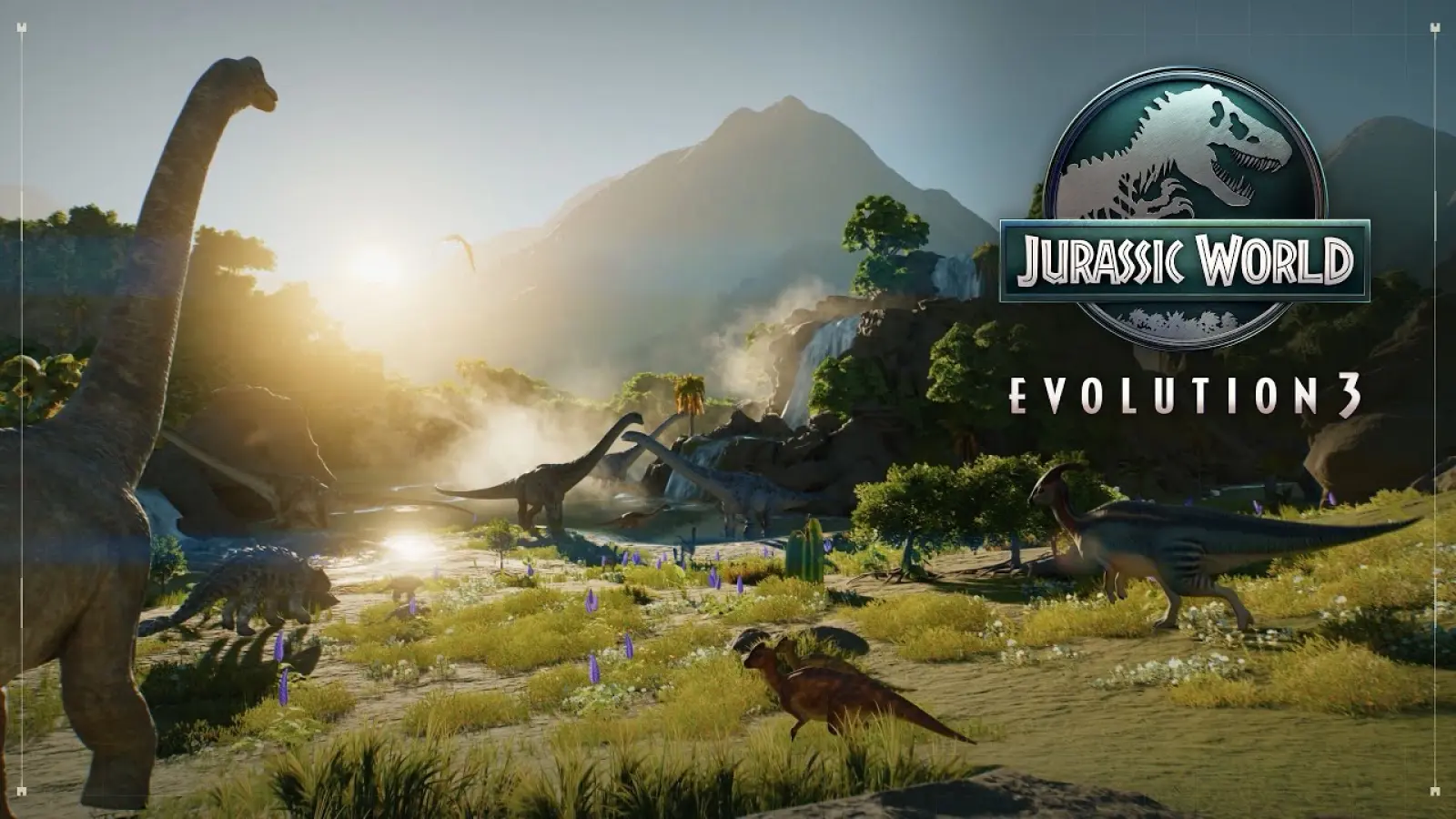
Jurassic World Evolution 3 + Rebirth: Dream Dinosaur Park
✅ Prednosti
- Interesting perspective for a new player
- Intuitive controls on the joystick
- Dinosaur breeding system adds depth
- Impressive visual presentation
- Functional interface despite complexity
❌ Nedostaci
- UI can feel cluttered
- Some characters are cringe
- No serious bugs, but not perfect
- Incidents can quickly become stressful
- Some parts of the game are familiar and predictable
I haven't played the first two installments of Jurassic World Evolution, which might sound like a handicap, but it actually gave me quite an interesting perspective. I entered the third installment completely fresh, with some distant memories of Zoo Tycoon and that childhood dream of one day creating the perfect animal park, only these animals have slightly different affinities.
The first few hours of Jurassic World Evolution 3 have that genuine "wow, this is so cool!" effect. The first time you release a dinosaur from the incubator, when you see the doors open and that huge creature step into your park, it's hard not to smile. The game successfully sells the fantasy of building a park where something prehistoric moves, breathes, eats, and potentially waits to cause trouble.
I played on PC, with mouse and keyboard, but also with a controller, and I was pleasantly surprised by how good the controls on the joystick actually are. Everything works quite intuitively. I even tried the game on the Steam Deck, where it runs very well, and I must commend that there is a specific graphics preset called "Steam Deck." A small thing that means a lot, because a dinosaur park on handheld is excellent.
What impressed me the most, however, was when I got into the maintenance vehicle and started driving manually through the park. I really didn't expect to be able to control it manually. Suddenly, everything stops being just a map with icons and numbers. You enter an enclosed space, drive past dinosaurs, see how big the park actually is, take photos of the animals, and for a moment, you just become a tourist in your own creation. From a bird's-eye view, the game looks great, but when you get down among the buildings, fences, and dinosaurs, that's when you get the full sense of scale and detail.
The basic structure of the game initially feels familiar, but it quickly shows how many layers there actually are in it. It's not just about drawing a fence, putting in a dinosaur, and waiting for the money to roll in. First, you need to obtain genetic material, research fossils, develop genomes, choose which species you want to create, and then think about where you can actually place them. Each dinosaur has its own needs: how much open space it requires, what kind of vegetation it likes, whether it needs water, what food it eats, how many other individuals it tolerates, and whether it is bothered by the presence of other species.
Once you release it into the park, the job has just begun. You have to monitor its health, satisfaction, and environment, and if something doesn't suit it, the game clearly shows you what the problem is. You click on the dinosaur, see what it lacks, and then through the environment editing tool, you literally "paint" the terrain: adding forest, low vegetation, water, rocks, or open space, depending on what the species requires. This is very elegantly resolved because the system is not just a number in a menu, but you see it immediately in the space.
At the same time, you develop the area for guests. They need a restaurant, restroom, gift shop, path to the attraction, a good view, and a sense of security. Because of this, you constantly balance between the animal part of the park and the tourist infrastructure. You build viewing platforms, connect them with paths, watch over the electricity, send teams to inspect facilities, fix malfunctions, and check on the dinosaurs.
A crucial part of the game are the scientists. They are not just decoration in the menu, but a resource you use for expeditions, research, and developing new things. Each has their strengths and weaknesses, so you must combine their skills to unlock further progress. All of this gives the game a good rhythm: you plan a bit, then build, explore, fix something, and then watch the dinosaurs live their lives peacefully, until the game tells you something is wrong and you return to the role of a person trying to keep the genetic experiment functional.
The campaign gradually unfolds through the Dinosaur Integration Network, an organization trying to find a way for dinosaurs and humans to function in the same world. It sends you to various locations around the world, and through it, you gradually learn the basic and advanced systems. Familiar faces from the movies are here, including Ian Malcolm, played by Jeff Goldblum, who is more or less there to sound like Jeff Goldblum and remind us that chaos is a theoretical problem but a very practical nightmare. The characters can be a bit cringe, but in the context of Jurassic World, that’s not necessarily a flaw. Besides the campaign, the game also offers sandbox and challenge modes.
The biggest novelty of the third installment is the dinosaur breeding system. Here we have males, females, hatchlings, families, and inheritance of traits. Baby dinosaurs are, as expected, adorable, and besides being cute, they give the park a sense of life. It’s no longer just about producing adult dinosaurs from the lab, but a system that tries to portray species as populations that develop and live.
The game is pleasantly complex. It doesn’t feel trivial, but it also doesn’t try to punish you just for the sake of it. I also like the medical aspect, where you send veterinary teams to examine and treat dinosaurs. The fun part is that you don’t always immediately know what the animal needs; someone has to visit it, scan it, see what the problem is, and then react. You can really feel the entire logistics of the park here. There are teams for maintenance, veterinary care, capturing, research, and all the other people trying to keep the system functional while you ponder whether it would be funny to let a carnivore among the guests after a long day at work.
Incidents are an important part of the game because they remind you that this is not just an ordinary zoo. Dinosaurs can become dissatisfied, sick, aggressive, or simply problematic enough to start testing the quality of your design. If their enclosed space doesn’t suit them, if they are stressed, if something goes wrong, or if the system fails, the situation can quickly turn from a stroll through a beautiful park to chasing velociraptors next to a restaurant.
When a dinosaur escapes, the game shifts to crisis management. First, you must react quickly and understand where the problem is. Fences can be damaged, the animal can end up among the guests, and the park begins to lose that nice illusion of safety you tried to sell to people. Visitors panic, the security rating drops, and you must activate the appropriate teams: send the capture team, tranquilize the dinosaur, repair the fence, and return the animal to its enclosure before the situation escalates further. If you have shelters, you can open them to allow guests to take cover until the problem is resolved.
You can even cause incidents yourself if you want to see how quickly all your efforts can turn into the news of the day. I like that part because Jurassic World without the possibility of system failure simply wouldn't be Jurassic World. A neat park is nice, but a park where you know everything can go to hell if you plan poorly has much more character. And, let's be realistic, half the fun is in first acting like a responsible director and then secretly thinking about what would happen if you let all the dinosaurs out.
Building is one of the game's major strengths. I mostly stuck to pre-made buildings, but I also liked that the same building can have different visual styles. For the more creative ones, there are modular tools and a Workshop. If you're someone who wants every path, every building, and every decoration to have an identity, you have plenty of room to play here if you want to create your ideal park.
Visually, the game is really impressive. The dinosaurs look fantastic. They are detailed, the animations are convincing, and their design carries that true cinematic feel. It's not just about graphical quality, but also about presentation. The camera, sounds, the way dinosaurs move and react, all of this sells the atmosphere very well. That moment when you stop looking at menus and just observe the animals in their enclosed space might be the best part of the game.
As for the technical state, I played on PC in 4K and 60 FPS without any issues. I didn't encounter serious bugs or crashes. The UI is large and can sometimes feel cluttered, but with a game like this, that's somewhat inevitable. There are a lot of systems, a lot of information, and a lot of things demanding your attention. It's not the cleanest interface in the world, but it's functional. The game also pleasantly surprised me on the Steam Deck, and the fact that such a title can be played so smoothly in a portable format is a big plus.
The biggest flaw of Jurassic World Evolution 3 is precisely what is also its greatest strength: complexity. When everything works, you feel like a genius architect of the perfect park. When the systems pile up, the game can turn into a series of small obligations. Someone needs a check-up, someone needs food, somewhere there's a power shortage, somewhere guests are missing a restaurant, somewhere a dinosaur is missing a bush, but not that bush, the other bush, because apparently, even a dinosaur has standards. Micromanagement can become tedious over time, especially if you were expecting a completely relaxed sandbox.
The Rebirth expansion brings an additional layer of content. There’s a new campaign, secret locations on the island of Île Saint-Hubert, new dinosaur species, geothermal energy, and additional tools. I played part of the campaign, and the impression is that the DLC fits nicely into the base game but doesn't change its core. Open-air aviaries are a really cool addition as they give flying species more space and spectacle, and new species like Mutadona and Titanosaurus nicely expand the roster. Titanosaurus is particularly impressive because in a game like this, size always matters, and a big dinosaur is a big argument.
Geothermal energy, on the other hand, seemed to me like a potentially unnecessary complication. I understand the idea, it fits into the locations and provides a new infrastructure system, but it didn't immediately sell me as something the game couldn't do without. It's more of an additional management layer for those who already enjoy such things.
Distortus rex is the obvious poster monster of the Rebirth expansion and probably the strongest example of the direction the DLC wants to take. This is no longer just another big animal for your park, but a mutant nightmare that looks like someone in a lab looked at a T. rex and said, “Can you make this thing look even scarier?” Its design is grotesque, deformed, and deliberately unsettling, which in the game serves as a reminder that Jurassic World is always best when human ambition crosses the line of common sense and then everyone suddenly acts surprised.
The Rebirth campaign has that mysterious, experimental tone, and Distortus rex embodies that tone best. It’s not just there to fill the roster, but to give the DLC an identity. While the base game often leans towards control, balance, and orderly park maintenance, this DLC reminds us that the formula works best when there’s a sense in the background that everything will eventually fall apart.
I would therefore describe Rebirth as a good addition for fans, but not as something that completely changes the game. If you enjoy the base Jurassic World Evolution 3, you’ll get more content, new animals, new locations, and more reasons to return to the park. If the core loop hasn’t sold you, the DLC probably won’t magically convert you.
Jurassic World Evolution 3 is a game for fans of the Jurassic world, but also for management sim lovers who enjoy building, balancing systems, and watching how small details create a larger whole. It’s accessible enough for casual players who want to have some fun with their own dino park, but beneath the surface, it has enough systems to satisfy those who want more than just watching dinosaurs. It’s complex, but rewarding.
What meant the most to me was that, as someone who hasn’t played the previous installments, I was truly amazed by the details. This is really a very good realization of the fantasy we all secretly have since childhood: to create a park full of dinosaurs. With the Rebirth expansion, it offers a rich, visually impressive, and surprisingly well-optimized package. It has a great sense of scale, fantastic dinosaurs, good controls, a smart tutorial, and enough depth in management to keep you engaged for a long, long time.
And when you get tired of being the responsible director, you can always open the doors of all the cages and watch the chaos.
A copy of the PC version of the game for review purposes was provided by Frontier Developments.