Sometimes a game appears in the gaming industry that doesn't become a big blockbuster, doesn't sell tens of millions of copies, and doesn't launch a franchise the size of Grand Theft Auto or Call of Duty. But despite that, it remains etched in the memory of an entire generation of players.
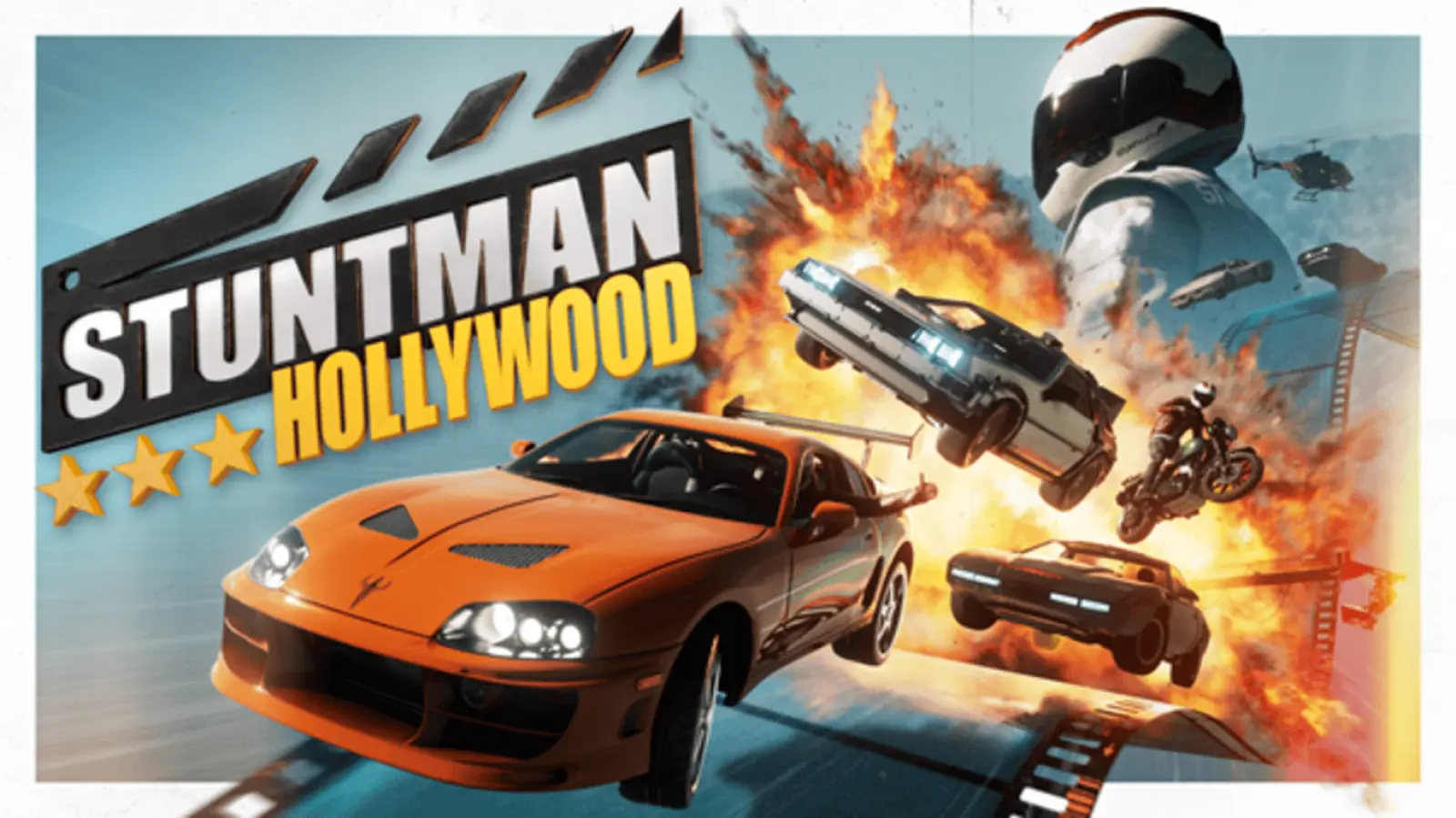
That's why the news of the series' return after all these years has sparked a wave of nostalgia among older players. Younger players may have never heard of it, but in the early 2000s, Stuntman was one of the most unique racing games on the market.
And one of the hardest.
How it all began
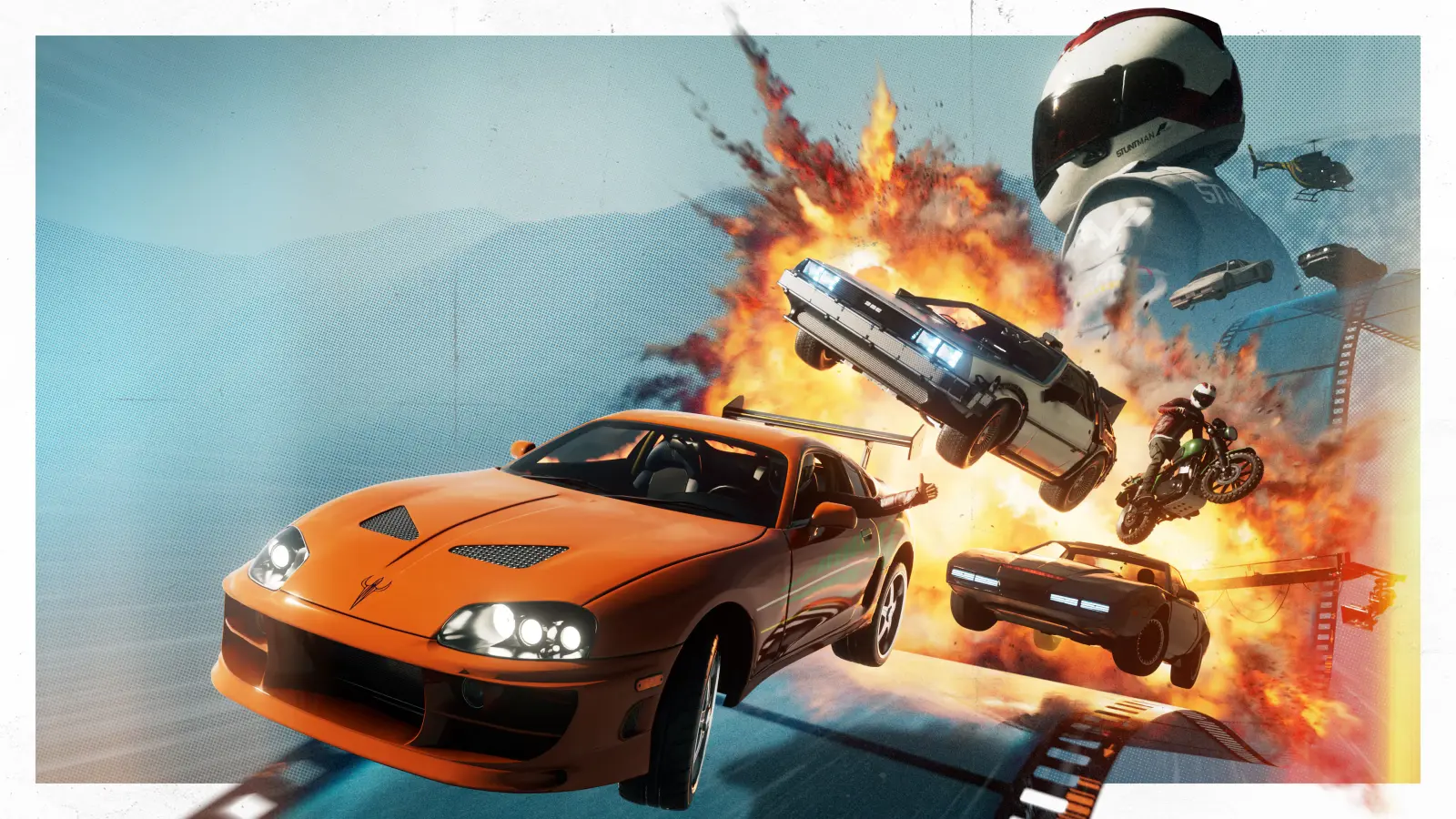
The first Stuntman was released in 2002 for PlayStation 2, developed by Reflections Interactive, known for the Driver series. Instead of classic racing, the game offered something completely different. The player was not a professional driver, a cop, or a street racer. They were a stuntman. Your task was not to beat opponents on the track but to perform perfectly choreographed action scenes for the film industry. Jumps over bridges, crashes, explosions, navigating tight spaces, riding on two wheels, and precisely timed maneuvers had to be executed almost perfectly to satisfy the director.
Today it may sound simple, but back then it represented something entirely new. Stuntman was essentially a blend of a racing game, a puzzle game, and an action movie shooting simulation.
It's important to remember the gaming environment in which Stuntman hit the market. The early 2000s were a golden age of experimentation. Publishers were more willing to take risks with unusual ideas, and the market was not yet obsessed with open worlds, live-service models, and endless progression systems. At the same time that players were racing through the streets of Liberty City in Grand Theft Auto III or escaping the police in Need for Speed Underground, Stuntman offered something completely different. You weren't concerned with how fast you were, but how spectacularly you could execute a scene.
A game that tested patience
If there is one thing that the original Stuntman is remembered for more than anything else, it is its brutal difficulty. Many modern players are used to checkpoint systems that forgive mistakes and designs that rarely punish the player. Stuntman was not that kind of game. One missed ramp. One late drift. One too-slow jump. And the entire scene could fall apart.
After finishing high school, I spent countless hours playing Stuntman on PlayStation 2 with my brother. To this day, I remember the amount of frustration the game could cause. There were moments when we repeated the same scene dozens of times trying to hit the perfect trajectory or timing that the game required. But that’s exactly why success felt so triumphant. When everything finally fell into place after an hour of trying, when the car flew through an explosion, jumped the ramp, and landed exactly on the marked spot, the feeling of satisfaction was incredible.
Today, when I look at videos of the original Stuntman on YouTube, I can still feel that familiar nervousness before the last big jump in the mission. My brother and I often sat next to each other and exchanged the controller after each failed attempt. Sometimes one of us would give up out of frustration, while the other stubbornly continued "just one more time." Of course, those "just one more time" often turned into the next hour of trying. Still, because of that, every success remained etched in memory much stronger than in most other games we played back then.
Today, very few games manage to create such a combination of frustration and euphoria. Especially frustration, as the controller often flew, and not once did the console go with it, as the controller's cable pulled it. Then we would turn off the game, try to calm down, and continue the next day. Once, I woke up frustrated in the dead of night, turned on the game, and tried to solve the stunt we had struggled with for several hours that evening. When I succeeded with a difficult bluff, I woke up the whole house with my joy (and screaming). My mom called me crazy, while my brother proudly grinned from the other side, knowing that in the morning when we woke up, we could continue.
Stuntman: Ignition tried to expand the formula
Five years later, in 2007, Stuntman: Ignition arrived for PlayStation 3, Xbox 360, and PC.
The sequel retained the core idea of stunt scenes but expanded it with higher production values, modern graphics, and a somewhat more accessible design. Inspiration once again came from Hollywood. Players participated in the filming of various film genres, from action blockbusters to futuristic sci-fi adventures and off-road spectacles. Ignition received solid reviews but never managed to achieve greater commercial success. At a time when completely different racing games dominated the market, it was hard to find space for such a specific idea.
Unfortunately, Ignition arrived at a time when the racing genre was undergoing significant changes. Need for Speed, Burnout Paradise, Test Drive Unlimited, and later Forza Horizon moved towards open worlds and the freedom to explore. In such an environment, it was difficult to sell players the idea of a racing game that required precision, discipline, and repeating a scene ten times. Although it did not achieve commercial success, fans still consider it an underrated sequel that deserved much more attention.
After Ignition, the series unfortunately disappeared.
Why do players still remember Stuntman?
Perhaps precisely because it never tried to be like everyone else. While other racing games rewarded speed, Stuntman rewarded precision. While other games offered open worlds, Stuntman required players to learn every second of the track. And while others raced towards the finish line, Stuntman wanted you to look spectacular while doing it. It was a series that turned driving into choreography.
Perhaps that is why the interest in the new sequel is so great among veterans of the PlayStation 2 era. It’s not just about nostalgia. Stuntman represented a type of game that has almost disappeared from the modern industry. It was different, challenging, and wasn’t afraid to ask players to put in the effort. In an era when most games want to be accessible to everyone, there is a certain charm in remembering a title that unabashedly said: "No, you didn’t succeed. Try again."
Why could a return succeed today?
The gaming industry today looks completely different than it did in 2002. Players have shown renewed interest in original ideas, and the success of numerous remakes and returns of old franchises proves that there is an audience that wants something different from standard open-world formulas. That is why the new Stuntman has a chance to find its audience. Modern physics, advanced destruction, procedural explosions, and today’s graphics could turn stunt scenes into a true spectacle that developers in the early 2000s could not even imagine. Along with, of course, the brutal difficulty that will test the nerves of aspiring players.
And if it manages to retain that feeling of satisfaction after a perfectly executed scene that made the original special, Stuntman could once again become one of the most pleasant surprises of the racing genre. Because sometimes it’s not the most important thing to be the fastest driver on the track. Sometimes it’s enough to be the best stuntman in Hollywood.





-hero.webp)






-hero.webp)
-hero.webp)