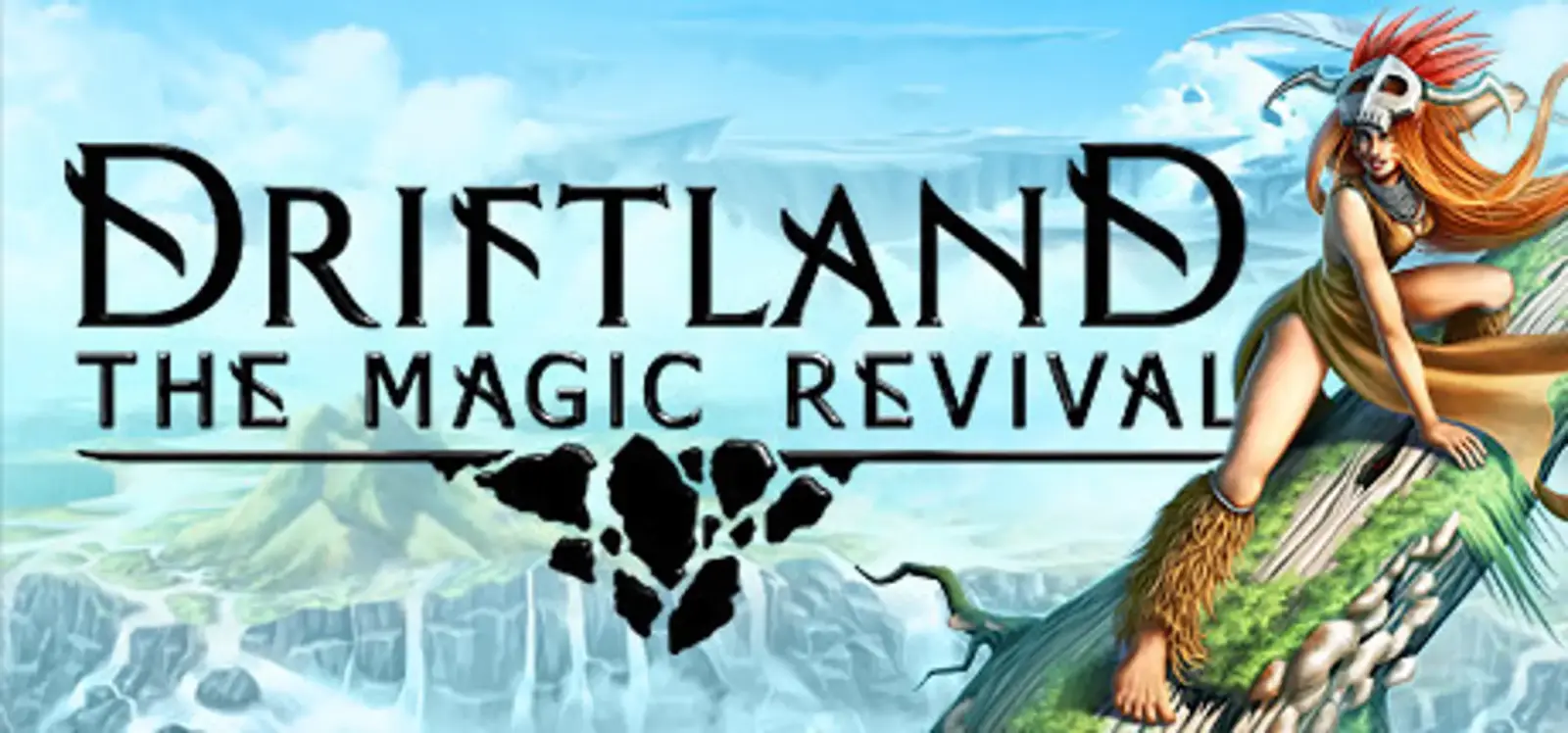
Driftland: The Magic Revival
✅ Prednosti
- Original mechanics with floating islands
- Depth of gameplay and strategy diversity
- Visually appealing artistic style
- Intuitive user interface after adjustment
- Stable performance in most situations
❌ Nedostaci
- Inconsistent enemy AI
- Slow pace in early phases
- Controller limitations for micromanagement
- Occasional clarity issues in battles
- Lack of spectacular audio segment
Driftland: The Magic Revival represents an unusual blend of real-time strategy, city-builder mechanics, and a high-fantasy world that aims to bring something fresh to the console market. Although the game was originally developed for PC by Star Drifters, its arrival on PlayStation 5 opens the door to a completely new audience. The question that naturally arises is: can a complex strategy, traditionally reserved for mouse and keyboard, really work on a console? The answer is not simple, but Driftland manages to offer an experience that is simultaneously intriguing, challenging, and often very satisfying.
The game's story is set in a world that was once a stable magical whole, but after a catastrophic war between powerful wizards, the continent was shattered into floating islands. Players not only manage armies and the economy but also the terrain itself. Control over the floating islands and their movement becomes as important as building bases or conquering enemies. This is a concept that immediately sets Driftland apart from the crowd.
Visually, the game on PlayStation 5 looks quite decent. While it is not a technical spectacle that uses the full potential of the console, the artistic style manages to compensate for what is lacking in raw graphical power. The world is full of vibrant colors, detailed buildings, and atmospheric effects. The floating islands look impressive, especially when connected by bridges or moved through magical energy. The spell effects are solidly executed, and the different factions have a recognizable visual identity. However, during larger battles or in the later stages of a match, it is noticeable that the game sometimes loses clarity. There can be too much information on the screen at once.
The main gameplay relies on three pillars: economy, exploration, and warfare. Each match starts modestly, with a few workers, basic resources, and limited space. Very quickly, the player must balance between expanding territory, gathering resources like gold, stone, food, and mana, and defending against enemies. What makes the game special is the system of floating islands. Instead of classic expansion across the map, here the player uses magic to draw islands closer to their kingdom or connect them with bridges. This opens up a range of tactical possibilities. Sometimes it is better to move an entire resource-rich island closer to the base than to risk sending workers through dangerous territories. Such mechanics add a layer of strategy that is rarely seen.
On PlayStation 5, controls are one of the biggest issues. Strategies of this type often suffer when transitioning to consoles, but Driftland makes a visible effort to adapt the user interface to the gamepad. Navigation through menus is relatively intuitive after a few hours, and the shortcut system makes managing armies and the economy easier. However, the limitations of the controller are still present. Micromanagement of units is not as precise as on PC, and quick reactions in crisis situations can be frustrating. When the enemy attacks from multiple sides, shifting focus can become tedious.
One of the strongest aspects of the game is its depth. Driftland is not a title that can be mastered in one sitting. There are a large number of buildings, upgrades, spells, and tactical options. Each wizard that the player chooses has unique abilities, which significantly changes the play style. Some are focused on aggression and conquest, while others favor defense or economic dominance. This brings a solid level of replay value. The campaign is long enough to provide a sense of progression, but the true potential of the game comes through the sandbox and skirmish modes. It is there that the systems truly shine. The freedom to experiment with islands, armies, and spells allows for the creation of completely different strategies in each match.
However, the game is not without flaws. The AI of the opponents can be inconsistent. At times it acts impressively aggressive and tactically intelligent, while at other times it makes strange decisions, such as ignoring key resources or senselessly sending units to certain death. This lack of consistency sometimes undermines the challenge. Another issue is the pace. Driftland can be slow, especially in the earlier stages of a match. Players expecting constant action might lose patience.
The audio segment is of good quality, but not spectacular. The music complements the fantasy atmosphere well and does not impose too much, while the sound effects of spells and battles give enough weight to the conflicts. Voice acting is not a central element, but what exists is quite decent.
On PlayStation 5, performance is mostly stable. In most situations, the game runs smoothly, but during massive conflicts or with a large number of active islands, there can be occasional frame rate drops. It is not a serious issue, but noticeable enough to disrupt fluidity.
Driftland: The Magic Revival is an ambitious strategy that successfully combines city-building, RTS, and fantasy magic into a unique package. Its depth, original mechanics, and rich content make it worth attention, especially for hardcore fans of the genre. Although it suffers from occasional issues with pacing, AI, and console controls, the quality of the core gameplay loop is strong enough to outweigh these shortcomings. Ultimately, Driftland is not a revolutionary game, but it is refreshingly different.
A copy of the PlayStation 5 version of the game was provided for review purposes by the publisher Ultimate Games S.A.