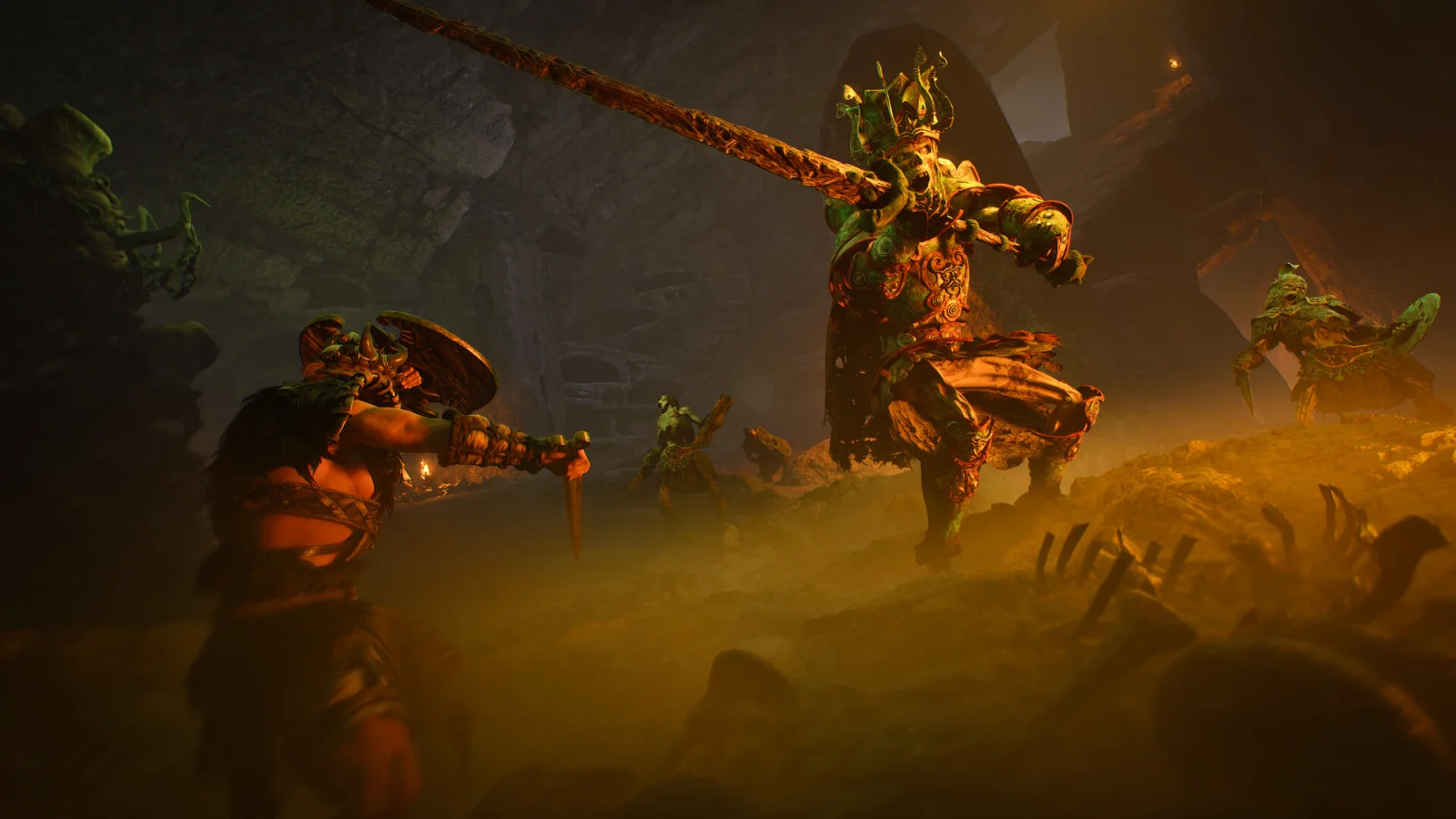
From the creators of the original Legacy of Kain game comes Deadhaus Sonata, a game where you truly play on the side of evil. You are undead in a world that is largely conquered and the living are fighting for survival.
Right from the start, a strong wave of nostalgia hits, for someone like me who not only played the first Legacy of Kain (the first PSX game I bought with my pocket money), but also bought the EGM magazine with a full guide for it. Later, the entire series and its spin-off series developed into a franchise known to almost everyone, but at that time it was just that one game, and it had that something special. Deadhaus Sonata promises to recreate that feeling, and the first impression is that it might succeed in doing so. A pleasant, charismatic male voice narrates and guides you through new interface elements, puzzles, and new skills; an element that players of the first Legacy of Kain will instantly recognize.
The soundscape, wind, and music along with that voice following you gives hope that something special awaits. Graphically, the game is of course not 2D top down, but keeps up with the times and looks very good in a third-person 3D view of the world. Clearly, we must emphasize that the game is still in Early Access, and performance and UI elements need quite a bit of polishing. The latest patch has significantly improved performance, at least on my computer, so I believe the developers will continue to work in that direction. The options offer many modern features, but some basic ones are missing, such as invert y-axis and proper controller detection along with corresponding changes to shortcut keys and their icons. Nothing that I couldn't solve with Steam Input - but it is what it is.
Definitely, the game wants you to play it with a mouse, or at least have one handy for navigating through a lot of things, which I find very unusual for a third-person title with action combat. If proper controller support comes to life, Deadhaus Sonata could win over those of us who consider the couch a war station, and have replaced carpal tunnel with back pain. We will follow its growth and development with great interest and hope, and soon expect a more detailed review!