Tides of Tomorrow
✅ Prednosti
- Interesting story about the Tidewalker
- Visually striking world full of colors
- Asynchronous multiplayer element
- Excellent artistic style and sound
- Atmosphere that leaves an impression
❌ Nedostaci
- Gameplay is not deep
- Lack of action and complexity
- Dialogues and decisions feel like a narrative tool
- Not always supported by a strong gameplay loop
- Can feel like a smart concept without fun
When the authors of Road 96 announced a new game, it was clear they wouldn't play it safe. Tides of Tomorrow is not a title that wants to be just another action-adventure to get through over the weekend, but a game that tries from the very first minute to leave the impression that you are part of something bigger. Not just your story, but someone else's as well. And that is its greatest asset.
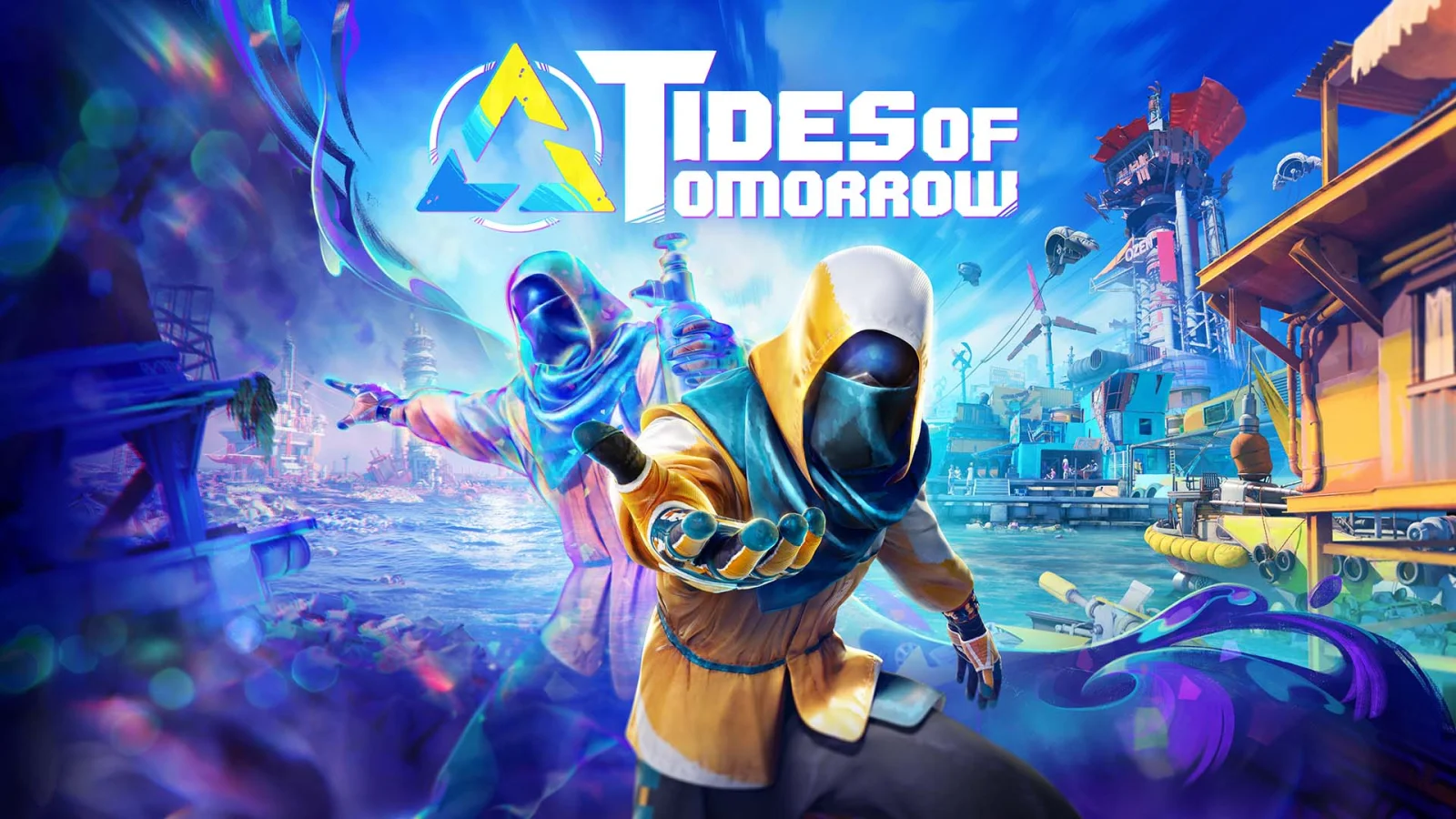
Set in a post-apocalyptic world that has literally been swallowed by the sea, Tides of Tomorrow takes us to a future where civilization remains afloat on the remnants of a former world. Water is everywhere, islands are scattered like shards of broken glass, and the atmosphere carries that specific feeling of melancholy and uncertainty that the game sells very well from the first frame. It’s not a classic depressing apocalypse in gray tones, but a visually striking world full of colors, plastic, and something almost surreal. It is this contrast between the vivid appearance and the rather grim background that gives the game its identity.
At the center of it all is the story of the Tidewalker, a character who wakes up without memories, infected with the disease of plastemia, and forced to embark on a journey through various communities and factions with morally gray decisions. The story itself is not revolutionary if we look at it only through the basic plot. We have a mystery, a world on the brink of collapse, and a quest for a cure. We’ve seen that before. However, the way the game presents the story is what makes it special.
The most interesting mechanical trick of Tides of Tomorrow lies in the fact that you literally follow the traces of other players. Before starting, you choose whom to “follow,” and then throughout your adventure, you see echoes of their decisions, their paths, mistakes, and even the consequences they left behind. Sometimes this means that someone will unknowingly save you from a trap, and sometimes that you will fall into complete chaos due to someone’s selfish decision. And I must admit, it works better in practice than it sounds on paper.
There is something almost eerily fascinating about arriving at a location and seeing that someone before you has already “lit the fuse.” NPCs look at you differently, relationships among factions are disrupted, and the game constantly gives you the feeling that you are not the first to tread this path. This asynchronous multiplayer element reminds one of Dark Souls ghosts, only here you are not watching someone’s death, but someone’s decisions slowly changing the story beneath your feet. That is the moment when I often felt like I was playing some strange combination of Life is Strange, Death Stranding, and an interactive thriller. Sometimes brilliant, sometimes a bit overemphasized. Because, let’s be realistic, the game is not without its problems.
Gameplay in the classical sense of the word is not particularly deep. Exploration, dialogues, decision-making, and occasional situational sequences carry the bulk of the experience. If you expect more serious action, more complex systems, or something that will keep you engaged on a mechanical level, Tides of Tomorrow can feel too “service-oriented.” The controls are tidy, sailing and moving around locations work quite well, but the feeling of pure satisfaction from playing for the sake of playing is rarely present.
You are primarily here for the story and atmosphere. And that may be the biggest drawback for some of the audience. The game can feel like a very well-designed concept that is not always supported by an equally strong gameplay loop. There were moments when the narrative completely drew me in, and then came a part that boiled down to walking, talking, and yet another decision that feels more like a dramaturgical tool than an organic gameplay moment. Fortunately, the atmosphere often saves it.
Audio-visual, the game on PlayStation 5 leaves a very good impression. The artistic style is excellent, the sea looks fantastic, and the whole “plasticpunk” identity of the world feels fresh and different enough to stay in your mind even after playing. Sound also plays a big role. The sound of waves, distant sounds of settlements, and the musical background create a sense of isolation, but also some strange hope, as if the world is still trying to piece itself back together.
Technically speaking, the performance on PlayStation 5 is stable and neat. I didn't get the impression that the game technically “crashes,” although it occasionally feels like the focus was more on the idea and atmosphere than on spectacle. This is not a title you would fire up to show a friend “next-gen graphics,” but you might show it because you want to explain how crazy good the idea is that someone else is unknowingly writing part of your story.
Personally, Tides of Tomorrow left the impression of a game that might be more interesting than it is actually fun in the classic sense. And I don't say this as a flaw, but more as a warning. This is not a blockbuster that knocks you off your feet with pace and action. This is a game that slowly gets under your skin, through atmosphere, a sense of consequences, and the constant question: “What did someone leave here before me?”
When it clicks, the experience is truly special. When it doesn't click, it can feel like a very clever concept stretched over somewhat average gameplay. Because of all this, a rating of 4 seems quite fair. Tides of Tomorrow is not a masterpiece, but it is brave, original, and different enough to deserve attention, especially if you enjoy narrative adventures that try something new.
A copy of the PlayStation 5 version of the game was provided for review purposes by the publisher THQ Nordic