The Taito Milestones series has been trying to preserve the arcade legacy of one of the most important Japanese publishers for some time now, and the fourth installment brings a somewhat unexpected approach. Instead of the biggest hits, the focus is on lesser-known games from the 80s, which today serve as interesting artifacts from a different time.
A selection of games that deviates from expectations
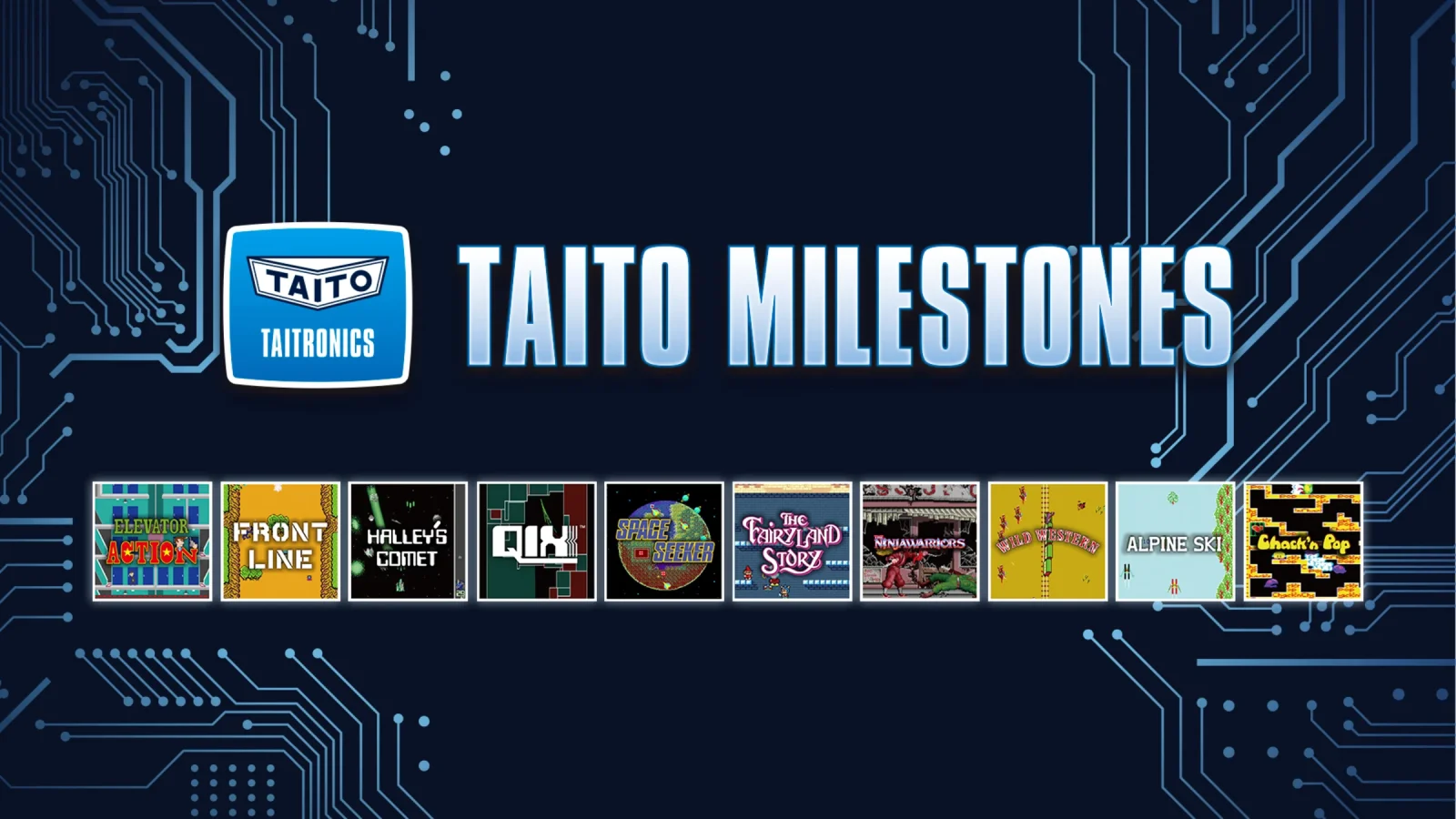
The collection features ten arcade titles from the period 1983 – 1990, including Arkanoid, Cameltry, Ninja Kids, and Don Doko Don. The list also includes Water Ski, Typhoon Gal, Kuri Kinton, and Syvalion, clearly showing that the aim here is not the most famous classics, but rather a diverse and somewhat experimental part of Taito's history. Such a selection may feel refreshing, but also risky – especially for players expecting a “best of” collection.
Diverse gameplay that hides a few surprises
The greatest strength of this compilation lies in the fact that it offers something different. Instead of the already seen arcade hits, players get the chance to discover games they have never played. Cameltry stands out with its unusual concept of rotating the maze, while Ninja Kids delivers a chaotic beat ‘em up with a recognizable style. On the other hand, Arkanoid remains a safe bet – simple, yet still extremely addictive. It is precisely this combination of the familiar and the unknown that gives the collection a unique identity, while also highlighting how some games have remained “trapped” in time.
Technical performance without major ambitions
From a technical standpoint, Taito Milestones 4 offers the basics that are expected from retro collections today. There is a save system available at any time, as well as stable emulation of all titles. However, that’s where the story mostly ends. There is a lack of additional content such as galleries, historical materials, or special challenges, making the entire package feel quite minimalist.
Uneven impression of the collection
Although the collection has its moments, it is clear that the quality of the games varies. Some titles still function very well today, while others feel outdated and difficult to access for modern players. The biggest issue, however, is the absence of major Taito classics, which is why this collection lacks the “weight” that many would expect. Instead, it feels more like an archival collection than a must-have package.
A collection for a specific audience
Taito Milestones 4 is not a typical retro collection that plays on the nostalgia card. Instead, it offers a glimpse into a lesser-known part of video game history. For players who enjoy exploring and discovering forgotten titles, there is enough interesting content here. However, those looking for the biggest arcade hits will likely be somewhat disappointed.
A copy of the Switch version of the game was provided for review purposes by the publisher Taito