Click.
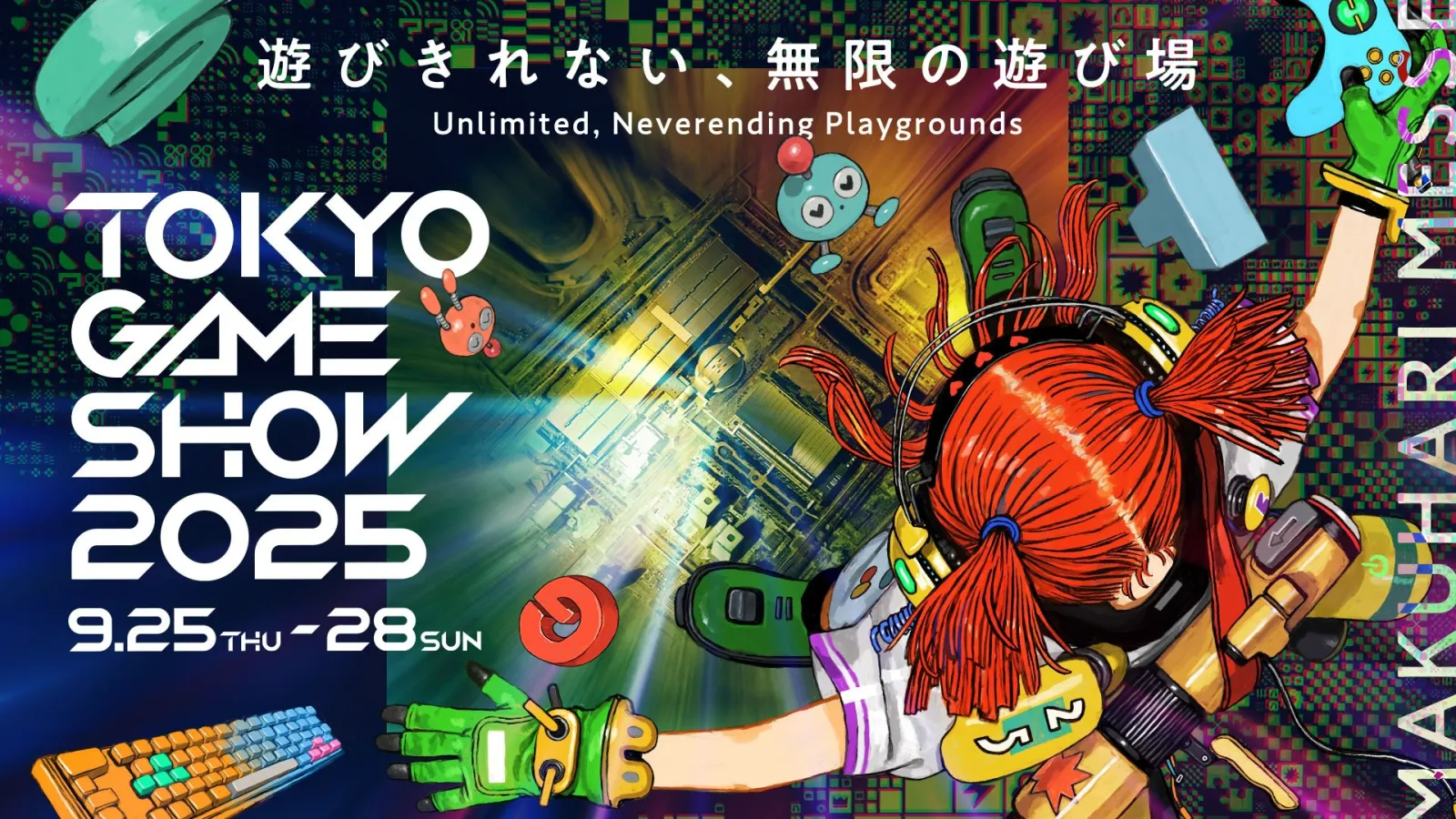
That was the first sound. Not the jingling of keys, not the rustling of a passport — but the click of the mouse with which I booked a flight to Tokyo. At that moment, I didn't know if it was an escape or a suicide mission. All I knew was: down there, on the other side of the planet, something big was happening. Not a game. Not a fair. Not a spectacle. But a digital apocalypse under the spotlight. Tokyo Game Show 2025.
The plane was a floating tin can full of lost faces and crumpled boarding passes. The view through the window: the clouds looked like messy pixels. Economy class is a loading screen that never ends. Sleep wouldn't come, as I was already imagining booths, demo versions, cosplay streets, adrenaline rushes, and long lines.
Landing in Haneda, good, I'm close, just a sleepy Chinese taxi driver who doesn't know Japanese let alone English separates me from the hotel and sleep. The air thick, humid, dense like a texture from a game that can't load.
Arrival at the fair: The Archaeology of Concrete and Minds
I hadn't slept. Not a minute. My body was in Thursday, but my brain stayed in Wednesday — jetlag grabbed me by the neck and shook me until sweat soaked the pillow like a broken air conditioner. The hotel had a hellish air conditioner — buzzing like a broken Game Boy in its last battery twitches, cooling exactly nothing. At midnight, I lay on the bed like a burnt toast with scars from the economy seat, staring at the ceiling and listening to the traffic from the street — taxis, sirens, screams from the arcade on the second floor of the nearby building.
At five in the morning, I gave up. Shower, instant coffee from the vending machine, cold onigiri bought the day before. The train to Makuhari was supposed to arrive at 8:41. It didn't arrive. Damn Japanese train that is late — something you wouldn't believe even under the influence of mushrooms. Notification on the display: “Delay due to a person on the tracks.” It doesn't say whether the person is dead, drunk, lost, or if it's all a metaphor. Just — "a person" that someone is probably scraping off the tracks.
The people around me were silent. A culture of discipline. No one comments, no one curses. I was, of course, dozing off. Just when I thought I would walk to the fair — the train arrives. I get in, like a sardine in an Eva can, close my eyes, and in my head, I'm already spinning all the possible trailers I will see, games I won't have time to play, and booths I will have to falsely praise.
When I finally exited the Kaihin-Makuhari station, the sun was already blazing, and I was a sweaty, half-awake creature with a press accreditation around my neck and the feeling that I was entering a sanctuary of digital madness. A bit of luck, the smallest line is for international press, I watch the poor people with GOLD pass tickets waiting in a line that oddly resembles the Snake game from the first Nokia.
The official Tokyo Game Show 2025 can begin.
Day One – Business Day: Under the Suit, Sweat and Advertisements
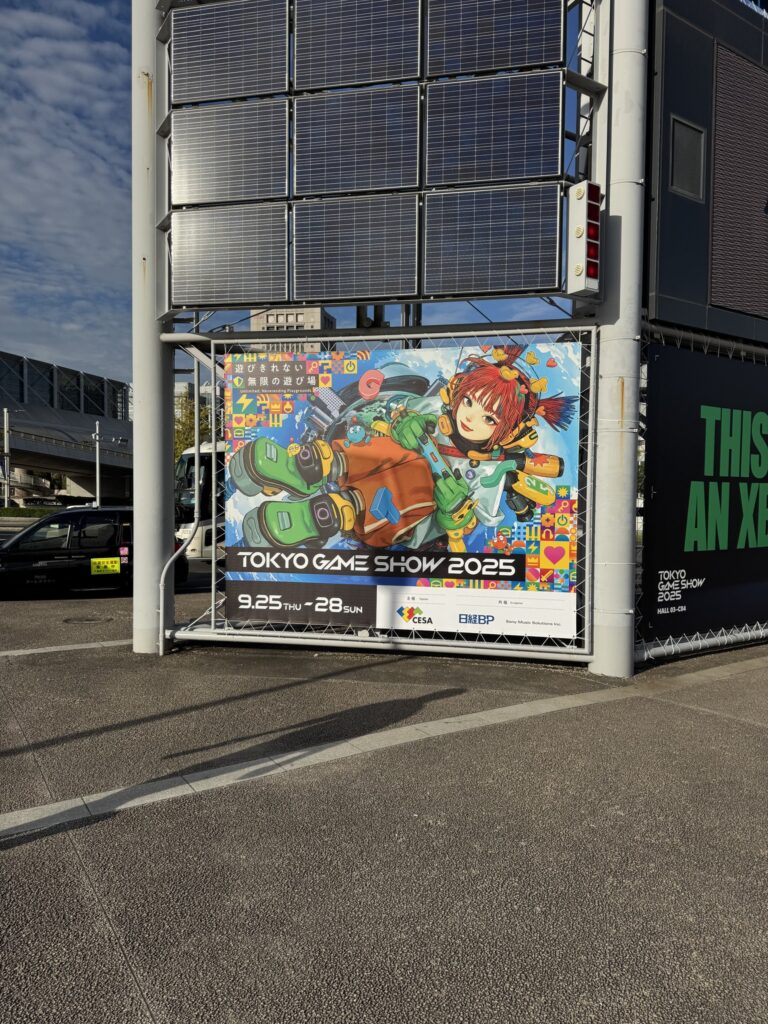
The first day of TGS is not for people. It’s not for gamers. It’s not even for journalists, although we are invited like dogs with identification. Business Day is the territory of hyenas in Armani, marketing managers with Apple Watches, and PR wolves with PowerPoint smiles. Here, there is no playing — here, there is trading. Who has the right to what. Who can publish first. Who is important enough to be let behind the black curtain, into the “closed demo.”
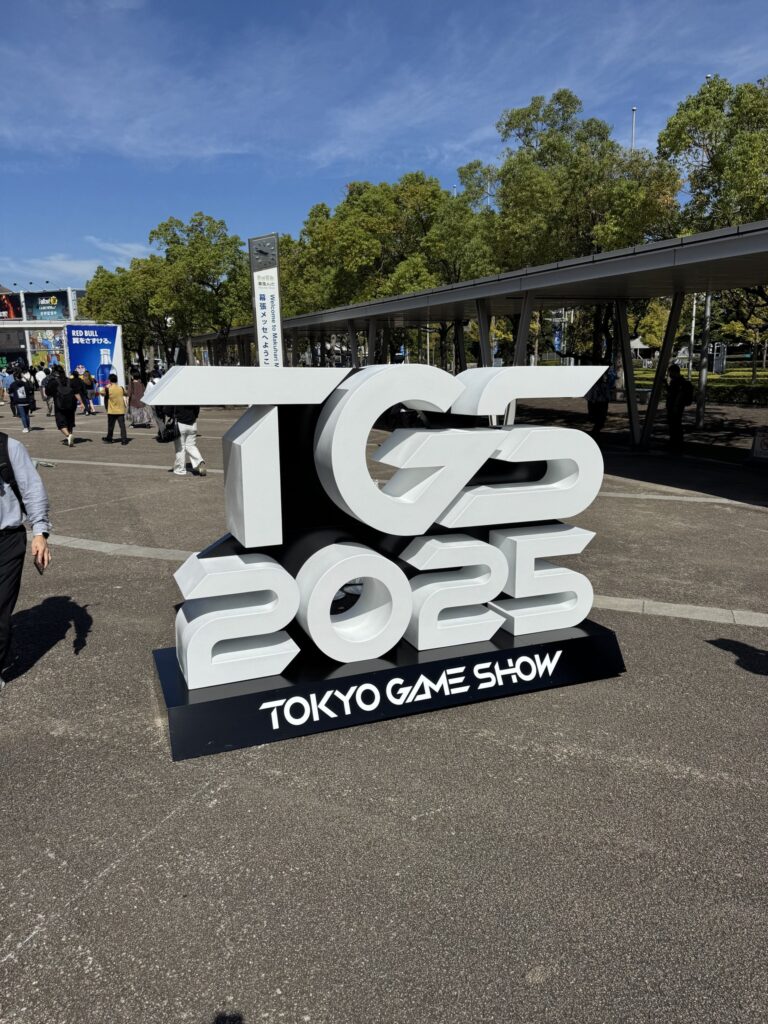
I enter Makuhari Messe with my accreditation around my neck and a facial expression as if I’m looking for medicine, not a game. The air conditioners are working as if they are cooling hell. The air smells of plastic, new equipment, and fatigue. Japanese cosplayers keep you awake better than free sponsored Red Bull.
Terrain: Concrete, logos, and a cold gaze
Each hall has its own aura. Halls 1 to 3 are for the big ones — PlayStation, Bandai Namco, Xbox, Capcom. Big logos, huge screens, women in uniforms whose purpose you can’t tell if they are advertising a game or an airplane.
Halls 4 to 6 — somewhat chaotic, with a few indie developers, snack stands, and random technology promising a revolution that no one is asking for. People linger here more for the seating and free cans of energy drinks than for the games.
Everywhere PR people with iPads. If you look at any screen for more than three seconds, someone is already offering you an appointment. “Hands-on demo? Interview? Maybe 40 minutes?” – Yes, sure, but first let me breathe, friend.
Bandai Namco: Circus and the graveyard of childhood
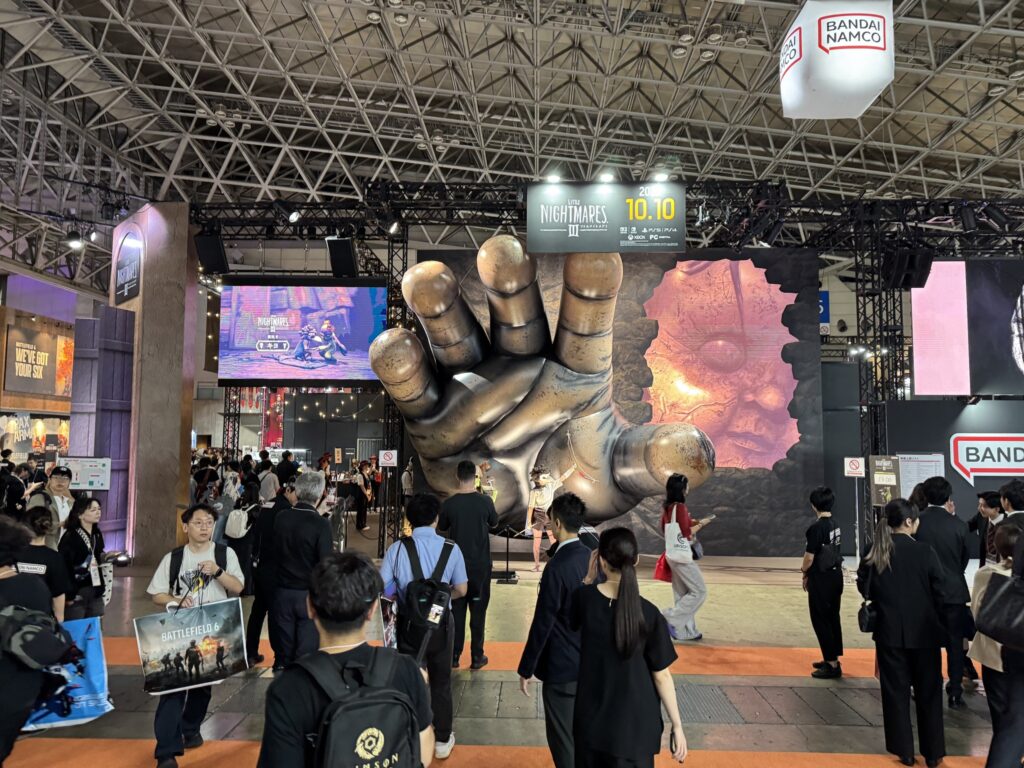
First stop: Bandai Namco. A booth the size of a small soccer field. Huge, claustrophobic beauty. The lines are already set, even though there is no audience yet.
I enter the "Little Nightmares III" demo. Dark. Cold. Circus aesthetics mixed with anxiety. The game throws you into a world where you are haunted by everything you suppressed in childhood — the darkness under the bed, your parents' divorce, shyness in front of an audience. And all of this while walking on a tightrope above barbed wire.
Controls are solid. The atmosphere feels like someone is quietly whispering behind the door. Outside, Bandai PR stands with a smile as if they know you'll be dreaming about their game tonight.
Right after that, they showcase "CODE VEIN II" — anime gothic, vampires, weapons larger than life. Technically impressive, emotionally empty. But still, you take notes because you know someone somewhere will click on that news.
Xbox: Japan, Forza, and the illusion of understanding
Xbox entered this year with the idea: "We understand Japan. We promise."
Their main bait? "Forza Horizon 6", set — where else — in Japan.
Demo? Closed. You can only watch if you're someone. I'm not someone, but a PR person from Osaka gives me a “press-only viewing” card.
And I watch — mountains, the streets of Tokyo, rain, zipping through Ueno, curves around Mount Fuji. Car culture in Zen aesthetics.
Graphics are stunning. Everything looks like you're watching a commercial for a luxury hotel you'll never be able to afford.
PlayStation: The art of selling expectations
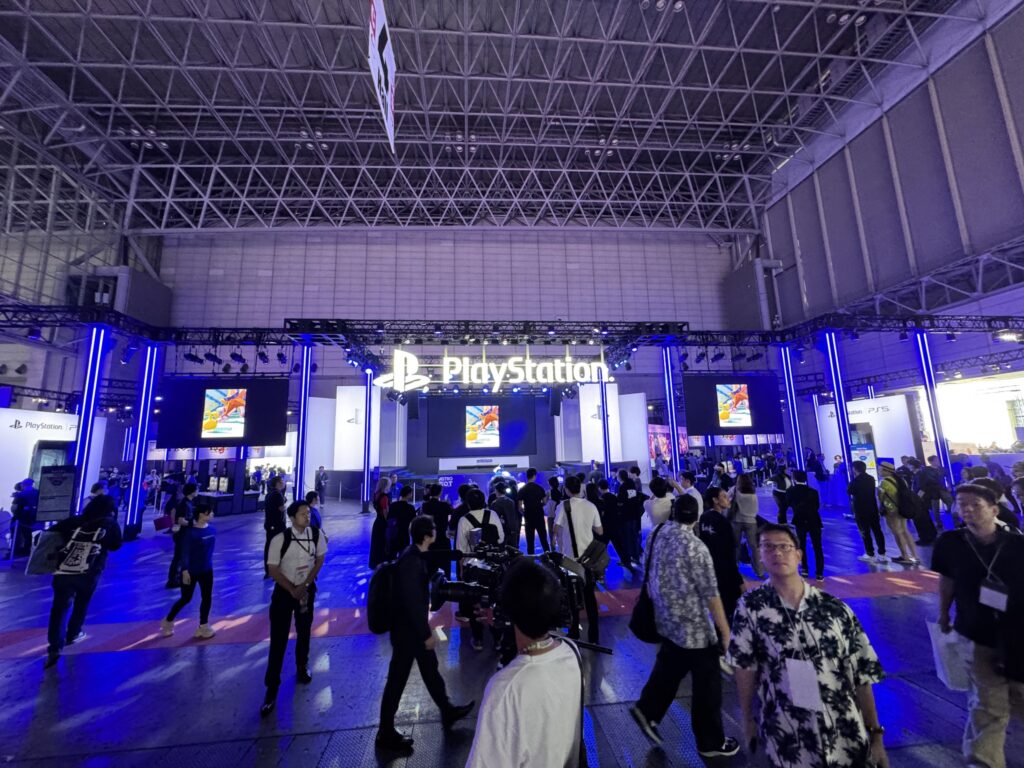
At Sony, it was... sterile. Boring. Too perfect.
As if they had hygienically disinfected every pixel.
They showcased:
- "Dragon Quest I & II HD-2D Remake" – a nostalgic collage of the old RPG with modern graphics. The heart says “wow,” but the mind says “this is what retro-capitalism looks like.”
- "Onimusha: Way of the Sword" – a return of the famous title. Katanas slice through the past and future simultaneously.
- "Fishbowl" – a chill simulator of life in an aquarium. Honestly? Possible highlight of the day. Minimalistic, but sincere.
- "Meteora" – a new IP, as if someone combined No Man’s Sky and GRIS on acid.
Everyone around me is taking photos. Everyone is live tweeting something. I'm sitting here with headphones, trying to catch the vibe of the fair — and all I hear is one thing: advertising. Everything here is advertising. And no one even pretends otherwise anymore. Look, God of War, no recording allowed, because apparently no one has seen that game since its release in 2022, luckily there's Astro Bot the mascot here, maybe if I throw 10,000 yen it will come out of the costume and I’ll save some tortured person's life, or maybe they just enjoy suffocating under the mask.
Day Two – Business Day 2: The Hunt for New Releases, Behind-the-Scenes Games, and Market Pressure
The second day of the business part of the fair brings a change in tone — more tension, more tactics, colder smiles, and hidden friends. You're no longer a newcomer, but you're still not a star. Now it's about who is strong enough to remain visible when the lights get brighter.
With a morning coffee from the vending machine in hand, I enter the hall like an old fox who knows he must keep his eyes on all sides now.
Pearl Abyss and Crimson Desert
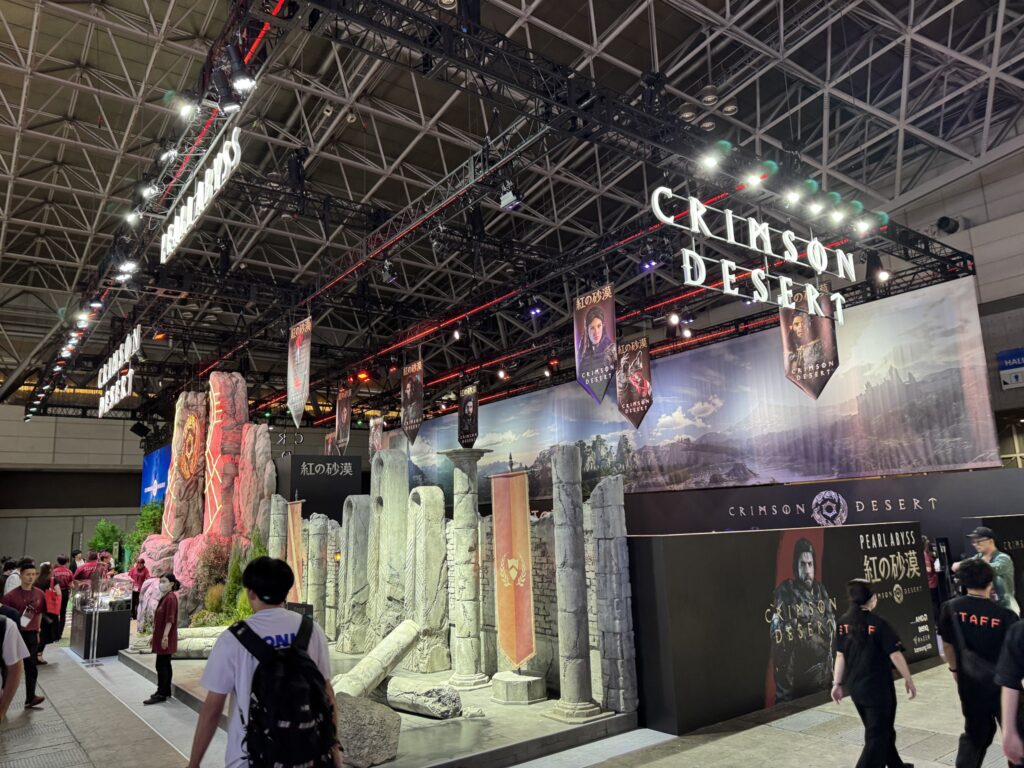
First on the target is Pearl Abyss and their mega project 紅の砂漠 (Crimson Desert / Red Desert) — a game that promises an epic open world with action combat, jaw-dropping details, and a narrative that smells of fantasy. Compared to their past titles, there is a huge leap towards an RPG spectacle that could compete with the biggest. The demo showcases detailed landscapes, camping under the starry sky, fires, war conflicts, and characters that breathe, live, and suffer. The atmosphere pulls you in as if you are on the brink of ruin, but also greatness. Still, I can't shake the impression that this is just a strange mix of Witcher III, GoW, and Zelda. As if these three had some crazy menage à trois and produced an RPG child.
Pearl Abyss is not here just for the hype — they come to show strength, but also vulnerability. Will Crimson Desert live up to expectations or become yet another great story of lost potential?
Sega — Legendary Dinosaurs and New Beasts in One Crazy Package
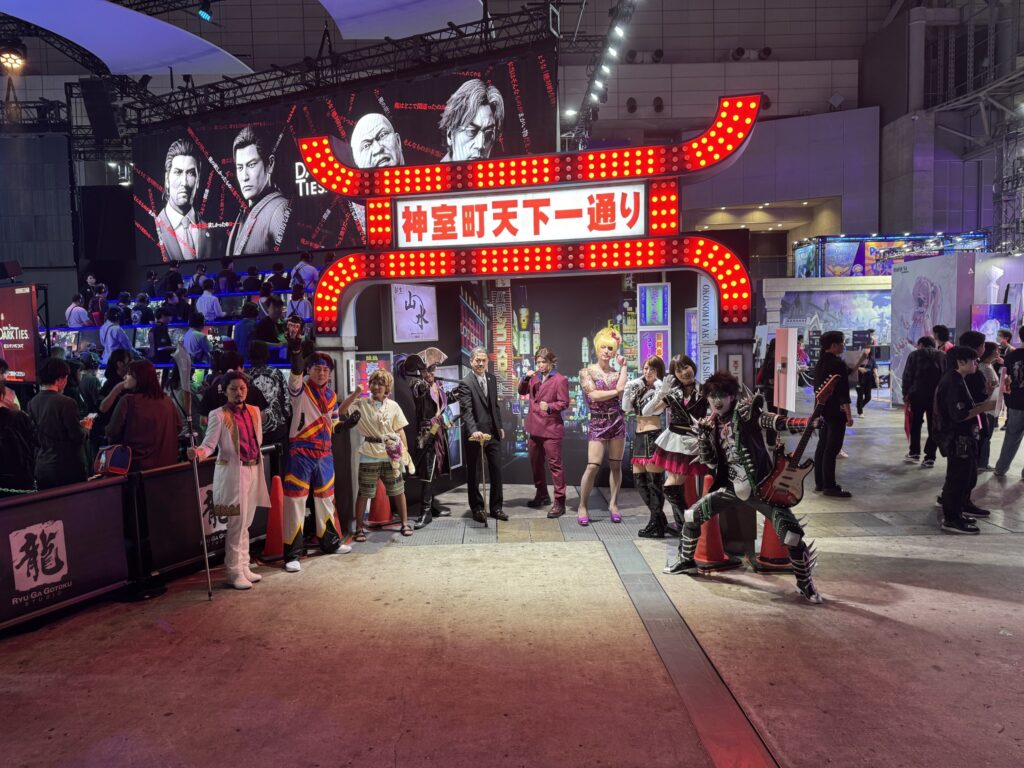
I step onto the Sega booth and feel like I've fallen into chaos that jumped out of time — neon lights, voices of fans, sounds of arcade machines roaring from every corner. Here, they don't play it safe, here they hit the right notes of nostalgia, but also drop bombs of the future.
Silent Hill fOva nova iteracija legendarne horor serije vraća se s novim pričama i atmosferom koja će te natjerati da se osjećaš nelagodno. Očekuj neizvjesnost i strah u svakom kutku.
Povratak u svijet vampira i čudovišta, s novim likovima i pričama koje će oživjeti klasičnu franšizu. Pripremi se za borbu protiv tame koja prijeti svijetu.
The return of the beloved RPG series with a new title that promises a wealth of characters and deep narrative. Promotional materials were displayed at the booth, and a global release of the game was announced.
The latest installment of the popular board game series, available for play on Nintendo Switch 2. Visitors could enjoy a food festival and local specialties, creating a unique experience.
Indie Hall (Hall 9‑11) – The Dance of Small Stars in the Shadow of Big Names
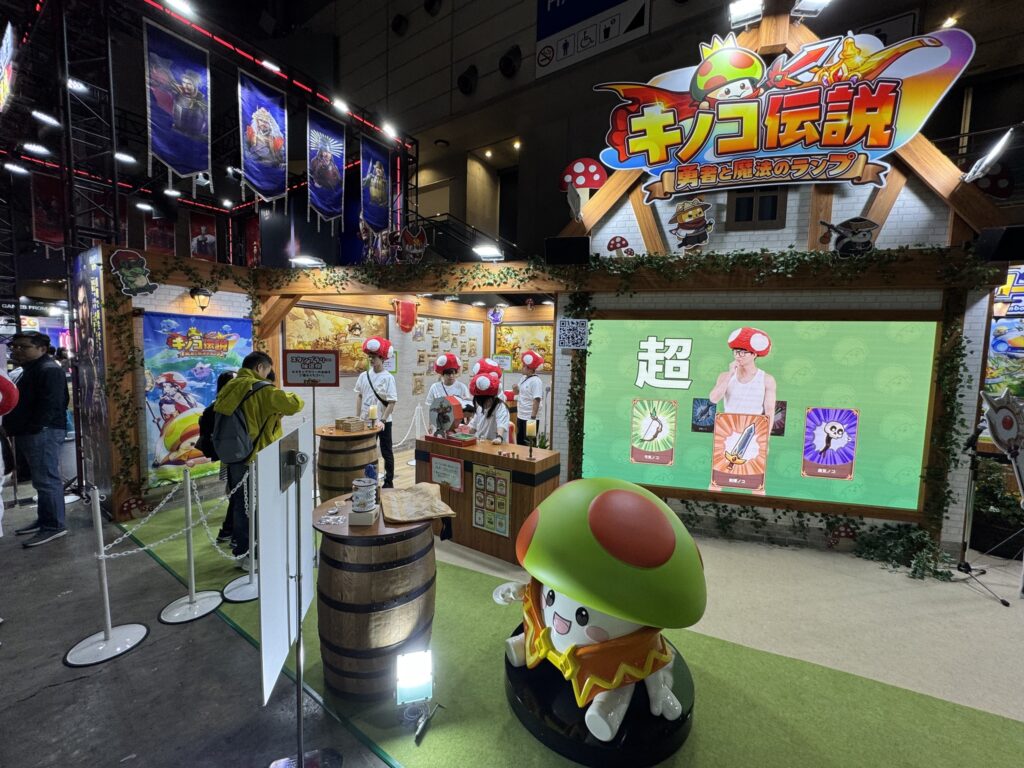
I enter Hall 9‑11 and feel like I'm in a hyperventilated dream. The walls of the booths vibrate with noise, neon lights, and crazy ideas that won't wait for the industry to "label" them. Hall 9‑11 is the indie zone, but not the kind of zone that gives you a little space — it's an arena of creativity, where every game counts.
Titles That Caught My Eye
Here are a few of the most interesting titles I came across through a mix of news and announcements, those indie games that have something to show:
- Steel Seed — from Storm in a Teacup. Sci-fi stealth action in a dark future where you survive among machines. It has a tracking drone. The atmosphere felt like Blade Runner, but with an indie soul.
- D-topia (Annapurna Interactive / Marumittu Games) — a futuristic utopia ruled by AI, but beneath the surface — dilemmas, ethics, human fractures. Puzzle + narrative = emotional candy.
- People of Note — a combination of turn-based RPG and music. Battles that sound, a story that sings. When you think RPG is a seen form, this shows you that you can still blow the roof off with feelings.
- Demi and the Fractured Dream — an action-adventure title inspired by Zelda classics, but also by modern explosion numbers. Puzzle + hack & slash + nostalgic feeling.
- People of Note, D-topia, Demi and the Fractured Dream are all showcased at Annapurna, which seems to have come to dominate the indie scene this TGS.
- Happinet Indie Collection also showcased a bunch of titles: Stray, FAITH: The Unholy Trinity, Poppy Playtime Triple Pack, STARBITES and a couple of new titles that don't have names yet.
Hall 9‑11 doesn't care about the tracks, it's not full of corporate shine, but it's the blood and pulse of indie creativity. When you walk through the rows of booths, you see a small team, people who have slept on the floor, who have missed sleep due to a wave of ideas. They don't ask, “Will this sell millions?”, but “Will this come straight from the heart?”
It's a place where dreams are made, where risks are taken — and where sometimes a miracle happens: a game that gets under your skin.
Tokyo Game Show 2025 — Digital chaos under the neon sky
When the last day falls and Makuhari Messe closes its doors, you realize that the Tokyo Game Show is not a fair — it's an assault on the nervous system. It's a massive, pulsating beast that roars from every booth, showing you the future of video games while taking your breath away.
I stood in front of the exit with three empty cans of coffee, my phone at 4%, and the feeling that I had just survived some form of virtual apocalypse. Thousands of people, thousands of ideas, billions of pixels, and every screen tries to peek into your brain and leave something inside.
It was a fair where giants and madmen collided, where Metal Gear, Final Fantasy, Crimson Desert, and Yakuza shouted over the shoulders of indie novelties, rhythmic hellish beats, and roguelike black holes from halls 9 to 11.
And while some booths sparkled like Disneyland for gamers, others looked like garages from which someone had just launched a new space genre. It was chaos — but the kind you need, that cleans you to the bone and leaves you with one thought:
"Gaming is not dead. It is crazy. And alive. And dancing."
Can I finally sleep the sleep of the righteous now?