Dad simulator in space: How PRAGMATA won me over at first sight
✅ Prednosti
- Interesting relationship between Hugh and Diana
- Innovative gameplay with hacking
- Shelter as a lively hub between missions
- Diverse arsenal of weapons
- Diana adds depth to combat and exploration
❌ Nedostaci
- Some players may find weapons too fragile
- Story may be too straightforward for some
- Possible frustrations with smarter enemies
- Some parts of gameplay can be confusing
- Lack of depth in some story aspects
Until a week ago, I had no idea what exactly PRAGMATA was, other than that it was some "cool new sci-fi game from Capcom." The demo was available, so out of curiosity, I tried it, and it hooked me almost immediately. A few hours later, I'm already on the Moon, taking down rogue AI bots while carrying an android child on my back who enthusiastically cheers for our cause and is thrilled by every new piece of chaos we leave behind. Has Capcom managed to create something special again?
I would say yes.
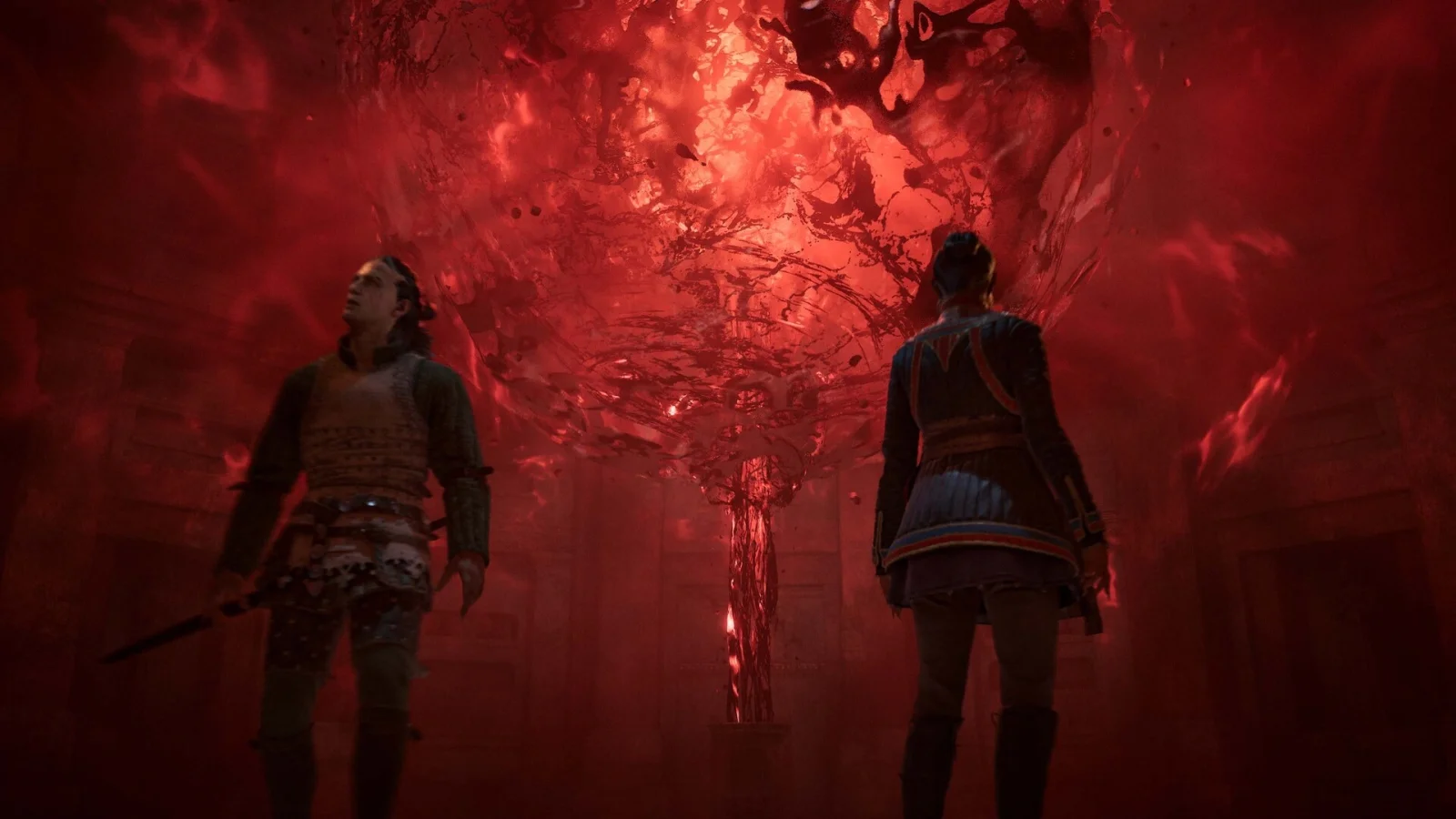
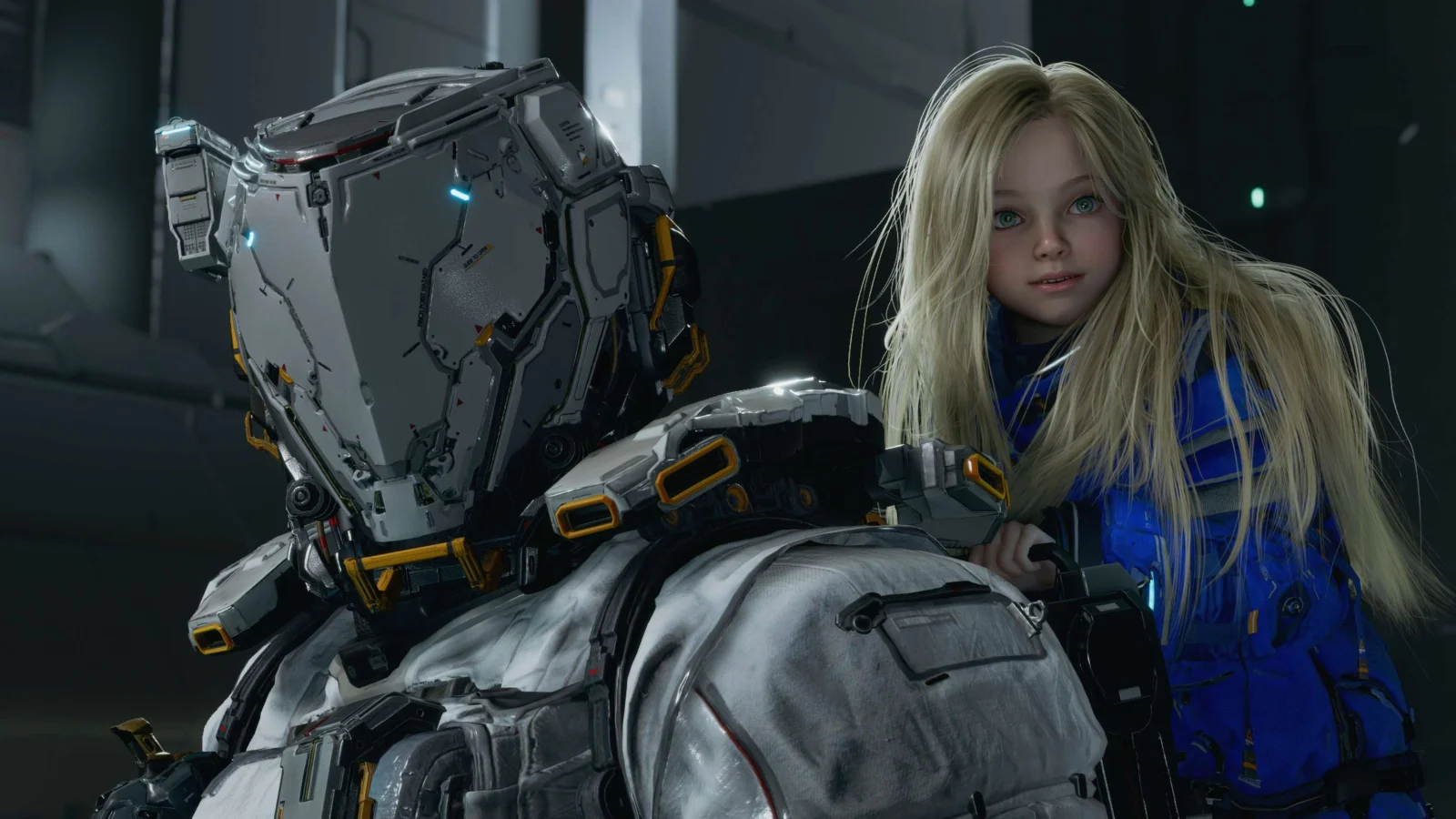
PRAGMATA puts us in the role of Hugh Williams, a member of a research team sent to scout a lunar base. There, he meets Diana, an android girl who saves his life, and from that moment on, the two become inseparable. Together, they try to outsmart IDUS, a rogue AI that controls the base, and find a way back to Earth.
The entire setting is based on the concept of lunafilament, a futuristic material that the lunar base manipulates at an atomic level. It's not just a building material; the base literally 'prints' reality according to the AI's instructions. The result is a bizarre architectural chaos where, amidst cold, sterile corridors, you encounter empty, precise replicas of downtown New York, wooded parks, and sandy beaches.
More than a sidekick
Although technically Hugh is the main character, it quickly becomes clear that Diana is the true heart of the game. Capcom has clearly poured an extraordinary amount of attention into her. She is constantly chattering. Her animations, expressions, the way she gestures, comments, questions, and absorbs the world around her give her a liveliness that child characters in games often lack. She feels real, like a child who is simultaneously smart, curious, cheerful, and completely unaware of her own charm. Her childlike awkwardness, like the moment she looks at her hand before uncertainly returning Hugh's 'high-five,' sells the whole story and strongly connects you to this duo.
At first, Hugh seems like a guy who isn't really for kids, but PRAGMATA builds a relationship without much forcing that quickly becomes one of the warmest parts of the entire experience. Hugh patiently answers questions, explains human customs, interprets why some things are important and why some hurt. Why do people celebrate birthdays? Why is death sad? Why shouldn't you rush headlong into danger? On paper, this might sound trivial, but in the game, it works so naturally that it's no wonder many have already dubbed it some kind of "dad simulator."
As for the story itself, it is quite straightforward. There are no unnecessary detours that would dilute your focus. PRAGMATA knows exactly where it's going, and for those who want to dig deeper beneath the surface of IDUS's chaos, there are audio and text logs scattered throughout the levels that subtly expand the story and explain how the lunar base became what it is today.
A place where the game breathes
Hugh's and Diana's relationship further flourishes in the Shelter, the central hub you will constantly return to between missions. Shelter is not just another boring menu disguised as a room; it truly feels like a base, a respite, and a place where the game slows down just enough for you to catch your breath. There, you upgrade Hugh's suit and basic weapon, expand your arsenal through the Unit Printer, adjust Diana's hacking abilities, and prepare your loadout for the next outing.
Shelter expands over time, unlocking new features and becoming increasingly lively, and the whole experience gains personality through Cabin, a small robotic assistant that leads challenges and a bingo reward system. It is there that you unlock additional outfits, gear, and useful bonuses, and the entire system is interesting enough that it doesn't feel like a dry grind.
A special plus here goes to the REMs, or Read Earth Memories collectibles that you find around the base and later gift or print to Diana in Shelter. These are things like globes, balls, televisions, and other earthly trinkets that represent a small window into another world for her, as a being raised far from normal human life. I'm not usually someone who frantically cleans the map for every collectible, but here I genuinely did it with pleasure, just to see Diana's reaction. The game even rewards you with coins for Cabin for this, but honestly, the best reward for me was every new dialogue that unlocked.
The journey from Shelter to missions takes place via a futuristic tram. Zones are clearly defined, and the checkpoints scattered across the map are not just there to save your progress. They are your ticket back to Shelter. Although I could often continue right away, I almost always returned to the base. Not for weapon upgrades or new outfits, but purely to discuss what just happened with Diana. Those little, optional conversations after each major zone are what transform Pragmatu from a regular shooter into a personal story.
An adventure that requires two heads
Gameplay finally presents a refreshing change from typical third-person shooters. Hugh shoots, dodges, glides, and maneuvers through combat, while Diana simultaneously hacks enemies. When you lock onto a target, a grid-like hacking panel opens on the screen, and you must draw an unbroken path through the blue fields to the endpoint to unlock the enemy's armor. The better route you create, the more damage the hack will do and the longer it will keep the armor open. The catch is that enemies do not wait for you during this time. You must think, move, and assess when to risk another node and when to break off and dive to the side. In the first hours, it’s chaos where your brain works “a little here, a little there,” but when it clicks, combat becomes incredibly satisfying.
Hacking nodes add additional depth. Yellow fields on the panel activate special effects, allowing you to break down an enemy's defense, expand the hack to multiple targets, return a guided missile to the sender, or generally create space for a more aggressive approach. PRAGMATA does not function here as a regular third-person shooter, but more like some strange, very successful combination of action and puzzler. You are not just aiming at a target; you are solving a problem under pressure.
However, do not think that Diana is untouchable. The deeper you go into the base, the smarter the enemies become. The most demanding ones will throw complicated grids full of obstacles at you that you must solve on the go, and they also have the ability to hit you where it hurts the most – temporarily disabling Diana. When she becomes 'locked', you suddenly find yourself in a very uncomfortable situation that needs to be resolved as quickly as possible, since it is nearly impossible to harm the bots without her.
Diana is not just key in combat. As the game progresses, she gains new abilities to remove lunafilm barriers and cleanse contaminated zones, opening previously inaccessible paths and giving the game a light backtracking feel that nicely rewards curiosity. Her hacking regularly opens doors, terminals, and new routes through the complex.
A smart loadout means a lot
Hugh's arsenal is diverse and meaningful. The basic pistol is always there as a reliable base, but the real fun begins when you start experimenting with more serious tools. I particularly liked the Shockwave Gun because it works like a real little sci-fi shotgun, ideal for punishing enemies up close. The Riot Blaster is great when you need a bit of space, as it knocks enemies back and creates chaos in their ranks, while the Stasis Net serves as a great crowd control tool and makes hacking under pressure easier.
Among the tactical gadgets is the Decoy Generator, which shoves a holographic decoy in the enemies' faces and buys you a few precious seconds of respite. The only catch is that all stronger weapons, except for the basic one, fire until they run out of ammo and then break, forcing you to think about your spending pace, not just how much you like something. Some will find this great, while others may find it slightly irritating.
A special highlight of combat is Diana's Overdrive, an ability that charges up through successful hacking and can completely change the encounter at the right moment. When activated, Diana releases a powerful pulse that scorches enemies and freezes them in place, giving you a few seconds of pure chaos to exploit.
It sounds complicated, but it's not too hard
The good news for anyone who might be intimidated by this system at first is that the game is not overly cruel. There are standard and casual difficulty levels, and even on standard, I didn't encounter walls that made me ragequit. Most bots are intentionally slow and readable enough to give you time for hacking and decision-making. I mostly died when I was greedy or foolish, which, let's be honest, is a perfectly legitimate punishment.
This doesn't mean the game is too easy; rather, it is very consciously balanced to push you towards multitasking without grinding you down out of pure spite. On the other hand, those looking for a brutal action challenge may occasionally wish for a bit more pressure. I think an additional difficulty level above would be a good compromise. Those who enjoy extra challenges will also encounter red challenge zones that require special keys and offer valuable rewards and a good test of everything you've learned up to that point.
What annoyed me throughout the game was the control layout for glide, or dodge, which is set to R1. It simply didn't sit well with me, and it felt unintuitive the whole time. The game offers certain control customization options, but it doesn't allow for complete free adjustment, which is a shame. In the heat of battle, while my fingers automatically seek B for dodge, R1 acts as an unnecessary obstacle that interrupts that perfect flow for a second.
Boss battles are the moment when PRAGMATA completely releases the brakes and becomes pure audiovisual chaos that demands absolute focus from you. While trying to navigate through a rain of rockets and avoid huge robotic boulders, you simultaneously have to solve complicated hacking grids under brutal pressure. These skirmishes are not just 'bullet sponges' or random minigames thrown in for spectacle. They are a logical test of maturity; a moment of truth in which you must connect everything you've learned about movement, strategizing, and collaborating with Diana in a split second.
Technically perfect, graphically beautiful
Visually, PRAGMATA looks fantastic on PC. On my RTX 3080 Ti, the game flew at 1440p on ultra settings, without those annoying stutters that too often plague new titles today. Capcom's RE engine shines once again.
Path tracing here is not just a checkbox in the settings that you enable to brag about your hardware. It is crucial for the atmosphere of that "printed" New York. The way light filters through digital leaves in the parks or how the sterile, cold corridors of the base reflect in glass surfaces really stands out. In that visual perfection, Diana is the only element that feels organic – her hair, skin, and reflections in the environment are rendered with such care that at times you forget you're looking at polygons.
All of this is accompanied by an excellent electronic soundtrack that perfectly supports the atmosphere. On one hand, you have cold, distant electronic synths constantly reminding you that you are alone in a hostile universe. On the other hand, the game shines in the dynamics of silence. The silence of the Moon here is not empty; it is heavy and claustrophobic, and it is only broken by Diana's chatter.
That contrast is brilliant; her questions about Earth and people become the only warm instrument in that cold environment. The music knows exactly when to stop and let the two of them simply be humans in the midst of lunar nothingness, turning cold sci-fi into intimate drama.
The warmth I didn't expect
PRAGMATA surprised me. I expected an interesting Capcom experiment, a technically polished sci-fi shooter with a cool idea. I got much more than that: a game with identity, soul, great gameplay, and one of my favorite duos I've encountered in a while. The combat system takes some getting used to, and some may wish for more weight, but when it clicks, it clicks like few things this year.
Resident Evil Requiem had been at the top of my games of the year so far, and honestly, I didn't think anything would threaten it so soon, but PRAGMATA created that special warmth around my heart that you don't feel often. Every time Diana smiles, I catch myself smiling too.
Watching her observe the flight of a bird or the sunset on a printed beach for the first time in her life, android-like confused, you forget about the fps count and texture resolution. PRAGMATA reminded me why I love gaming. It's not about shooting; it's about what you feel when you put down the controller. And I felt... happy.