AYN Thor test: a new, better 3DS, or much more?
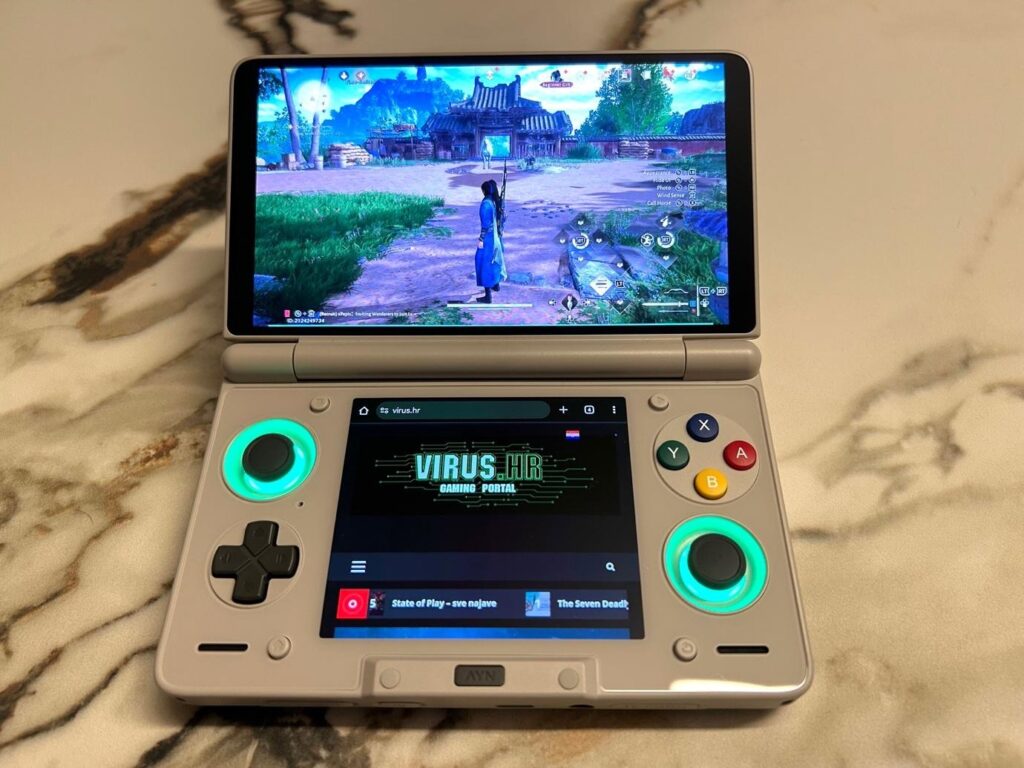
Where Winds Meet with a light scroll through your favorite gaming portal, where else would you go?
I’m not exactly sure how I discovered this handheld device, but when I first saw it, it instantly attracted me. A modern yet familiar design that doesn’t hide its inspiration from the Nintendo 3DS, with two screens, an Android interface, and the promise of emulating almost everything we’ve played in the last 30 years, it seemed like something that could fill the gap left by the 3DS. Nostalgia did its part, reasonable thinking took a coffee break, and Thor ended up in my cart.
After the success of the Switch, the handheld market exploded. Besides the Steam Deck and ASUS ROG Ally, Android handhelds have been gaining more attention in recent years; there are Retroid, Anbernic, Ayaneo, and a whole array of manufacturers offering their own takes on portable gaming. Different formats, different systems, but the same idea; gaming without compromising mobility.
The Nintendo 3DS was special. You could fold it, shove it in your pocket, and play anywhere. The question is simple: have the Chinese managed to create a worthy successor, or is it just a pale copy of the legend?
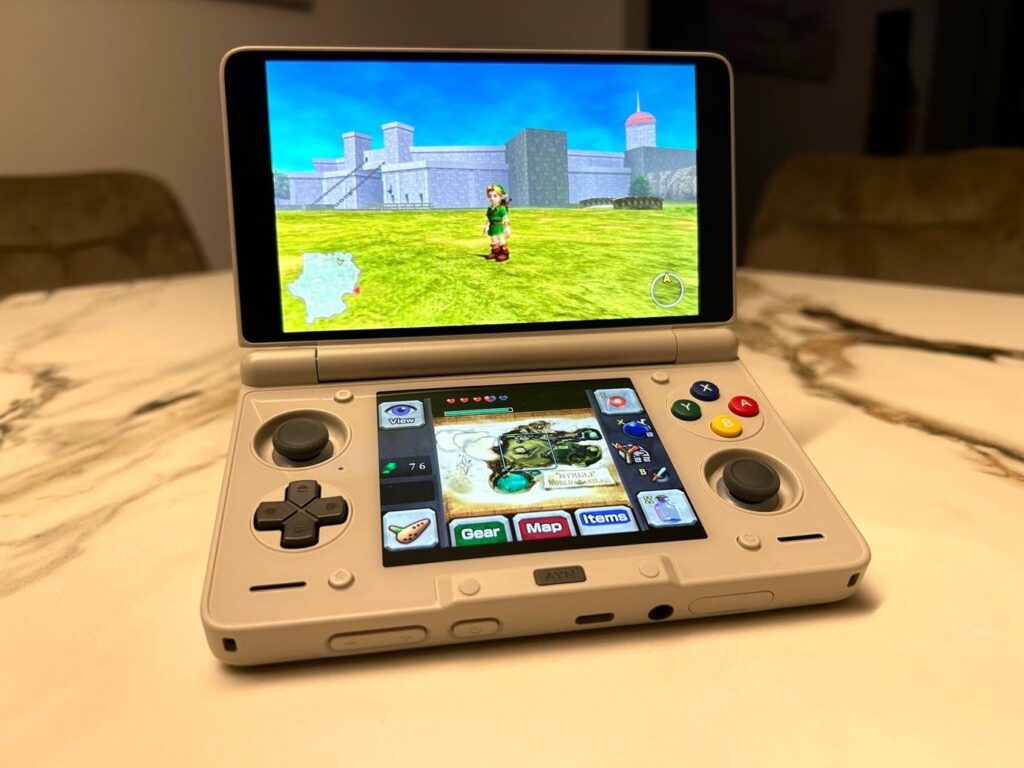
The true 3DS experience in a new guise
Hardware that promises serious things
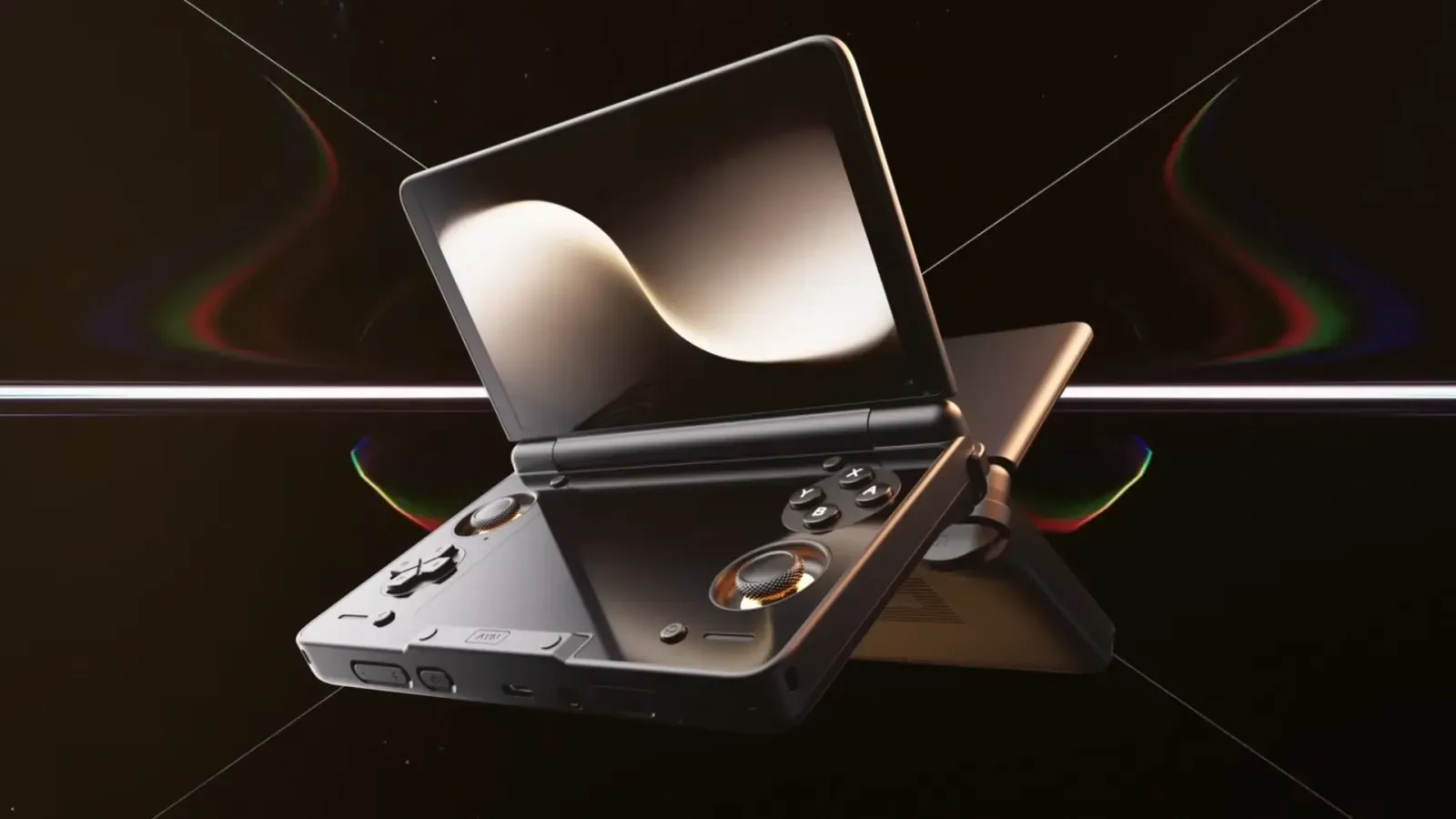
AYN Thor is an ambitious device from a Chinese company that clearly loves Norse mythology. They already have Odin and Loki, and Thor aims straight for the heart of nostalgia with an impressive package: two AMOLED screens (6“ and 3.92“), touch-screen support, refresh rate up to 120 Hz, Android 13 operating system, a 6000 mAh battery, and a Snapdragon processor with an Adreno 740 graphics card. It comes in several variants – Base, Pro, and Max – which differ in the amount of RAM and internal storage (up to 16GB of RAM and 1TB of internal storage), while the Lite version uses a weaker chipset and clearly targets the budget audience. All of this is packed into a casing weighing just 380 grams that easily fits into a larger pocket.
AMOLED panels may be the most underrated part of this device. Black is truly black, colors are vibrant, and contrast and resolution are a huge leap compared to the old 3DS, making games on this screen look better than we remember. 120 Hz sounds impressive, but realistically, you rarely use it for emulation. Most content targets 30 or 60 FPS anyway. Still, the interface and Android navigation feel exceptionally smooth.
The sound from the built-in speakers is average, somewhat thin, but with the JamesDSP plugin, you can play around with the equalizer and significantly improve sound quality, and AYN also releases regular updates, so I believe an official solution is coming soon. Bluetooth headphones work without major issues, and the console also offers a classic 3.5mm audio jack. Thor is available in four colors: black, white, rainbow variant (gray with colorful buttons), and transparent purple.
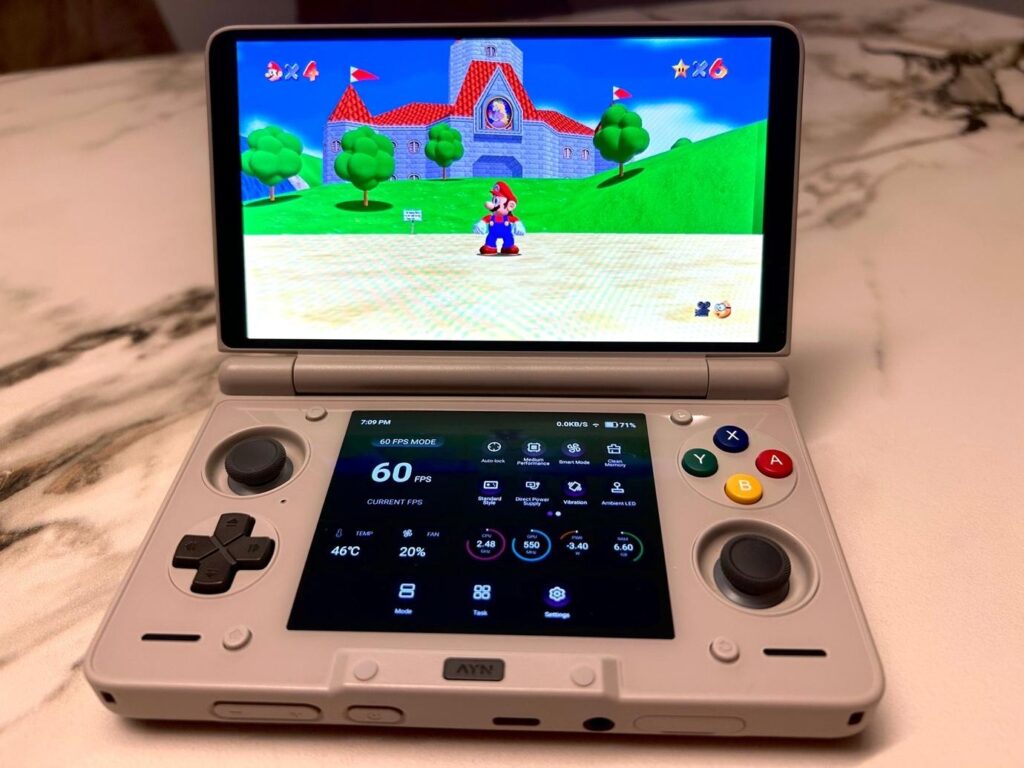
Android port of Super Mario 64 with HD textures and 60 FPS? Yes, please.
It's not for everyone, and that's the point
If you're looking for a console that you can just turn on and play, Thor probably won't make you happy. Setting up and configuring emulation, drivers, and profiles can take time, especially if you want to utilize the full potential of the hardware. When I got it, it took me a good few hours to set everything up the way I wanted, and I barely scratched the surface of all the possibilities. If you enjoy tinkering, adjusting, experimenting, and getting the most out of the hardware, you'll like Thor. The Android system is familiar, but the real fun begins when you dive into emulators, front-ends, and various settings. There are many options, but they require patience and willingness.
The primary purpose of Thor is still emulators. And here comes my biggest surprise – emulation on Android has gone further than I expected. There are emulators for almost all consoles except the current and last generation. The question arises, how is Thor legal? AYN essentially sells you a regular Android device with two screens, and as such, it is completely legal. It does not use Nintendo's proprietary software, firmware, or code that belongs to other consoles. Yes, they are similar, but they are not the same. Legality actually depends on the user and whether they will play their, ahem, "legal backups" or churn out ROMs from dubious sites.
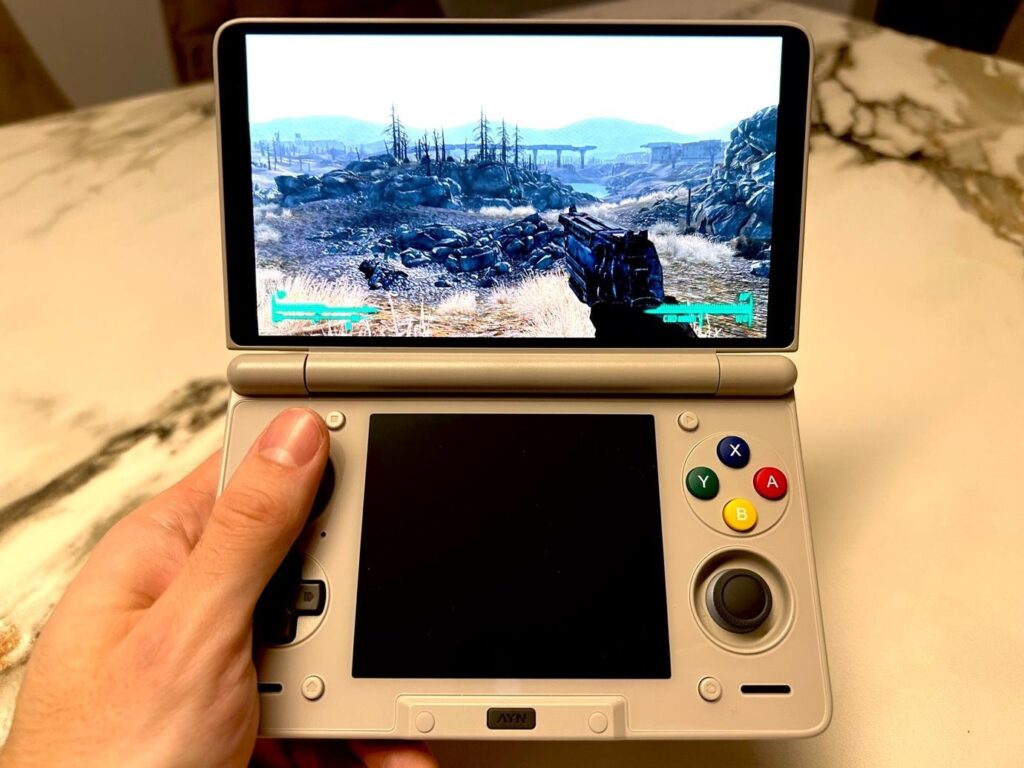
A pleasant surprise is the ability to play PC games.
Emulation in practice: how far does Android go
What can we emulate? Of course, there are NES, SNES, Nintendo 64, and PSX games, but Thor can easily run PS2, GameCube, PSP, Vita, and Wii titles as well. The ability to emulate Switch is particularly impressive, with the note that experimenting with drivers, shaders, and settings is necessary. For larger titles, this is not a "install and play" scheme, but with a little effort, the results are surprisingly good. In my case, Thor has handled everything I've thrown at it so far, without excessive struggle and frustration. Lighter Switch titles run very well, while larger AAA titles require a compromise in resolution or frame rate, and sometimes even patience. This is not a replacement for a real Switch, but as a bonus option, the results are impressive. For example, Super Mario Odyssey achieves a smooth 60 FPS, while Breath of the Wild can pull 30 FPS with dips.
It is especially worth highlighting the emulation of DS and 3DS games where Thor shines. The bottom screen finally provides a true dual-screen experience, instead of compromise solutions with two screens on one panel. This is, without exaggeration, currently the best way to play DS and 3DS titles outside of the original hardware, and perhaps even better, with features like upscaling native resolution, HD textures, 60 FPS modes, and camera control via the second analog stick that completely change the experience. Ocarina of Time with HD textures and free camera feels surreal, almost like a forbidden experience.
One of the more interesting features is the GameHub application, which connects to your Steam account and emulates a Windows environment. Expectations should be kept realistic; new titles are out of reach, but games like Witcher 3 and Fallout 4 run surprisingly well, while newer indie titles fly without issues; I played my last review here on Thor!
Feel in the hands – 3DS, but more mature
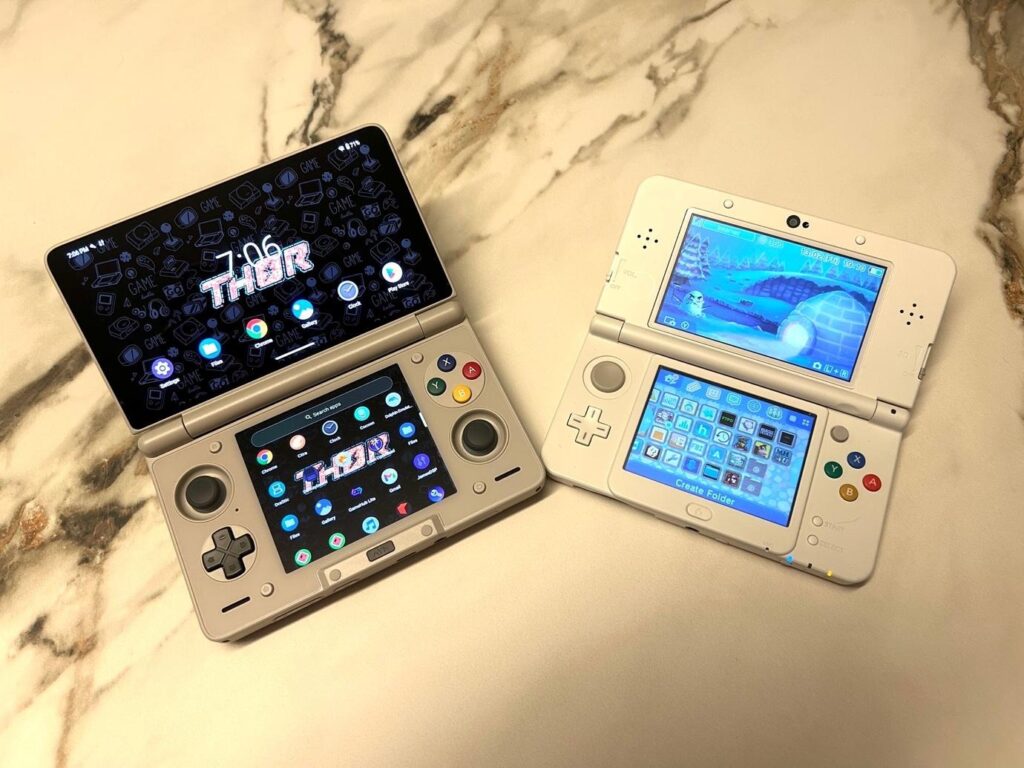
Thor openly copies Nintendo's homework. The feel in the hands is almost identical to the 3DS. It's a bit thicker, but the added L2 and R2 triggers and the second analog provide much more control. The hall-effect analogs are not just a marketing trick. They are precise, with no noticeable drift and a good range of motion. The deadzone is reasonable, and in 3D games, the feel is stable. The D-pad is solid for retro and platformers.
The L2 and R2 triggers are functional, but they are not the most ergonomic part of the device; during longer FPS gameplay, they can feel a bit shallow and awkward. AYN also offers an additional grip that can help with shooters. Pro tip: grips can also be 3D printed if you "know a guy." The LED ring around the analog can be customized if that matters to you.
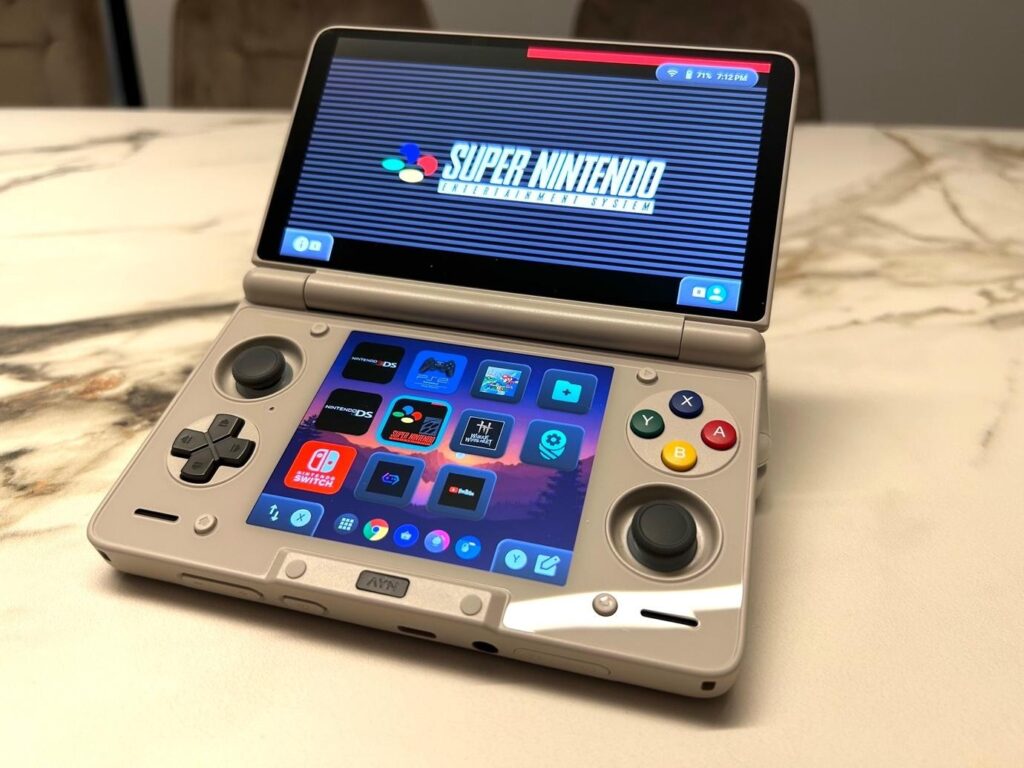
The Cocoon front-end provides me with an interface similar to the 3DS.
Battery, thermals, and autonomy
By pressing the AYN button on the lower screen, you get a special display with information about temperature, FPS, performance profiles, and ventilation, along with the option to turn off the second screen to save battery. The two screens are independent of each other, so you can browse the web, watch YouTube, or be on Discord on the lower one while playing something on the upper one, or vice versa.
The 6000mAh battery is impressive and lasts about 6 hours when playing DS and 3DS titles, while at moderate brightness and lower loads, it offers even more. Of course, PC and Switch titles will drain much more; Switch emulation gives you 3-5 hours at best, and PC titles put even more strain on the battery and thermal system – here, a realistic 2-4 hours is not unusual, depending on whether you're playing Witcher 3 or Hollow Knight.
Under load, the device heats up, but not to a level that would interfere with holding it. The fan is audible in performance mode, but it doesn't reach an uncomfortable range. In everyday use, the device feels stable and controlled.
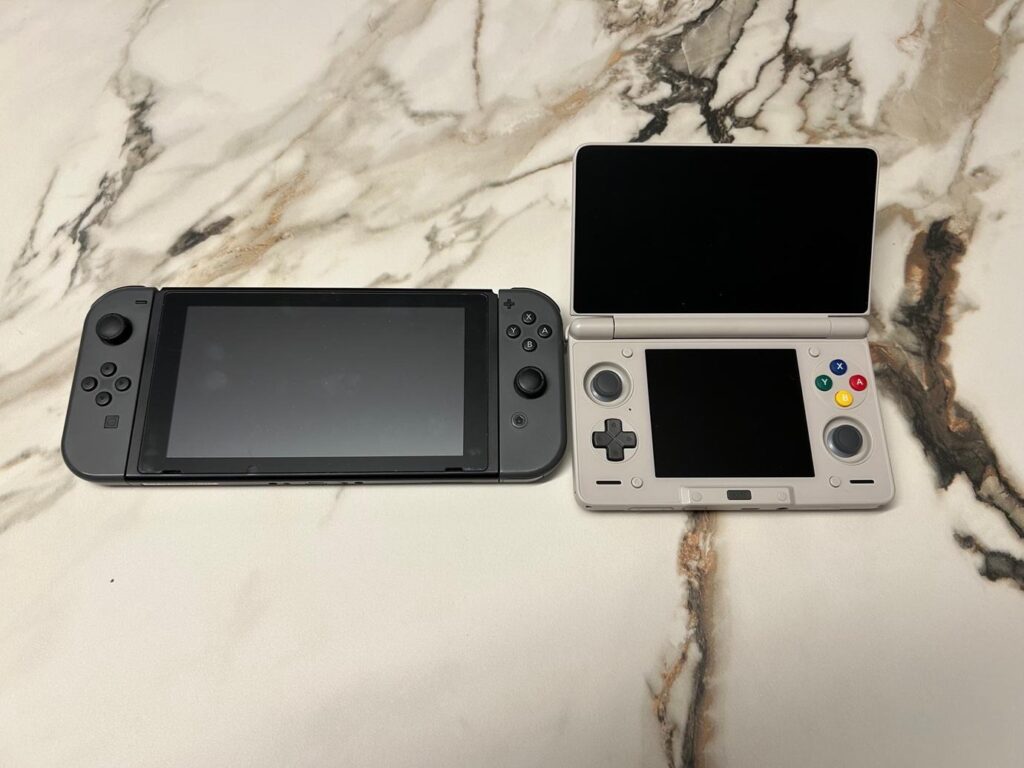
The screen is slightly smaller than the Switch, just 0.2 inches less
Comparison with Steam Deck and Switch
During use, I did not experience any serious system crashes or issues, but it is clear that Thor is not a closed ecosystem like Nintendo's consoles. Android is Android, an operating system for a million devices, and as such, it will naturally have occasional minor bugs; it's impossible to perfectly optimize it. AYN regularly releases updates, which is a good sign that the device is not left to fend for itself.
I have to draw a parallel with other well-known handhelds. The Steam Deck and ASUS ROG Ally are powerful devices, but they are large, heavy, and anything but portable. While I would love to have a Steam Deck, in direct comparison, Thor wins for me due to its compactness, battery, and DS and 3DS library. I believe this is a unique line of games that primarily focused on pure fun, and only then everything else. On the larger OLED screen, they look excellent, and the ability to play PC titles is a big bonus that I did not expect at all.
Conclusion: who is Thor for?
After the initial setup phase, Thor has turned into a device that I spontaneously take with me and use almost every day. Not as a primary console, but as a natural complement to my PC and Switch. It is not a cheap device and clearly targets enthusiasts. For the same or a similar price, you can buy a more powerful device. If you want simplicity and a closed ecosystem, the Switch is still the safer choice. If you want power and PC gaming without compromise, the Steam Deck is the more logical option. Thor is somewhere in between, as a specific product for people who know exactly what to expect.
The setup can be challenging for the average user, but if you want the best dual screen retro experience outside of the original hardware, with very serious performance and Android flexibility in your pocket, Thor is worth considering. Not as a pale 3DS copy, but as a much more powerful and versatile device that respects nostalgia. It’s not for everyone, but for those who grew up on the DS and 3DS, this is the closest we’ve come to a true successor.
Note: In the context of testing the AYN Thor device, we mention the possibilities of emulation and using game backups. Virus.hr does not support or promote piracy. All information pertains solely to the use of personal backup copies of legally purchased games from one’s own collection. Downloading and distributing unauthorized copies constitutes a violation of copyright and law.