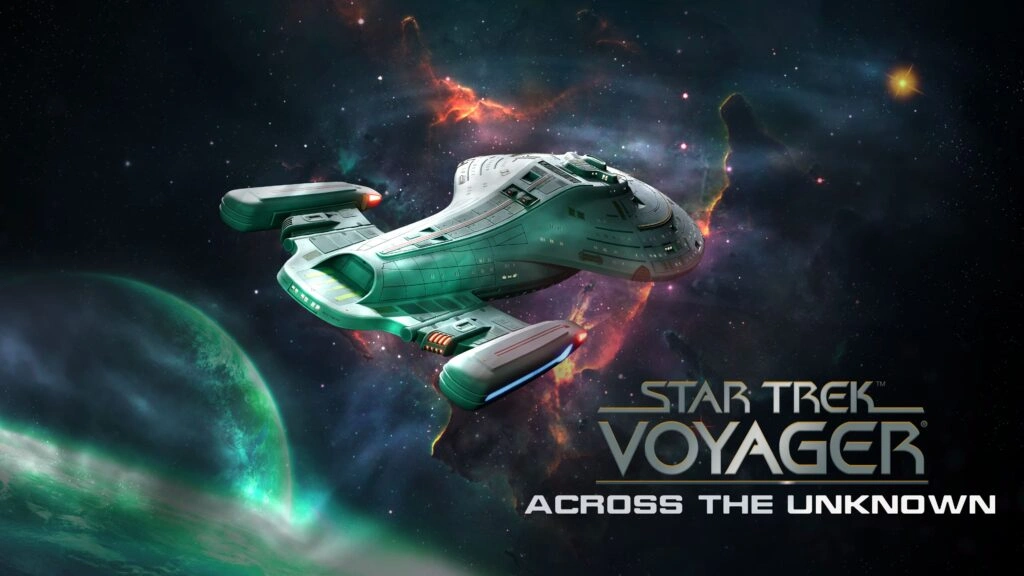
To understand what Star Trek Voyager: Across the Unknown is trying to achieve, it's worth taking a quick look back at the series that inspired the video game. Star Trek: Voyager premiered in 1995 as the fourth live-action series within the franchise. In Croatia, the series premiered on HRT2 in 1996 and I watched it regularly as a child. This part of the series is responsible for my further exploration of the world of Star Trek and getting to know Picard, Sisko and the rest of the team, so it could be said that I am familiar with the subject matter. Unlike its predecessor, Voyager made a significant narrative turn, and instead of the familiar exploration of space, the crew of the Federation ship USS Voyager is thrown by chance to the other end of the galaxy, in the distant Delta Quadrant. Far from home and the support of the Federation, the crew found themselves in a real test that showed how disciplined and resourceful members of the Fleet must be in order to successfully return home. They estimated that it would take them about 75 years to return home at maximum warp speed without a stopover. Of course, the members of the Fleet still managed to shorten the journey by several years using various methods (including Borg technology). This is also the series that introduced the captain of the ship for the first time in the franchise, while in the previous installments the commanding role was played by men. Voyager thus combined classic Star Trek, themes such as moral dilemma, exploration and scientific curiosity in society with an ongoing story of survival and isolation.
Let's now look back at Across The Unknown; this narrative survival game, licensed by Paramount Consumer Products, largely follows the story of the series. If you are familiar with the original content, the basis of the scenario will not surprise you too much. However, in certain situations you have a chance to make a decision that is the opposite of what happened in the series. This means that certain members of the crew (who are also the main characters of the series) can die here regardless of the outcome of the original story. Take a risky approach or play it safe. Be diplomatic or let firepower decide. The basic concept of the game is based on the question "What if?" Therefore, be prepared to deal with the consequences of your decisions!
The moment you take on the role of captain, the core gameplay consists of several parts: repairing damaged ship systems, reorganizing the layout of the ship's rooms according to their functionality, balancing between diplomacy and demonstration of power under pressure, taking care of crew morale and food supply, and deciding how far to circumvent the Fleet's rules when it comes to survival. In short, you have a lot to worry about, like a real captain. Your final decisions can decide whether Voyager returns home or not. When you're stuck in the Delta Quadrant, the first thing you need to do is repair certain systems, such as deck life support, the laboratory, the engine room, and the tactical system. All these activities require a certain amount of resources, so at the same time you have to explore the quadrant in search of new ones.
There is no Federation here to help you with supplies and repairs. Exploration begins by first scanning the planets and anomalies within the system you are in. Some things you can solve without leaving the ship, and in some situations you will still need to send a scouting team. When choosing a team, you should take into account that each crew member has defined skills, so carefully make a decision about what kind of team you will put together. Helping you decide are mission tips that give you an indication of what skills might be needed. This could also cost you the lives of individual crew members, if you do not assemble an optimal team. The same goes for the battle system that you will encounter from time to time. Conflicts are likely during reconnaissance missions as well as in space itself with the ships of other civilizations. Gathering resources encourages survival, but the Delta Quadrant punishes recklessness. Riskier sectors often contain valuable research materials, but also serious threats.
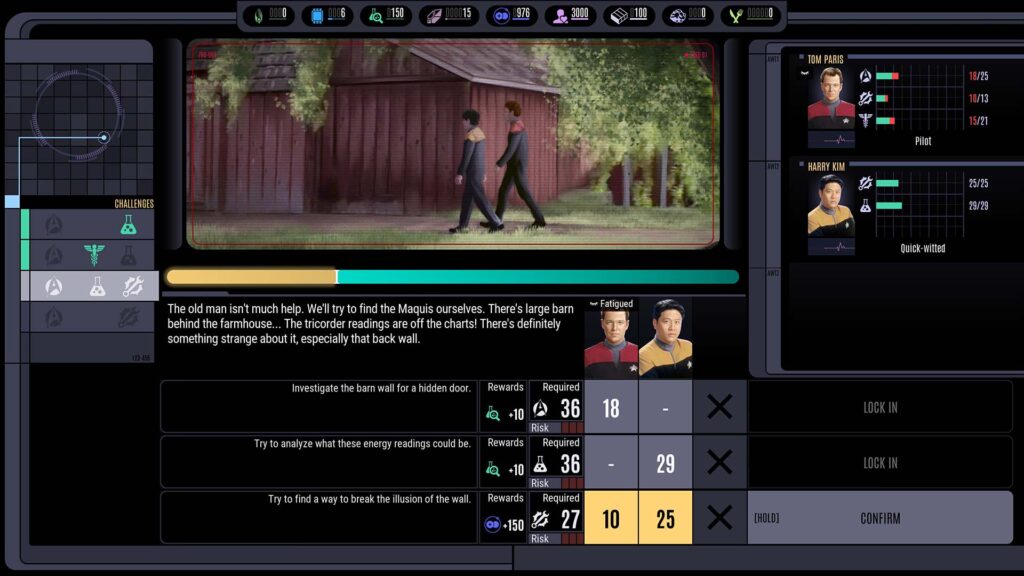
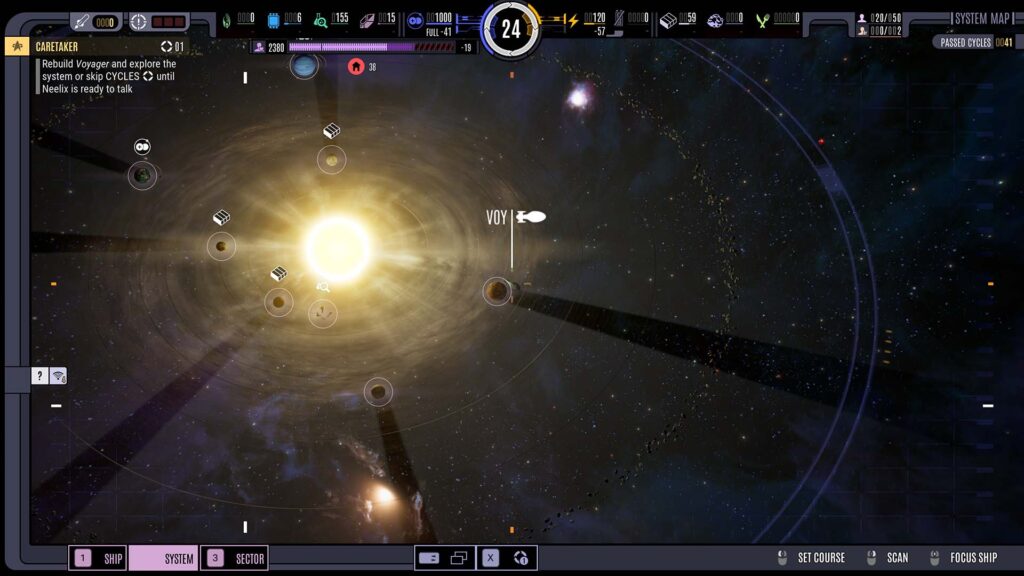
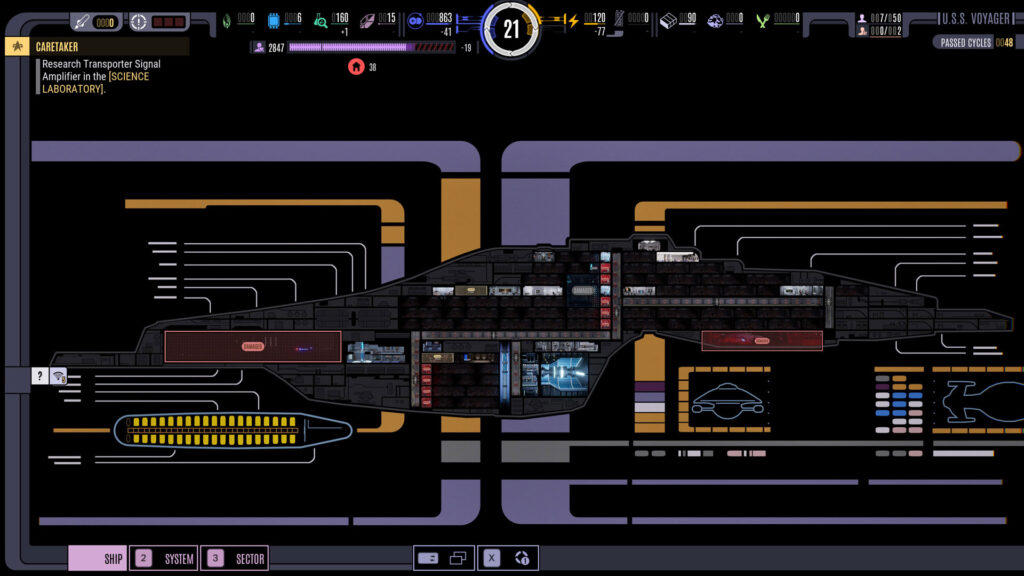
Ship battles take place through tactical decisions. You assign crew to battle stations, target enemy systems and activate special abilities at critical moments. The fight is tense, but not too difficult. When we already touched on this topic, you have the choice of choosing the gameplay difficulty. I haven't played on the highest difficulty, so it's up to you to try this aspect yourself. Shields and hull integrity are managed simultaneously in combat. The hull of the ship and the morale of the crew must be constantly taken care of. If one of the above ends at zero, the game is over. Therefore, always take care to plan the availability of the repair team, as well as to improve the quality of life of the crew members by giving them better cabins, holodeck, better food, etc.
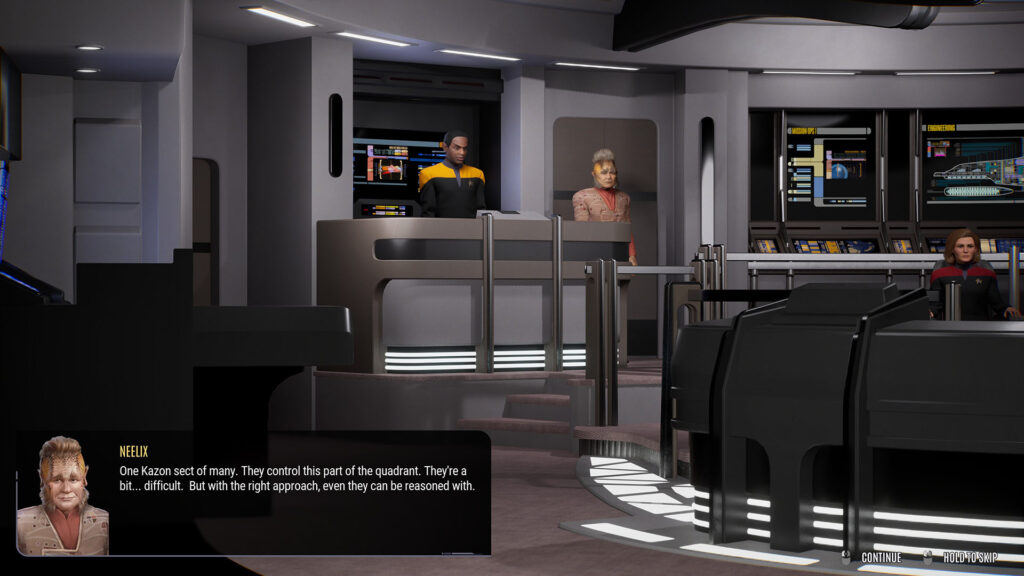
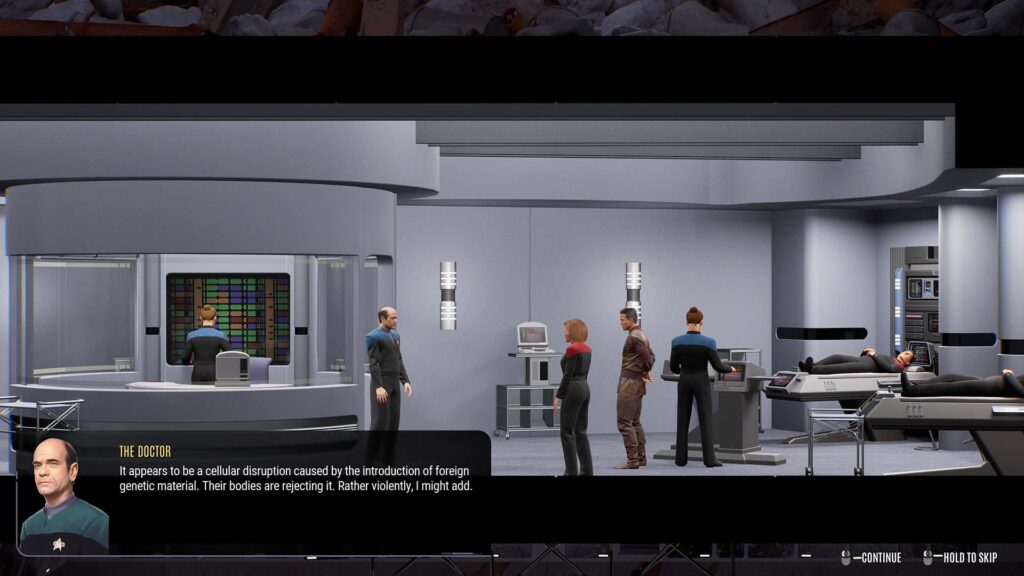
The biggest drawback of the gameplay could be the dialogue. Interactions are limited, systems offer no depth, and dialogue options feel like they're there for the sake of order. This feeling is further aided by the fact that, due to lack of budget, there are no voice actors, except for occasional entries in the ship's logs. The pace of the game is also an occasional problem. A slower pace can be an advantage in a well-balanced design, but here it occasionally turns into monotony. The player does not always feel that his decisions or actions significantly influenced the course of events. If we look back at the visual impression, it is functional, but still a bit outdated.
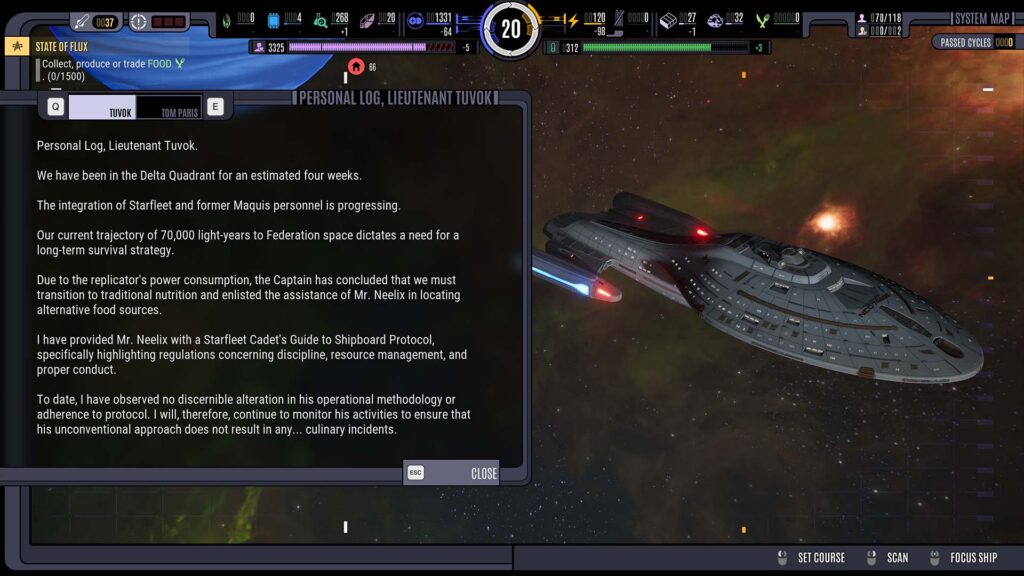
Graphics is probably the first element that will divide players. The environments and models do a decent job in the context of the Star Trek aesthetic, but technically speaking, the game feels dated. Details, animations and general presentation cannot compete with modern titles or even stronger indie projects. The positive side is the consistency of style – the visual identity is clear and recognizable (relatively good UI system and in the style of the series), but it's hard to ignore the feeling that it's a game from an earlier era. In short, the game will not put any significant load on your graphics card. What the game manages to convey, however, is the atmosphere of the Star Trek series. The sense of isolation, the exploration of the unknown and the general Voyager vibe are relatively faithfully conveyed. Fans will surely appreciate the references.
Star Trek Voyager: Across The Unknown is a game that doesn't just appeal to nostalgia, but challenges you to live a journey by making your own decisions that don't necessarily follow what you've experienced through the series. This is also a title with a clear vision, but also obvious limitations. As a fan project it can provide a certain amount of enjoyment, but from a broader perspective, it can hardly stand out as a particularly competitive experience. Unfortunately, even the atmosphere alone cannot fully compensate for technical and design limitations. Definitely worth at least one playthrough for Voyager fans. For others, this could be a somewhat unusual stopover, but not mandatory.
The game is available from February 18, 2026 for Nintendo Switch 2, Microsoft Windows, PlayStation 5, Xbox Series X and Series S and GeForce Now.
Advantages:
- good atmosphere in the spirit of the series
- faithful feeling of a lost ship in the unknown
- focus on research and details for fans of the series
Disadvantages:
- a slower pace that will not suit everyone
- technically and production more modest than some other indie titles
Rating: 3/5 3/5
A copy of the PC version of the game for review purposes provided by publisher Daedalic Entertainment