Metroid Prime 4 – after all these years
Breath in... breathe out... How to review the sequel to a series that has been in development hell for years, to the point where Nintendo decided to tear everything apart and start over? The last Metroid in the Prime series, Corruption, was released EIGHTEEN years ago. Prime 4 was announced right after the release of the Switch console and was supposed to be one of the big titles that finally gave Metroid fans hope that they were not forgotten, as Nintendo had long neglected this series in favor of Mario, Zelda, and the gang.
Developer: Retro Studios
Publisher: Nintendo
Platforms: Switch, Switch 2
Release date: December 4, 2025.
Platform on which the game was tested: Switch 2
Starting price: 69.99 euros
Then... in 2019 came a brief but brutal announcement: “The game does not meet our standards, we are starting over.” Shock. A shock that only meant more waiting. And finally, 8 years after the announcement, Metroid Prime 4: Beyond shone on Nintendo Switch platforms. Was the wait worth it? Let's find out!
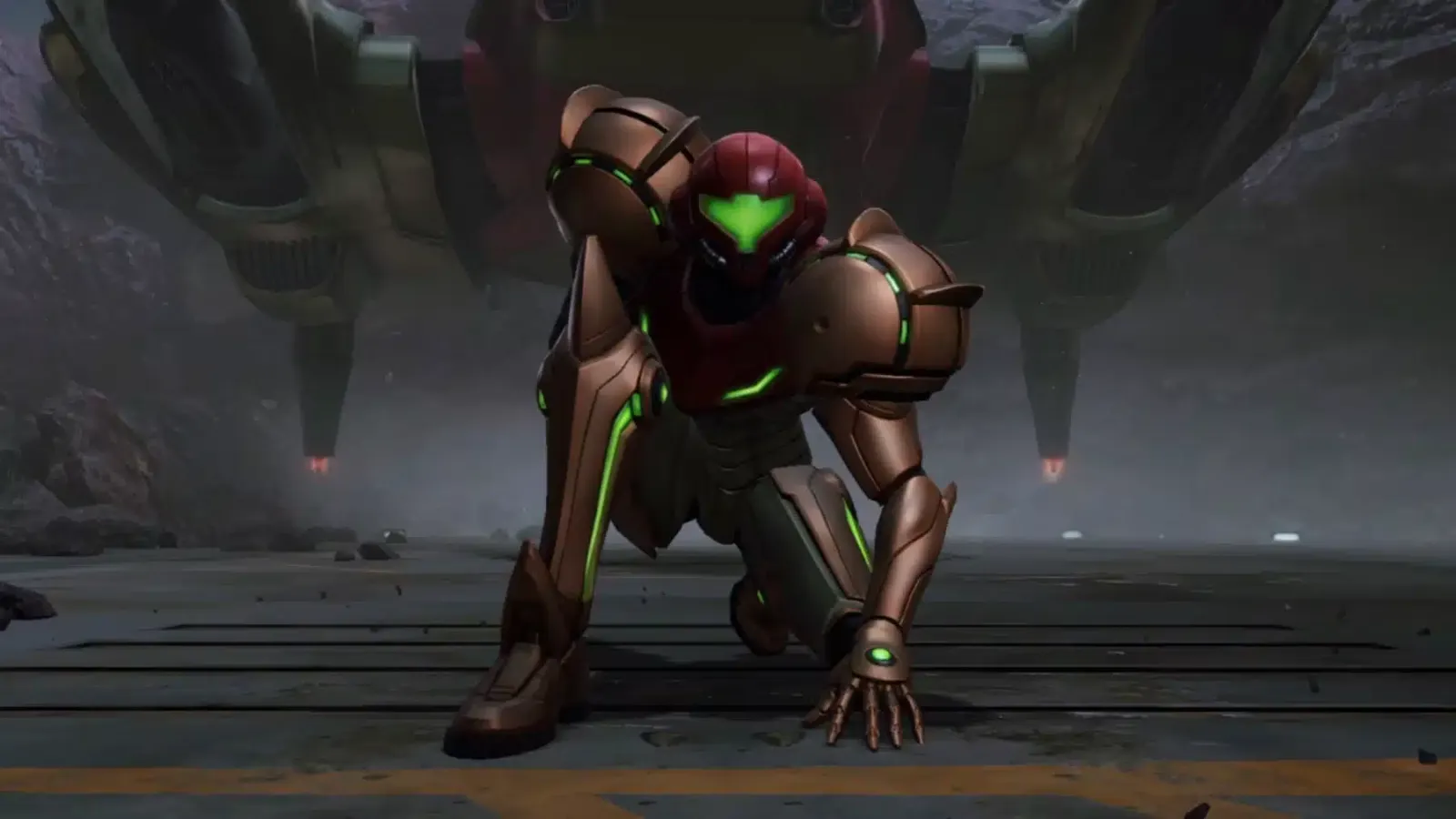
Being Samus Aran, again
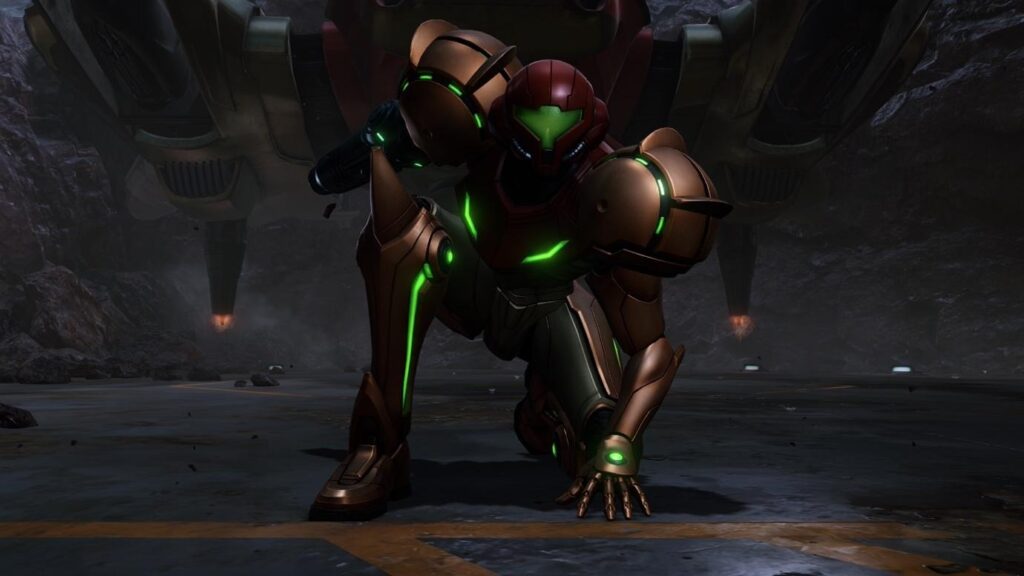
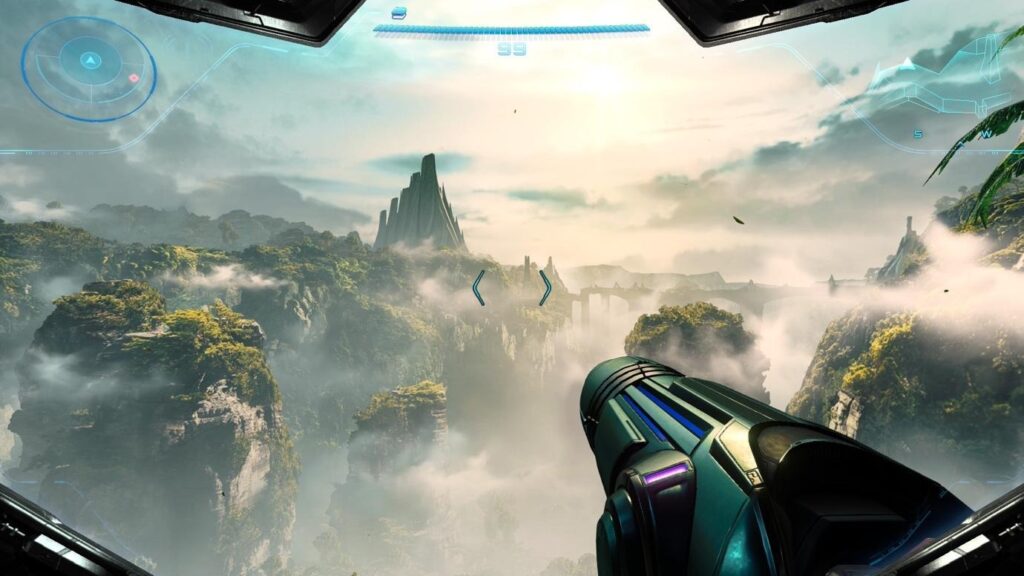
From the very beginning, it is evident how much the game exudes authenticity and style. The feeling of being in Samus Aran's boots has never been more pronounced. The HUD is designed to simulate a view from the helmet, with visible edges of the visor, a holographic display of the map, radar, energy, and other information. Transitioning into the legendary Morph Ball automatically switches you to third person, without any jerk or interruption. As in previous installments, scanning enemies and objects is not just a mechanical addition, but a key tool for solving puzzles and deepening the world through side information.
The biggest novelty is the psychic powers, which surprisingly fit naturally into exploration. They reveal hidden platforms, allow manipulation of the environment and solving more complex puzzles, and act as a logical extension of Samus's abilities, rather than an addition thrown in just to justify novelty.
Combat remains true to the Prime formula
The combat remains true to Prime – a combination of lock-on mechanics, evasion, and smart use of the environment. It doesn't try to be a modern FPS, but rather an action-adventure with an emphasis on exploring an alien planet. Fights are less frequent but more exciting. The focus is on readability of combat and tactical positioning. The lock-on system is still crucial, especially in combination with faster enemies and bosses that require constant movement.
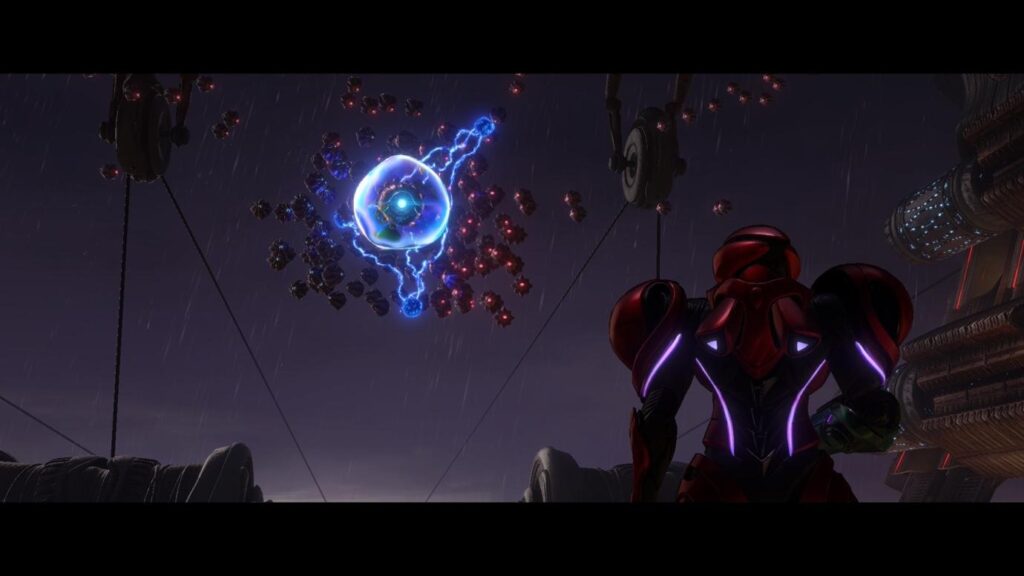
Boss fights are visually impressive and mechanically clear. There is no random chaos; each fight has its own logic, phases, and clear moments where you need to react appropriately. Beyond does not try to shock with difficulty, but tests your understanding of all the mechanics you have learned up to that point.
Bravely through the new world, Viewros
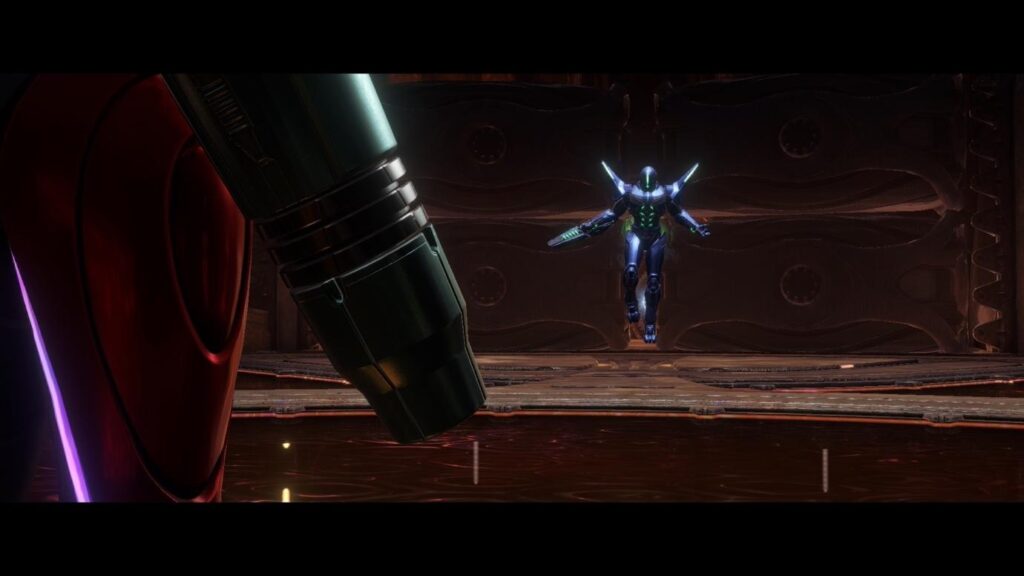
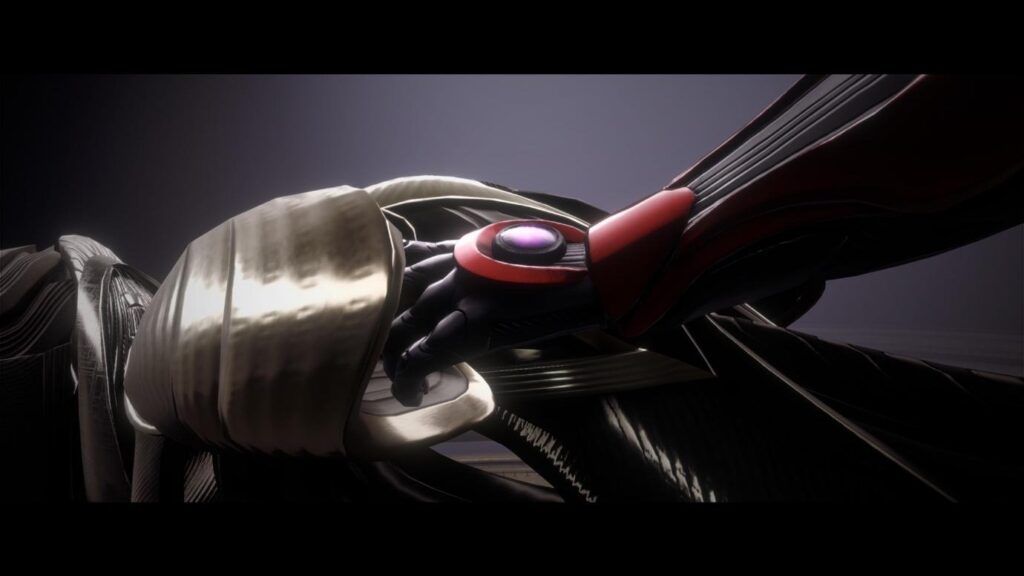
The story, as always in Metroid, is not in the foreground but unfolds through the environment, scans, and subtle clues. Space pirates are attacking again; you are sent to assist the Federation forces, restore order, and secure a mysterious artifact. This serves as a small tutorial and, as often happens, things go awry, and the artifact teleports you far, far away, to the unknown planet Viewros. In exploring Viewros, Samus discovers holographic recordings of the extinct race Lamorn and finds a crystal that grants her psychic abilities. We learn that Samus is the one chosen to secure the legacy of the Lamorn while trying to return home. Her connection to them is slowly revealed, without forcing it.
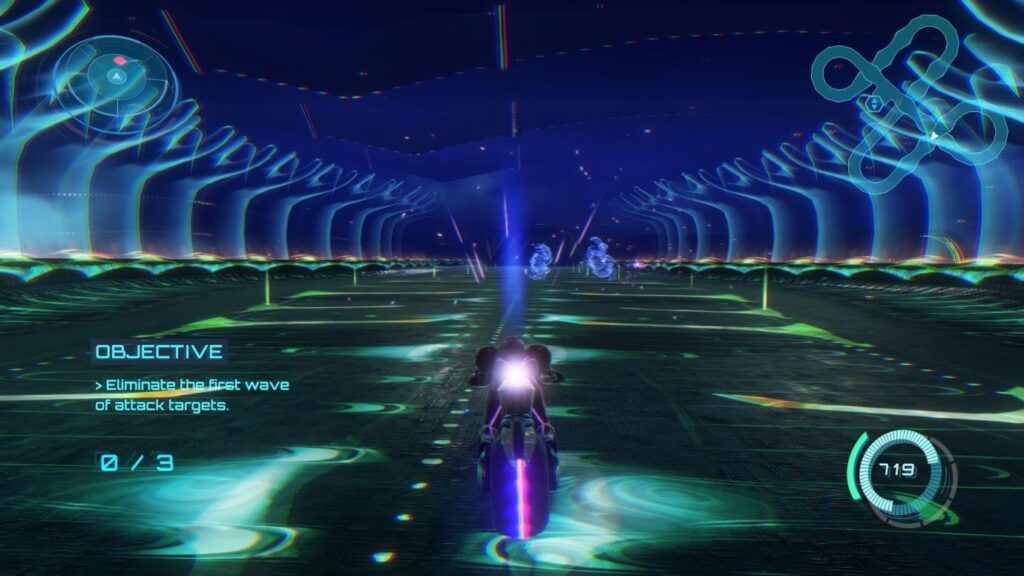
The world of Viewros is made up of a network of different biomes, which are thematically and visually clearly differentiated, yet designerly interconnected. They are all linked by a central desert hub, Sol Valley, which functions as a transit point and a sort of backbone for exploration. It is in Sol Valley that Vi-O-La is most utilized, a neuro-motor that allows Samus to move quickly across open terrain. This hub gives the game a sense of scale and continuity, as returning to it happens frequently to open new routes to areas that were previously inaccessible. Although the world structure is not open world in the classic sense, this arrangement gives the impression of a connected planet rather than a series of disconnected levels.
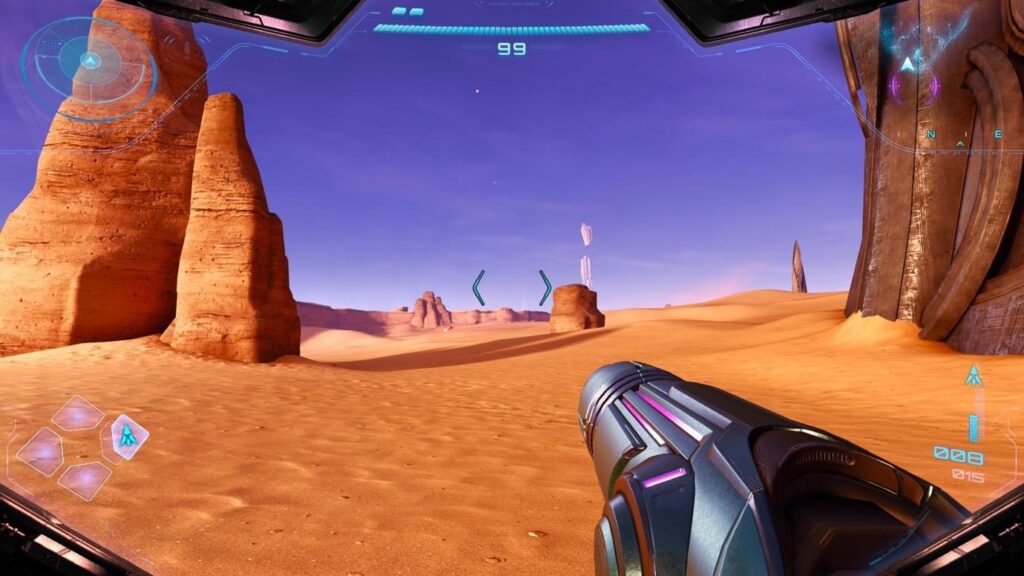
Vi-O-La serves to shorten distances, orient in space, and occasionally for combat or acrobatic sequences, but the game deliberately does not allow it in all areas. This way, Beyond avoids the trap of turning Metroid into an “action game with vehicles” and maintains focus on classic on-foot exploration, puzzles, and combat. While one might wish for more segments that creatively utilize the engine, it is clear that its role is intended as a complement to the world structure, not as its supporting pillar.
The map is clear, straightforward, and functional, with enough detail that you never get lost. However, that is its only downside; sometimes I want to get lost. The game feels too linear, to the point where I needed to pull up the map significantly less often than in any previous installment. The game rarely leaves you completely directionless, and progression is often more clearly structured. Some of the starting zones feel like a straight line from start to finish. This will suit some, especially new players, but veterans of the series may feel a lack of that classic sense of being lost and experimenting.
Side Characters and the Federation
Although Metroid is traditionally a very lonely series, Beyond does introduce a few side characters that serve as narrative anchors and connections to the broader galactic situation. At the forefront is Myles, a Federation engineer whom we rescue from certain death at the very beginning of the game. Myles remains as a sidekick with whom we mostly communicate via radio later on. His tone is casual, occasionally irritating, with a dose of humor that resembles Marvel's style more than the restrained atmosphere of Metroid. This tonal shift may feel foreign, especially at first, but fortunately, Myles retreats into the background after the introduction. Although I was surprised by his appearance, I quickly got used to him and can't say he's as much of a boogeyman as the Internet wants you to believe.
Besides Myles, other members of the Federation appear, but their presence remains limited and functional. They do not attempt to take over the story or emotionally burden the game, but serve to contextualize the mission and highlight the contrast between organized military force and complete solitude on Viewros. Beyond manages to maintain the recognizable Metroid atmosphere while simultaneously giving the feeling that Samus is not isolated from the wider universe, but rather operates as part of a larger, albeit distant, system.
Technical Presentation at a High Level
This is definitely one of the most beautiful games for Switch 2. The game looks truly impressive; the lighting, reflections, raindrops on the visor, and environmental details create a sense of "place" that we rarely see in Nintendo games, which are usually stylized. This is not just a beautiful game, but a convincing world. We have the option to choose between 4K resolution at 60 FPS or 1080p at 120 FPS in docked mode, or 1080p 60 FPS in handheld mode, compared to 720p at 120 FPS. Personally, I stuck with 4K resolution because once you see Viewros in all its glory, it's hard to drop down to a lower resolution. The framerate is stable, loading times are minimal, and transitions between areas are almost seamless, which is especially important for a game that heavily relies on world continuity.
On the standard Switch, Beyond still runs decently, but the compromises are visible: lower resolution, occasional frame rate drops in more complex scenes, and somewhat weaker lighting detract from the overall impression. It is still a solid experience, but it is clear where the game shows its true face.
The controls are precise, responsive, and extremely pleasant, whether you use the classic lock-on style or rely on finer, freer aiming using the Joy-Con as a mouse. Transitions between different play styles are smooth and intuitive, without the feeling that you are struggling with the controls or that the game is holding you back. In those moments, Beyond feels like a title that has finally captured the full potential of modern Nintendo hardware.
The soundtrack creates the perfect atmosphere
The soundscape of Metroid Prime 4: Beyond deserves special mention as it represents one of the strongest elements of the entire experience. The blend of dramatic sequences, subtle electronic textures, and occasional rock elements feels mature and measured, and is without exaggeration the best soundtrack in the Prime series since the original Metroid Prime. The music rarely takes center stage; instead, it is constantly present in the background, building tension and a sense of isolation.
You will often hear ambient tones, distant vibrations, and almost imperceptible motifs that emerge at key moments of exploration, as if the world itself reacts to Samus's presence. Each space has its own sonic identity: rain hitting the helmet, the creaking of old metal in the ruins, the quiet energy hums of Lamorn technology, and the characteristic sounds of enemies constantly remind you that you are in a hostile, living world.
Conclusion
Metroid Prime 4 does not change the series from the ground up. This is not a Breath of the Wild moment for Metroid and, if you expect that, you could easily be disappointed. And when something is waited for so long as this game, expectations are, understandably, almost endless. Instead of a radical shift, we got a return of the series that very clearly knows what it wants to keep and where it can afford to evolve.
Although it is more linear and accessible than some previous installments, Beyond offers a strong atmosphere, exceptionally high-quality presentation, and gameplay that rightfully carries the name Metroid Prime. After eighteen years of waiting, this is a return that makes sense: not perfect, but honest, technically impressive, and true to the spirit of the series.
★★★★ — “Very Good”
A copy of the Nintendo Switch 2 version for review purposes was provided by the distributor CD Media