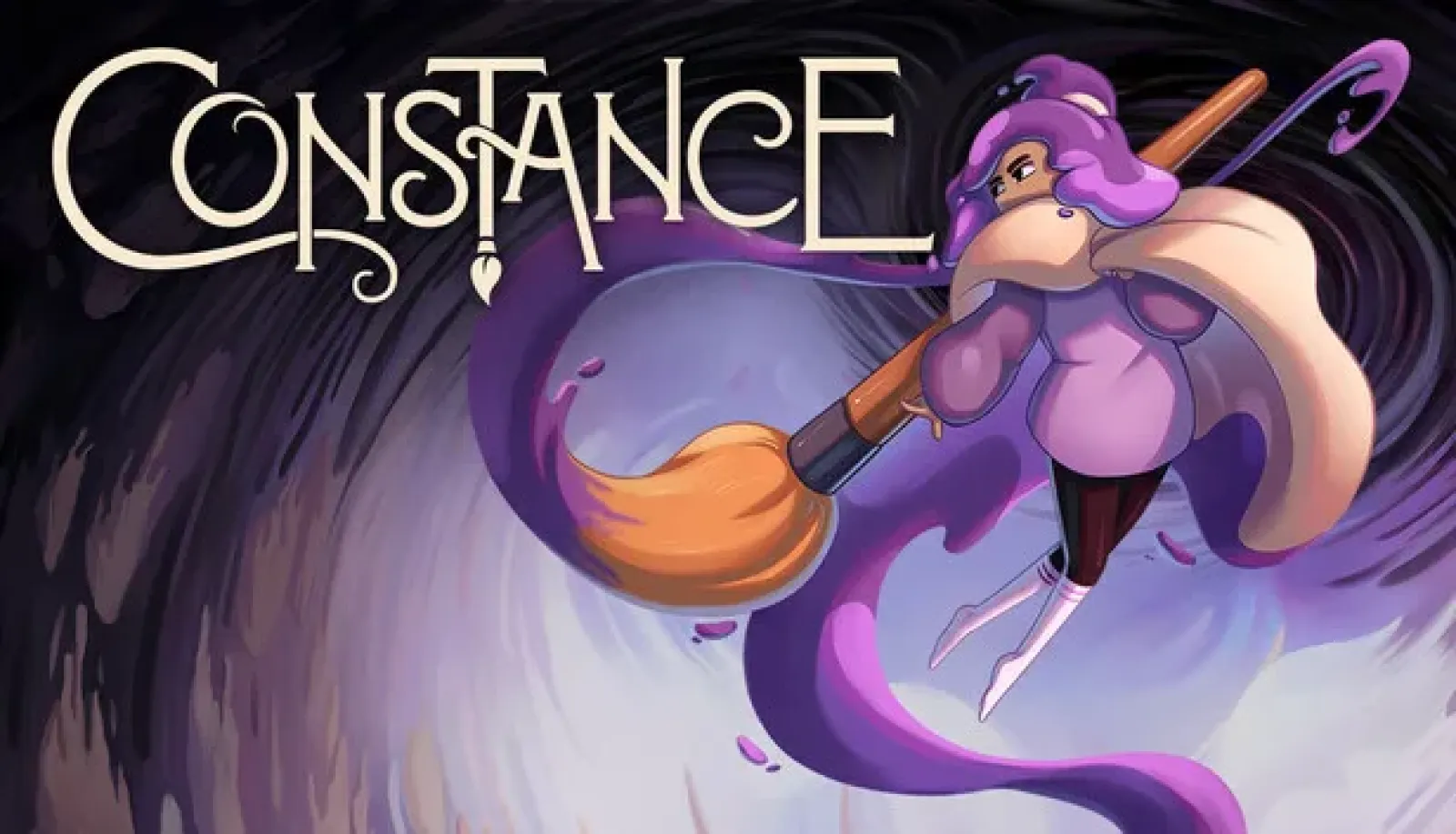
Constance — an adventure that slowly breaks you and then puts you back together.
Behind Constance is a small, distinctly author-driven studio btf Games, a team that has become known in recent years for atmospheric, emotionally charged indie adventures. If you have played their earlier projects, you know that their emphasis is on introspective storytelling, a slower pace, and a focus on characters rather than spectacle. The studio has already achieved great success with the adventure game Trüberbrook and has been awarded for Best German Game 2019 and Best Production at the German Computer Game Awards. Constance is their most mature title and also their boldest.
Story and atmosphere: a quiet drama that grows into a loud truth
You play as Constance Clarke, an illustrator who, after a personal tragedy, finds herself stuck between creative block and guilt. The game introduces you to her small apartment, which at first seems only narrow and claustrophobic, but over time transforms into a visual map of her mental state. The walls change. Objects echo past experiences. And what is not spoken aloud is heard most clearly. The story is only partially linear, but intelligently paced. There are no classic dialogue choices. Instead, your interactions with the space become decisions. One unlocked memory triggers another. Everything is organic and very intimate, as if you have truly entered someone's head and are trying to regain control. One of the game's greatest values is the way it uses space, objects, and changes in the environment to visualize psychological states. Although it is a 2D action adventure, the symbolism is constructed as if it were an interactive film. The entire game takes place in a seemingly cramped, 2D cross-section of the apartment, but this apartment is never static. The walls narrow, objects fade, drawings appear on the floor or walls. The narrow corridor represents a state of entrapment, while long and endless rooms signify a separation from reality. Disappearing doors symbolize a loss of control. This reminds one of how space is used for emotional emphasis in games like Limbo and Inside, but Constance goes deeper. The environment is literally an extension of her mind. Every important object in the apartment carries weight. Pencils and sketches symbolize creative block and a return to identity. A closed window often signifies a refusal of contact with the world. Although it is 2D, the game uses light effects in a very symbolic way. Warm colors appear only in moments of progress or acceptance. Sharp contrasts accompany episodes of anxiety, and isolated patches of light literally guide the player towards inner truth. Similar to the game Journey, light is not just an aesthetic but also a narrator. Thus, we could say that the visual style is somewhat realistic, with a very careful use of light and shadow. The colors are muted but not depressing, more like an old photo album. As Constance emotionally opens up, the color palette gradually awakens. Small details, like the sound of a pencil or the jingling of keys, sound unobtrusive but carry emotion.
Gameplay: 2D action-narrative adventure where mechanics serve the story
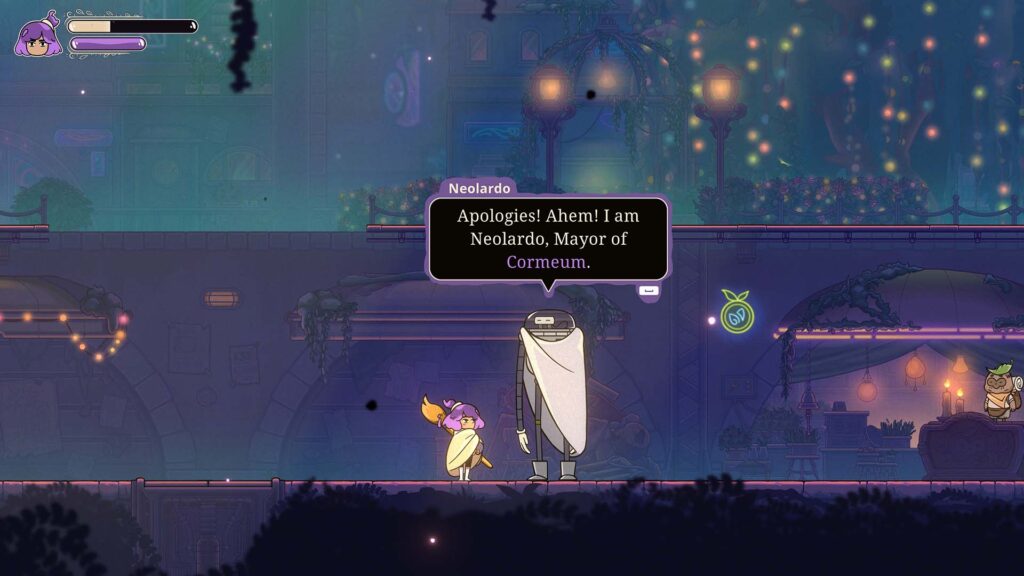
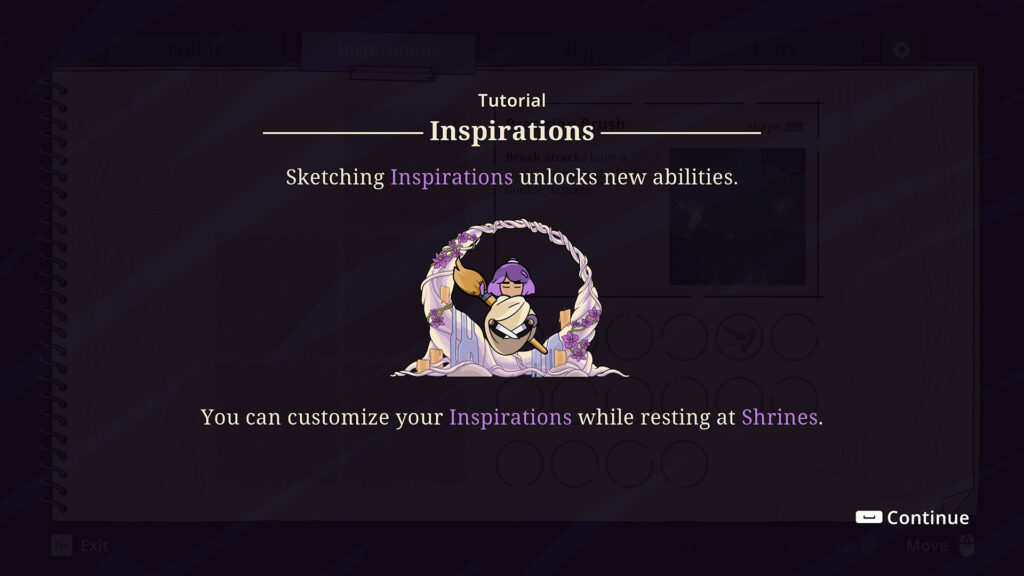
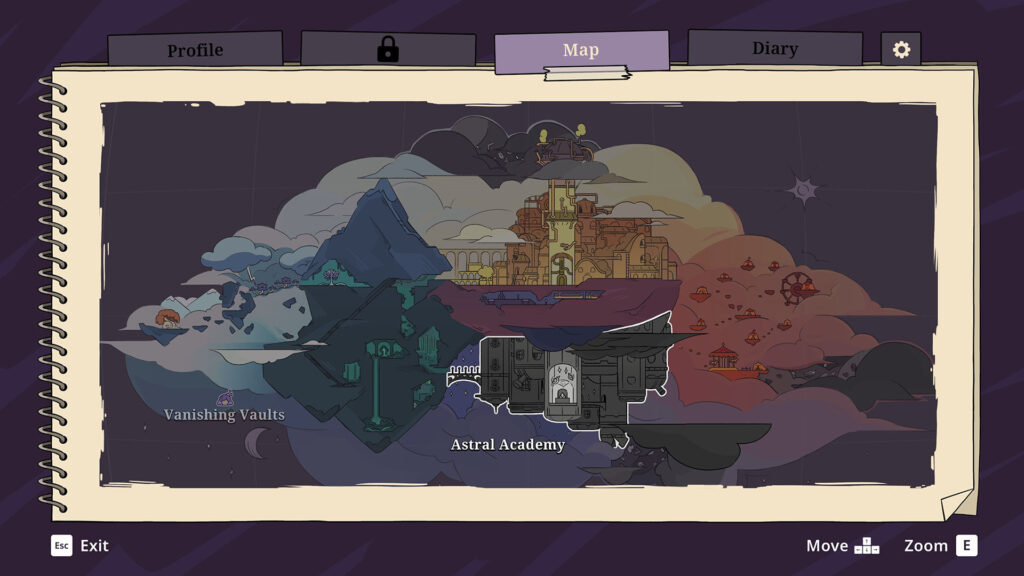
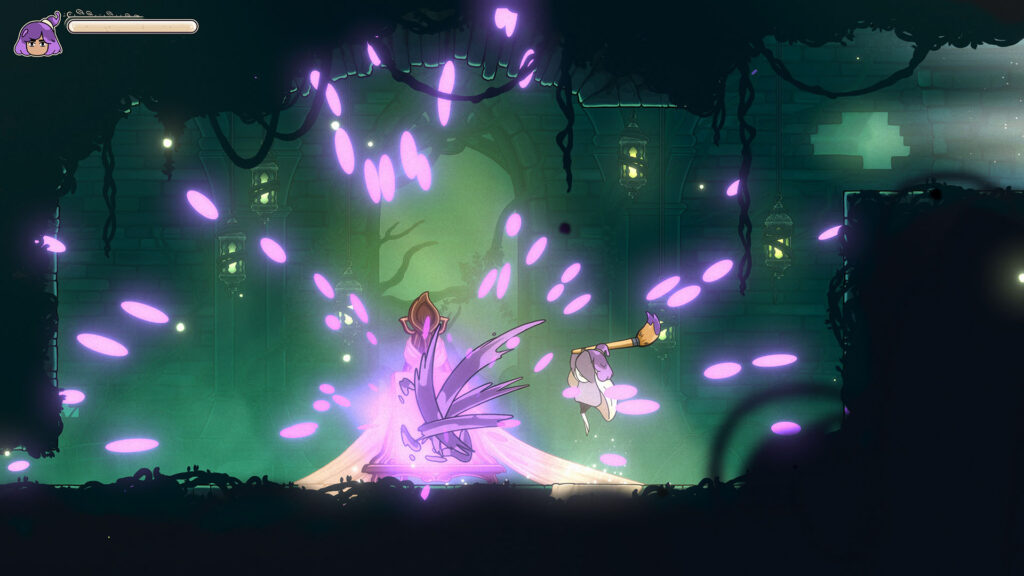
Although it is heavy on emotions, Constance is not just an interactive story; it has a full-fledged 2D action-adventure structure. When we talk about exploration and interaction, the point is not speed, but attention. The space is small, but constantly evolving. You unlock new paths through mental cracks, activate sequences of conversation with yourself, and objects change depending on emotional progress. The platforming is stylized and symbolic, never overly demanding. The combat is mostly simple, minimalist, tailored for players who only play games occasionally. Our character mainly fights against shadows that represent her inner fears. Occasionally, she also battles a distorted image of herself or with deformed objects from her past. As for the puzzles, they are based more on feelings than logic. They are simple but also symbolic. For example, you have to piece together broken memories, rotate drawings to reveal hidden truths, or repair a damaged part of the apartment by connecting it to a memory. The game often rewards emotional understanding. But don't be fooled; the initial levels offer relatively easy tasks to solve, and then suddenly you find yourself in the midst of a tougher battle, with more enemies testing your skill in using Constance's abilities that you unlock throughout the game. The game occasionally wants you to feel a certain dose of frustration and burnout due to your own mistakes. The amount of paint on the interface shows how much you have left to use special abilities. If you completely deplete the paint, Constance will still be able to use special powers, but she will lose a portion of health each time. You decide whether to risk your remaining health or to pause in a corner and wait for the paint to replenish. Another aspect worth mentioning is the revival of your character after you die. Here you have two options – the game can teleport you to the last place where you could save your position or it can revive you immediately at the spot where you died. If you choose the latter, enemies will gain more health, deal more damage, and one of your special powers will no longer make you temporarily invulnerable. If you die again, the enemy difficulty does not double, and it resets completely only when you reach a checkpoint. It takes the form of a place where your character can rest and meditate, and you activate it manually when you are near it. At one point, the game also allows you a non-linear way of playing. You have three locations to choose from in terms of their order. Some of them will be easier to navigate with a greater number of unlocked abilities from a previous level. You are given the choice of how much difficulty you want in your gameplay. Your decision will also affect the difficulty of the battle with the final enemy in each level. Speaking of them, I could briefly explain their role in the game. Each of them represents a universal problem of creative and emotional blockage: fear of beginnings, mental noise and overload, perfectionism and self-criticism, nostalgia and regret for the past, and self-sabotage and inner guilt. Throughout the game, our character deals first with the phase of repression, then confrontation, acceptance of what has happened, and finally, healing.
The ending of the game Constance is intentionally layered: one is textually clear, while the other is symbolic, hidden behind visual and mechanical elements that only appear in the final act. This is one of those games that is not here to entertain you in the traditional sense, but rather to convey a message. Aesthetically very pleasing, and its visual beauty is enhanced by the handcrafted 2D art style. A potential drawback is the lack of depth in the narrative parts that could have further spiced up the story, as well as the lack of linear gameplay, which somewhat disrupted the flow of the plot. But overall, a pretty good and polished platformer with fun final enemies, which can also serve as a release valve after a hard day at work.
The game has been available for Microsoft Windows since November 24.
+visual design, story idea, sound effects, controls
-occasional nonlinear plot disrupts the protagonist's story flow, insufficient dialogue, and underdeveloped supporting characters
Rating: 4/5
Game copy for review purposes provided by the development studio btf Games