As a kid, I was crazy about Silent Hunter games ever since I read Oleg Maštruk's review (shoutout to the legend) in Bug related to Silent Hunter III.
The whole concept of managing a submarine seemed brutal to me, but I never had a computer that could run it. When Silent Hunter 5 came out, I had a top computer, acquired it in the same way Jack Sparrow would on one of the seven seas, launched it, and… Realized I didn't have time for it.
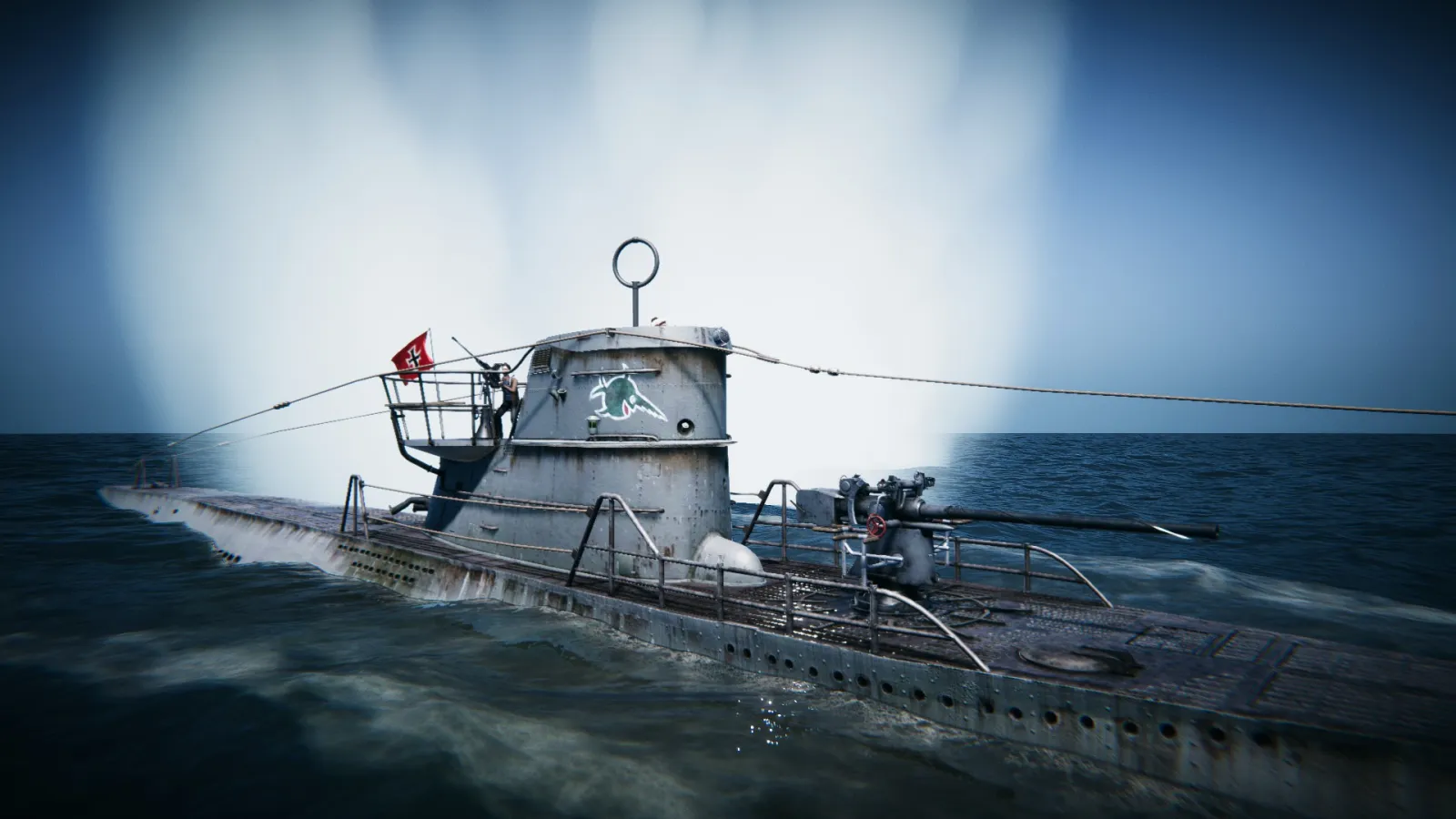
About 15 years later, Uboat comes to us, and when they asked me if I would try it, I just said…
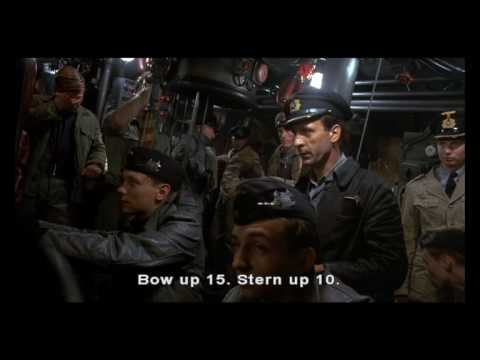
This isn't that great of a joke because the submarine is going up, but imagine I dove.
The Genre We Were Missing
Simulations used to be huge hits, and while they still exist today, they were once massive hits.
Silent Hunter was the series that dominated submarine simulations and set the benchmark.
In the Silent Hunter series, your main role was to monitor instruments, hunt convoys, and watch your attack angle. Uboat takes it a step further. You are the captain, strategist, and psychologist.
It's the same here; primarily, this is a crew management game.
You need to feed them, ensure they get rest, keep an eye on morale and interpersonal relationships. Small mistakes like poorly scheduled shifts or a forgotten compressor can mean the difference between returning to port and sinking to the bottom of the Atlantic.
It is precisely this management layer that brings freshness, but it can also be a double-edged sword; after a few hours of play, it can become repetitive and require more micromanagement than some players would like. Who would have thought that life on a submarine isn't adrenaline-filled!
The greatest value of the game lies in the moments of tension it creates. A patrol can start routinely – sinking a few merchant ships, then the sudden news that a ship with secret information is hiding in the enemy convoy. The convoy is protected by cruisers and battleships, but if you know the tactics, you can slip deep between their formations, launch torpedoes, and try to escape in silence. All of this lasts for tens of minutes in real time, where every mistake – for example, leaving an engine running that produces noise – can result in the death of the entire crew. It’s not instant action, but a slow build-up of tension that culminates in explosions from depth charges and complete chaos in the control room.
Technical Presentation and Sound
Before I launched the game, I thought it was a shame that I couldn't enter the submarine and that I would only be looking at a cross-section like a model in a textbook.
The first hour completely changed my impression. I went inside, passed through narrow corridors, stopped by the periscope, and peered into the torpedo room. That part was super fun because I didn't know it could be opened.
I felt the cramped space and the rhythm of the crew's life as they brushed shoulders in hallways barely wide enough for two people. In that moment, you realize that the visual idea has fully succeeded; the submarine is not a backdrop but a living organism.
The interior model is lavish in detail. The valves shine with grease, the pipes have traces of condensation, the joints leave a slight patina of wear, and the instruments are not just textures but functional devices that pulse with light and needles that actually move.
When the lighting switches to night mode, the cabin receives a warm red light, and the entire space transforms into a quiet stage where every movement of the crew stands out. Dynamic lighting works beautifully in cramped spaces and creates contrasts between the murky depths and the brilliance of the surface after surfacing.
Even small details like droplets falling from the ceiling, the gentle swaying of the camera when changing depth, or the flash of a spark in the engine room when damage occurs in the game contribute to the impression that you are truly inside.
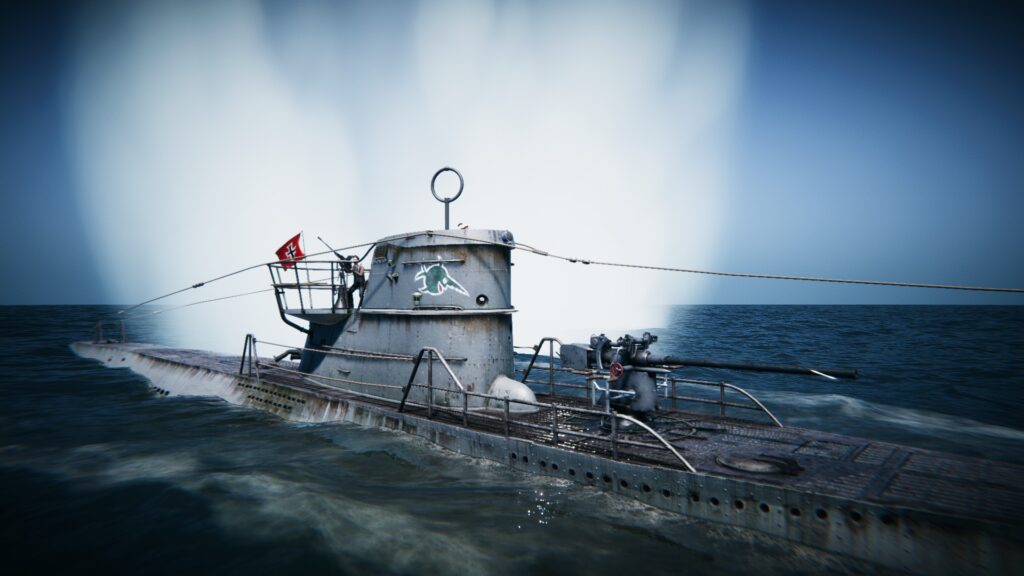
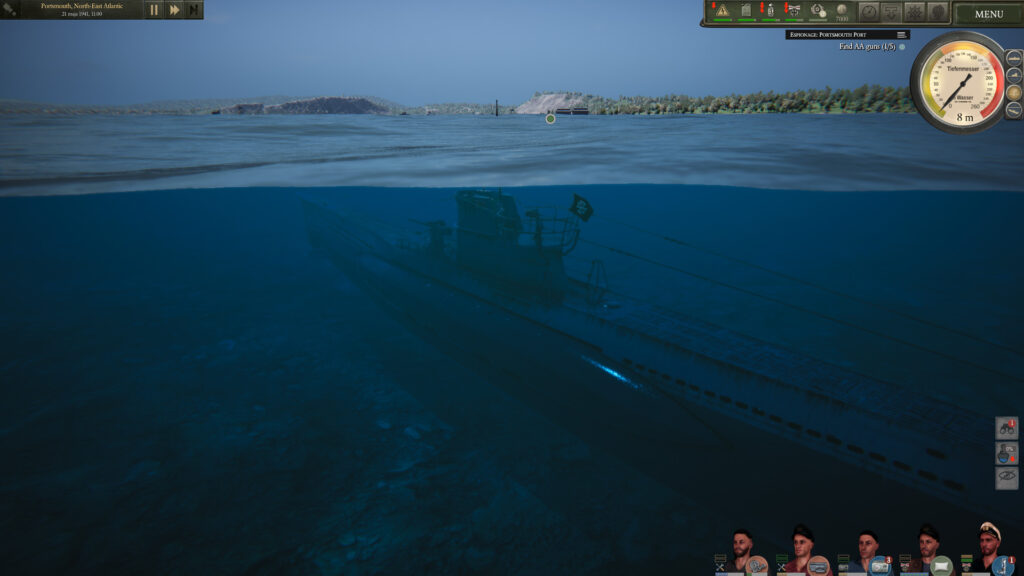
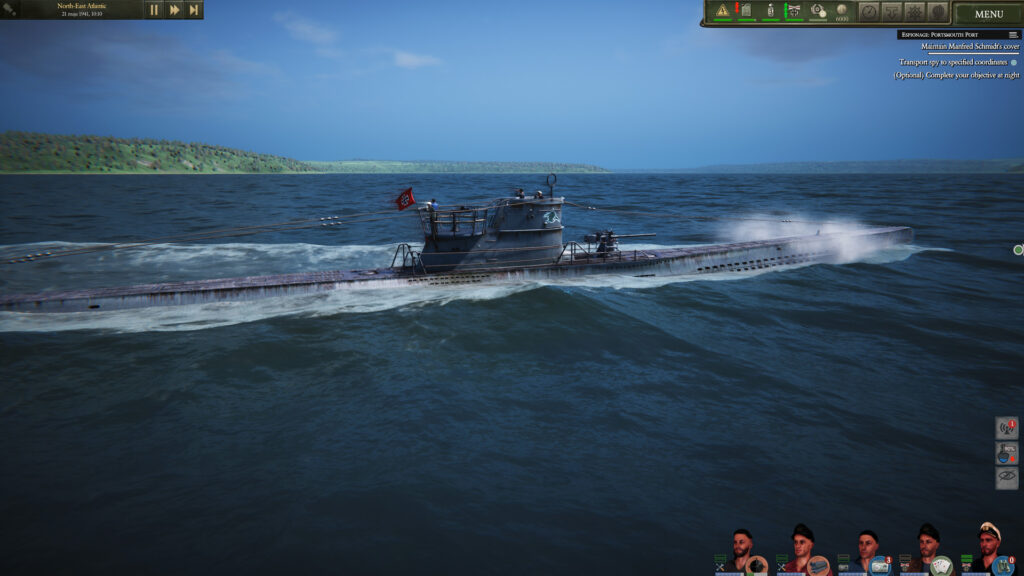
The surface model of the sea, the waves, the splashes, and the traces of the submarine's movement across the surface appear convincing, but the real spectacle begins when I dive and shift focus to the interior.
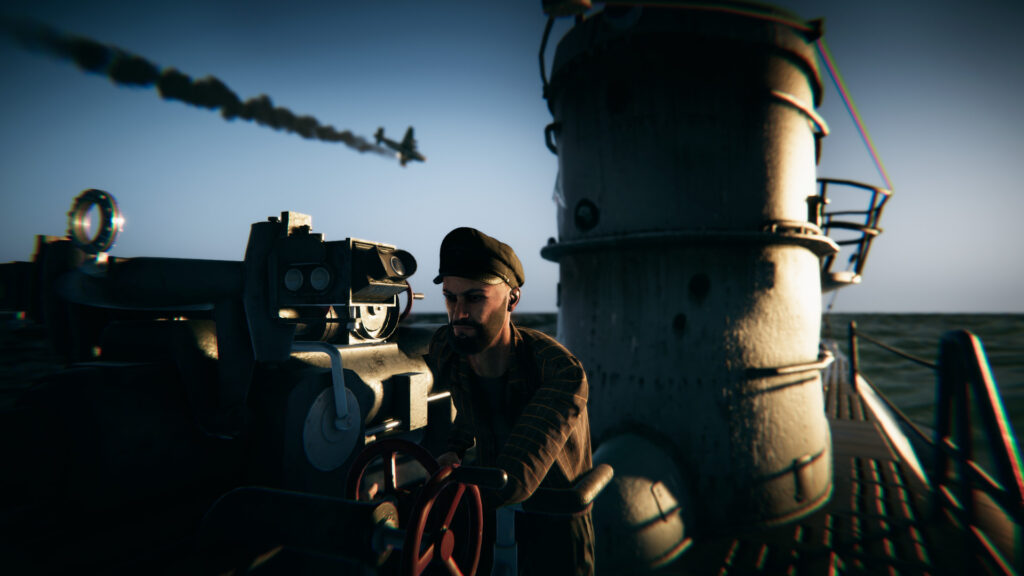
The crew animations are functional and varied enough not to feel like a repetition of the same few actions. The wheels, levers, dive and surface controls have convincing kinetics. It doesn't look like a set of animations glued to puppets, but like an organized chaos of a small ship in crisis.
When chaos ensues due to damage, water pours into compartments, puddles remain on the floor, and the lights flicker on the edge of going out. At that moment, without any numbers, you feel the weight of the situation.
The soundscape is equally powerful. The diesel engines on the surface run deep and guttural, and inside you feel the vibration even though you are in front of the monitor. After diving, the tone muffles and everything becomes softer; you hear the sound of the ocean and the distant metallic whisper of the hull working under strain. The sounds of ventilation, condensation droplets, creaking bulkheads, the turning of the periscope, and the clicks of switches layer the atmosphere.
When the hunt begins, the sonar ping resonates throughout the hull and triggers a reflexive discomfort. Depth charges have an arrival phase, first a distant rumble, then a whistle, and finally an impact that cuts through all conversations. In that moment, you also hear the small things, the alarm bell, the crew's shouts, the creaking of metal at the edge of endurance. During those minutes, sound becomes the mechanic of your imagination, giving you clues on where and how to react.
The mix is well balanced. The ambient level makes the crew's conversations and short commands understandable, while the heavy sounds of the engines and explosions have space to dominate in critical moments without everything else completely disappearing.
The transition from the surface to a quiet ride in the depths is clearly heard through the change in spectrum, high frequencies disappear, leaving the dull hum of machines and the occasional sound of metal working under pressure. When you return to the surface, the air and waves take over the scene again, and it feels like you've opened a door from the basement to a stormy shore.
Mechanics
One of the biggest advantages of Uboat is the way it balances between pure simulation and more accessible gameplay.
Players have the freedom to choose whether they want to indulge in a detailed, almost mathematical level of control or let the crew handle the toughest parts while they remain in the role of the commander making strategic decisions.
If you enjoy a hardcore approach, Uboat provides you with the tools to feel like a real submarine officer from World War II.
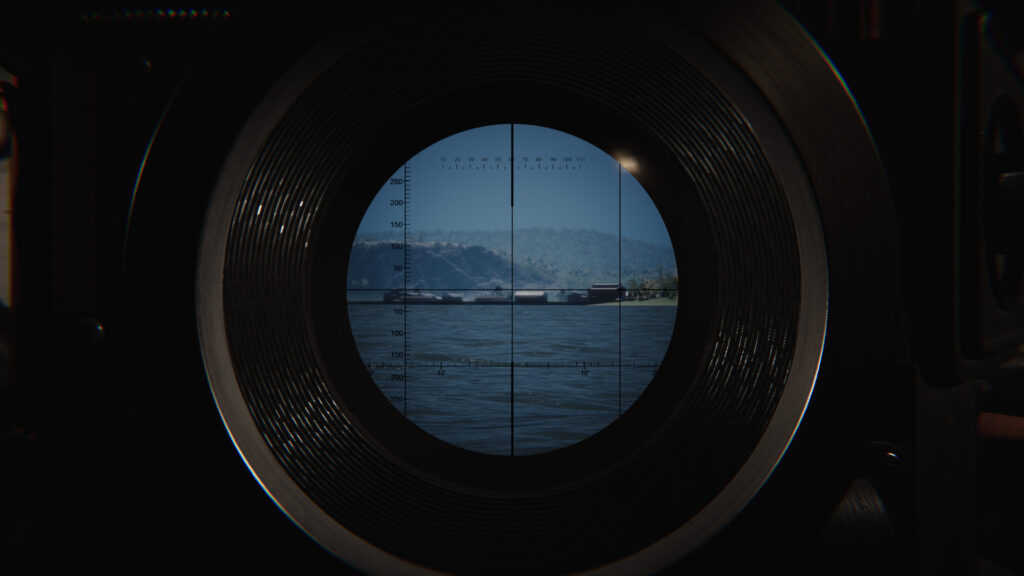
You can manually calculate the speed and course of the enemy ship using an optical rangefinder and periscope, record data in a table, and based on that determine the correct angle for launching torpedoes.
The TDC (Torpedo Data Computer) system is not simplified; you need to track the distance, speed, direction, and angle of the target, and any mistake or incorrect input results in a miss and the loss of precious torpedoes.
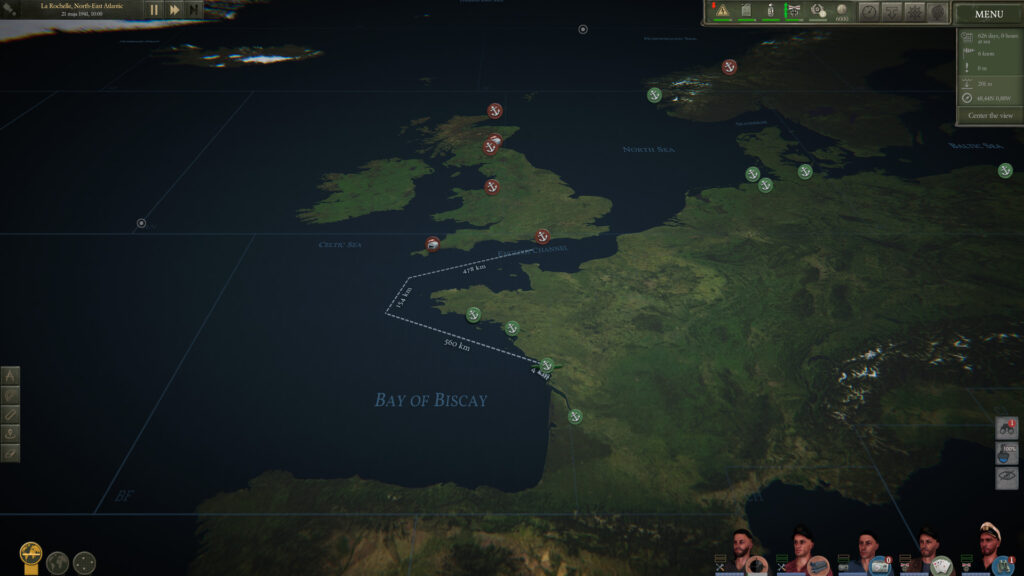
The same goes for navigation; you can rely on your own calculations using maps, protractors, and compass measurements, instead of letting the game automatically show you where you are. This style of play slows down the pace, but the reward is the feeling that you earned every victory with your own knowledge and patience.
On the other hand, Uboat understands that not everyone wants to spend hours calculating angles and practicing trigonometry. If you prefer to be a strategic leader, you can delegate those tasks to the crew. In that case, your sonar operator automatically reads distances, the navigator calculates the course, and the officers input parameters into the TDC.
It’s up to you to choose the moment of attack, decide whether to play aggressively and risk detection or patiently wait for a better opportunity. This way, the game becomes accessible to those who want to experience the atmosphere without learning all the technical details.
A special strength of the game is that both approaches can coexist. It is not necessary for the player to strictly adhere to one style; you can manually handle one part of the calculations and leave the rest to the crew.
For example, you can measure the speed of an enemy ship yourself, but let the TDC calculate the final torpedo trajectory. Or you can navigate using a compass, while allowing the game to calculate corrections during long journeys. This flexible design allows both complete beginners and veterans of the Silent Hunter series to play the game, each at their own level of complexity.
Uboat also encourages experimentation. If you want, you can start a campaign in a more accessible mode, and then gradually take on more responsibilities as you become more confident in the mechanics.
The game never forces a hardcore approach, but always offers it as an option for those who want the most realistic experience. This is a rarity in a genre that has often been closed off to new players.
Weaknesses and Areas for Improvement
The biggest downside right now is the micromanagement that can become tedious. Manually changing shifts, the constant need to repeat the same actions, and limited automation slow down the flow of the game.
Additionally, the storage system and resource allocation could be more intuitive. These are details that may suit those who enjoy absolute control, but for a broader audience, they can become a barrier.
Potential and Future
Although it is no longer early access, there are still a few bugs, but it shows consistent progress. New updates bring tutorials, better optimization, and content that makes the game even richer.
An active community and a developer team that listens to feedback give hope that this could become what Silent Hunter once was, a reference point for the entire genre. If a dynamic campaign, more automation, and space for the modding community are added, Uboat could cement its place as the ultimate submarine simulation.
Uboat is a modern attempt to bring back the feeling of complete immersion in the submarine world, with the addition of RPG and management elements that make a difference. It is not perfect and has its frustrations, but when depth charges start shaking the ship, and you search for salvation in the silence of the depths, you realize that we simply do not have enough games like this today.
The game copy for the review was provided by the publisher Ultimate Games S.A.