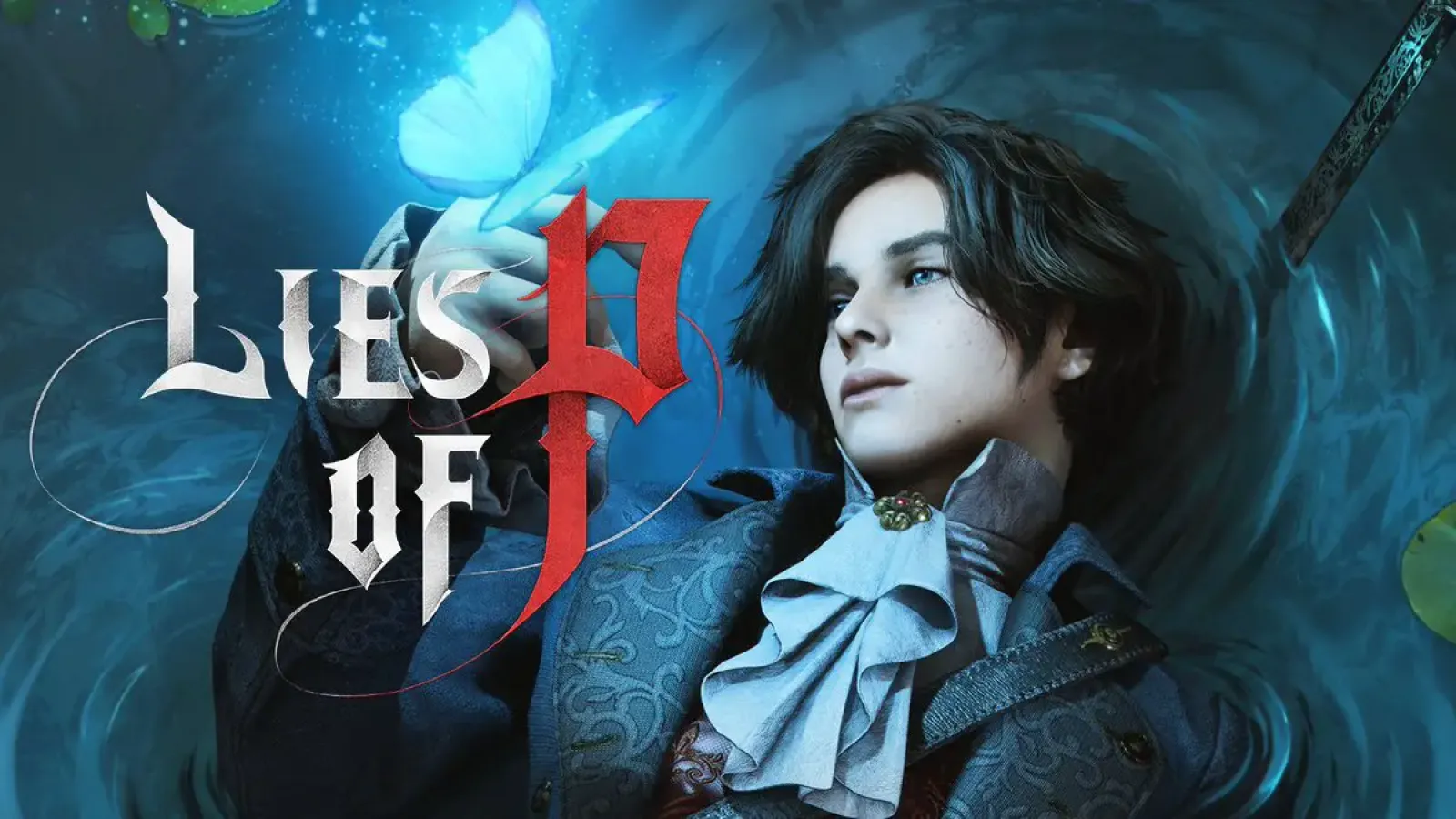
Soulslike titles often prioritize gameplay over narrative, so we end up reading Wikipedia after the subtitles for the story. Lies of P turns that recipe on its head: it places us in a dark, electrified Belle Époque variant of Pinocchio's world and immediately pulls us forward with a clear main plot, character-building dialogues, and a system of lies/truth that alters endings.
Story and Atmosphere
"I am just a puppet, this city is Geppetto" - The Boys probably didn't even send it thinking they would hit the story of Lies of P while describing Split in their hit Dalmatia.
The very beginning of the game is magical, with subtle signs and an introduction to the game. The musical theme in the main menu is enchanting, and the moment you press play, an introduction worthy of a cinematic masterpiece begins.
It starts with the words can you hear me? Here the game tries to engage us in the story.
After that, a voice calls us Geppetto's puppet. It immediately explains who we are and precisely clarifies our identity.
The next sentence is "We need your help". Because of this, we feel important, like the main character, which we are. It doesn't use complicated animation, it hasn't thrown us in front of a boss we can't defeat. It gently sets us in the first act.
It started with a story.
Beautiful.
This game never holds your hand, quite the opposite, but it provides a quality introduction to the story and to Krat.
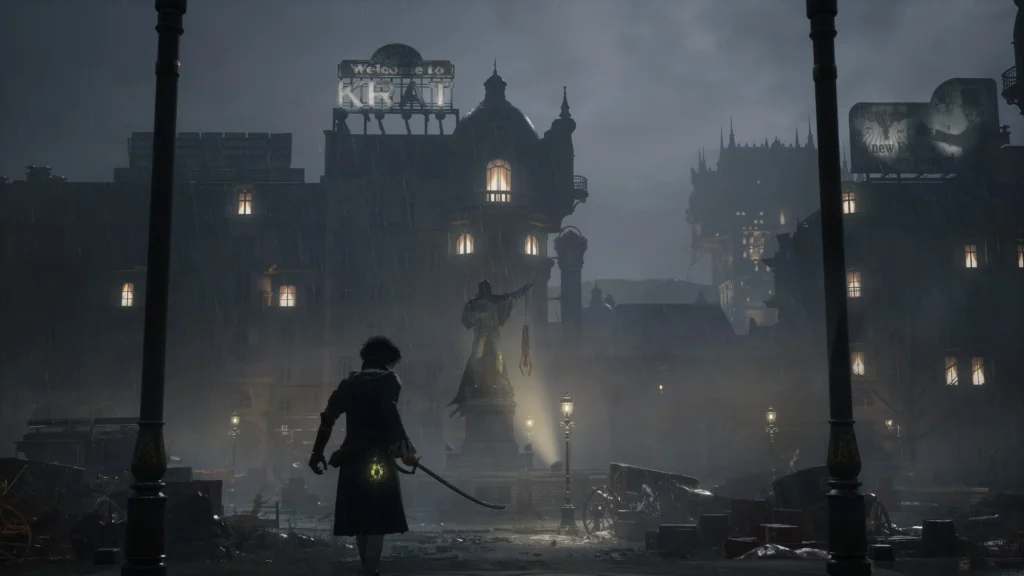
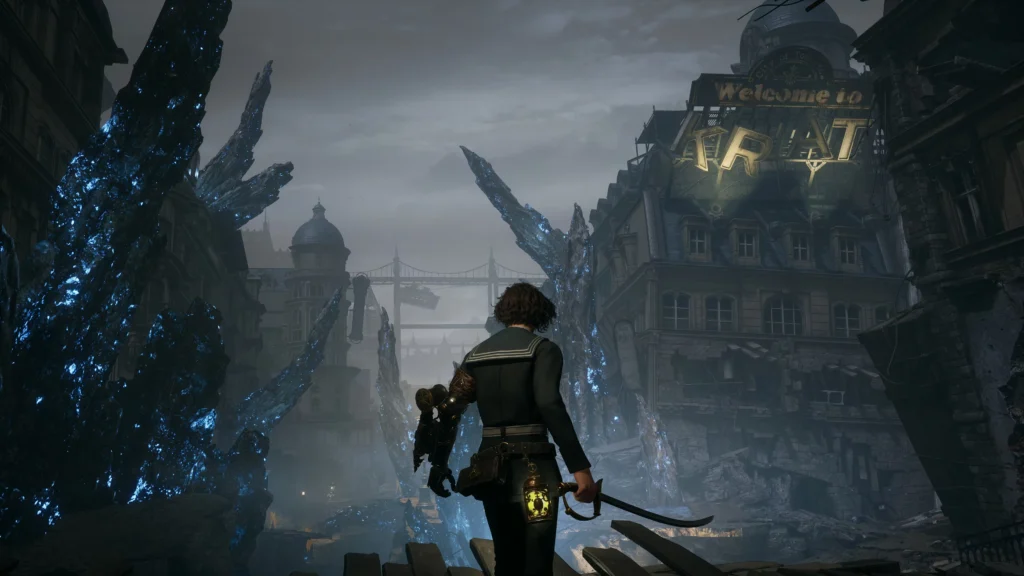
Krat, the city where the story takes place, is animated with a love for detail rarely seen outside the biggest AAA productions. The fire that spreads throughout the city casts warm, flickering reflections on the damp cobblestones of the streets, so even before we encounter any enemies, we feel that entire neighborhoods have come alive with their own pulse.
The puppets are animated deliberately jerkily, with a hint of stop-motion: their heads sometimes freeze at an unnatural angle before suddenly grabbing weapons, invoking a fear that is not horror but existential discomfort.
In contrast, human characters, especially Sophia, Antonia, and Polendina, move gently, fluidly; the difference reminds us of how far P is, yet so close to its goal of becoming a “real boy“. If you choose the good ending.
The structure of the story itself is complex, divided into several acts, with a clear dramatic arc.
Krat, which we exit, feels like a Belle Époque dream transformed into a nightmare. The pavements shine from the rain, torches on the facades flicker orange over bluish gas flowing down the drainpipes; everything exudes the decor of the Paris Exhibition of 1900, but beneath that lavish arch, there is a sense of anxiety in the empty streets.
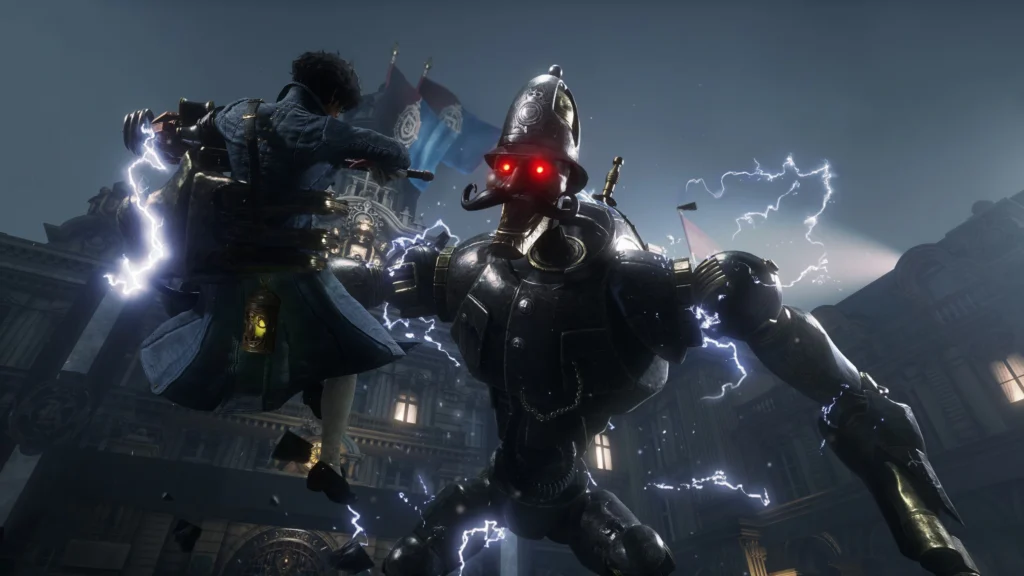
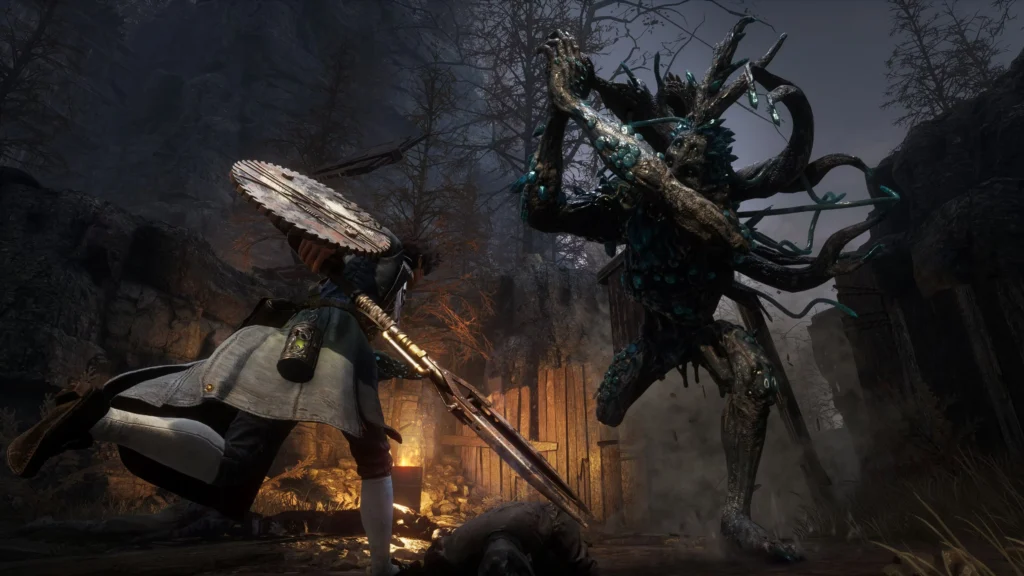
The animators intentionally moved the puppets jerkily, as if they were framed using stop-motion technique: when the police marionette turns its head ninety degrees without a single transition frame, the discomfort is more primary than fear, as we recognize an almost human, yet foreign rhythm of life. This is why the fights are quite tricky, as the attacks are not often expected due to the unusual movements of the puppets.
In contrast, the human characters, Sophia who gently cheers us on from the hotel balcony, Antonia who strikes the keys of a faded piano, Polendina, the butler who makes the entire hotel exude elite Viennese charlatanism, appear smooth (because they never move), visually creating a distinction between animated wood and metal and flesh.
This dichotomy is both P's longing and his burden: the closer he gets to being a real boy, the clearer the price of humanity is revealed.
The first act focuses on the search for Geppetto and the discovery of the consequences of the puppets' rebellion. The game does not burden us with complex cutscenes, but rather with small letters scattered throughout the vast exhibition hall and dialogue pauses in which Sophia says don't lie if you don't have to, or just lie when you must (I'll go into more detail about that later).
Krat was once the pearl of the world, a city whose café tables clinked with the money of world travelers fascinated by the wonder that the hosts called Ergo.
The miners found it deep beneath the nearby limestone plateau, in veins that shimmered like liquid gold; chemists soon discovered that this glittering substance powered both engines and human bodies, and inventors, primarily Lorenzini Venigni and the older Geppetto, realized it could serve as the mind for their mechanical puppets.
Thus began the era of Puppetcraft: street cleaners, waiters in the Opera, even police officers at intersections were wooden workers whose Ergo-core beat like a heart, freeing citizens from hard labor and solidifying Krat's reputation as a technological paradise.
But at the very root of this flourishing lay the seed of ruin, Petrification Disease. At first, it was called stone cough, as the voices of the afflicted would crack in a sharp screech, and hard blue-green spots resembling mineral veins would appear on their necks.
Doctors believed it was a mining ailment, perhaps a consequence of dust from ergolite; alchemists claimed it was the natural price of touching the divine substance.
The symptoms were deceptively mild, slight stiffness in the joints, paleness, occasional bouts of complete loss of voice, but the disease progressed quietly: tissue turned into a crystalline mass, circulation halted, and the afflicted would end up in a grotesque peaceful pose, petrified, yet aware until the last blink.
After that, the puppet frenzy occurred, where the puppets decided to kill all human inhabitants, and only the stalkers, elite fighters serving various factions in the city, stood against them.
I won't spoil any further, as the story is a masterpiece.
RPG system
In theory, it's simple: you collect Ergo, spend it on levels, and levels raise six classic attributes. I'm joking, I had to read a real little bible about what each attribute does because they don't have standard names. The game is overloaded with instructions and combinations of attributes, so sometimes it's hard to grasp everything.
I will try to briefly explain:
Vitality increases health and the number of Pulse Cells (flasks); Vigor regulates stamina; Capacity is carrying weight and how much Legion energy you can carry; Motivity and Technique are two poles of physical damage (blunt handles versus finesse handles).
Advance pushes elemental and status damage. When you spend Ergo on the Stargazer, the game clearly shows you how much DPS each equipped blade gets, useful because the weapon consists of two halves: the upper “blade” scales with Motivity/Technique/Advance, while the lower “handle” dictates attacks and scales with the same statistics, but often with different coefficients.
Experimentation is, like in a long-term relationship, a necessity. The same greatsword on the handle rapier turns into a slow but precise thrust-greatsword with different scaling.
In practice, there are several layers of upgrades that complement each other, so even a slight shift in one branch gives a different emphasis to your combat style, which you can adjust with points you pay with Ergo.
But what is Ergo? Ergo is the element that exists in all living beings, but also in dolls. It is the fuel that powers all of Krat, and our goal is to collect as much as possible. It's not just our goal, but you'll find that out after visiting the cathedral.
Combat system
At the foundation of combat are two defensive paradigms – block and dodge – which the game constantly pushes you to combine instead of relying on one. A basic block consumes stamina and takes a percentage of health depending on the weapon you use, but each subsequent hit returns a portion of health in a system similar to Bloodborne.
While a perfect block (Perfect Guard) negates damage and fills the enemy's stagger meter, the window for execution is so narrow that in the first hours it feels even more complex than Sekiro's deflect; many describe the usage ratio as 75% parrying and 25% dodging precisely because enemy spring-action strikes often change tempo in the last hundredth of a second.
However, when you manage to execute a perfect guard, a hard metallic sound is heard, the camera slightly shakes, and the enemy's weapon is deflected, it becomes a moment that turns every series of perfect guards into an almost rhythmic game of stacking stagger and breaking the opponent's weapon.
Dodge is tricky. Not just at the beginning, but throughout the entire game.
It's good that with the help of P-organ (let's say these are skills) upgrades unlock a wider and deeper dodge, making combat more fluid as you invest quartz into yourself.
Instead of classic perks, you upgrade your mechanical heart through the quarters. Four rings, each with five nodes (I guess, it's about nodes), unlock in concentric circles: the first rotates basic QoL bonuses (greater Pulse Cell heal amount, shorter recovery after a knockout), the second injects new actions (rising after a dodge, additional Fable Art slot), the third and fourth serve for fine-tuning combat (wider stagger window, additional health recovery after a block).
It’s important that the nodes do not unlock in order but like a puzzle: each upgrade requires you to place a quartz in a “slab” or “potent” slot; if you assemble the required color pattern, you receive a bonus for the entire branch. The system rewards both mathematical planning and personal affinity.
Since I have always been bad at math, and there was too much information, I realized this a bit too late. Just like I figured out that I could sprint after 4 hours of gameplay.
This is where the often-mentioned situational difference comes in; in a certain part of the first game, a perfect block does not open the opportunity to counter because the boss is currently retreating; a one-time dodge, however, shortens the gap just enough for your sword to tear through the armor before its jump back.
The offense is far simpler. Each blade and each handle create their own hybrid set of moves, and the interchangeable Legion arm, which serves as a weapon.
P represents the puppet, so its left arm is interchangeable with a module that has its own upgrades. Each module, some chain that pulls enemies, a Flamberge flamethrower, a Fulminis electro-gun, has three levels of raw power, but also two passive options (faster charging, greater stagger) that unlock with Legion caliber. Yep, another thing you have to collect.
The arm itself serves as a joker that fills stamina gaps and has saved me quite a few times.
There is no traditional magic, but throwing termite bombs or parts of puppets almost mimics an elemental system. Fire melts zombified alchemists, electricity short-circuits metal puppets, acid eats away at human enemies.
The stagger mechanic is tied to these statuses: when the enemy's lifebar turns white, you need a charged attack right at the end of the animation to knock them down; if you’re late by a second, the window closes and you return to patiently carving with light attacks because there’s a good chance you don’t have stamina.
The damage balance is noticeably lower than in Souls: the game expects you to utilize Rally, block-parry, and stagger instead of the boss falling in three waves of min-maxing.
Because of this, battles can take the form of exhausting trenches where only after using up Pulse cells (or medpacks in other games) do you realize that you are actually dying from lack of stamina, not from one wrong step.
At the same time, weapon durability and limited carry weight force thoughtful rotation: the grinder sharpens the sword in the midst of a marathon battle, and the weight of the gear compels a choice between a tank build that defends everything and an agile fencer who relies on the surgical precision of their dodge.
The game calculates encumbrance as the sum of weapons, Legion arms, amulets, and armor (which is purely cosmetic but carries weight). 30%, 60%, and 100% are thresholds that, if exceeded, shorten the dodge and increase block stamina consumption.
Anyone wanting a tank build without losing agility must push Capacity instead of pure Vitality.
Instead of rings, Hotel Krat sells amulets that offer more extreme bonuses (+30% power, but -20% physical defense, thus pushing specialization towards an element or block style.
The best amulets drop from bosses, and here Specter, the summoned AI companion, comes in handy, which can be further adjusted with a Wishstone.
How to get a wishstone? Well, you have to collect coins from trees that you unlock a bit later. Yep, more gathering.
If you swap out its gem, you can give it an electro-explosion upon death or a slowing cloud of smoldering acid – a small but sometimes crucial boost in early NG.
Lie System
Now, here’s a real tip without spoiling anything.
Lying is mostly good, even though the game tries to portray it as something bad. Puppets, according to the Great Covenant, cannot lie, but P can.
In Lies of P, there is a hidden counter that the game never shows, and we feel it at every dialogue crossroads: the level of humanity. The only way to raise it is to lie. Whenever you are given the option of Lie or Truth, you decide how much the wooden puppet will turn into a real boy. The game does not record such decisions in the menu; it tracks them behind the scenes and then gives them voice through subtle but increasingly noticeable changes.
There is one way to track this; halfway through the game, a hidden portrait of Carlo, the boy on whom P is designed, is found, and the more you lie, the more his nose grows. Fun fact: if you lie well, the portrait eventually gives top-tier weapons.
Humanity accumulates in three basic ways.
The first is direct conversations, like the moment when you can tell a crying puppet that her owner is still alive or confess the harsh truth to her.
The second is seemingly insignificant actions, such as praying in front of a statue or playing a record on a phonograph, which the game classifies as truth or lies even though it does not speak about it aloud.
The third is side quests: when you hand an item to an NPC, they often ask you what you think about their appearance, character, or fate, and that judgment also contributes to the hidden total.
As the number of lies grows, the world subtly changes. The eyes of P eventually get pupils, the metal tick of its mechanical heart slowly transforms into warm beats, and most importantly, the cat in the hotel finally lets you pet it.
At the end of the story, the sum of the spoken lies determines the ending. I won't spoil it, all endings are great, but one is quite dark.
Final verdict
Lies of P proves that a soulslike doesn't have to sacrifice emotional depth to maintain gameplay mechanics. In fact, you don't have to sacrifice 40 minutes to learn the lore by watching a YouTube video because the game has a fantastic story.
A story that grows under the weight of your lies, a combat system where block and dodge blend into a dance of steel, and a modular RPG approach that encourages experimentation, all together create an experience that feels fresh yet familiar to those who grew up with FromSoftware.
Despite the difficulty and factors that affect it, such as the narrow window for perfect blocking or the weight that can stifle creativity, every victory over the puppets of Kratos leaves that recognizable feeling of earned triumph.
A must-read for anyone who loves the soulslike genre!
Game copy provided for review purposes by publisher Neowiz