The Tokyo Game Show (TGS) is one of the largest annual video game fairs in the world, held every September at the Makuhari Messe convention center in Chiba City near Tokyo. The first TGS took place in 1996, and since then it has evolved into a globally significant event dedicated to video games. The fair is organized by the Japanese video game industry association CESA (Computer Entertainment Supplier’s Association) in collaboration with the publishing group Nikkei Business Publications, with support from the Ministry of Economy, Trade and Industry of Japan. The main focus of the Tokyo Game Show has traditionally been on Japanese video games, but in recent decades, an increasing number of international publishers and developers have used this platform to showcase their new titles and hardware.
Historical Development of the Fair
The Tokyo Game Show was first held in August 1996, when the three-day event attracted over 109,000 visitors with the participation of 87 exhibiting companies showcasing a total of 365 video games. In its early years, TGS was held twice a year – every spring and autumn – from 1997 to 2002 (the first editions were held at the Tokyo Big Sight center), after which the fair transitioned to a single annual date in the autumn months.
During the late 1990s and early 2000s, TGS established itself as a key stage for the premieres of new consoles and games. For example, at the fair in 1999, the upcoming PlayStation 2 console was presented to the Japanese audience for the first time, along with a range of accompanying games, marking an important technological milestone for the industry. Attendance and the number of exhibitors grew continuously year after year, although initially, some major companies like Nintendo were absent – Nintendo showcased its innovations at its own Shoshinkai fair at that time.
After 2002, when an annual schedule was introduced, the Tokyo Game Show continued to grow in scope and significance. By 2011, attendance had risen to over 200,000 people, and in 2012, around 223,000 visitors were recorded. The content of TGS evolved by following trends in the industry: in 2012, a sudden rise in mobile and social games was noted, which led some major companies to reduce their presence that year – for example, Microsoft did not participate in TGS that year – while in 2013, it returned to promote the launch of the Xbox One console. In the following years, new technologies gained increasing importance: by the mid-2010s, games and equipment for virtual reality (VR) began to be regularly showcased at the fair, and in 2014, an official e-sports tournament for the fighting game Street Fighter was introduced as part of the program.
By the mid-2010s, the Tokyo Game Show had broken its own attendance records. The 2016 anniversary edition (20th anniversary of the fair) attracted over 271,000 visitors with more than 600 exhibiting companies, and in 2018, the number of visitors peaked at around 298,000 – the highest in TGS history. At that time, TGS solidified its position as one of the most attended video game fairs in the world, comparable to events like the former American E3 and the German Gamescom.
In 2020 and 2021, faced with the COVID-19 pandemic, TGS was held for the first time in an exclusively virtual format – instead of a classic fair, online versions of TGS were organized. Even during those challenging years, the fair did not interrupt its continuity. By 2022, the Tokyo Game Show returned to exhibition halls, albeit with certain restrictions: that year, it gathered around 138,000 visitors, which was half of the record number from 2019 (over 260,000 visitors).
However, in 2023, attendance significantly increased again – to approximately 243,000 people – signaling a renewed interest from the audience. Then, the Tokyo Game Show 2024 reached as many as 274,739 visitors, the second highest result in the fair's history, nearly matching the record year of 2018 and confirming that TGS has returned to its previous level of popularity.
Tokyo Game Show 2024 and 2025
The Tokyo Game Show 2024 was held from September 26 to 29, 2024, in a hybrid format – as a physical fair at the Makuhari Messe center alongside a parallel virtual platform, Digital World – under the slogan "Trailblaze the World with Gaming", which emphasizes the global reach of video games. The organizers highlighted that the 2024 fair edition once again filled the entire exhibition space of Makuhari Messe and that nearly half of the exhibitors were from abroad, with a large turnout of foreign visitors and media. Thus, TGS 2024 demonstrated how the video game industry has returned in full swing after the pandemic, with an emphasis on international cooperation and digital content.
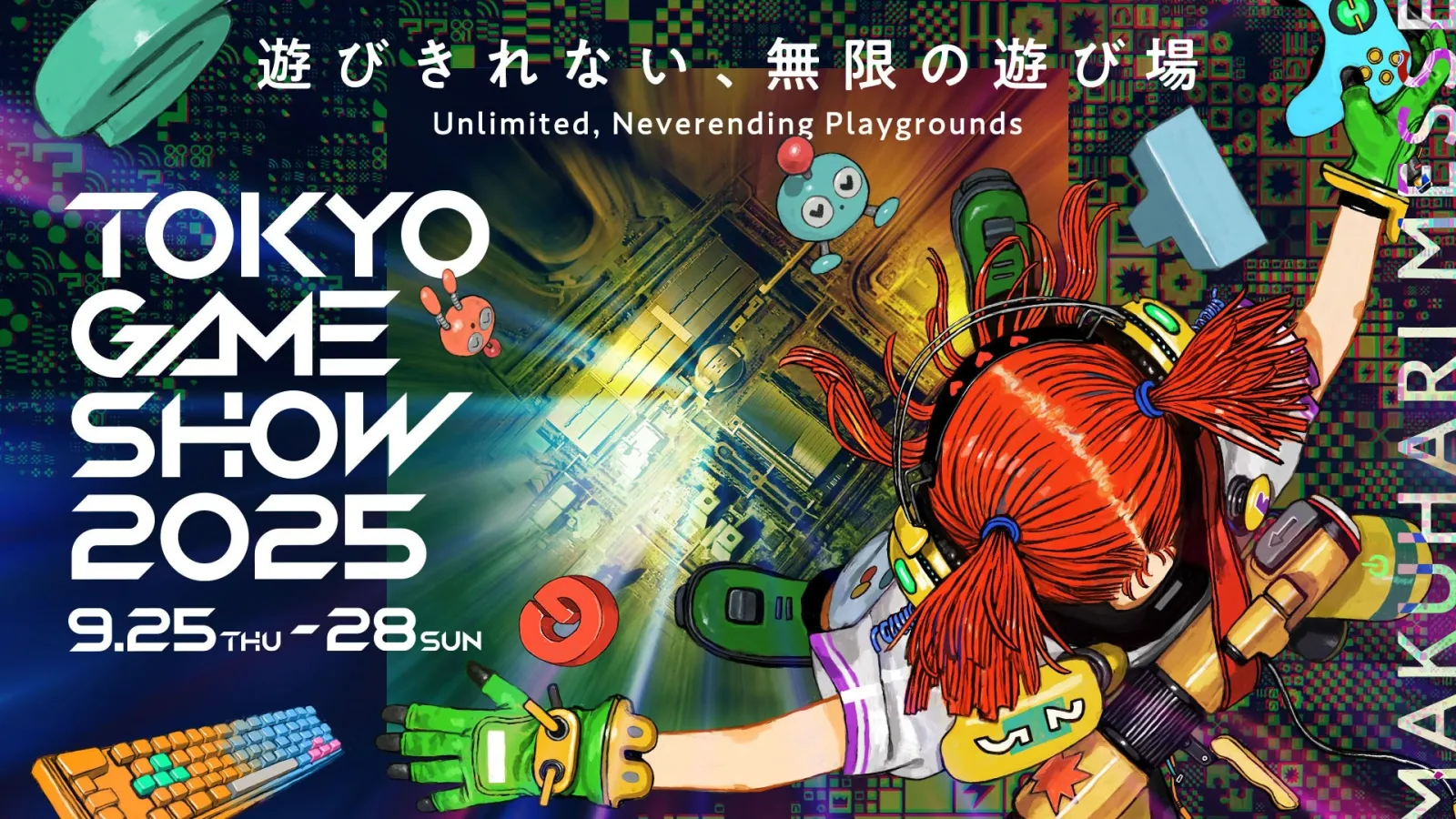
TGS 2025 will take place from September 25 to 28, 2025, and carries the theme "Unlimited, Neverending Playground", symbolizing an unlimited, endless playground that connects players of all generations. For 2025, the organizers are also announcing a refreshed visual identity for the fair (a newly redesigned logo that signifies a “new era” for TGS), along with further expansion of the program for a global audience. Continued growth in international participation is expected – both from exhibitors and visitors – as the Tokyo Game Show continues its role as a bridge between the Japanese and global video game markets.
International Impact of TGS
Over the years, the Tokyo Game Show has outgrown the confines of a national fair and become an event of international significance for the video game industry. Nearly half of all exhibitors at TGS in recent years come from abroad, including many major Western publishers and game developers, which attests to the global appeal of this event. The organizers actively encourage the participation of foreign companies and audiences – for example, through promotional events in other Asian countries and collaborations with travel agencies offering package deals for foreign visitors. Major international players like Microsoft, Ubisoft, Electronic Arts, and others increasingly participate in TGS, showcasing new titles to the Japanese audience, while simultaneously allowing Japanese publishers to reach a global audience through TGS.
In addition to physical presence, TGS also exerts influence through media and online channels. Every year, hundreds of journalists and influencers from around the world cover the event, reporting on announcements and the atmosphere of the fair. Thanks to official live broadcasts and digital platforms, the content of the Tokyo Game Show reaches millions of viewers outside Japan. This significantly contributes to the spread of interest in Japanese video games on a global scale – many successful Japanese game franchises have gained international popularity partly through presentations at TGS and the media attention generated by the fair. As a central meeting point for the Eastern and Western video game industries, the Tokyo Game Show remains one of the most important annual events in the world of video games.