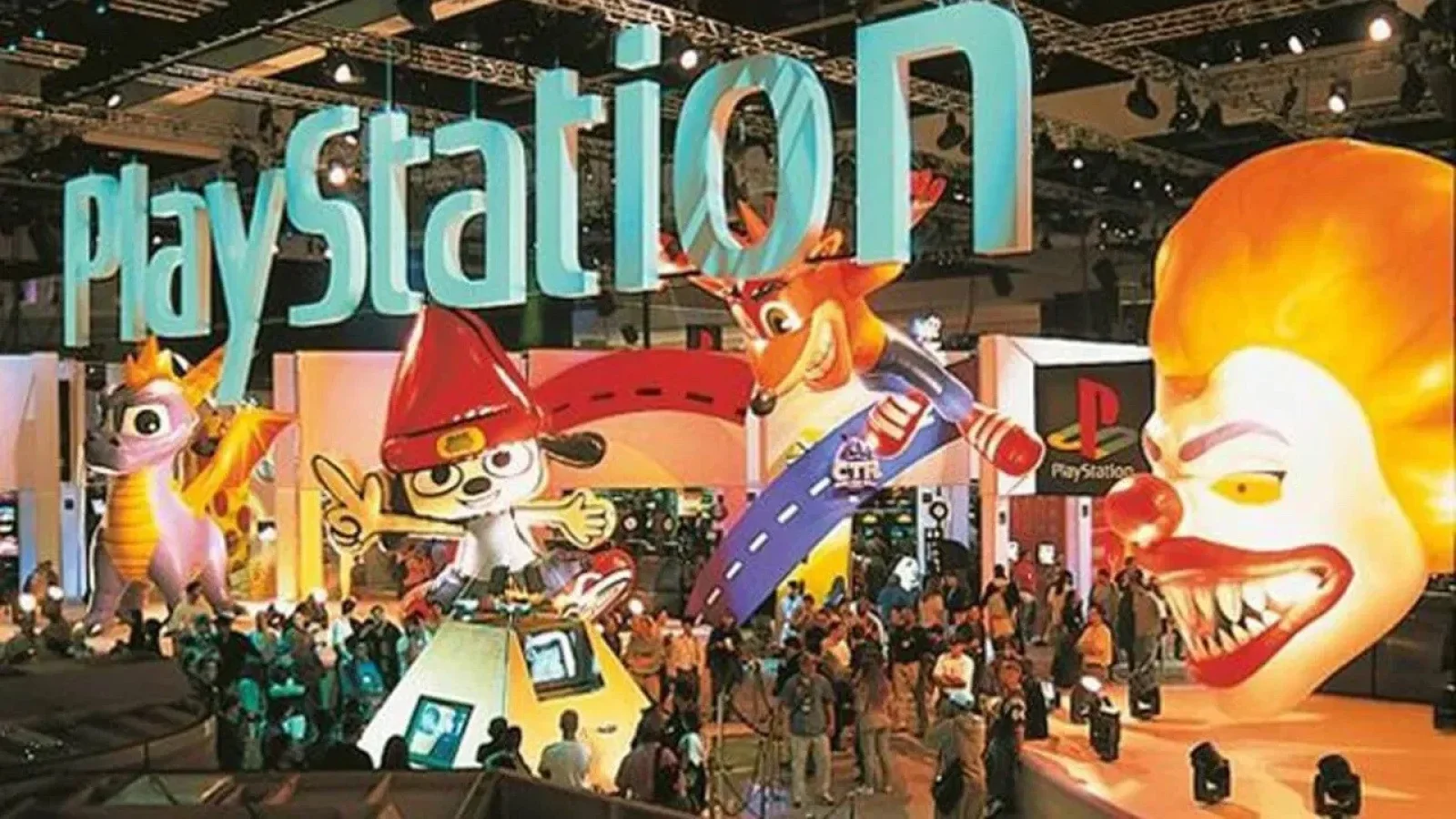
E3 1996 was one of the most important fairs in the history of video games. It was at that time that the gaming industry seriously stepped into the 3D era, while PlayStation, Sega Saturn, and Nintendo 64 were engaged in a fierce battle for the attention of players and the media.
Let's take a brief step back in time and remember the platform games that visitors could play at the E3 fair back in 1996. It was the platform games at E3 1996 that best showcased the industry's significant transition from the 2D to the 3D era of video games.
Crash Bandicoot (PlayStation)
Sony introduced Crash Bandicoot at E3 1996 as the new major PlayStation mascot. The game impressed with its graphics and a different approach to 3D platforming compared to the competition.
Crash Bandicoot quickly became one of the faces of the first PlayStation console, and Naughty Dog demonstrated how far PlayStation could push visuals in the platforming genre.
Super Mario 64 (Nintendo 64)
If there was one game that dominated the E3 1996 fair, it was Super Mario 64. Nintendo demonstrated a completely new level of freedom in 3D space, allowing players to explore open levels for the first time without the limitations characteristic of older platformers.
Many developers later admitted that Super Mario 64 laid the foundations for modern 3D games. The controls, camera, and level design were years ahead of the competition.
Rayman 2 (PlayStation, Saturn)
It is less known that Ubisoft was working on a 2D sequel to Rayman as early as 1996, which was supposed to be a classic 2D platformer, with a planned release at the end of 1996 for PlayStation and Sega Saturn. That version was later canceled after Ubisoft developers saw Sony's Crash Bandicoot at E3 and became aware of the new gameplay possibilities offered by the 3D platforming genre.
Interestingly, there is still a playable prototype of the early PlayStation version of Rayman 2, which shows how the game was supposed to look before transitioning to a fully 3D concept. The final version, Rayman 2: The Great Escape, was released a few years later as a fully 3D platformer.
Sonic X-treme (Sega Saturn)
Sonic X-treme was Sega's attempt to transition the Sonic the Hedgehog series into a fully 3D environment, responding to the growing popularity of new platformers like Crash Bandicoot and Super Mario 64. E3 1996 was one of the few moments when players and the media could see the game in motion.
The game used a so-called fisheye camera, open levels, and a completely different approach to gameplay compared to the previous 2D installments of the series. The project was never completed due to numerous development issues, and we had to wait for the next Sega console and the release of Sonic Adventure for the first true 3D Sonic game.
Bubsy 3D (PlayStation)
Today, Bubsy 3D is often mentioned as one of the most controversial platform games of the nineties, but during E3 1996, the situation was completely different. Developers were then massively experimenting with transitioning platformers from 2D to a fully 3D environment, and Bubsy 3D was one of the more interesting attempts of that period.
It is particularly interesting that the game was developed by the studio Eidetic, which would later become known as Bend Studio and develop hits like the Syphon Filter series and many years later Days Gone for PlayStation.