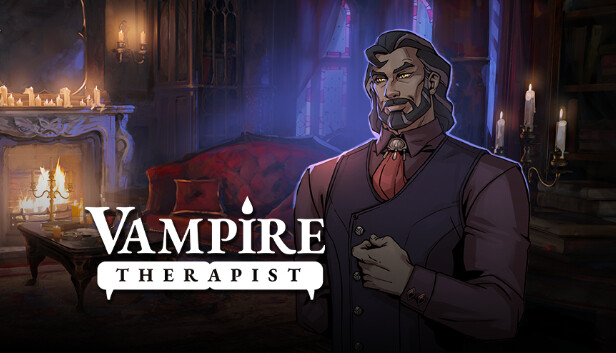
Vampire Therapist, by Little Bat Games, seems at first glance like another unusual indie visual novel with an eccentric premise. However, behind the absurd idea of a vampire who becomes a therapist hides a surprisingly layered and thoughtful experience that successfully combines humor, gothic atmosphere and real psychological concepts.
At the center of the action is Sam, a former gunslinger from the Wild West who, after becoming a vampire, decides to change his calling in life centuries later. Instead of being a hunter, he becomes a therapist to other vampires struggling with the emotional burdens of their own immortality. This premise already breaks the classic stereotypes about vampires as cold and powerful predators. Here they are insecure, frustrated, anxious and often trapped in patterns of thinking that they have not been able to overcome even after several centuries of existence.
The game's greatest strength lies in its mechanics. Therapy sessions are based on recognizing cognitive distortions – wrong thinking patterns such as catastrophizing, overgeneralizing or a black-and-white view of the world. The player must listen carefully to the interlocutor and identify problematic thoughts. It is not simply choosing the correct answer, but a process that requires understanding the context and emotional background of the character. Wrong assessments can slow down progress, while correct interventions gradually lead to a shift in the client's thinking.
It is especially worth pointing out that the game does not trivialize the therapeutic process. Although the dialogue is often witty and laced with irony, the characters' problems are treated with seriousness and respect. The humor comes from the contrast between the dark vampiric environment and the very human dilemmas of fear of rejection, feelings of inferiority, guilt over the past or the inability to adapt to change. The balance between the comic and the sincere gives the game authenticity.
Visually, Vampire Therapist relies on stylized 2D portraits and static, dark backgrounds that create an intimate, theatrical atmosphere. The emphasis is clearly on text and interaction rather than technical pageantry. Such an approach shows confidence in the quality of the writing, which is really at a high level. The characters are developed, the dialogues are natural, and each new therapy session brings a different emotional challenge.
The pace of the game is slow. It is not a title that offers action or fast dynamics, but an experience that requires concentration and patience. The game gives space to conversation and thinking, allowing the player to fully devote himself to analyzing the situation. Such an approach may not suit everyone, but for those who appreciate narrative games and psychological depth, it will provide an extremely satisfying experience.
The soundtrack further emphasizes the melancholic tone of the game. Subtle music and minimalistic sound effects create a sense of an enclosed, safe space where the characters can open up without fear. The atmosphere is intimate and somewhat introspective, which perfectly matches the theme.
Vampire Therapist is a bold and original project that shows how video games can be a medium for exploring psychological topics in a serious but accessible way. Combining gothic aesthetics, quality writing and real therapeutic principles, the game offers an experience that goes beyond mere entertainment.
A copy of the PlayStation 5 version was provided for review purposes by the development studio Little Bat Games and the publisher ULTIMATE GAMES SA