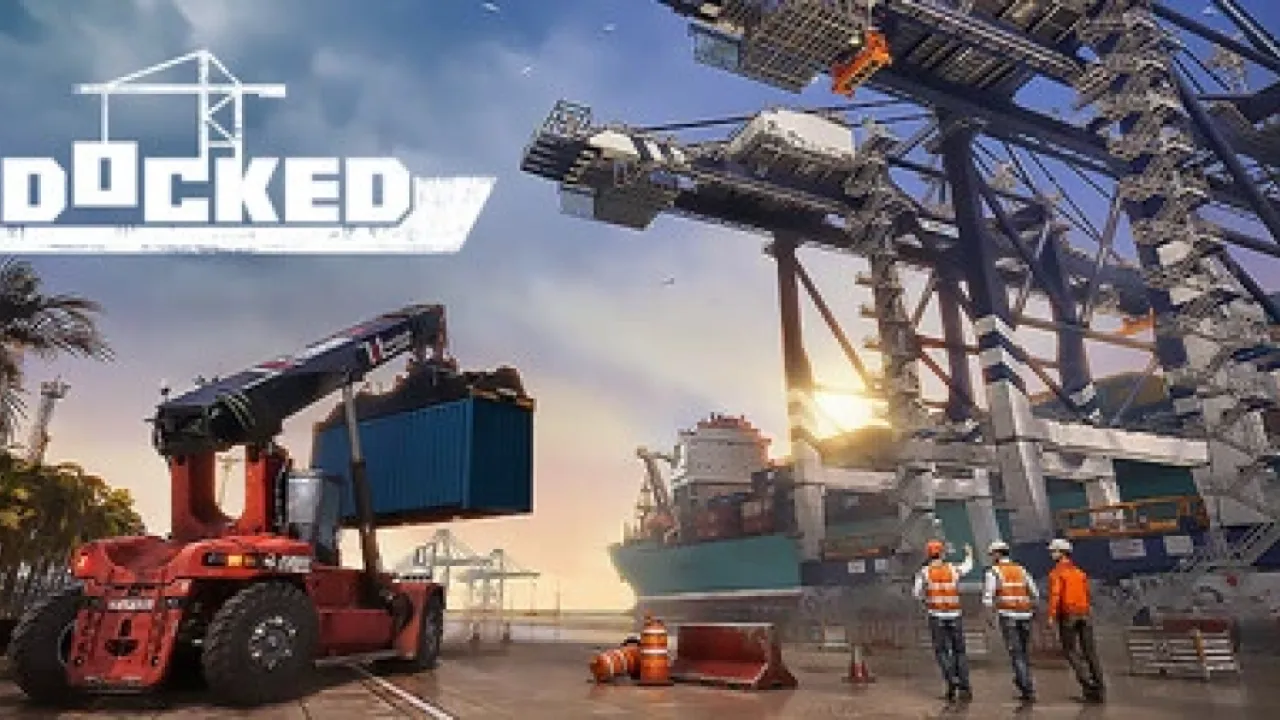
Simulators have been firmly rooted in the mainstream for some time now, but rarely do they manage to find a balance between realism and playability. This is exactly what Docked, a new title from the Saber Interactive studio, is trying to achieve, which places players in the role of a port manager with a clear goal - to restore and develop a family business in the failing Port Wake.
Unlike many modern games that rely on spectacle and fast pace, Docked takes a different approach from the very beginning. There are no big opening scenes or over-dramatization here. The focus is exclusively on the operation and gradual development of the system that powers the entire port. Such an approach may not immediately win over a wider audience, but it clearly defines what the game wants to be.
The basis of the gameplay is the management of heavy machinery. Players take control of a variety of machines – from large port cranes to transport vehicles – and use them to load, unload and move cargo. Each action requires precision and patience, because physics and the weight of the load play a significant role. Dockeddoes not try to simplify these processes, but presents them in a way that emphasizes authenticity.
It is precisely in this dedication to detail that the game's greatest strength lies, but also its potential problem. The early hours can feel rough because the tutorials aren't always clear enough, and the game often expects players to learn by trial and error. However, as the mechanics are gradually mastered, a feeling of control and satisfaction that is rare in this genre comes to the fore.
As progress progresses, Docked expands its focus from individual tasks to managing the entire dock. New jobs, more complex logistical challenges and the possibility of investing in infrastructure are being introduced. Earned money is used to upgrade equipment and expand capacity, giving the game an additional strategic dimension. Management is no longer only operational, but also organizational, which significantly deepens the experience.
The pace of the game remains consistently slow and methodical. It's a conscious design decision that will divide audiences. While some will appreciate the relaxing, almost meditative rhythm, others may feel the monotony. However, for players looking for a focused and calm experience, this approach works surprisingly well.
Visually, Docked offers a realistic representation of the port without overemphasizing the spectacle. The environment is functional and the machine models are detailed enough to support a sense of authenticity. The physics and animations do their job convincingly, although technical aspects such as the user interface and information transparency sometimes lag behind the rest of the game.
It is important to emphasize that Docked is not a title aimed at the widest audience. Its focus on realism, slow pacing and more complex mechanics means it will best suit fans of simulators and games that reward patience. Those looking for faster and more affordable entertainment might find it hard to relate to his concept.
Despite certain flaws, Docked manages to offer something that many similar games lack – a sense of real progress. Every job done and every upgrade has a clear purpose, and the development of the port seems concrete and well-deserved.
Conclusion:
Docked is a demanding and slow simulator that will not suit everyone, but within its niche it offers a solid and satisfying experience. For an audience that appreciates realism and gradual improvement, this is a title that is well worth trying.
A copy of the PlayStation 5 version of the game was provided for review purposes by publisher Saber Interactive