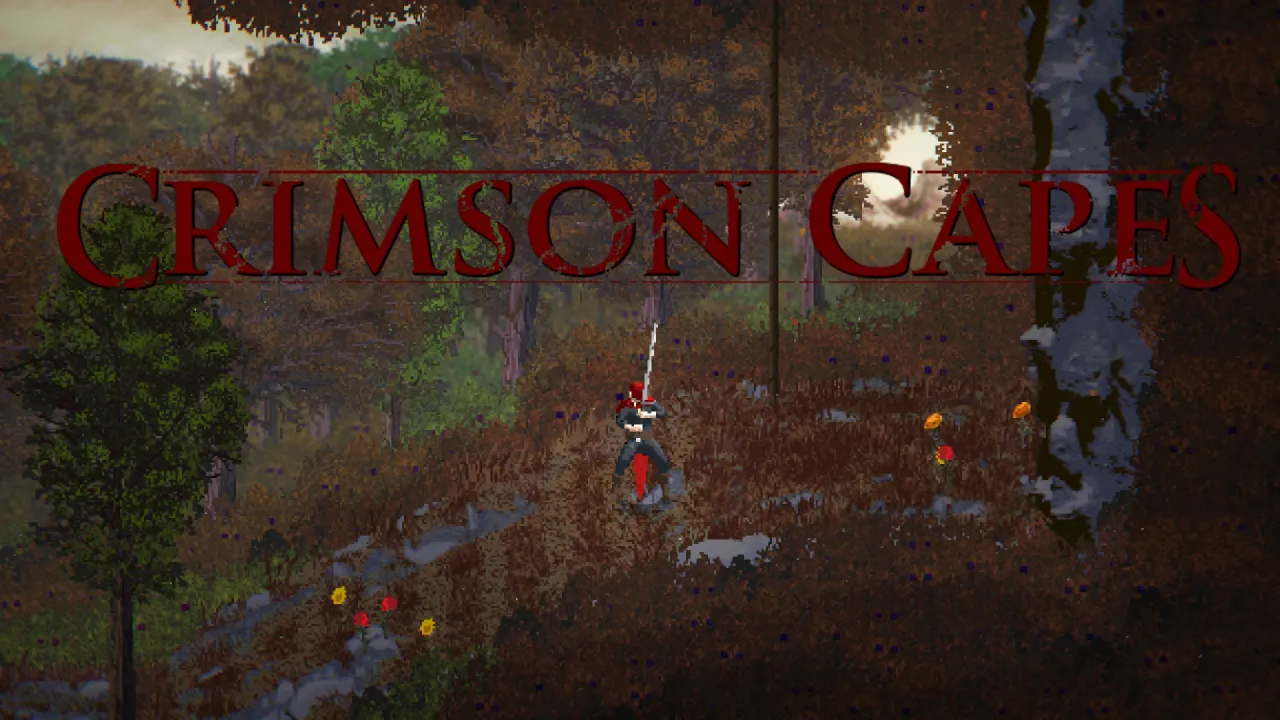
There are games that immediately know what they want to be, and there are also those that only search for it through hours of playing. Crimson Capes definitely belongs to this first group. Already in the first hour, it's clear that he's aiming for a dark, demanding action RPG formula where there's no room for thoughtless keystrokes. Everything feels thought out, from the difficulty of combat to the atmosphere of a world that doesn't try to be likable, but consistent. And this is precisely where his greatest strength lies, but also his limit.
The story puts you in the role of Milo, a man who holds the title of Left Hand of the King and leads an order tasked with hunting witches and suppressing the corruption that is spreading throughout the kingdom. The setting has potential for a serious, morally gray narrative, but the way it unfolds feels distant. Instead of a strong narrative arc, you get fragments. Parts of the dialogue, pieces of the world, hints of larger intrigues that rarely gain real momentum. The curiosity is there, but the emotional connection is missing. The characters are functional, but rarely cross the line of recognition. Everything is there to support the atmosphere, but rarely to raise it to a higher level.
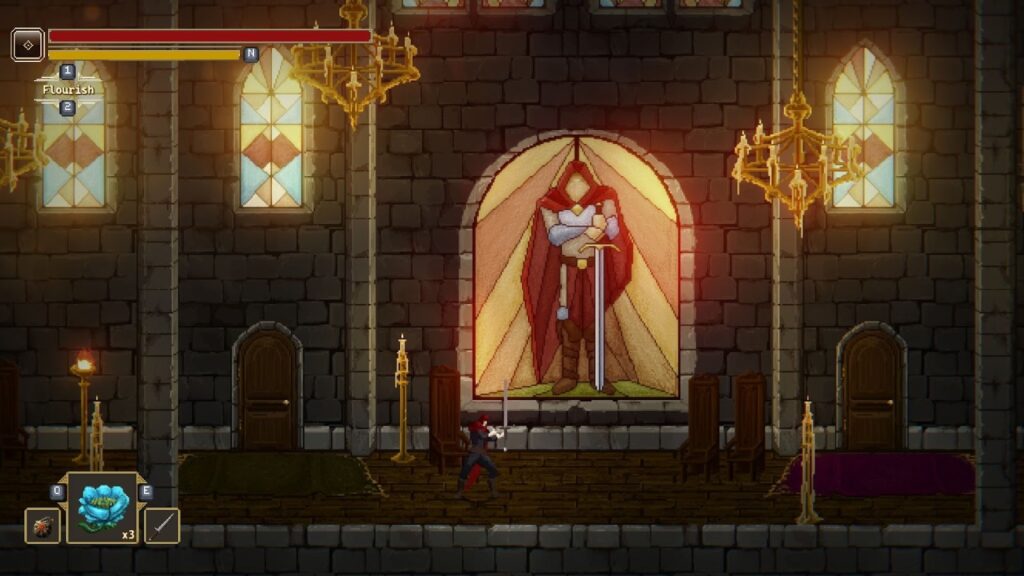
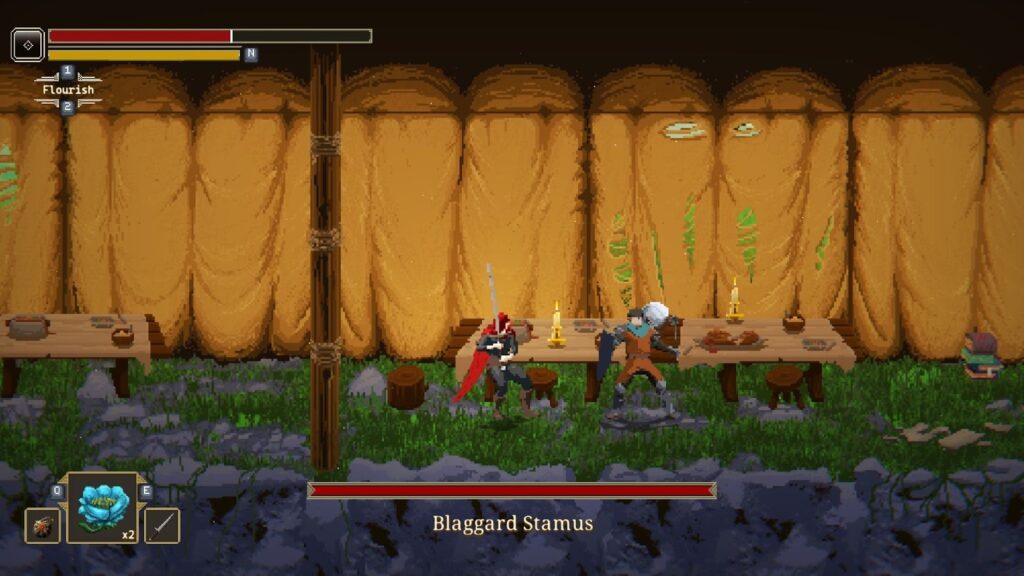
On the other hand, combat is where the game really shows its teeth. Every move has weight, every decision has a consequence. Stamina management is not just a mechanic but the foundation of the entire system. If you rush in without thinking, the game will quickly ground you. The parry system adds depth as it rewards you not just for defending, but for actively breaking down your opponent's defense. When everything falls into place, the fight becomes a rhythm in which you learn, make mistakes and improve. Boss fights stand out because they require patience and reading the opponent, not luck.
However, not all moments are equally precise. When you find yourself surrounded by a large number of enemies in a confined space, the clarity of combat tends to fall apart. The camera and positioning sometimes work against you, so defeat doesn't always feel deserved. These are not frequent moments, but they are noticeable enough to break an otherwise very solid system.
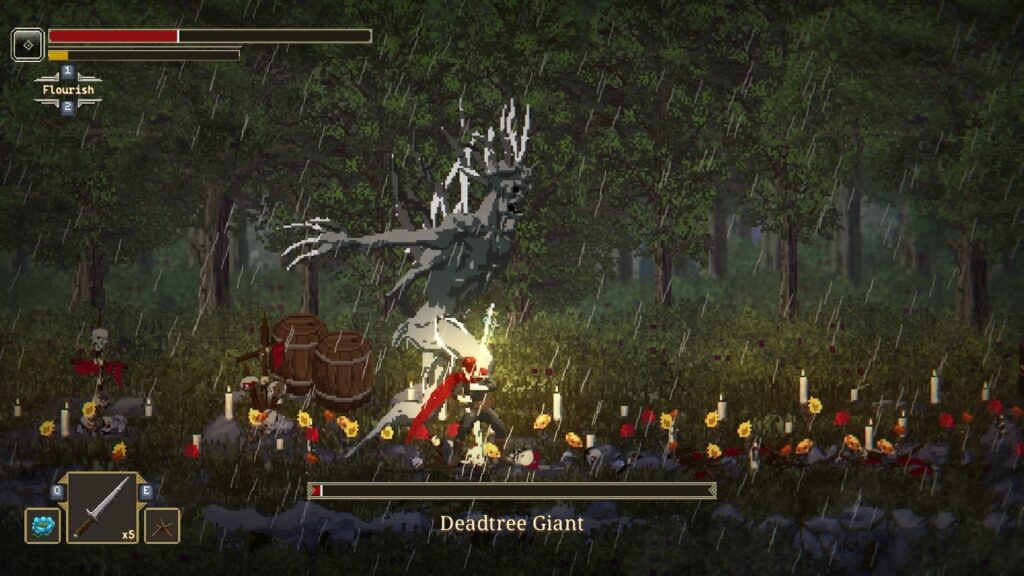
The game world offers a semi-open structure that encourages exploration. There are side paths, hidden locations, and a sense of freedom that rarely comes with this type of combat. But that freedom has its price. Navigation is not always intuitive and it is easy to find yourself in a situation where you are not sure whether you have missed a key path or simply lost your way. Visually, the game looks great. The pixel art has depth, the animations are fluid, and the locations carry some weight. However, there is a lack of stronger visual landmarks that would help each zone to be etched more clearly in the memory.
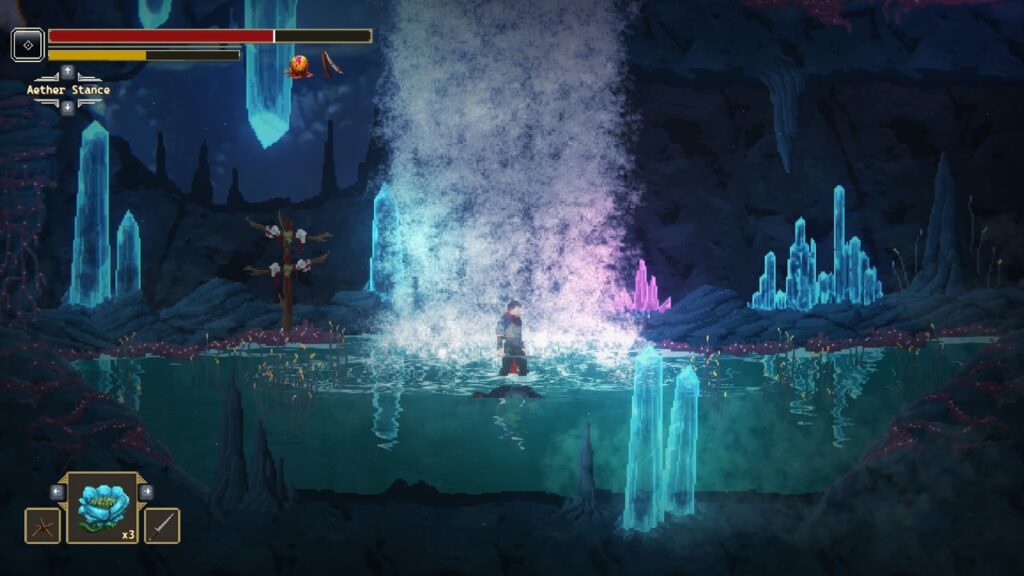
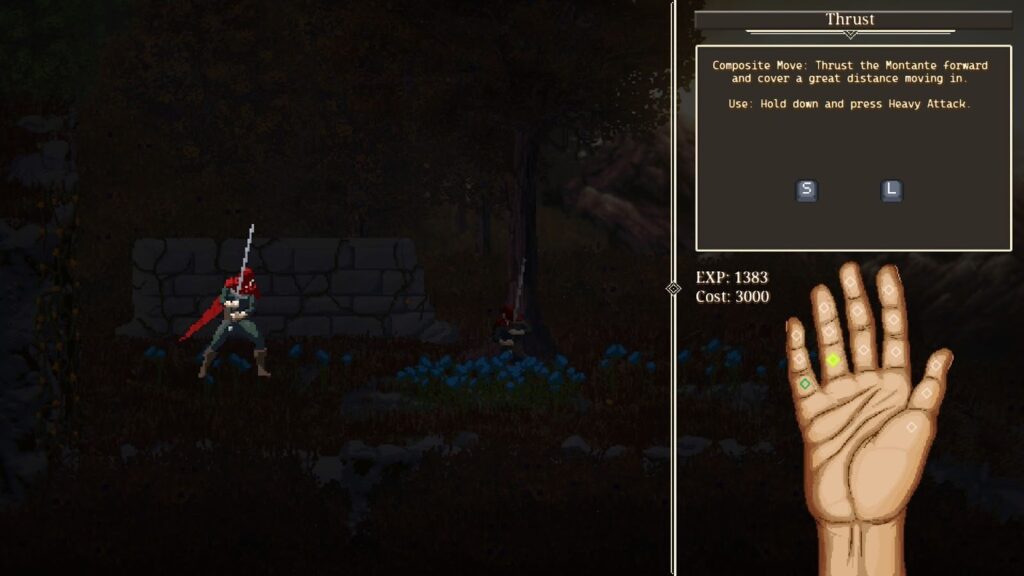
The progression system offers everything you'd expect from an action RPG, but rarely forces you to experiment. Some abilities really change the approach to combat, while others act as minor enhancements that don't leave much of a mark. The gear is there, but the differences between them aren't always pronounced enough to make you feel like you're building something unique. The game gives you tools, but doesn't encourage you enough to make the most of them.
Online elements, including cooperative play and PvP invasions, add an extra layer to the experience. Co-op can lighten the difficulty and add a dose of chaotic fun, while invasions bring unpredictability that won't suit everyone. The good thing is that none of this is forced. You can ignore them and play at your own pace.
Audio and presentation remain constant throughout the experience. The music does not dominate, but supports the atmosphere, while the sound effects in battle give an additional sense of weight to each blow. Everything seems finished and carefully put together, without the impression of incompleteness that often accompanies indie projects.
Crimson Capes can best be described as a game that has a very solid foundation but fails to live up to its full potential. The combat is thoughtful and rewarding, the visual style is convincing, and the atmosphere is consistent. But the lack of a stronger narrative impulse, an uneven progression system, and an occasionally unclear world structure keep it a step below what it could be. And that's exactly why it gives the impression of a game that is very good, but never takes that last step towards something really special.
Sample of the game for review purposes provided by publisher Poor Locke