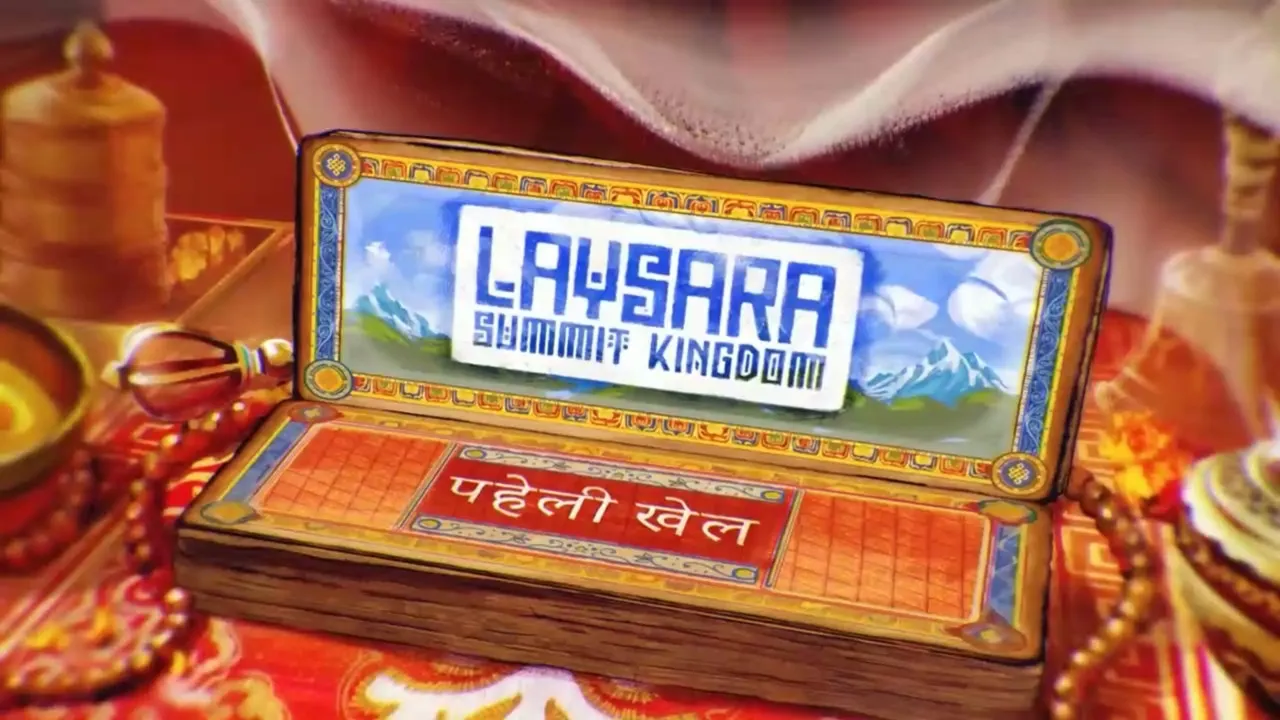
I have traveled a large part of the world, but I have always wanted to visit Nepal, and especially Kathmandu. Since I'm a construction professional, I'm interested in how they build their settlements on mountains and cliffs, how it all works crammed into such a small space. Right now, this game is the closest I can get.
Your nation has been struck by an elemental disaster, so you are sent to unconquered mountain peaks to establish the foundations of a new kingdom. You will have to plan your settlements well, grow the food necessary to survive in harsh conditions and protect yourself from the avalanches that threaten from the snowy peaks.
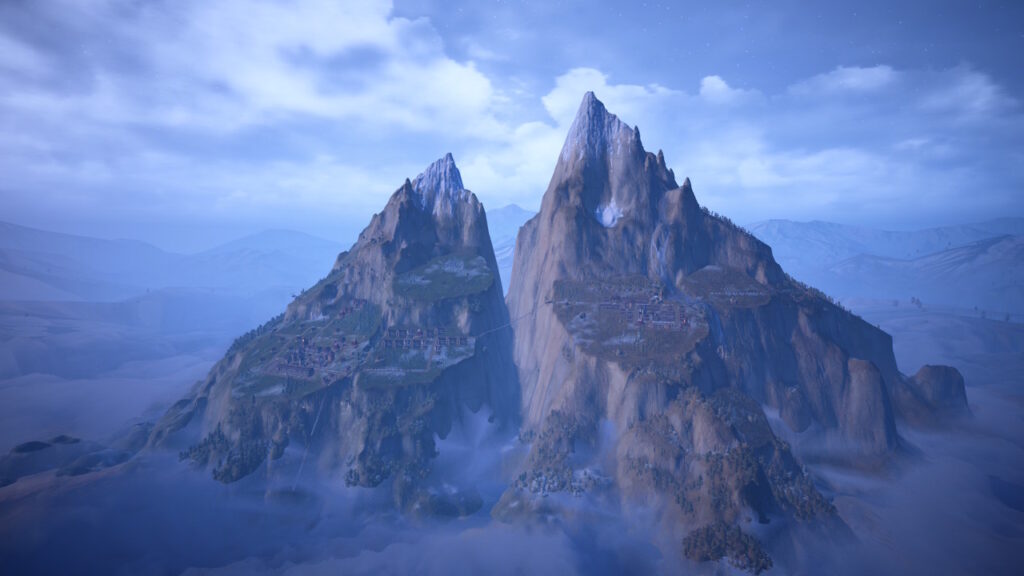
The game recommends that you start with the campaign, which has 15 missions, and also serves as a kind of tutorial where you will learn the basics of how to get your settlement up and running and how to make it self-sufficient.
There are 3 castes at your disposal, lowlanders, artisans and monks. Each of them must contribute to the functioning of the settlement: the lowlanders are workers and they perform all the most basic physical tasks related to food production and mining. Artisans live in slightly richer dwellings, and are mainly engaged in trade and transportation of goods. Monks, as the highest caste, are responsible for the development of new technologies and communication with, well, the heavens.

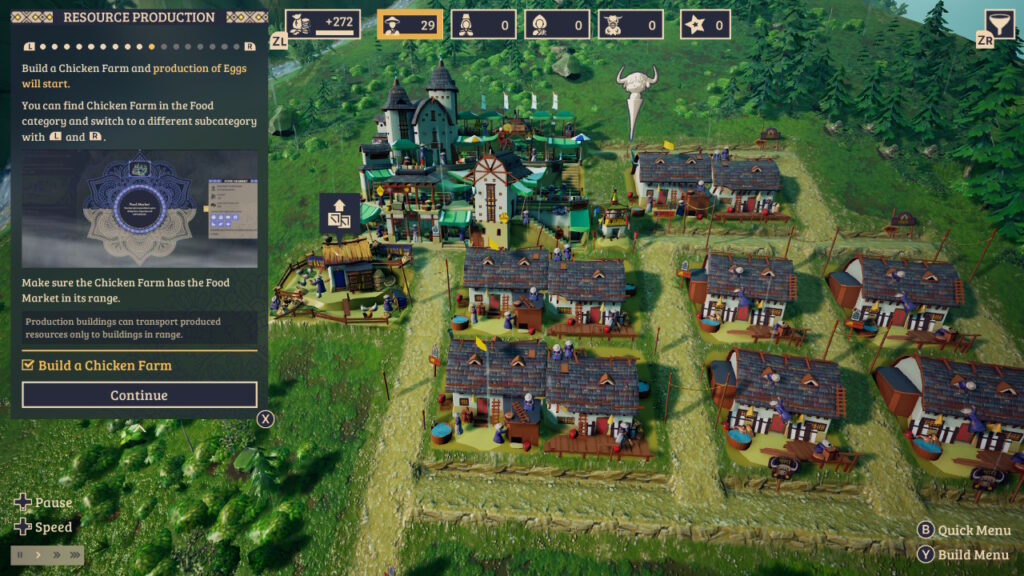
The most important building, without which you cannot even imagine your settlement, will be the Food Market, ilitiga market, where residents will get access to a variety of food that you produce on your farms, from cheese, milk, honey, eggs and the like. It is best to place it centrally, and then build your dwellings around it. The transfer of goods is very easily possible through couriers and traveling merchants.
Since you are developing your settlement on mountainous terrain, it will eventually outgrow its territory, so you will have to expand to other cliffs and heights. Fortunately, this is made possible by very simple and intuitive placement of bridges, vertical shafts and tunnels.
And for everything to work, it is important to constantly keep an eye on finances. Because even though you start with an enviable amount that the kingdom gives you, it will quickly melt away if you become too spendthrift. The first time you run out of money, they'll begrudgingly give you more, but if it happens again, it's game over. Fortunately, like all city governments, you can extort money from residents under the pretext of "donations".
My gripe with building is that you can't rotate buildings, so you'll often end up with some part of an already small territory unused because you can't fit a building into a space where it would only fit if you could rotate it. But you can't.
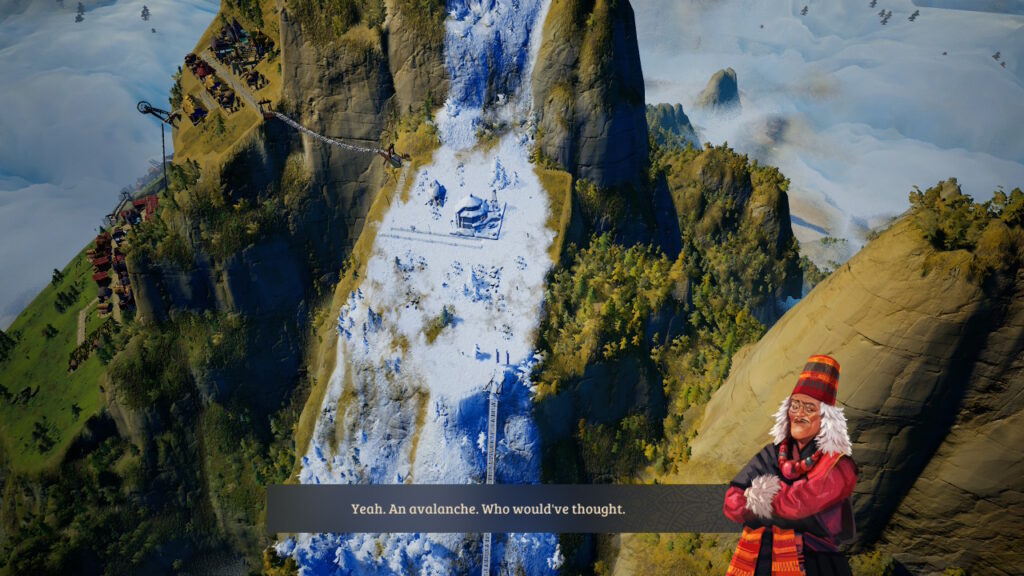
As with any snow-covered mountain, there is the danger of avalanches, which, although you can guess where they might hit by gathering snow, will still appear unexpectedly and bury your trade route or part of the settlement. That's when Mr. Plow comes into action (yes, they really called him that) who will clear the snow for a larger sum and make sure everything is working again. Until the next avalanche. However, you are not completely helpless. You can plant forests that will prevent snow from reaching vital parts of your settlement.
Once you've finished the campaign and learned everything there is to know about establishing a kingdom on the mountainside, it's time for some of the other modes. You can play scenarios with specific missions, in sandbox mode develop several settlements on different mountains and connect them with trade routes, or in free build build a kingdom worthy of the heavens.
The buildings are colorful, the different castes are painted in dynamic colors (blue-red-yellow), the different terrains are very detailed, and the rain, snow and avalanches are well made.
Although you can zoom in and look at everything up close, the camera manipulation is quite bad. Namely, you cannot rotate as you would like, there are already several defined positions and you actually rotate the entire mountain, which, due to the multi-level construction, can seem quite confusing. Also, the controls are sometimes quite imprecise and it would be great if the game supported the mouse function on Switch 2.
The sound side of the game is also commendable: very soothing background music is relaxing and you will simply enjoy playing this game.
Although it has some of its shortcomings, I can definitely recommend Laysara: Summit Kingdom to all those looking for a relaxing city-builder where you can focus on building a functional kingdom and establishing trade routes in detail.
Nintendo Switch copy of the game for review purposes provided by publisher Nejcraft.