AI seems to be in everything these days. From ChatGPT, which almost everyone uses today, through Adobe software, to pregnancy apps that sometimes seem to know more than some doctors. Any way you look at it, the era of AI is here. It makes no sense to deny it today.
Gaming, of course, did not remain on the sidelines.
AI has had its place in Nvidia's DLSS for some time now. Basically, DLSS (Deep Learning Super Sampling) takes a lower resolution image and uses AI to reconstruct it into something that looks like a higher resolution. In practice, this means: more FPS, better image, less load on the graphics card. And realistically, we all accepted that without much drama. You get more performance "for free", and the visual compromises are minimal. Win-win.
Then things started to escalate. DLSS 3 brought frame generation, a technology that not only improves the image, but generates additional frames between the real ones, and later iterations further refined this, reducing artifacts and making the whole system more stable and believable. In other words, AI no longer just helped, it began to actively participate in what we see on the screen.
And even then some of the players began to wonder: where is the limit? And then NVIDIA announced DLSS 5 at its recent presentation. And, as expected, the internet went crazy. Mostly negative. Comments ranged from: "this is the future of gaming" to "this is no longer a rendering but an AI lie". The question that naturally arises is: is this reaction justified? What does DLSS 5 actually do?
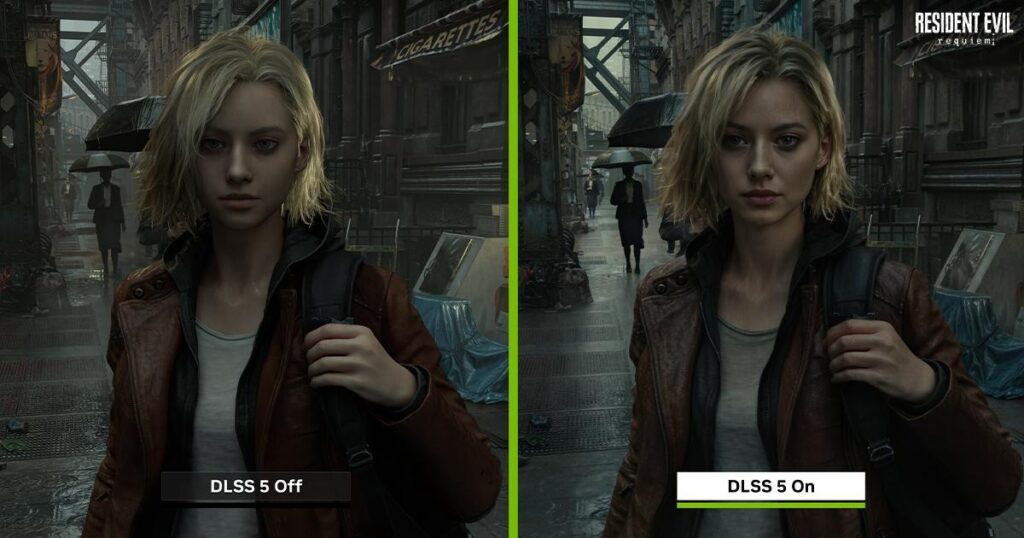
If we saw DLSS 2 as a smart upscale, and DLSS 3 as the first serious step in generating additional frames, DLSS 5 goes even further. And this is where things get interesting. DLSS 5 is no longer just a tool in the background, but more actively involved in how the final image looks. According to the first information, AI is no longer responsible only for the reconstruction of the resolution or the insertion of additional frames, but also for the generation of visual details that are not necessarily directly rendered by the engine.
This includes a finer appearance of materials, a more detailed rendering of surfaces and a generally richer visual result than we would expect from a classic upscale. In other words, the line between "rendered" and "generated" is beginning to blur. And that's where we come to the key difference: DLSS used to enhance what already existed, while now it's starting to create what may never have existed in the original render.
Sounds impressive. But also as something that opens up a lot of questions.
Why DLSS 5 makes sense
If DLSS 5 delivers on what it promises, the benefits are hard to ignore. Performance is still the key. Even now, DLSS in "quality" mode gives results that are, in most cases, practically imperceptible, and bring noticeably better fps. And there is not much philosophy, most players today accept such a trade-off without thinking. The only catch: DLSS 5 comes exclusively for RTX 50 series graphics cards. Owners of older models, no matter how powerful, remain without this technology, which relativizes the story of "availability for everyone".
Honestly, as someone who already uses AI in his daily work, it's hard for me to look at this exclusively negatively. Technology is moving forward and DLSS 5 is a logical continuation of that direction. However, it is important to note that the versions shown are still in the early stages of development, and the demos were performed on an extremely powerful configuration with two RTX 5090 graphics cards. One card was responsible exclusively for rendering the game, and the other only for running the DLSS 5 model, on the final version everything will work on one card.
Why some people raise their eyebrows
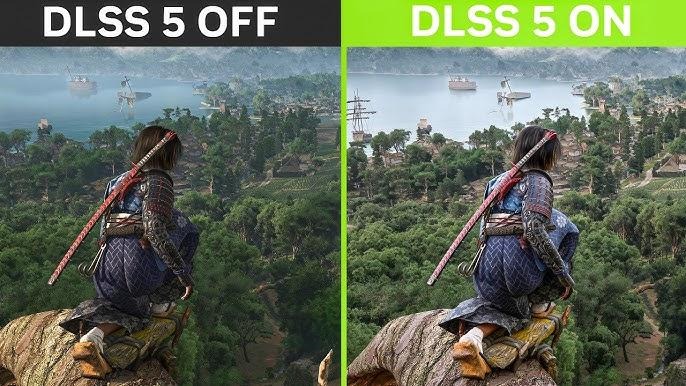
It's not just Internet noise. Developer Mike Bitjell publicly wrote that this kind of technology removes art from the gaming experience, and a rendering engineer from Respawn described the result as an excessive AI filter that tramples on the game's visual identity. When people who develop video games have objections, it's worth listening.
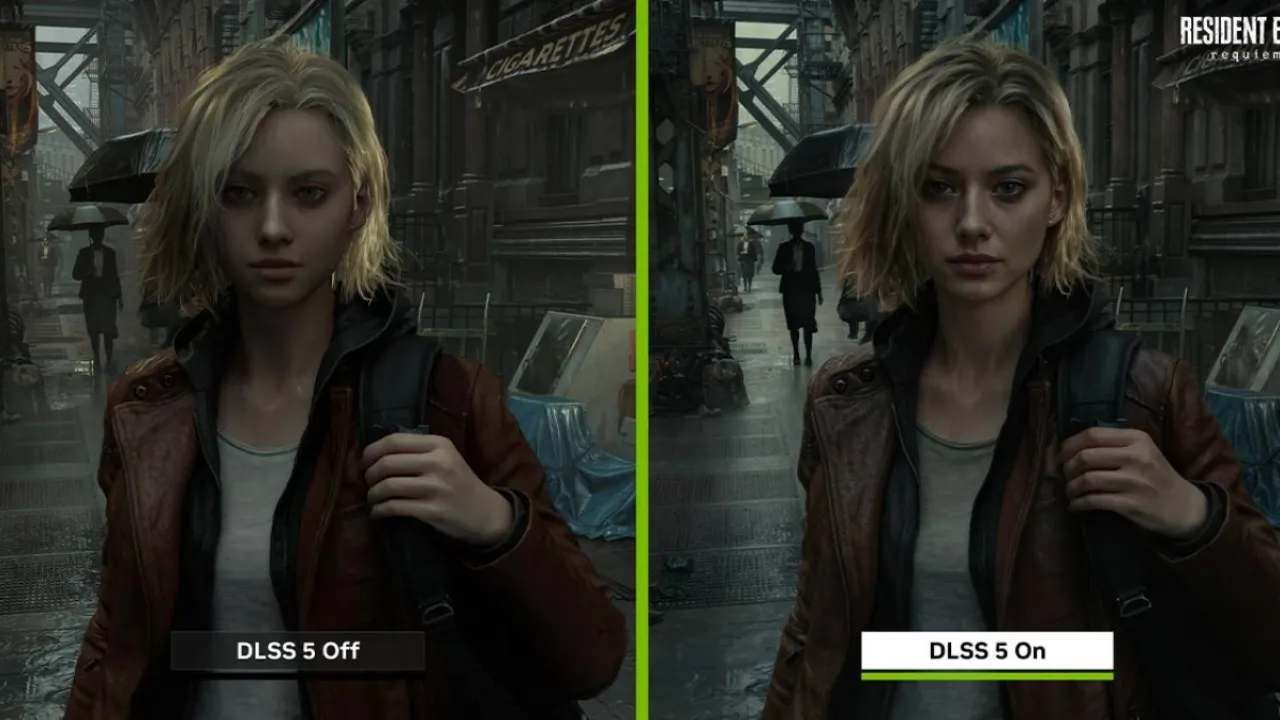
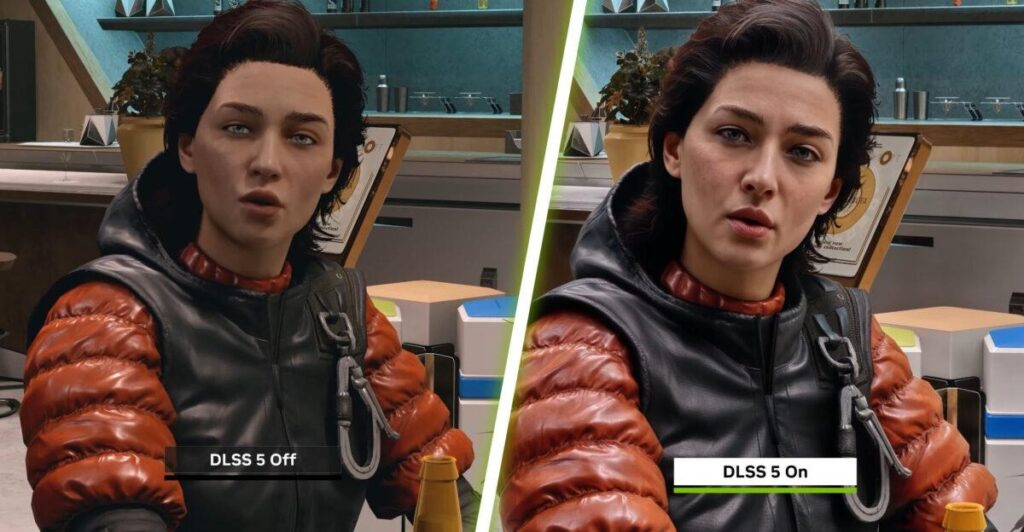
The problem arises at the moment when DLSS stops being "help" and starts changing the image itself. It's one thing to improve what already exists. Another is to actively add details and change the visual impression of the game. This effect can already be seen in some of the presented examples; characters look hyper-realistic, but still move like classic video game models. The result is a bit strange, as if something is not right.
This is where we come to a bigger question: where is the border between artistic vision and AI interpretation? NVIDIA states that developers will have a lot of freedom in implementing DLSS 5, which sounds good on paper. In practice, this opens up space for completely different approaches, from smart integration to potential overkill.
And the question inevitably arises: will DLSS become a tool for improvement or an excuse for poorer optimization? We have already seen some games come out in a technically questionable state, with the assumption that things will be "ironed out" through upscaling and similar technologies. DLSS 5 could further push that trend.
Also, most players will probably never even think about what is actually rendered and what is generated. They will see the finished product and that will be enough. I showed the woman the controversial video and her reaction was: "Wow, that's really cool!". I don't think the average gamer will wonder what's under the hood, but will press play and play the game. But this is exactly where a small amount of discomfort lies, because the border between "real" and "generated" is becoming more and more blurred.
It is important to emphasize that DLSS 5 is not a classic generative AI, like Midjourney or Stable Diffusion, where the system creates a new image from nothing. DLSS 5 does not "invent" a frame from a void, but uses existing data from the game, such as depth, motion vectors and previous frames, to reconstruct and improve the display. In other words, this is more advanced image reconstruction than free content generation.
My take
I'm somewhere in between. Stable FPS and good optimization are still the foundation. If DLSS 5 helps achieve 60 FPS without noticeable visual degradation, great, but if it starts to change the artistic identity of the game, then it's no longer just a technical tool. Some of the characters and scenes shown look really better, but the protagonist of Hogwarts Legacy, for example, looks 10 years older. Bethesda has already commented that this is an early preview and that the art teams will continue to tweak the effects further, which is a good sign: it means that the developers have control over the end result, rather than the AI doing whatever it wants.
AI is already a part of almost every technology and that will not change. DLSS 5 is not the exception, but the rule. But that's exactly why you have to be careful, because there is a real danger that over time everything will start to look "too perfect" and without character. If we get to the point where everything looks the same, regardless of style… then maybe we're losing something along the way.
Another interesting question remains open: how would this kind of technology behave in stylized games? Will DLSS 5 respect that — or try to "fix" it? What happens if I crack such an AI layer on Hi-Fi Rush, Borderlands or Hades? Also, maybe it's time to stop pushing hyperrealism in video games and focus on innovative and interesting gameplay.
Conclusion
Let's face it, technology is law, and DLSS 5, although controversial, is a fascinating step forward - but not without risks. If used as a tool that complements good optimization and respects artistic vision, it can mean huge progress for the gaming industry. If it becomes a shortcut to solve problems that should be solved at the engine and development level... then we'll just get a nicer version of the same problems we already have.
Nvidia does not hide that DLSS 5 is just a step towards full neural rendering, which they call DLSS 10, a future where the GPU practically stops rendering classically and leaves everything to AI. Whether it will be a revolution or the end of gaming as we know it, we will see. For now, DLSS 5 launches in the fall of 2026, and we'll have time for a final judgement.