There are survival games that sell you a sense of control. They give you enough resources, enough room for error, and enough systems to make you feel like a genius as soon as you put two things together. Dead in Antares is not that kind of game. She quickly reminds you that survival is not a matter of a good plan, but of constant improvisation while everything around you slowly goes into that thing.
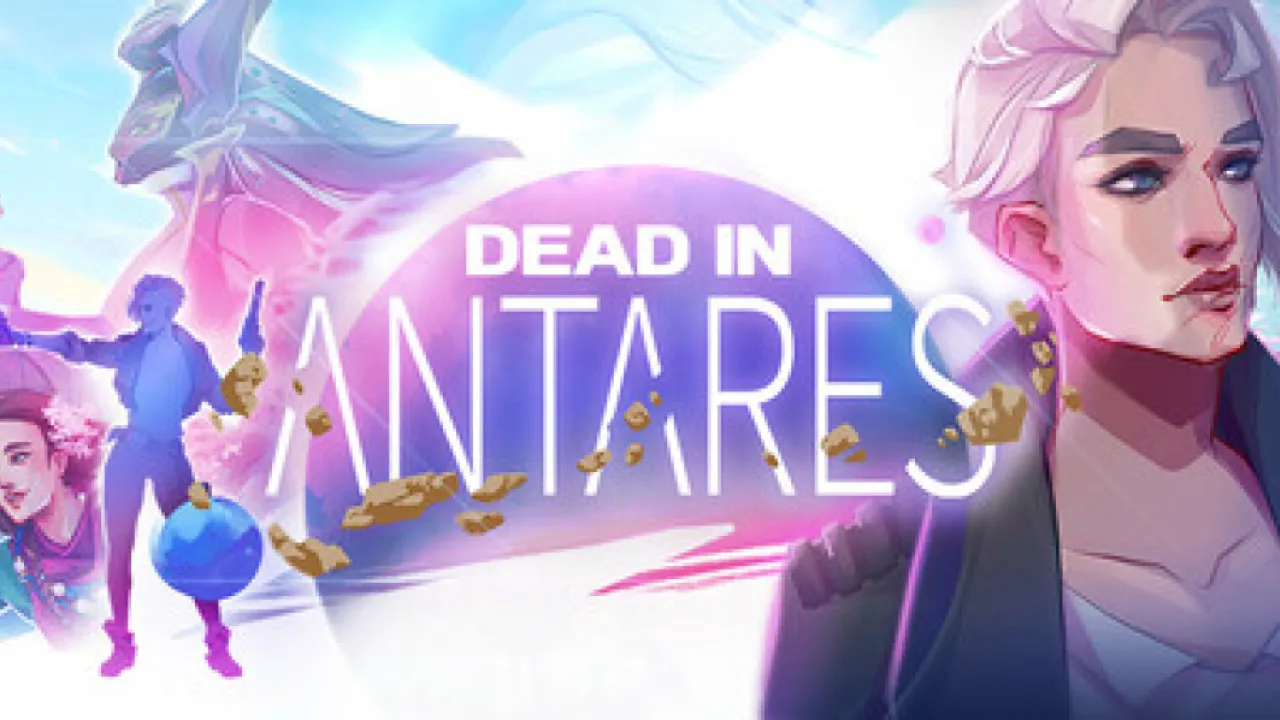
Ishtar Games, the French studio that made a name for itself with its "Dead in" series (Bermudaand Vinland), is back with the third sequel – Dead in Antares. This time, instead of tropical islands and Viking villages, we got a vast space, but the formula remained the same: a combination of survival management, base building, exploration, RPG progression and turn-based combat.
After 30 days of survival in a game with ten shipwrecks, I can tell you one thing - in this game you don't die from radiation or alien teeth, but from human stupidity, stress and a chronic lack of empathy.
What exactly is the "Dead in" formula?
We follow a crew of ten specialists on their way to the planet Ceres. The mission is clear: to save the Earth from impending doom. After a catastrophic ship malfunction, you end up stranded on the inhospitable planet of Antares Prime. Earth will have to wait because your new mission is now: see the next morning.
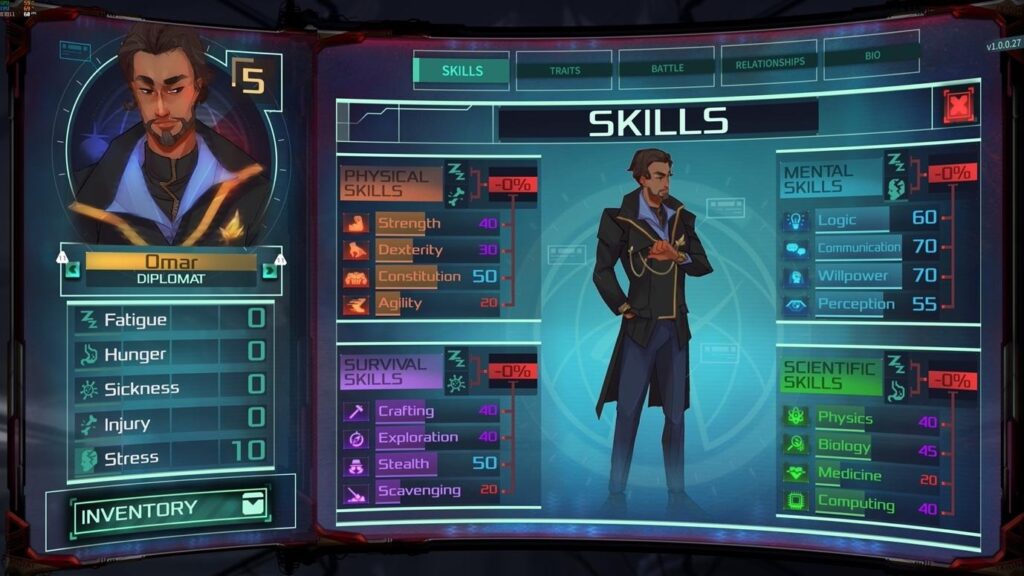
The greatest strength of the game is the concept itself. You have a group of specialist survivors, each with their own skills, traits, and role in this whole makeshift space agony, and it's your job to keep them alive long enough to build a base, explore the environment, and have any chance of survival at all. This includes job allocation, resource management, research, crafting, upgrades, and a constant balancing act between short-term survival and long-term progress.
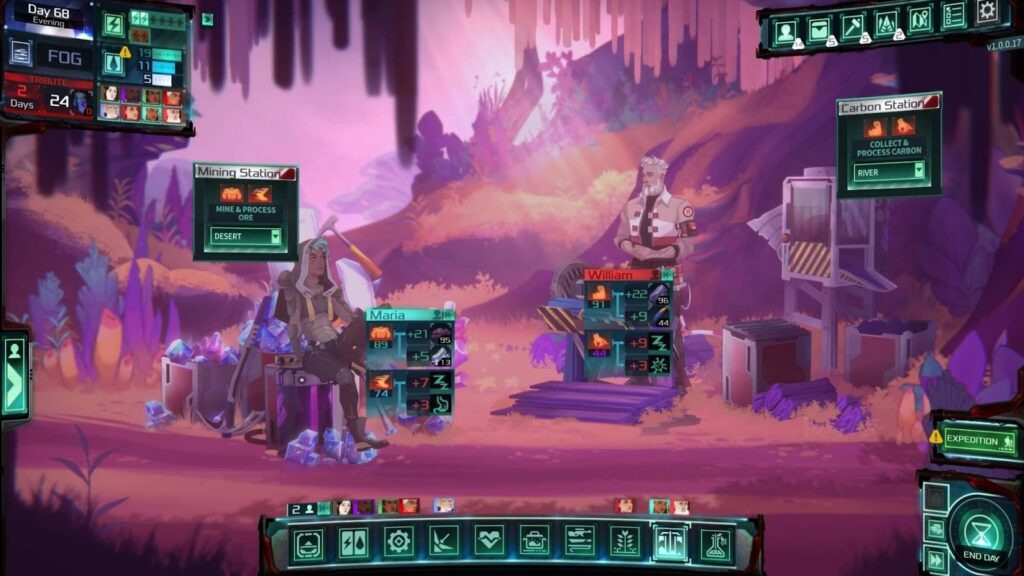
The game takes place through the cycles of day and night. Each action consumes resources, but also affects the condition of your characters. There are five main enemies that are constantly lurking on the interface: fatigue, hunger, injuries, illness and the most dangerous one - depression. If any of these parameters hit 100%, the character is dead, and the game ends.
In the beginning things seem ok, you sort of find a rhythm, test what works, meet people and think to yourself, well, it's going slowly. And then, sometime after twenty days, when all the crew wake up from hibernation, you have more options and more potential problems, and not enough food and water for everyone. Then Dead in Antares ceases to be an interesting concept and becomes a real little chaos of management, survival and firefighting on several sides at once.
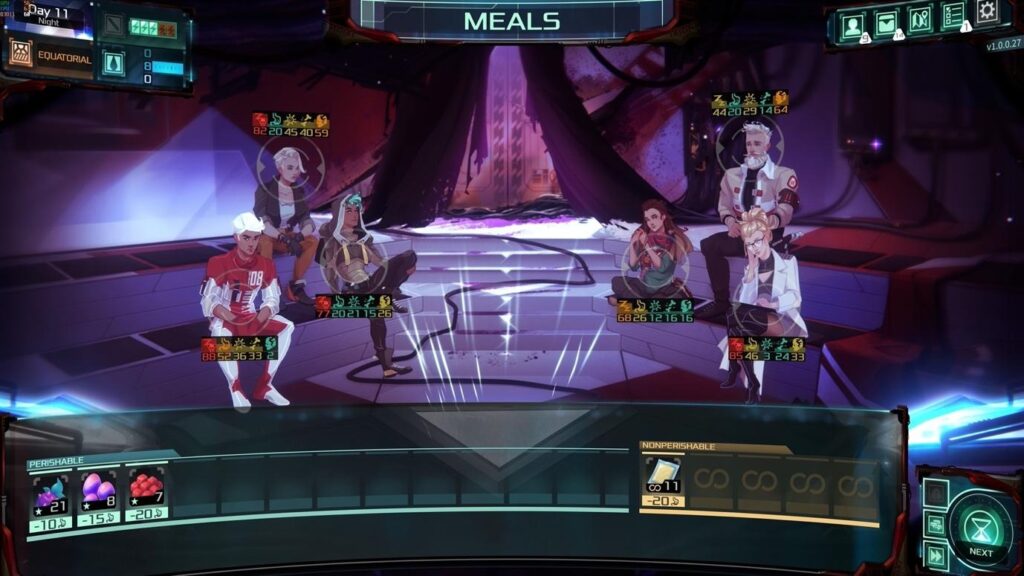
People, not just numbers
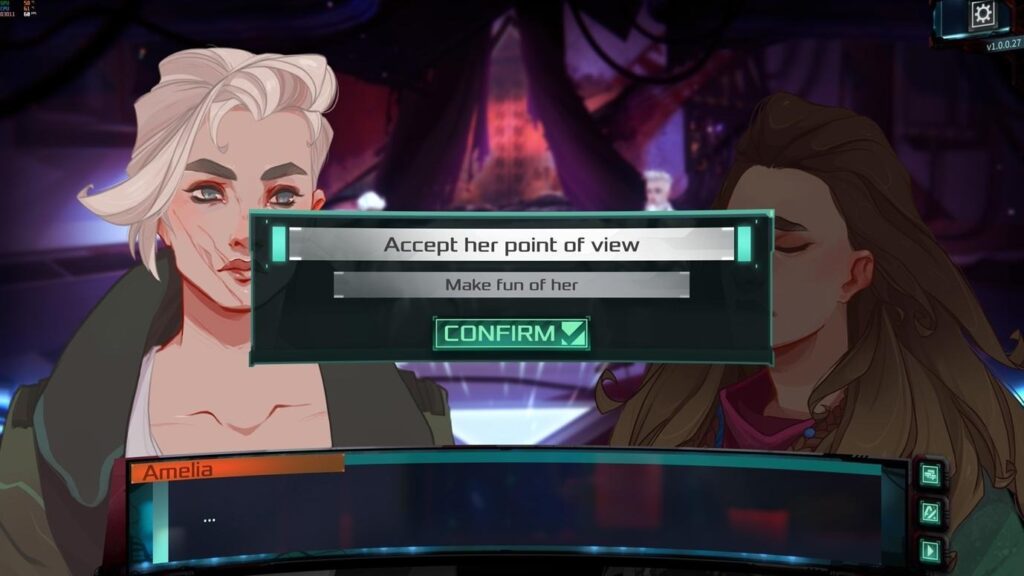
Devs succeeded in what many people fail to do: they wrote characters who are actually... people. Captain Amelia is a classic "control freak" authority who tries to bring order to chaos, but her coldness often creates more problems than it solves. On the other hand, you have characters like the xenobiologist Noemi, who would rather make friends with bloodthirsty aliens, which puts you on edge as a player. There is also the empathetic doctor Wiliam, who is stressed every night about the health status of his colleagues to the point that his own depression skyrockets.
Dialogues are frequent, deep and directly affect morale and attitudes. This is not just a dry text; you feel that anxiety, hunger and human need for attention in the middle of nowhere. The characters share personal information, fears and desires with each other, argue, swear and do stupid things. All this affects their bond, which can grow and fall, and romances are also an option.
When you have to assign a job to someone, risk someone's health or balance who will carry what on their back, it is not weighty just because some number will fall on the screen, but because it still creates the feeling that you are leading a group of people, and not a set of statistics. The game writes its characters well enough that the whole situation gets the human layer it really needs.
Unfortunately, there is no voice acting. In 2026, you can feel it, especially since the pace of text printing is slower than the average (and impatient) player would like. Get ready for a lot of mindless clicking through texts just to get to the essential information.
Combat: Necessary evil or tactical challenge?
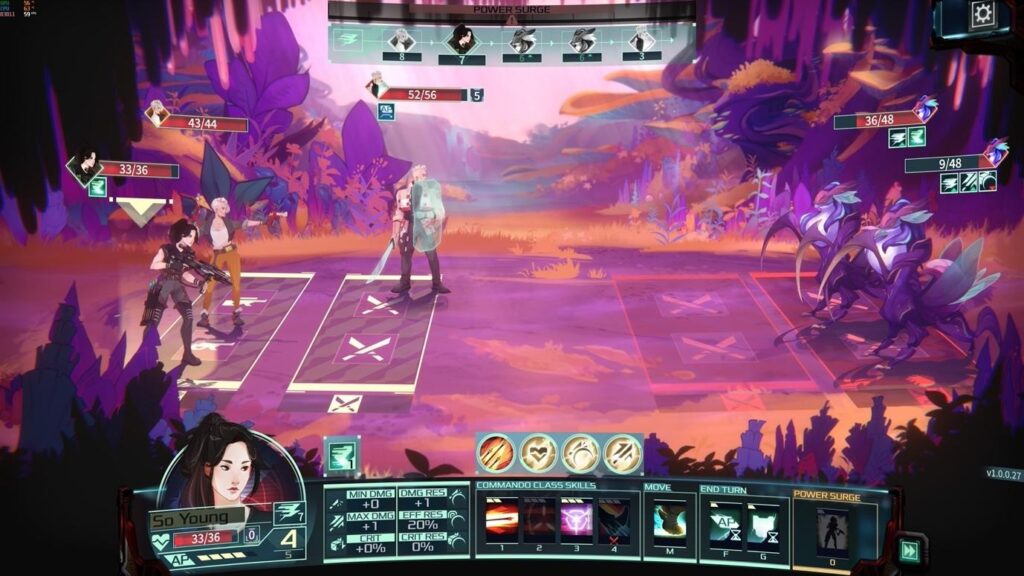
When you're not trying to stop the crew from killing each other, you'll be exploring Antares Prime. The map is divided into hex-fields, and each exploration carries the risk of combat. The fight here, paradoxically, is the only part of the game where the characters are actually animated, and not just static sprites, but it is also the most boring part of the gameplay.
The system is based on a 3 vs 3 grid where positioning means everything. You can put units in the front or back row, and depending on that you get different buffs. You have different classes: Ace (fast attackers), Vanguard (tanks), Civilian (support) and Commando (damage dealers). You can choose whether you want to strengthen the character's combat abilities or give him a passive bonus for working in the camp, which creates interesting strategic dilemmas.
The new Power Surge system (ultimate attacks) serves as a finisher that can turn the tide of battle. Still, on "normal" difficulty, combat rarely offers a real challenge once you've figured out the basic synergies, and it takes a long time. I found myself rooting for my team to avoid a fight when exploring the map, just because I just don't feel like going through the same repetitive routine of moves for ten minutes. Combat in Antares is a secondary player, while the real "boss" is water supply management.
Visual identity and UI
Visually, the game immediately stuck to me. Dead in Antares breaks that specific sci-fi style and gives Antares an identity that is not generic. It is a strange, alien world full of pink and purple tones, unusual flora and architecture that seems ancient and advanced at the same time.
This is not a technical spectacle, but it has enough character to make it memorable. The environment, portraits, colors and that whole hand-drawn sci-fi touch nicely support the feeling of isolation and suspense, and along the way give the game charm. The characters are excellently designed, unique, with a lot of character in the drawings themselves, and therefore it is easy to remember their names and get attached to them.
Unfortunately, I can't say the same about the user interface. UI is probably the weakest link here. It's not unusable or disastrous, but it's clunky enough that there's often friction where things should be clearer and more elegant. Although the icons are large and everything looks "modern", placing characters on workstations in the camp or deploying them in battle could be much more intuitive.
You will often find yourself "hunting" characters around the screen or trying to figure out who is assigned where. In a game that relies so heavily on managing people, resources, and priorities, that's no small feat. When I already have so many systems demanding the player's attention, I would like them to be more transparent. It doesn't break the whole game, but it does take some of the fluidity out of it.
The moment of truth: Day 20
The real test of your nerves comes around day 20. By then you've probably unlocked most or all of the crew, the camp looks decent, and you think you've "beaten" the game. Just then, Antares unapologetically pulls the rug out from under your feet. The resources you thought were "assured" suddenly disappear. Water becomes more precious than diamonds, food spoils faster than you can gather it, and the drama inside the camp escalates as everyone is tired, hungry and mentally broken. I made you sit and rest, Noemi, why do you have to have an existential crisis right now?
It's that moment of truth where you can see whether during the first 15 days you just mechanically clicked or if you really planned for long-term sustainability. The game forces you to make difficult choices: will you feed the best fighter to protect you, or the doctor who is the only one who can cure the plague that is spreading through the camp?
Conclusion
Dead in Antares is an interesting crisis management simulator wrapped in a nice visual wrapper. Ishtar Games has managed to keep the core of the series, while at the same time taking it to a higher level visually. Although the combat and dialogue pace can test patience, the sense of accomplishment when you survive another cold night on Antares is very satisfying.
On the other hand, the clunky UI and somewhat laborious combat mean that this is not exactly a title that will sit well with everyone at first. You need to give him some time and some patience. But if you like survival management games that ask you to put out multiple fires at once, to think ahead and to live with the consequences of your decisions, there is a lot here worth noting.
Just be prepared for Noemi to get on your nerves. And a lot.
A copy of the PC version for review purposes provided by publisher Nacon