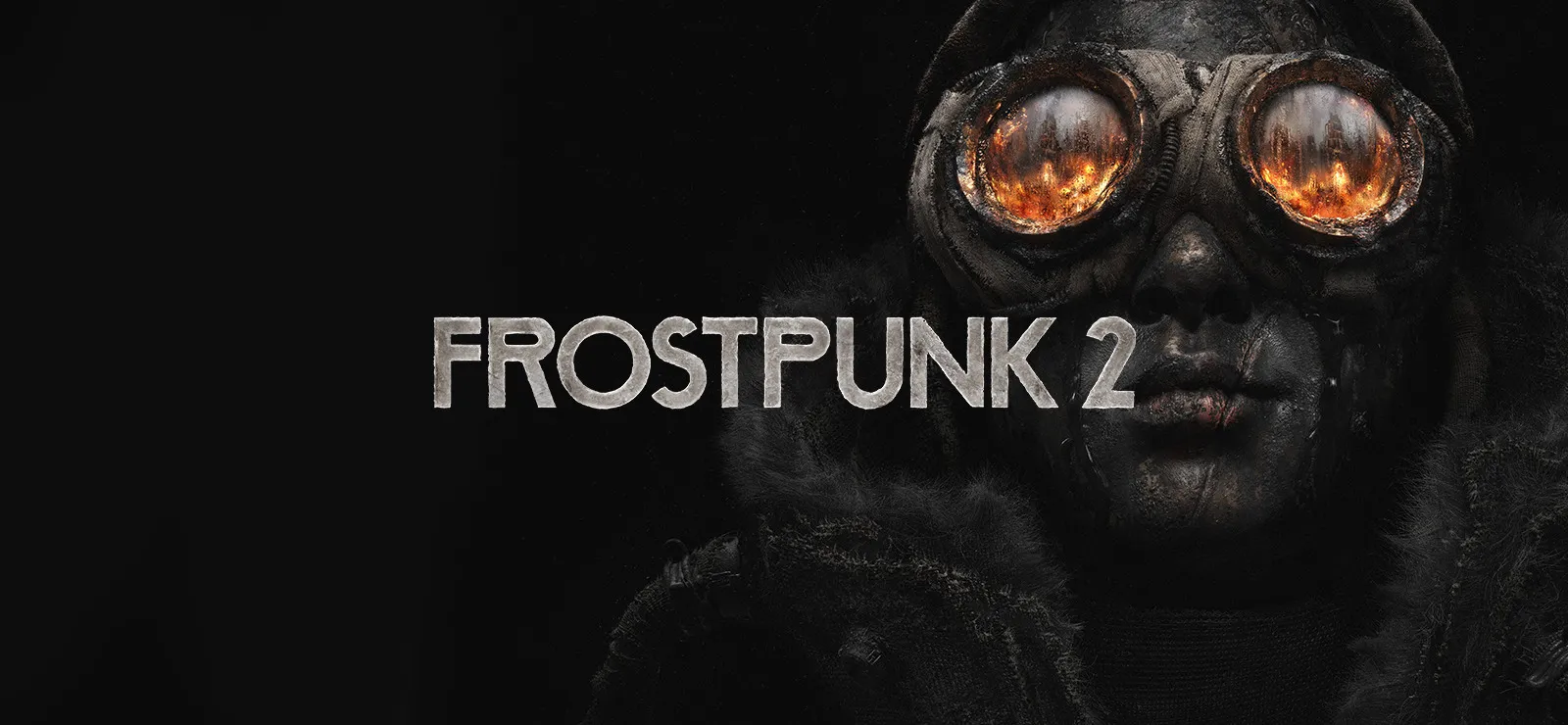
Frostpunk is one of the few games I've completed about 20 times, so my comments might sound biased, but I can't help it considering how much I love the concept of this game.
For those who don't know, and they should because Frostpunk 1 is long gone (the king of survival games has returned), the story is set in an alternate 1886, when the world is hit by a mysterious global cooling, mostly due to volcanoes and such.
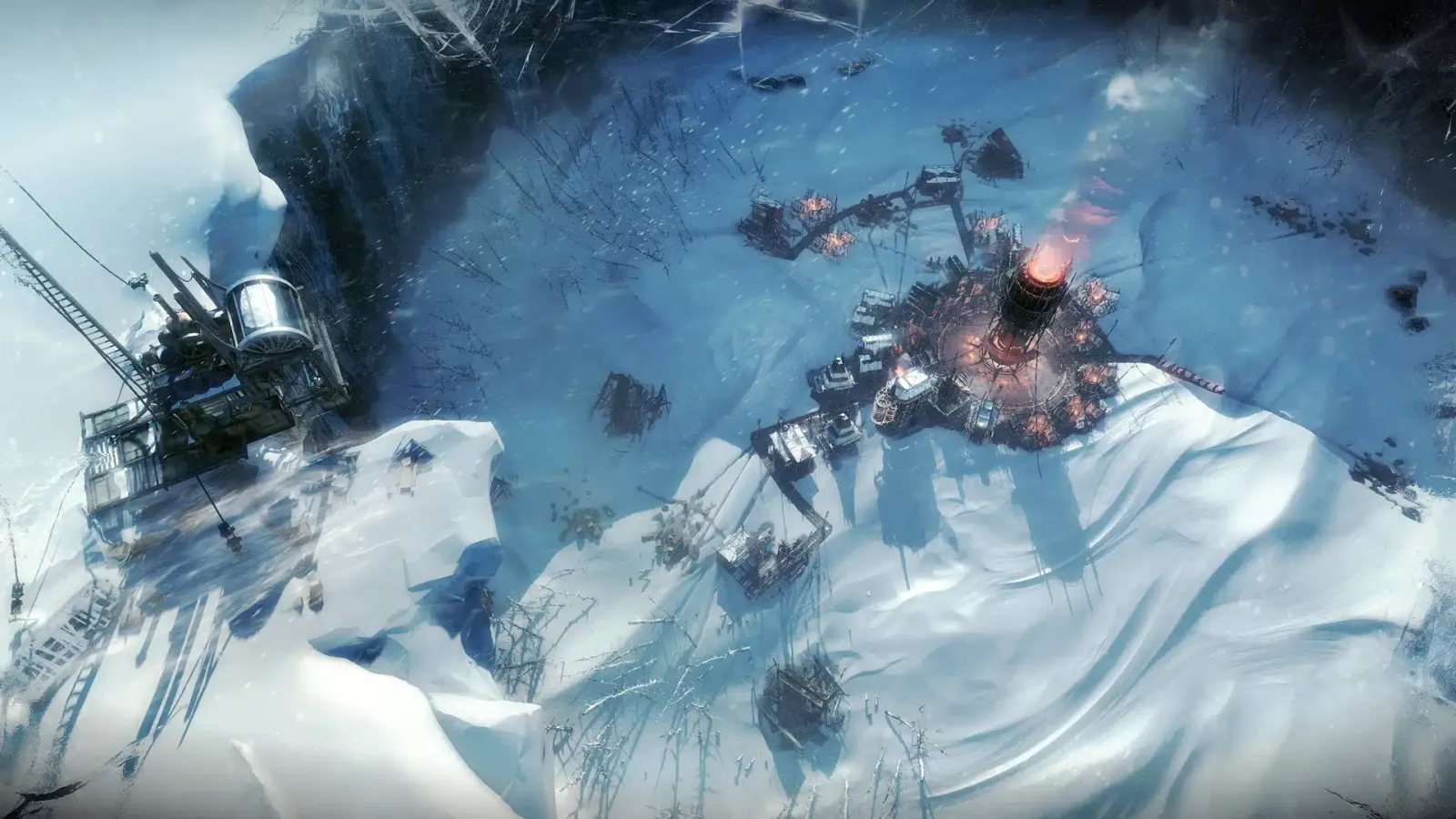
Ice and snow have swallowed entire continents, and the surviving English are leaving London in search of shelter. Groups of people are sent north, where they build a city around a large coal generator, the only source of heat and life.
If that sounds like Snowpiercer, the developers aren't even ashamed to admit it; in the game, you can find a location where the French train designed to circle the country has broken down, probably didn't go for 1.5 dci, but has these new 1.6, and they aren't that good.
The player takes on the role of the leader of the last human community (or maybe not!). They must make tough decisions, from building shelters, introducing bike paths, organizing work and food procurement, dealing with the situation in Jakuševac to enacting laws that balance between humanity and brutal necessity. Hunger, disease, dissatisfaction, and extreme cold constantly threaten survival.
Do You Feel Chilly, Punk?
I'm literally writing a review for Ready or Not at the same time and couldn't help but make two similar subtitles.
Frostpunk 2 is a story like okay, people survived that apocalypse in the first game, but guess what, now they aren't freezing so much because of nature but because of their own stupidity. The story takes place thirty years after the first game, when the kids have grown up and forgotten that their grandfather almost died because he worked in a mine at -120. Nobody cares where you were in '91, grandpa.
Or rather '86. Grandpa was in the Boys then.
Now everyone is full of talk about the future, industry, and of course, oil, because if history has taught us anything, it's that oil solves all problems except climate ones.
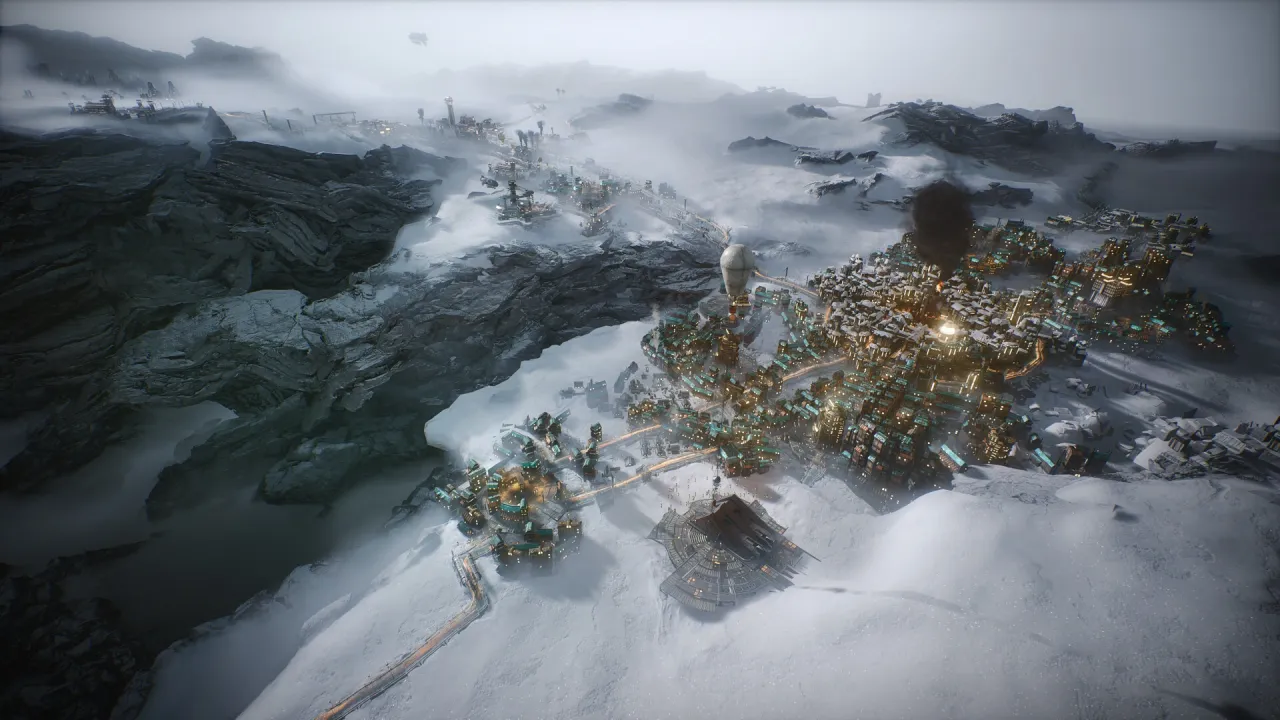
The city you saved in the first part is no longer just a circle around one generator, but a real metropolis where everyone has their opinion, their factions, and their smart ideas about how they should rule.
Some want turbo-industrialization and everything to smell like gasoline, others would rather not have people dying every other day, so they push for a more humane policy, and you, as a player, end up being guilty no matter what you do. Of course, everything is again packaged in that let's decide whether you want to be Hitler or Mother Teresa moment, only this time it's not about ice but politics, greed, and the question of how stupid we all are together when we are given a little power. It's actually funny how easily problems could be solved if they cooperated, because the game literally forces us into either-or decisions all the time in the campaign.
But that's not such a problem in Utopia Builder <3
If the first Frostpunk asked how far you would go to save people from nature, the second asks how far you would go to save people from themselves, but the peak is that you can still get a happy ending!
Mechanics
The first shock for me was actually when I realized that it no longer focuses on days but on weeks. In the original, it was clear, you played day by day, a small number of people, every decision immediately hit you back.
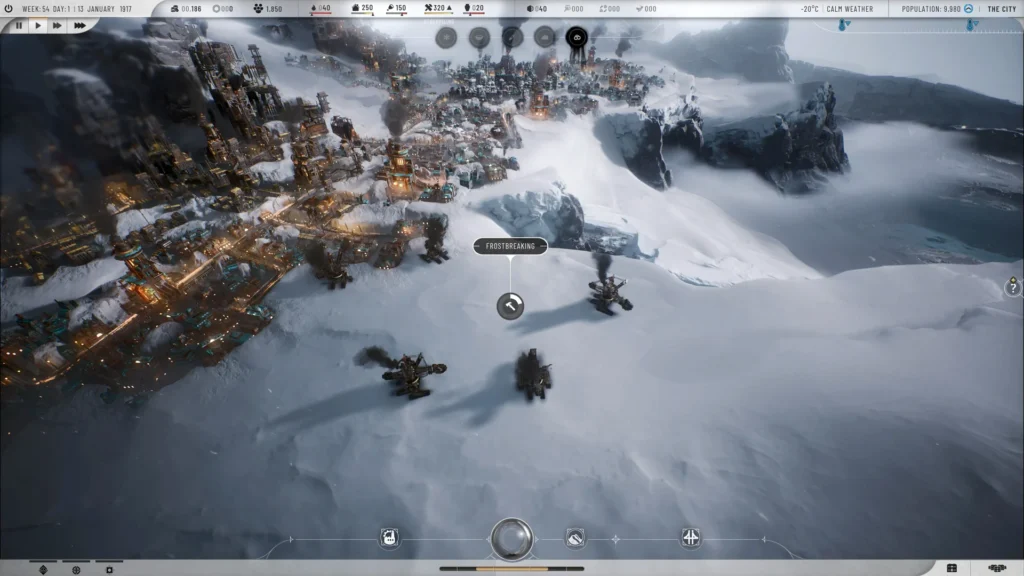
Here, all of a sudden, you have thousands and everything unfolds on a much larger scale. This immediately changes the dynamics; you no longer have that feeling that every death cuts under your skin, but you manage a crowd that behaves like a single organism. In the first game, you were a small manager walking a thin line between hunger and warmth, while in the second, you are more of a politician and the mayor of a megacity.
The generator is no longer the heart of the game but just a part of a much larger system; the city expands into districts, each with its own needs, factions, and demands. This means that gameplay is not focused on surviving today but on maintaining long-term balance.
Instead of constant micromanagement of how much coal you will use and who goes to the hospital, you now fight with ideologies, interest groups, and the question of how to steer the entire city. In the first part, the dilemma was whether you would be brutal enough to survive nature, while in the second, the dilemma is whether you will have enough nerve to survive your own people.
Everything is raised to a new level of scale. Resources are no longer just wood, steel, and coal, but oil enters as a key item. It is not just a raw material but also a trigger for political conflicts, as every faction wants control over the future.
While in the first game you fought against ice and storms, here you fight against the very system that is collapsing under the weight of its own ambitions. Frostpunk 1 was a survival simulator, Frostpunk 2 is a strategic political novel in the form of a game, where it is not the cold that kills you but the decisions that have consequences for thousands of people. And those people get angry and try to stab you.
Resources
Resources in the second game immediately show how much the game has changed.
In the first game, everything was more straightforward; first, you build a camp that gathers wood and steel, then you expand coal mines, everything was on a small scale and every shovel counted. Now, when you are dealing with thousands of people, resource gathering is no longer a matter of a few tents and one sawmill but entire industrial zones.
The city is divided into districts that have their specializations and in them, production chains develop. Wood and steel remain the basic materials, but their importance is no longer existential as in the first part; now they are the fundamental blocks from which you build complex systems.
The English have decided to pick up a few American tricks, so oil is now an important resource, a new resource around which the entire economy and politics revolve.
It is not gathered by sending a few people to the field; instead, you open oil fields, develop technology for exploitation, and decide whether to invest resources in an industry that will turn the city into a concrete jungle of chimneys or seek a balance to keep the city somewhat humane.
The role of research has never been more important, as every new discovery not only changes efficiency but also society.
In the first game, you researched steam automatons and better branches, while in the second, every research carries ideological weight; if you push the industrial line, you open doors to a radical faction that believes technological advancement is above all, but if you slow down, you risk leaving your people hungry and unemployed. Often, you have 4 options for research, so your research also affects your relationship with the faction, as each pushes its own solution.
Now every technology raises new questions: who will control it, which faction will gain an advantage from it, and how much will it cost you in political capital.
Food is another segment that has gone in the direction of macro-management.
No longer just a few greenhouses and pots of soup, now you have to deal with entire systems of production and distribution, but worst of all, this time they are limited. Like, literally to the point of disappearing, and if you're not quick in the campaign, well then tough luck.
Factions and Voting
Ideologies and factions in Frostpunk 2 are a total pain in the ass, but a very entertaining pain in the ass.
If in the first game the law was a tool with which you balanced despair and morality, in the second game the law becomes a weapon of factions fighting for dominance. Each of them has its own view of how the city should look and function, and you, as the leader, are stuck between their ambitions and the reality of a cold world.
One faction pushes for industrialization at any cost; for them, oil is sacred, and they believe that technological advancement justifies any sacrifice.
The second faction wants a more humane approach, emphasizing equality, fair distribution of resources, and sustainable development, but at such a pace, you risk the city simply not surviving. There are also factions that play on religion, tradition, or pure populism, each with enough influence to complicate your life.
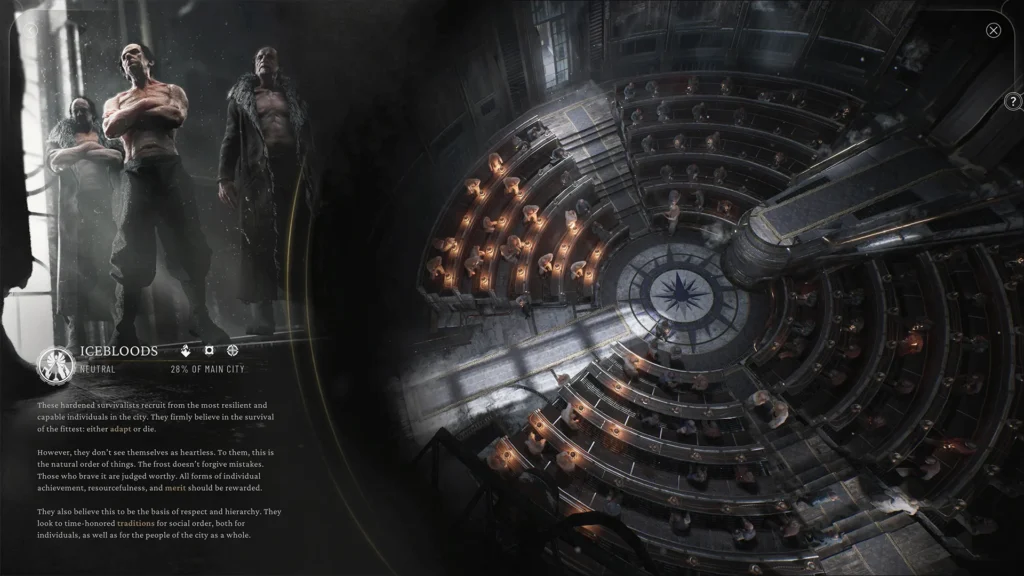
Resources and ideologies are inextricably linked. It's not just important to have enough oil, but also who controls it. If you let industrialists lead the development, the city will turn into a steel machine that grinds people just as easily as resources.
If you lean towards the pilgrims, you may have more satisfied citizens, but you'll lag in development and be vulnerable when new waves of cold come, even though they want you to adapt, so that's okay. Every decision has consequences, not just in the economy but also in politics. Once you sign a law or side with a certain faction, it's not a trivial matter that can be forgotten, but a path that shapes the future of the entire city.
This is best seen in moments when resources become a political tool. Food becomes a symbol of power. If you reduce someone's rations, that person will interpret it as an attack on their values, not just on their stomach.
The same goes for technology; every research is a card that changes the balance of power. The player thus stops being the main lawmaker, but serves the council, and if you propose a law that won't pass, there's always room for political bribery.
Although the average voter thinks that HDZ knows, in reality…
Steward knows
We built the city while others faltered
snow and hunger broke us but we did not yield
for in the dark of ice lives a small hope
he who knows what he knows will survive
Steward knows, knows, knows
it is known who knows
The city has stopped but the will makes it
obstacles have been overcome by strength
together in the ice our hearts burned
for Steward knows, Steward knows
Under the icy storm while the wind breaks through
we kept watch when the night loomed
there is no warm home without sacrifices
only he who knows what he knows survives
Steward knows, knows, knows
it is known who knows
And freedom, our hope has been maintained
even though winter never lets go
in the silence of ice hope echoes
pride lives, never falls
When everything stops, when even the sun disappears
we in the snow know who defends us
the city will always remain on its feet
for in the icy heart Steward knows
Research
Okay, sorry for this, but inspiration hit me, so I experimented a bit.
I love exploring, and so do the people from the Frostpunk world!
While in the first game you sent small expeditions into the icy wasteland to bring back some food or lost survivors, now you send entire expedition teams and open new colonies, conquer various locations, build settlements, and even visit a few places from the first game!
I would rate Frostpunk 2 a solid 9/10. The game is excellent, bringing a ton of innovations, new mechanics, and a freshly set storyline that deals not only with nature but also with human folly. What I do miss a bit are the more intimate stories and personal moments that the first part had, the small human details that made the decisions hurt even more.
Also, the feeling of exploration could be richer, as the locations are somewhat fewer than I had hoped. But all of that pales in comparison to what the game manages: to convey the feeling of leading an entire civilization through icy chaos, where every decision leaves a mark. And to be honest, I can’t wait to see what DLCs they will release and how much more they will expand this world.
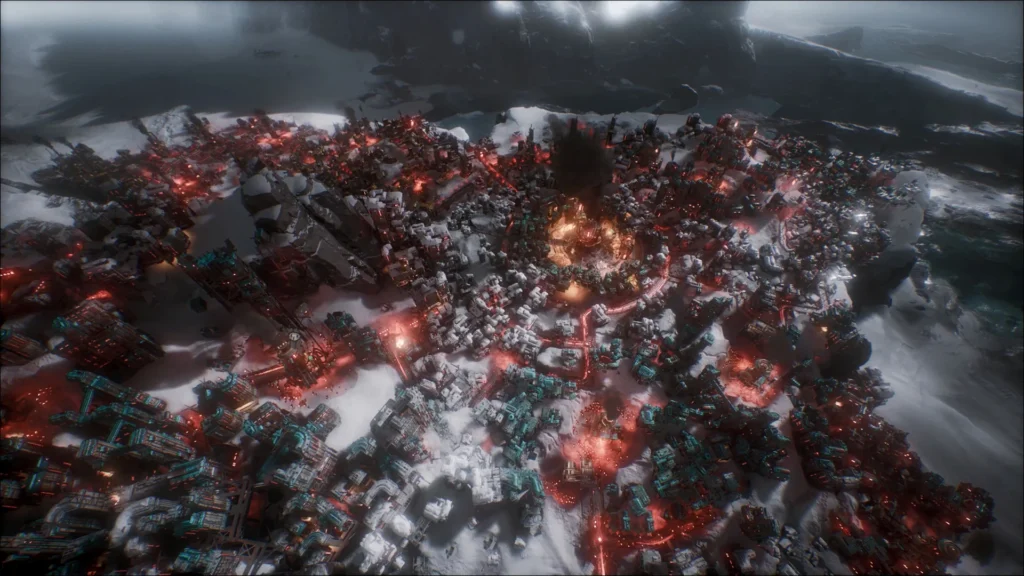
A copy of the PlayStation 5 version of the game for review purposes was provided by the development studio and publisher 11 Bit Studios