
Underquest is a dungeon crawler with an isometric view, but don't immediately think you know what awaits you. The game is going in its own direction. Instead of everything being about combat or rapid fire, here the key to everything lies in the inventory. Yes, inventory. Each item you pick up not only takes up precious space, but can be combined with other items to create powerful attacks, defenses and various skills. You literally build your build step by step.
The combinations are sometimes logical, sometimes totally unexpected, but when you get a good combo you feel like you hacked the game. What surprised us the most was how much could fit into such a simple visual style. Underquest does not try to impress with its appearance, everything is clean, functional and transparent. The style is more towards indie mobile games, which will not be to everyone's taste, but you quickly forget about that when you start thinking about how to cram another item into an already crowded backpack.

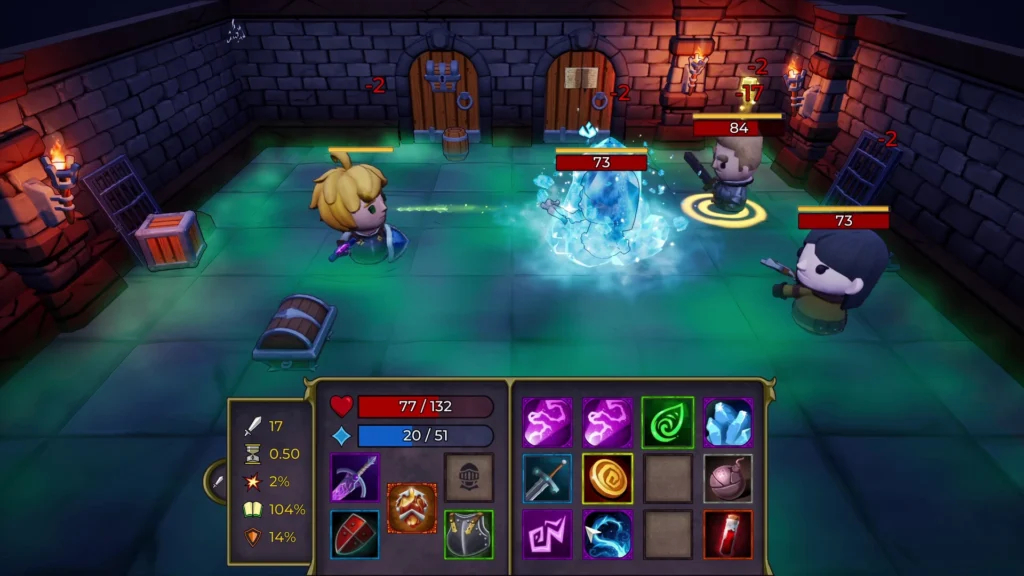

Levels are randomly generated, everything happens in real time, and permadeath is very real. You die, you go back to the beginning, but with small permanent perks that you unlock through interactions in the tavern. Just that small progress between runes gives you the feeling that you are not playing for nothing, even when the game breaks you mercilessly.
We have to admit, Underquest didn't really knock us off our feet right away. It took a while for it to click, but once you understand the system and start making crazy combinations, the game becomes very addictive. It's not for everyone. If you like the pace in the style of "I'm going to try one more time and then shut down", and if you enjoy games where the gameplay itself tells the story, then this might suit you.
We certainly enjoyed the attempts, failures and those rare moments when everything clicked. And maybe it clicks for you too. Try it and let me know if your inventory was better than ours.
A copy of the game was provided by the development studio Otherside Bay Studio for review purposes