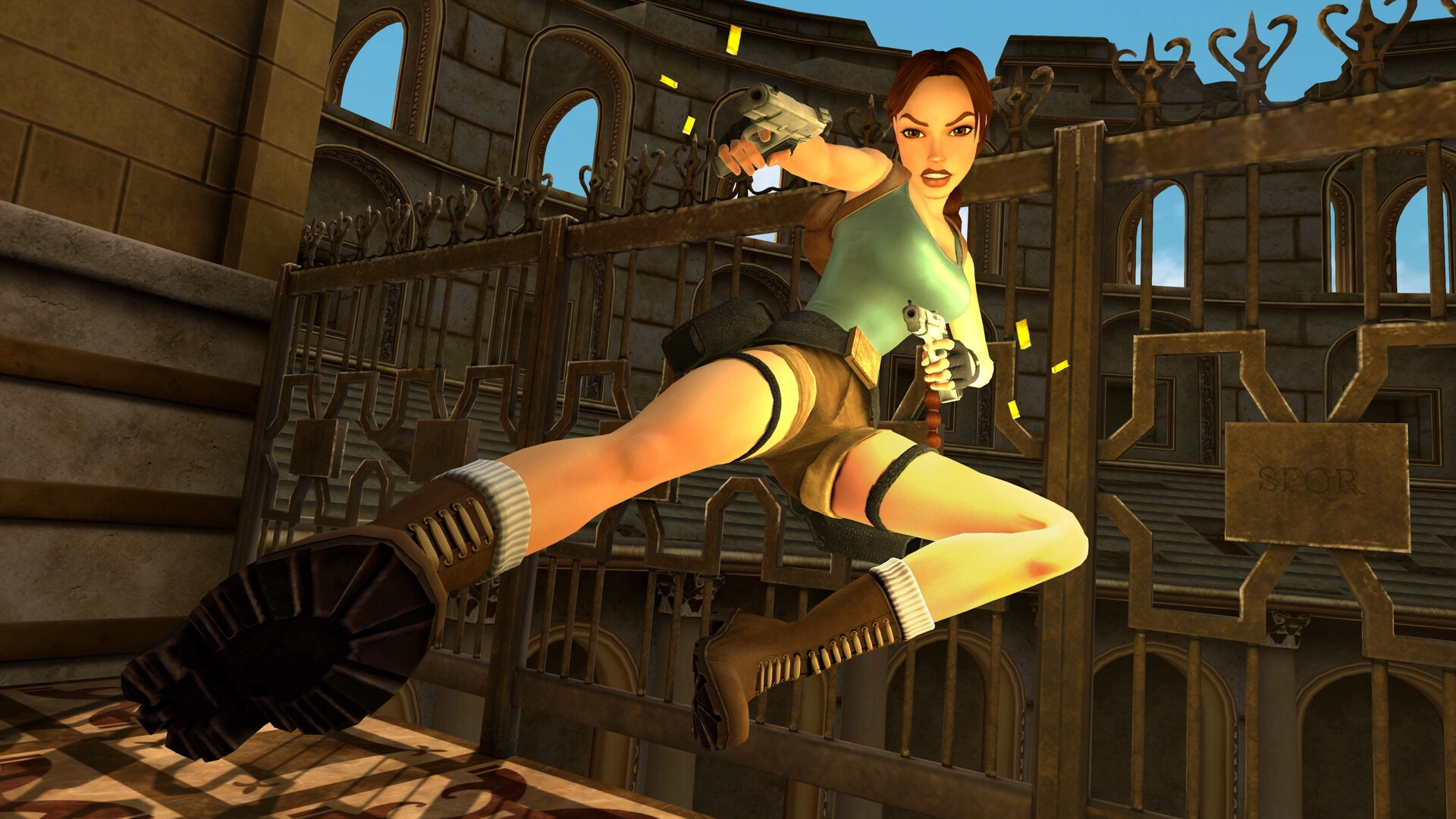
1999 was the year of the Lord in which Core Design and Eidos released what was to be the last title for Lara Croft and her adventures. I was a kid and I welcomed the headline announcing Lara's death in the Egyptian sands with a bit of sourness. Imagine playing a game for days where you just wait for the scene where Lara's last moments will be presented! Depressing. But that's the world of gaming. Considering that since 1996 Tomb Raider titles were released one after the other, the market became saturated with Lara Croft and the production team decided to end this series with the (then) final game Tomb Raider: The Last Revelation. Although in principle it was a game like the previous sequels, in its essence it still had slightly more advanced graphics and more intelligent enemies. The reaction of the players was mostly positive, although the game did not make any significant progress in terms of gameplay. The biggest novelty was that in some parts of the game you could move back and forth through the locations in addition to the transition loading screen. There was no map or any hints, and you could easily get lost in this level design as well. It is worth remembering how this sequel introduced swinging on a rope/lianas. The game was considered huge by the standards of the time and could be completed in 23-24 hours. The remaster in its offer has a more polished appearance of Lara and nicer textures. You are offered two ways to manage your character. You have classic tank controls that ffunctions exclusively through the keyboard and the newly implemented system in combination of mouse and keyboard. I tried both and somehow decided on old school way. The game requires a significant amount of precision when jumping, so playing with just the keyboard made things easier for me. And it was nice to see again how Lara's pistol arms automatically target the nearest enemy, and you just press the "action" button, run and jump until the enemy finally drops dead (or Lara, haha). I must mention that this edition also includes "The Times Exclusive", an additional promotional tier made for The Last Revelation.
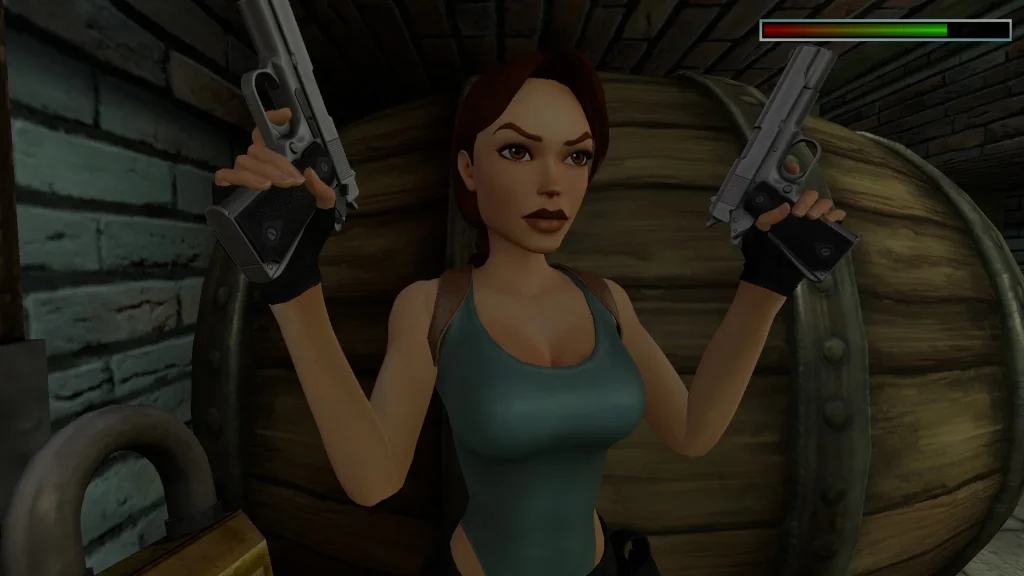
Tomb Raider Chronicles immediately inherited the next year wandering through the levels and brainstorming where to go and what you missed doing so you can't progress further in the game. This sequel was released for Windows, Playstation, Mac OS and Dreamcast console (owned by Sega). Despite Lara's death in the previous sequel, Eidos insisted on continuing the series. The story here is not linear, as Lara's adventures after her funeral are recounted by her friends and business associates. Some levels of this sequel had stealth mode implemented. This is also the last part of Lara's story, which was worked on by veterans of the project, and also the last time that Tomb Raider was made on the original engine. The gameplay itself is the same as in the previous sequels – it's a third-person action adventure. The locations present in the game are Rome, Russia, Ireland and New York. The original Windows version of the game also had an editor, which allowed players to design their own levels. Subtle novelties that were presented in this sequel are walking on a rope, swinging on a pole and faster exit from a hole in the wall with a forward reel. Just like the remaster of the four, here you also have a choice of which type of controls to use if you play on the Windows platform. You could say that the locations in Rome are inspired by the classic Tomb Raider (this is also my favorite part of Chronicles), with Russia there is more emphasis on naval locations and their exploration. In Ireland we have the opportunity to hang out with a young Lara without weapons again, and the level in the office building of New York is more stealth-oriented and has a limited amount of ammunition for Lara's weapons. And in this part, Lara and other characters of the story look refreshed, just like the textures of the environment. The end of this chapter gives a hint that Lara managed to survive in Egypt, which immediately prepares us for the next sequel.

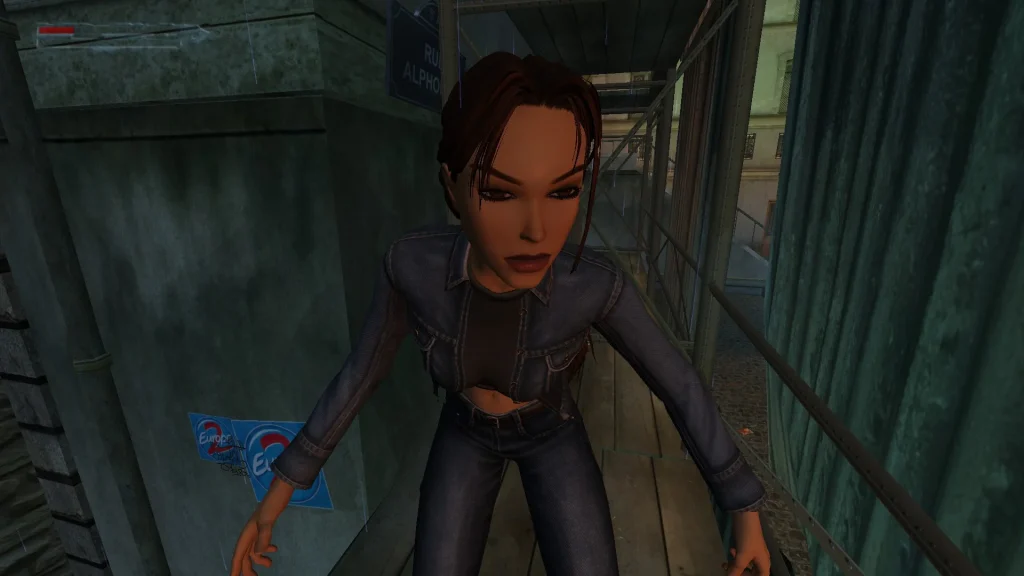
While the veterans were "forced" to work on Tomb Raider fifth, the new team was already working Tomb Raider: The Angel of Darkness for Playstation 2, Windows and MacOS X with the help of Aspyr. The game was released in 2003 and is a continuation of four and five. In this story, Lara becomes suspected of the murder of her mentor Werner Von Croy and investigates the activities of a cult that practices black magic. The idea of this sequel was to present a newer way of playing compared to its predecessors, in order to better compete with competing games. The goal was to introduce more stealth elements and the gradual development of Lara's skills, such as the length of her hold on the edge of a building or a pipe. Interactive dialogs were also introduced in which you could feel the consequences of your sentences. The production was not without problems, and the evaluations of the final product were divided. On the one hand, players praised the story, and on the other, negatively and justifiably criticized the controls, the camera and a bunch of other technical problems. Taking this into account, the idea of a planned trilogy was abandoned and ultimately the baton of production was handed over to Crystal Dynamics. If you expected better controls in the remaster Angela, I must warn you that you will be disappointed. While the game's graphics are a bit more polished with some new content in the game, the controls are still sloppy, which from my perspective makes the game still barely playable, no matter what type of controls you choose. Lara reacted poorly to commands, and I used a mechanical keyboard! In short, the six from which I had the most expectations in the remaster did not offer me any satisfaction. Lara's movements are slow and sluggish, and the game often demands your reaction speed and precision under time constraints. I remember when the game came out I used some editor to skip levels, because some parts were simply unplayable, just like now. Considering that I am now much older, my patience is getting thinner, so I couldn't bear to deal with the frustrating parts that remained almost untouched, that is, unironed. Therefore, my association with Kurtis Trent (Lara's companion, the cool guy with telekinesis) will have to wait for better times, if I ever decide to return to this sequel. Yes, in this sequel you could play with another character, not just Lara. A missed opportunity for redemption. It's a shame, because I liked the story and the idea in general, but I'm afraid that the problems of this sequel can possibly be saved by a remake with the whole thing from the beginning and that no remaster can alleviate the ailments that the now "haunted" The Angel of Darkness has. Looks like this one will too Angel of darkness stay somewhere in the darkness of my memory.
Although I'm a fan of the new generation currently being developed by Square Enix, the classic Tomb Raiders will still evoke nostalgia in me and remind me of childhood times. Even the technically inferior ones. The first game I ever played when I got my first PC in 1998. it was a Tomb Raider 3 demo. Today, Lara Croft is a cult character and I dare to say that, along with Ellen Ripley and Sarah Connor, she is one of the first concrete action heroines of our time. Even my grandfather had heard of it, and the man never played or followed video games. Although these sequels may not represent the pinnacle of the franchise, fans of exactly these retro games could certainly at least try the current remaster, even if at some future discount. Fours and fives definitely have their own charm. I even believe that one of the players will have more patience for the six itself, for which I no longer have the nerve. Now I am only enthusiastically waiting for the next generation Lara Croft sequels, which I think the developers have confirmed.
Tomb Raider IV-VI Remaster is now on sale and is available for Windows, Nintendo Switch, PlayStation 4, PlayStation 5, Xbox One and Series X/S.
Comparison of the old and new graphic layout
[modula id="3778"]A copy of the game was provided by the publisher Aspyr for review purposes