When I first heard that Vampire the Masquerade: Bloodlines 2 was actually coming out, I didn't believe it for a second.
They announced it so many times, then postponed it, then changed the studio, then kept silent for YEARS, that I had already written it off in my head. The original was a cult gem, full of bugs, but also soul. Something like The Room.

That's why it was hard to imagine that the sequel would be able to repeat that magic, especially at a time when most games come as half-finished products. Still, when I finally turned on Bloodlines 2, when the first scene reeked of dark Seattle, I realized there was something to that return. Only, it is no longer the same world we remember.
Fun fact, after a long time this is the game I tested on PC, not on PS5 or Xbox. This is followed by a rant and some praise.
Return to the city of darkness
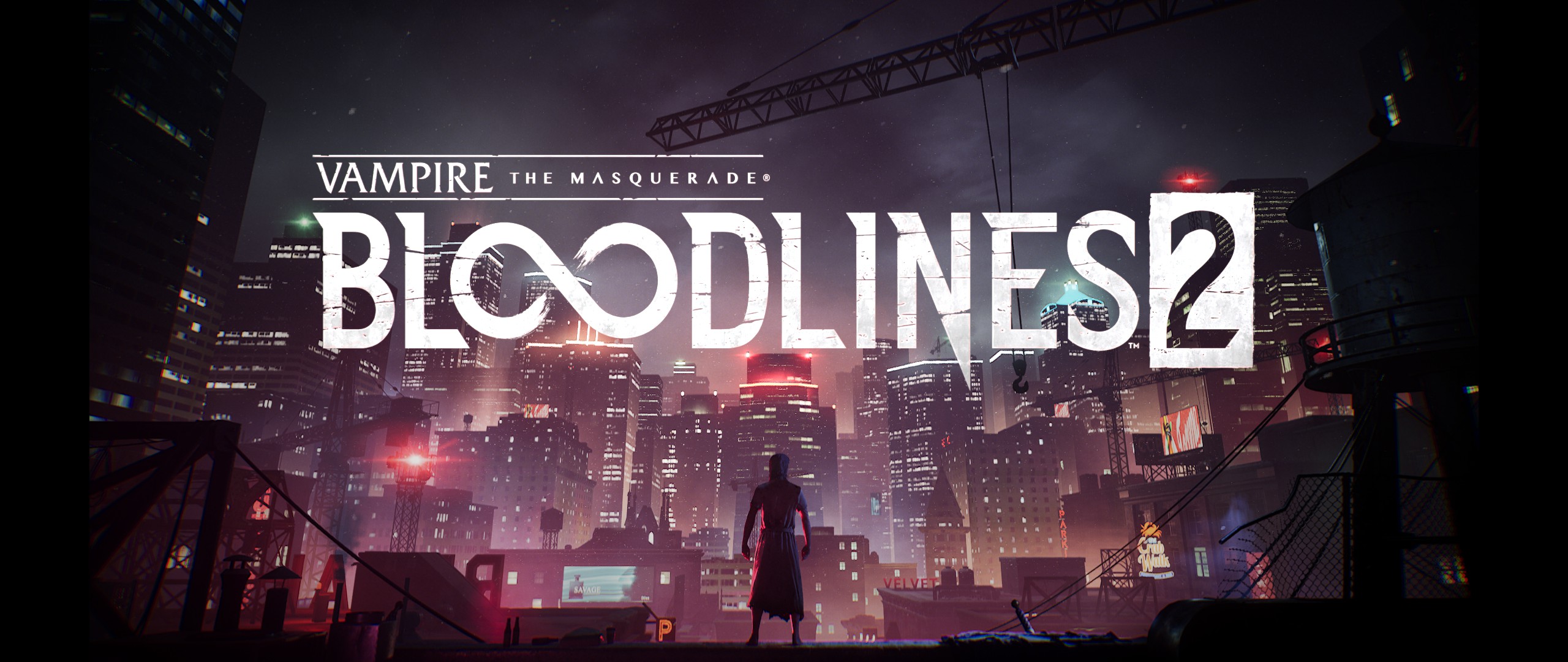
Seattle in Bloodlines 2 is everything you'd expect from a modern vampire RPG, cold, rainy, glowing under neon lights. The city looks like it has a pulse, as if it breathes through every alley and every shadow. The game immediately throws you into the role of Phyra, an ancient vampire who awakens after hundreds of years of dormancy to discover that the vampire world has fallen apart into factions, intrigue and betrayal. Masquerade, that sacred rule of hiding from people, is on the verge of collapse. You are, of course, thrown right into the middle of it all, between powerful clans and their dirty wars.
The atmosphere is, without exaggeration, one of the strongest I've seen in recent years. Each neighborhood has its own personality, from gothic Pioneer Square to flashy Belltown. Everything exudes that mixture of decadence and ruin. When you walk through the streets, you hear the conversations of passers-by, you feel that the city is alive and that you are just a small cog in its mechanism. It is this feeling that you are not a hero but a predator trying to survive that gives the game a character that is rarely seen.
The problem is, there is something in games called the Seattle curse, which is that none of the sequels that are set in Seattle are good.
I'm looking at you Deus Ex 2.
Atmosphere
What Vampire the Masquerade: Bloodlines 2 does almost flawlessly is create a vampire world that breathes its own laws, morals and hypocrisy. From the first moments it is clear that you are not playing a hero here, but a creature that exists in the shadows, between humanity and pure predation. The city, the characters and the dialogues constantly remind you that you are in a system where every gesture is political, every word is calculated, and every decision can have consequences that are felt hours later.
The conversations are full of ambiguity and veiled threats, but not in that superficial, clichéd way. Here, every sentence sounds like it hides at least two layers of meaning. One is what is said out loud, and the other is what is conveyed between the lines, with a look, a tone, a pause. No one ever tells you the truth outright, because in this world, truth is currency, and currency is not given out for free. When someone says they trust you, it usually means that they are evaluating you. When they give you help, it means that they count your debt.
In every conversation you feel that you are surrounded by hundreds of years of politics, old alliances and new betrayals. Clans are portrayed with more depth than ever before. Each has its own ideologies, philosophy and way of survival.
The Brujah still represent raw power and rebellion, but now and within them there are factions, some seeking change through chaos, others seeking justice through control. The Ventrue are cold and aristocratic, but no longer caricatures of power; they are people (or rather, beings) who have lost all emotion because centuries of intrigue have turned them into pure functionality. The Toreadors are desperate in their pursuit of beauty, but they are charming so I took the Toreador as I did when I played the unit because I'm screwed, the Malkavians remain an enigma, especially since they're gone this time, and they were a fantastic clan to play! Nosferatu are like shadows that know everything, but rarely share information, and honestly, they ruined it, so you can't play with them this time.
The gray zone between good and evil is not just an aesthetic trick here, but the central theme of the entire experience. You will often make a decision convinced that you are doing the right thing, only to realize an hour later that you have just signed your own doom. In this sense, Bloodlines 2 manages to convey what is at the core of the Masquerade universe, a world where everyone is a predator, only some have better manners.
The dialogue system is built to adapt to your skill, reputation and past decisions. If you are charismatic, ways of intimidation, persuasion or seduction open up for you. If you are more of an intellectual type, you can use logic and an analytical approach to expose the interlocutor's lies. But if you're a brute, you can just end the conversation, literally. Every decision has meaning, every sentence you speak can become a weapon, and your reputation spreads throughout the city. Humans and vampires react to what you've done before, so small gestures, like helping someone in an early mission, can open or close entire story branches hours later.
The greatest strength of this system is reactivity. You rarely get the feeling that you are watching a scripted scene. Instead, each situation acts as a living dialogue between your decisions and the world around you. If you try to manipulate someone who knows your past, they might call you a liar. If you use intimidation too much, the town will start to see you as a threat, which can affect how NPCs react to you in the future.
Some scenes may end in complete chaos, others in perfect diplomacy, but what connects them is that they never ne you know who te really use, and who helps you. This unpredictable pulsation of social relations makes every interaction tense. No casual conversations. Even when you're talking to a character who seems well-intentioned, you always feel a silent threat in the background. It's as if the world is constantly testing you, checking if you're still able to keep control of yourself, or if hunger will take you over.
It's interesting how much the game relies on non-verbal communication. The view, the silence, the music in the background, all this gives weight to the words. The characters don't talk too much, but the way they look at you, the way they say your name, gives you a sign that you're a fucking badass.
This subtle approach makes every scene feel personal, as if you are really in the company of predators who are watching you, weighing you up and waiting for a moment of weakness.
Another important element of atmosphere is tone dialogue. There are no typical heroes, no classic villains. The people and vampires you meet seem real, wrong, egotistical, cynical, but sometimes tragic. When you talk to someone who's been a vampire for over a century, you feel the weariness, the resignation, and a kind of melancholy that comes with immortality. It is not a romanticized portrayal of vampires from the movies, but a cold, realistic depiction of beings who lost touch with humanity long ago.
The best dialogues come when opposing philosophies meet. For example, when the Brujah tries to explain to the Ventrue that the world doesn't need another council of elites, or when Malkavian in his madness utters something that sounds like a prophecy, only to realize later that he was right. Such moments make every conversation feel like a struggle for supremacy, except that here there is no shooting, but cutting with words.
In these moments, Bloodlines 2 recalls the best moments from the original, but now technically much more maturely performed. The camera moves slightly, the light changes as the character speaks, and the sounds of the city come through the open windows. All this creates the feeling that you are not in a game, but in a real space, where every word has weight and every lie can be deadly.

When the action starts
Unfortunately, that all goes away when you get into combat. At first it looks promising: the animations are fluid, the powers look powerful, and the sense of speed and strength gives the illusion that you're really a superhuman being. But after a few hours it becomes clear that the combat system is shallow and repetitive. Combos are limited, enemies behave almost identically, and the challenge comes down to simply surviving waves of the same opponents.
In the first hours, you feel the adrenaline, but very quickly you realize that you have already seen everything. You repeat the same moves, use the same powers and always end up with the same outcome. The combat just doesn't have enough layers to hold interest long-term. It's a shame, because vampiric powers offer enormous potential for creativity. Instead of playing with different approaches, the game pushes you into a routine.
However, if you are in love with this world, if it is enough for you to be part of a dark story, it can be survived. When the story starts, you easily forgive the mechanical flaws because the characters and the atmosphere carry you forward. It's not perfect, but it has that inexplicable charm that makes you keep playing even when you know another genre RPG would be more dynamic.
When an RPG is made by someone who doesn't normally make RPGs
What hurts the most is the fact that Bloodlines 2 was not made by an RPG studio. And you can feel it at every step. You get the feeling that the authors knew more about what they wanted to achieve aesthetically than mechanically. Dialogues, atmosphere, character design, it's all superb. But when you need to connect systems, when you need decisions to really have depth and long-term consequences, everything falls apart.
Instead of a true RPG structure where the world adapts to your choices, here you often feel that the game is leading you towards predetermined outcomes. There is not enough spontaneity, there is not the feeling that your decision changes the course of the story in an organic way. Everything is scripted and controlled, as if the authors weren't sure if they could handle the complexity of a real RPG.
This difference between ambition and performance can also be seen in the progress system. Even though you have an ability tree, it feels linear and without surprises. You don't have a sense of growth or adaptation, you just unlock options that logically follow on, but rarely change the way you play. It's like the developers had a good idea, but stopped halfway.

A house with potential is the best description for Vampire the Masquerade: Bloodlines 2
The best way to describe Bloodlines 2 is like a house with a good foundation but no finishing touches. You have walls, you have a roof, you have electricity, but you still don't have a soul. Everything looks nice, everything works well enough, but you know it could be more. In some moments, the game shines with genius, the moment when you look at the city from the roof of a building while the rain is falling, when you feel that you are being watched, when the dialogue ends with one sentence that changes your view of the whole story. Those moments are reminiscent of what Bloodlines used to be.
But there's a lot of idle time between those flashes. Missions are often simple, reduced to "go there, kill that, talk to that character". There isn't too much exploration, there aren't enough mechanics that force you to return to old locations or change your strategy. All this leads to the impression that the game ended too soon, as if the developers simply said "enough, this is enough".
And maybe it is. Because despite everything, Bloodlines 2 has what many modern games lack, soul. You feel that the people who made it at least tried to tell a story that has meaning and emotion. They didn't succeed in everything, but they didn't fail either. The potential is there, and with a few smart patches, the game could become significantly better.

Technical side and execution
The best way to describe Vampire the Masquerade: Bloodlines 2 is like a house with a good foundation, but without a roof, windows or heat. On paper, everything looks promising, a strong license, a rich world, a recognizable tone and a huge number of ideas that could lead to something special. But as soon as you spend a few hours in that house, you realize that everything stands only because the walls are made of marketing and not of solid design. The game has a skeleton, but no flesh. It has ambition, but no implementation.
Bloodlines 2 feels like a project lost in its own weight. It tries to be an RPG, but without the depth that genre requires. It tries to be an action game, but without enough pace and challenge to justify it. In the end it is neither. Instead of finding its own identity, the game is constantly dragged between these genre attempts and remains trapped in a gray area.
In theory, all of this wouldn't be so bad if the story and world managed to make up for the lack of mechanics. But there is also a lack of clear vision. The narrative has potential, vampire intrigue, clan clashes, moral gray area and the search for identity. But everything unfolds through a script that seems uncertain, as if it doesn't even know what it wants to be. Dialogue often loses its rhythm, characters appear and disappear for no real purpose, and decisions that should be important rarely carry any real weight.
It makes the whole experience feel empty. Missions are routine and predictable, reduced to "go there, have a conversation, kill a few enemies and come back for a reward". Very quickly you catch a rhythm that does not change until the end of the game, which creates the impression that you are playing some kind of semi-automated system, and not a world that breathes and reacts. There are no surprises, there is no feeling that your decisions change the course of the story. Everything works like a script that lets you play it, but not change it.
The game is, simply put, an unfinished idea. As if at some point someone pulled the trigger and said "enough, we're letting her out". There isn't enough layering in the gameplay, there isn't enough content to keep you interested, and it isn't technically as impressive as it should be. Seattle looks decent, but not stunning. Light and shadows do the job, but textures and animations often feel rough and uneven. Everything works, but nothing excels.
Combat, which should be the centerpiece of any action-packed part of the game, disappoints almost immediately. The first few fights seem fun, especially when you start using vampire powers, but after an hour or two you realize you've seen it all. Enemies behave the same, weapons don't feel heavy, and skills don't offer enough variety. Combat boils down to the same thing, hit, block, power up, retreat, repeat. After ten hours you feel like you're playing a demo that never got the final version.
And when you try to escape into the dialogues and the story, you encounter another problem, which is the absolute lack of identity. Bloodlines 2 tries to recreate the complexity of the relationships from the original, but it doesn't work here. Everything is simplified to the point that it comes down to three or four sentences that change the tone, but not the outcome. Even when you think you've made an important decision, the game soon puts you back on a predetermined path. In that sense, it's not a true RPG. Do you know why? Because an RPG lives on choices and consequences.
On the other hand, it's not a good action game either. The pace is slow, the fights are repetitive, and the missions don't have enough variety to sustain interest. The first time the fight is super fun, but in about two hours you've seen everything.
There is no real sense of progress, no moment when you feel you have mastered the system. Everything remains within the limits that I would describe as good enough, but not good enough. Fuck it.
It's a phrase that, unfortunately, can be applied to the entire project.
However, what saves Bloodlines 2 from being a complete disaster is the IP. The Masquerade world still has some magnetic power. Vampire mythology, clans, old rules, rituals and the dark tone of the story - all of it carries a certain weight. Even when the mechanics fail, the idea of existing in that world still has an appeal. Nostalgic gamers and lore fans will feel moments of satisfaction as they recognize the names, tone and references that go back to the original. That sense of belonging to an already familiar universe gives the game a little life, but not enough to mask its shortcomings.
That's why Bloodlines 2 feels unfinished house, not because it has no foundations, but because no one knew how to use them. The potential was huge: a dark world full of moral dilemmas, a system of power and survival, political games in the background, complex relations between clans and factions. It was possible to turn all this into a rich RPG with depth and atmosphere. Instead, we got a version that feels safe, sterile, and cautious. It's as if the developers were afraid of risk all along.

Conclusion
Vampire the Masquerade: Bloodlines 2 is not a game that will redefine the RPG genre, nor is it a worthy successor to the original in the full sense. It feels like it passed through too many hands, that each studio left its mark, and that the final result is a compromise between vision and reality. The combat is repetitive, the story is great, the atmosphere is impeccable, but it all never clicks together into a whole that would completely knock you off your feet.
Still, if you love the world of darkness, if you're drawn to the idea of living in the night and deciding who lives, Bloodlines 2 will provide enough to keep you going. It's not what was promised, but it's a game with potential. Like a house that needs a little more hands to become a home, and maybe with time, through a few patches and upgrades, it will really become what it was meant to be.
A copy of the PC version of the game was provided for review purposes by distributor Colby and publisher Paradox Interactive