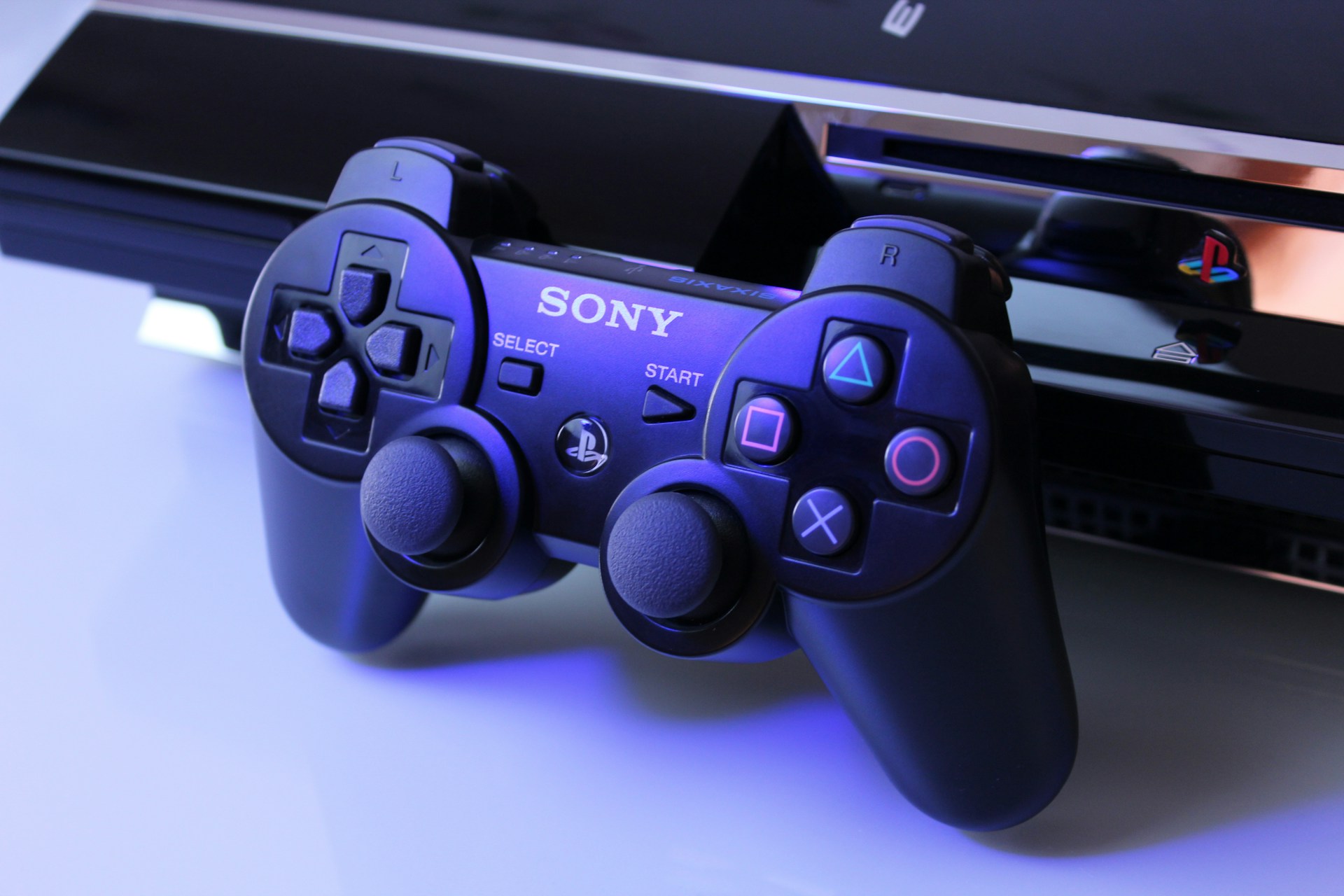
We all remember the PlayStation 3 for its games. It was the machine where we played Uncharted for the first time and watched Nathan Drake climb cliffs as Indiana Jones for a new generation. It was the machine on which Metal Gear Solid 4 kept us glued to the screen as we followed the story of an aging Snake.
Holy shit, I haven't played a better movie since then, and I love Telltale games.
It was the machine on which open world games like Red Dead Redemption began to look like real movies. But what you might not know is that the PS3 wasn't just a game console, at one point it also became part of the US Air Force's supercomputer.
The console we used to hack FIFA and drive Gran Turismo was used to build one of the the fastest computers in the world.
Yes, exactly what it says, but more on that later.
The story sounds like something out of a cyberpunk novel. The US Air Force, more precisely the Air Force Research Laboratory, decided to connect as many as 1,760 PlayStation 3s in what was later called the Condor Cluster.
At the time, it was the 33rd fastest supercomputer in the world, capable of 500 trillion operations per second. In other words, the PlayStation 3, the console on which you may have played God of War 3, had hardware so powerful and so affordable that the US military decided to use it to build a computer that would analyze satellite images, track objects in space and develop artificial intelligence. And all this with only 10% of the power consumption of other supercomputers!
How did it even come about?
The PlayStation 3 was a special console. When it came out in 2006, it was incredibly expensive – $599, which was astronomical at the time. Sony advertised it as a device of the future, and the reason for the price was its specific architecture. The PS3 used the Cell Broadband Engine, a processor developed in collaboration between Sony, Toshiba and IBM. It was a hybrid of a classic processor and specialized cores for parallel computing.
The PS3 was capable of processing massive amounts of data simultaneously, making it perfect for complex tasks such as graphics rendering, physics simulations, and image processing. What gave gamers realistic games allowed scientists and the military to see it as a low-cost alternative to classic supercomputers.
At the time the Condor Cluster project began, the price of a single PlayStation 3 was around $400. On the other hand, comparable specialized supercomputer hardware cost up to $10,000 per unit. The price difference was huge.
The US Air Force calculated that they could put together an equivalent performance system for 5 to 10 times less cost using the PS3. The final price was around $2 million, which we all agreed was a pittance compared to traditional systems. In addition to price, there was also energy efficiency. The Condor Cluster consumed only 10% of the energy compared to other supercomputers with similar performance, which was a huge plus for the military.
Of course, it wasn't all just a matter of price. In its first versions, the PlayStation 3 allowed the installation of Linux. This meant that you could turn the console into a real small computer system with an open source operating system. Sony initially advertised this as a feature for advanced users.
It was officially opened in 2010 in Rome, New York, and presented as the fastest interactive computer in the US Department of Defense. And it wasn't just a PR stunt. The Condor Cluster could analyze images in ultra-high resolution at a speed of billions of pixels per minute. This meant that satellite imagery, which previously took hours or days to process, could now be processed in minutes. It could recognize patterns, track objects, and even detect blurry or foggy spacecraft in space that other systems would miss. In short, the PS3 helped the US Air Force see the world better – literally.
To make things more interesting, at that time PS3 was also part of another big project - Folding@home. It was a global science project that used the power of computers and consoles connected to the Internet to investigate the structure of proteins and help find cures for various diseases. Sony made it possible for PS3 users to include their consoles in the Folding@home network, and at one point, most of the power of the whole project came precisely from players who wanted to help science. So, while on the one hand the PS3 served the military for surveillance and defense, on the other hand it also served ordinary people to help medicine. Few consoles in history can boast of simultaneously playing a role in saving lives and defending airspace.
Of course, the story also has its own bizarre ending. After Sony released the PS3 Slim, it removed the ability to install Linux. This meant that it was no longer possible to use those consoles for projects like the Condor Cluster. That's why the army had to keep older, "thick" versions of the PS3 because they were the only ones that were compatible. This led to the ridiculous situation that the US Air Force was actually dependent on old versions of the console that had been discontinued. If something broke, they had to buy used units. Ironically, the PS3 became a piece of hardware that was both cutting-edge and outdated.
But that just goes to show how unique the PlayStation 3 was. In the world of gaming, we remember him for the exclusives that defined a generation: Uncharted trilogy, Last of Us, Killzone, Gran Turismo 5 and 6, Heavy Rain, Resistance and many others. But in the tech world, it is remembered as the console that proved that hardware developed for entertainment can also be used for serious scientific and military tasks.
The PS3 did something that no other console had been able to do until then. How much is it Playstation 1 was the beginning, as far as it is PS2 made a revolution in the gaming world, so PS3 made a miracle in the world of science and the future development of games, because we got an extremely powerful system that was miles ahead of the PS2.
It has not only provided entertainment to millions of gamers around the world, but has become a tool in the hands of scientists and the military.
For me personally, the PS3 was the first true next-gen machine.
That feeling when I inserted the disc for the first time and saw the graphics that looked like a movie was incredible.
But it fascinates me even more that this same machine somewhere in America was part of a system that could analyze satellite images in real time and help in the development of artificial intelligence. That tells you enough about how ahead of its time Sony was back then.
I think we can all agree that the PS3 was a contradictory console. Too expensive at the beginning, difficult to program, it lagged behind the Xbox 360 in terms of online services. But in the long run it paid off and became a legend.
It sold over 87 million copies, had a catalog of games that shaped an entire generation, and - the craziest part - became part of one of the fastest supercomputers in the world. To say that the PS3 was more than a console is an understatement.