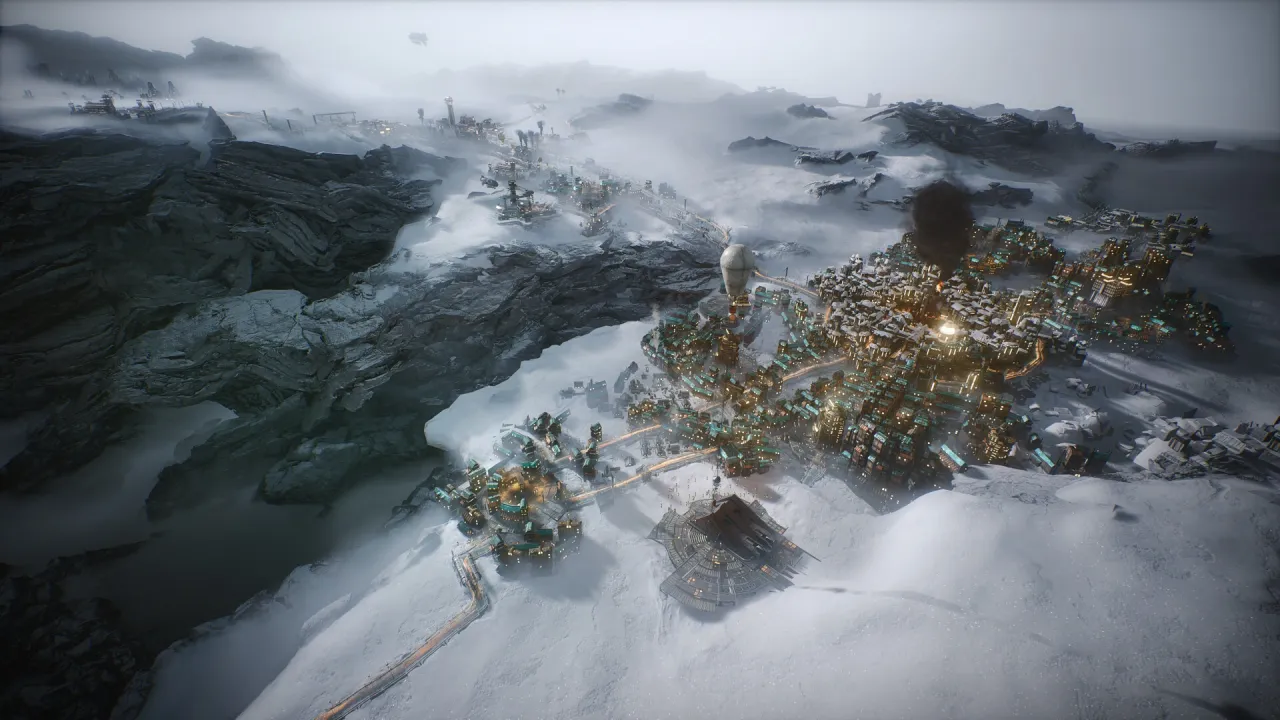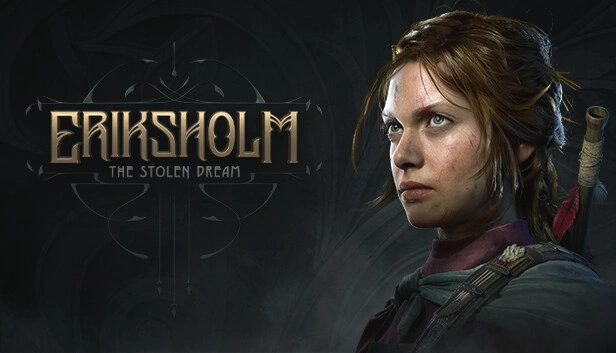
Eriksholm is an imaginary Scandinavian industrial town full of fog, screeching machinery and unspoken secrets. At the center of the story are two orphans, Hanna, who at the beginning of the story is surrounded by the police because of something her brother Hermann did. After initially escaping from them, Hanna searches for Hermann all over the city to find out what he did, and along the way discovers a few secrets that she never expected.
Although the beginning seems interesting from the beginning, the story opens up the most in the second third of the game, when we discover the deeper motives of the antagonists and the socio-political structure of the city. Thematically, the game touches on classes, corporate power and the cost of technological progress, all without being didactic, subtle enough to leave room for interpretation.
In addition to conversations, we discover the story through letters, collectible cards and eavesdropping on characters who explain the situation in Eriksholm in more detail. Through newspaper articles, you can learn that this was once a rich town that was engaged in making sails, but with the advent of the industrial revolution and steam ships, it suddenly became poor, which led to a division in society.
Of course, to make the game a standard classic plot twist in the Victorian era, we also have an inexplicable disease that attacks the townspeople. They could have been a little more imaginative, but oh well, the gameplay helps.
Gameplay
I tested the game on PlayStation 5 and although I was initially afraid of how the real-time isometric view of the game would turn out, it turned out that they did a great job. The control is simple, the start is extremely simple and it helps the player to catch all the steps very easily.
It's interesting that Hanna actually teaches the player skills he already knows, like shooting sleep darts, and this is shown in the way Hanna explains to her younger friends how to use them.
The game is based on stealth, as a rule they cannot find you and the goal is to hide from the police and other villains. Of course, in order not to be boring, they also added puzzles.
As a rule, the puzzles are fair: clues are found in the environment and dialogues, and the logic is consistent. Of course, there is the problem of isometric games, which is pixel hunting. Tiny interactive elements can be missed if you're not meticulous. The interface is functional, but can be sluggish when moving faster between locations.
The good thing is that it can be zoomed in and out as needed, so that makes things easier, but the problem is when multiple characters are looking for you, it's harder to keep track when it's zoomed all the way out. A good trick is that you can "take a look" and see something further and thus make a plan before taking action.
The game reminded me of the older Desperado games, not only in appearance but also in map design, and the cool thing is that players can approach the same problem in multiple ways.
Visuals and atmosphere


The aesthetics of Eriksholm look fantastic, and not just because it's an isometric game that I find particularly beautiful.
Cool color palette, sharp contrasts and a fine mix of art deco and industrial motifs. The character animations are not at the level of the biggest productions, but they are expressive enough to support emotional moments. The background illustrations and light work are especially impressive, the city looks alive, even though a mysterious disease reigns.
The framing of the scenes is reminiscent of a comic book, sometimes the frame narrows, focuses on a detail, and then expands to reveal a new puzzle or danger. This cinematic approach makes research visually interesting.
The musical score is discreet, so much so that I often didn't even notice it. It is mostly rich in light piano motifs that intensify in emotional climaxes.
The sound design is superb: the clanking of metal, a distant train, the hum of machinery, all contribute to the feeling of being in an industrial city. The voice acting is solid, with the occasional accent adding authenticity, though the secondary characters sound rather caricatured at times.
Conclusion
Eriksholm: The Stolen Dream is a narrative adventure that will satisfy fans of atmospheric, story-focused games with a classic puzzle approach. It is not revolutionary, but it is carefully crafted and the story goes from good to very good at one point. If you like to immerse yourself in dark industrial landscapes and solve puzzles that are not there to get on your nerves, this journey is worth your attention.
A copy of the game was provided by publisher Nordcurrent for review purposes