Our collaborator SirBaronSand played the charming title Alchemist: The Potion Monger. Below are his impressions.
At first glance at the game's Steam page, just browsing through the images and reading the description, I expected yet another average "Stardew Valley, but in a new way," but I was pleasantly surprised by all the elements of the game.
The game appears to be relaxed, has a simple visual style, basic combat mechanics, but very advanced mechanics for potion crafting and the systems associated with them. The world isn't large, but it has enough content for a very fun adventure full of twists and mysteries. There is a significant number of skills, recipes, and equipment for potion crafting that we can acquire, and it’s always exciting when we can produce something new or ease the production of something we could barely produce until then.
At the start, we choose the game's difficulty, with only an easy and normal option available, and then we select the character we play as. All characters in this world are humanoid animals, and we choose one type from many. The character choice affects minor passive advantages and disadvantages, but it can also significantly impact how easy or hard the game is.
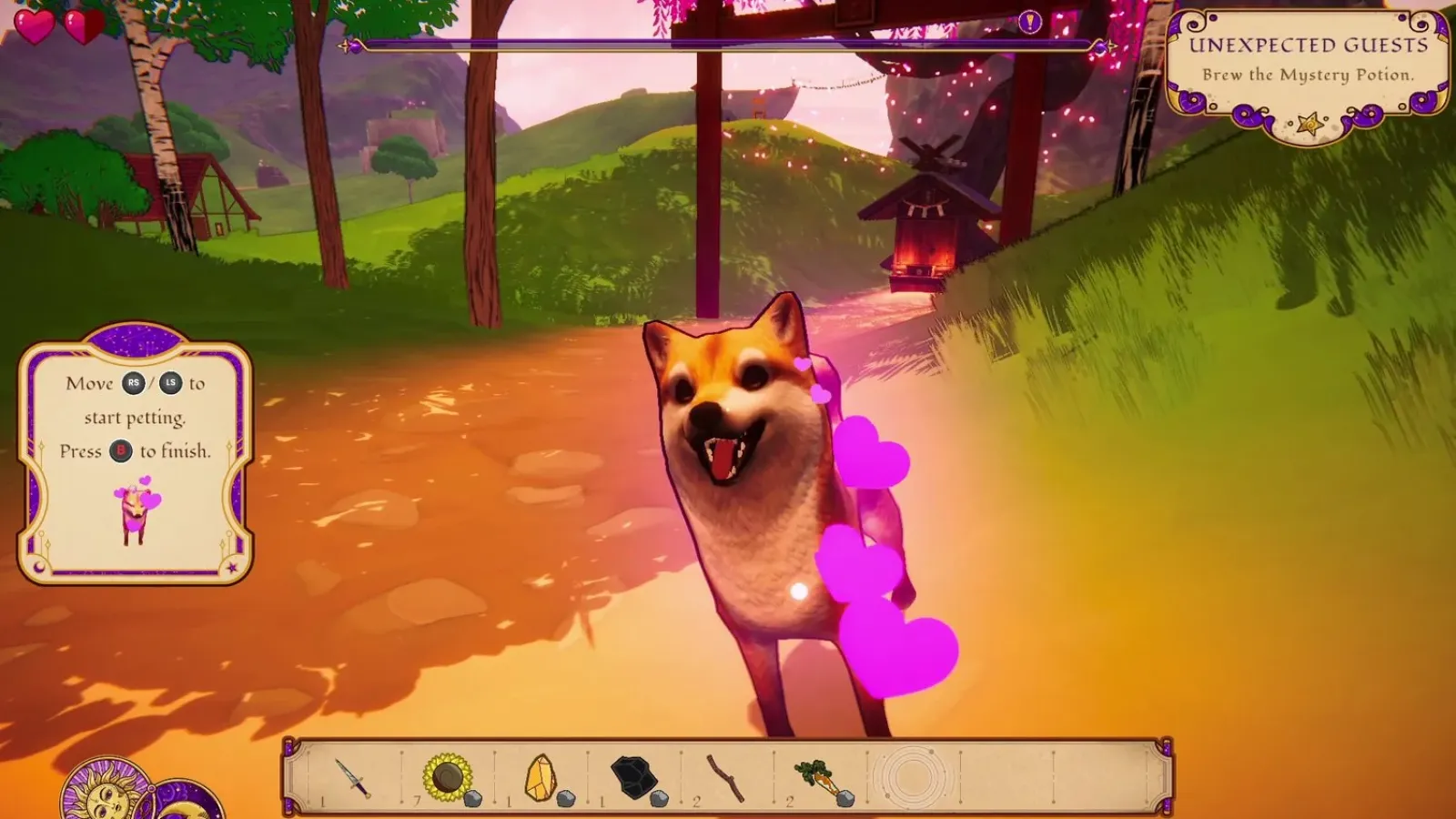
Although the game is mostly simple, there is an interesting learning curve waiting for us right at the beginning. While setting up our new house, naming our pet, a shiba inu dog, we start crafting our first potion. The game immediately guides us through several different menus where we learn the basics of alchemy: we look at potions, elements, and processes.
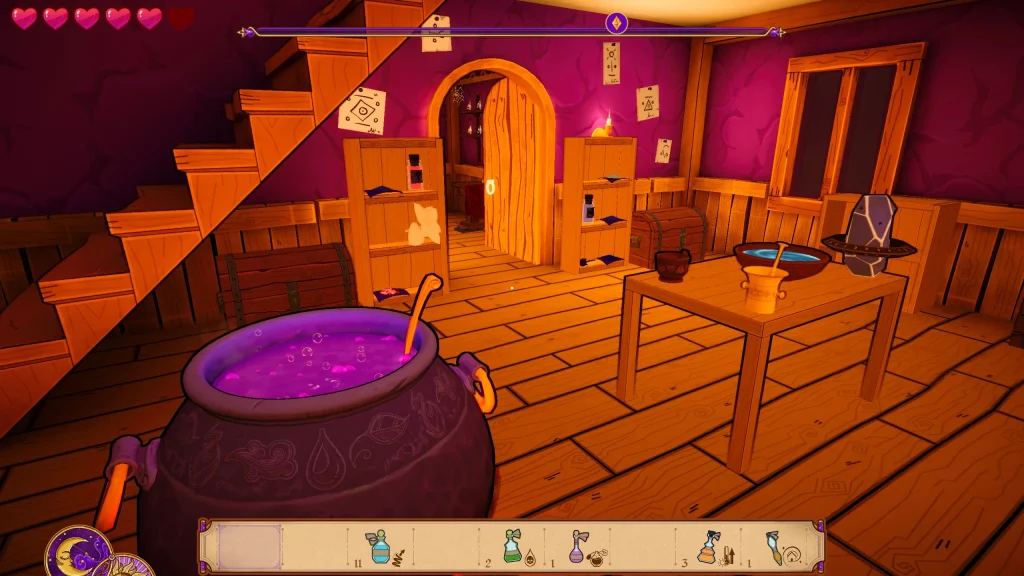
Combining potions is simple in concept; the pot can only contain elements needed for the potion we want. Elements are divided into earth, air, fire, and water, with each category having 16 elements, some of which have additional conditions. Potions can require between one to four elements, and ingredients can have one to three elements, and in rare cases, more. By using various tools, we move the elements of the ingredients, but we can only process them within the rules of those tools. We start with only a few elements we know, and we discover more by giving them to our pet to identify. The dog we start with can only identify earth elements, and throughout the game, we discover other pets that help us identify the rest. Putting the wrong elements in the pot can result in an unexpected potion for which we don’t yet have a recipe, but more often than not, it results in a small explosion and the loss of all components in it. When we place ingredients that make up a potion in the pot, we play a simple minigame of “drawing” shapes that come out in bubbles to improve the quality of the potion.
Throughout the game, we complete various quests, some related to the main story and some side quests, and alongside them, we have a list of time-limited requests that change daily. Also, important NPCs have lists of potion packages that we can bring them for various rewards. We discover new potions through quests, packages from NPCs, or we buy them in various shops, and sometimes we find them in specific locations or hidden in boxes. Along with all this, we can learn various skills that we can buy, receive as rewards, or find. Skills affect various aspects and mechanics of the game, from movement speed to earnings from potions (and perhaps some secret mechanics). All skills require us to meet certain conditions to activate, and these conditions are often related to what the skill will enhance.
The game has a pleasant atmosphere most of the time, but there are constantly enemies in the way that interfere; on normal difficulty, combat is not a big problem and is very simple, we can hit or block attacks, so most of the fighting comes down to moving backward and swinging weapons. All other elements are related to our use of potions and possession of skills.
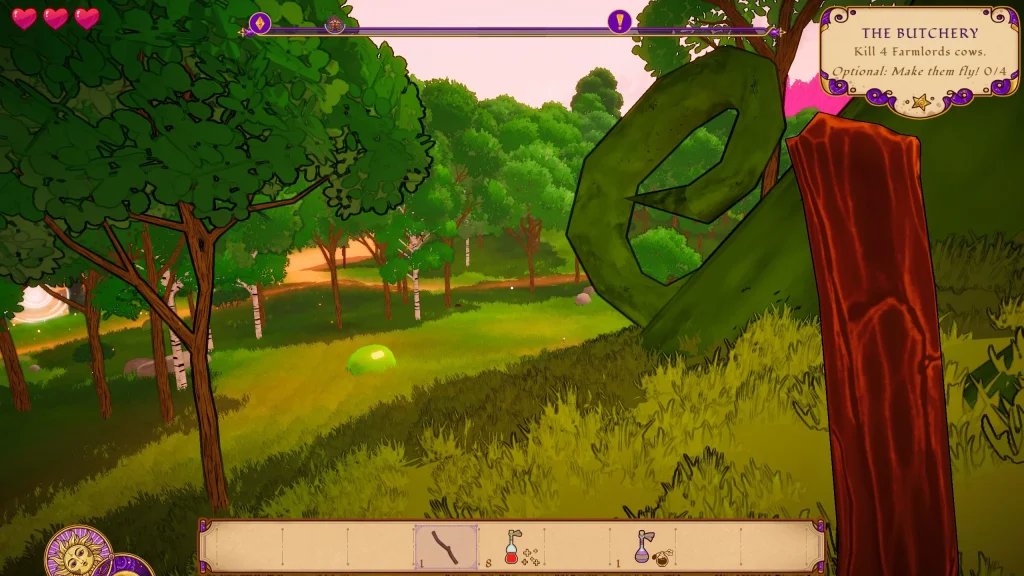
Almost all problems in the game can be solved with the right potion; some things, of course, can only be solved with a specific potion. Although we possess weapons and have several options available to solve problems, most tasks, hidden rewards, and other things are easiest to resolve with a potion. They have various effects that significantly change our abilities, but also effects that can easily put us in a position from which we cannot easily escape. The game allows for creative approaches to certain locations, and there are very fun combinations of potions that motivate the discovery of new elements so that we can produce new potions as quickly as possible.
Perhaps the biggest problem of the game is the rare but occasional bugs that sometimes require a game restart to resolve, where sometimes certain tasks do not progress, NPCs occasionally get stuck, and there are sometimes minor menu issues. A minor problem in the early game is if we do not have money to buy new recipes, we do not have too many tools for creatively processing ingredients, and we do not have the ingredients for the potions on the list (and we may not be able to find them at the moment), our only option is to do something else instead of completing those tasks, or go to bed to pass the day until the list refreshes with new requests. The last minor issue that can be a problem is that saving can only be done by going to bed and passing time until the next phase (day or night), and occasionally the game automatically saves outside of that.
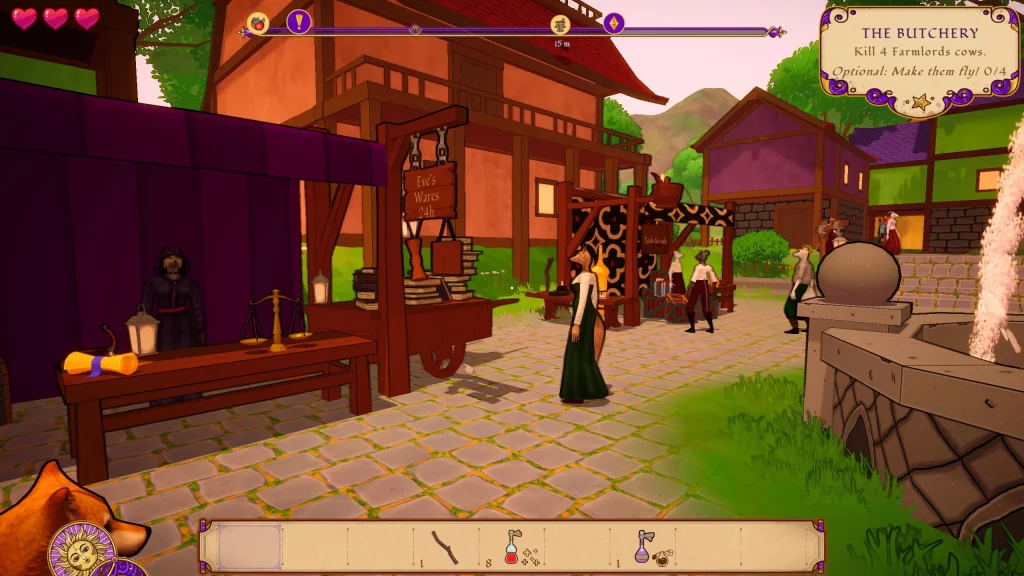
All in all, the game was one of the more enjoyable experiences, the plots really surprised me, and some potions were incredibly fun. Every gaming session was extended with the classic “just one more turn” type of thinking, it was just “just one more potion/quest.” The mysteries in the world encouraged exploration, and often every exploration was rewarded with something interesting or useful.
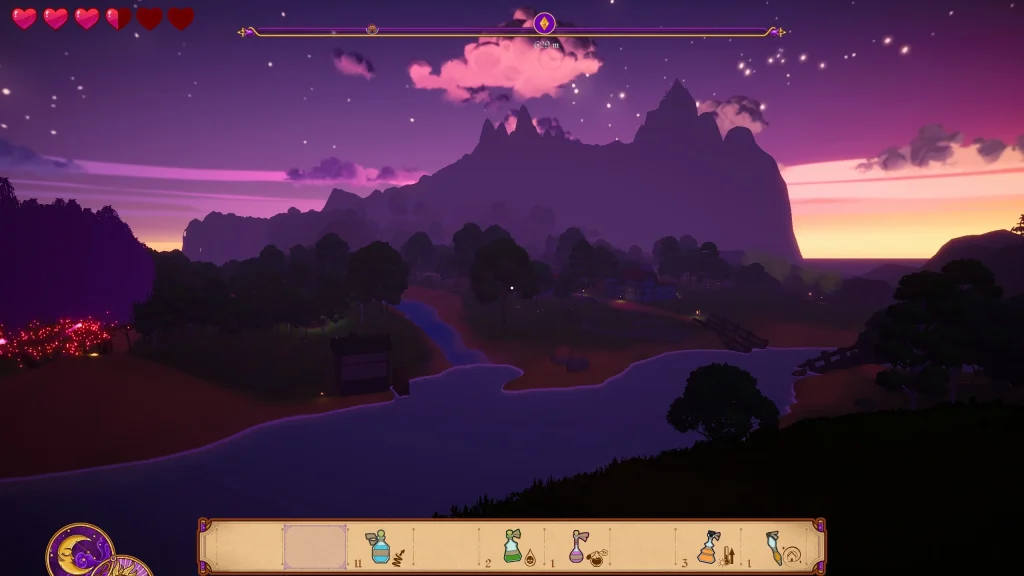
I would definitely recommend the game to fans of relaxing/pleasant games, but also to anyone interested in the theme of alchemy. The game offers interesting challenges, and the problems are almost negligible compared to the fun the game provided. One of the plots can significantly affect the relaxation of the game where the level of danger occasionally increases, but I think that only contributed to the experience rather than detracted from it.
A copy of the game for review purposes was provided by the publisher and development studio Art Games Studio S.A.