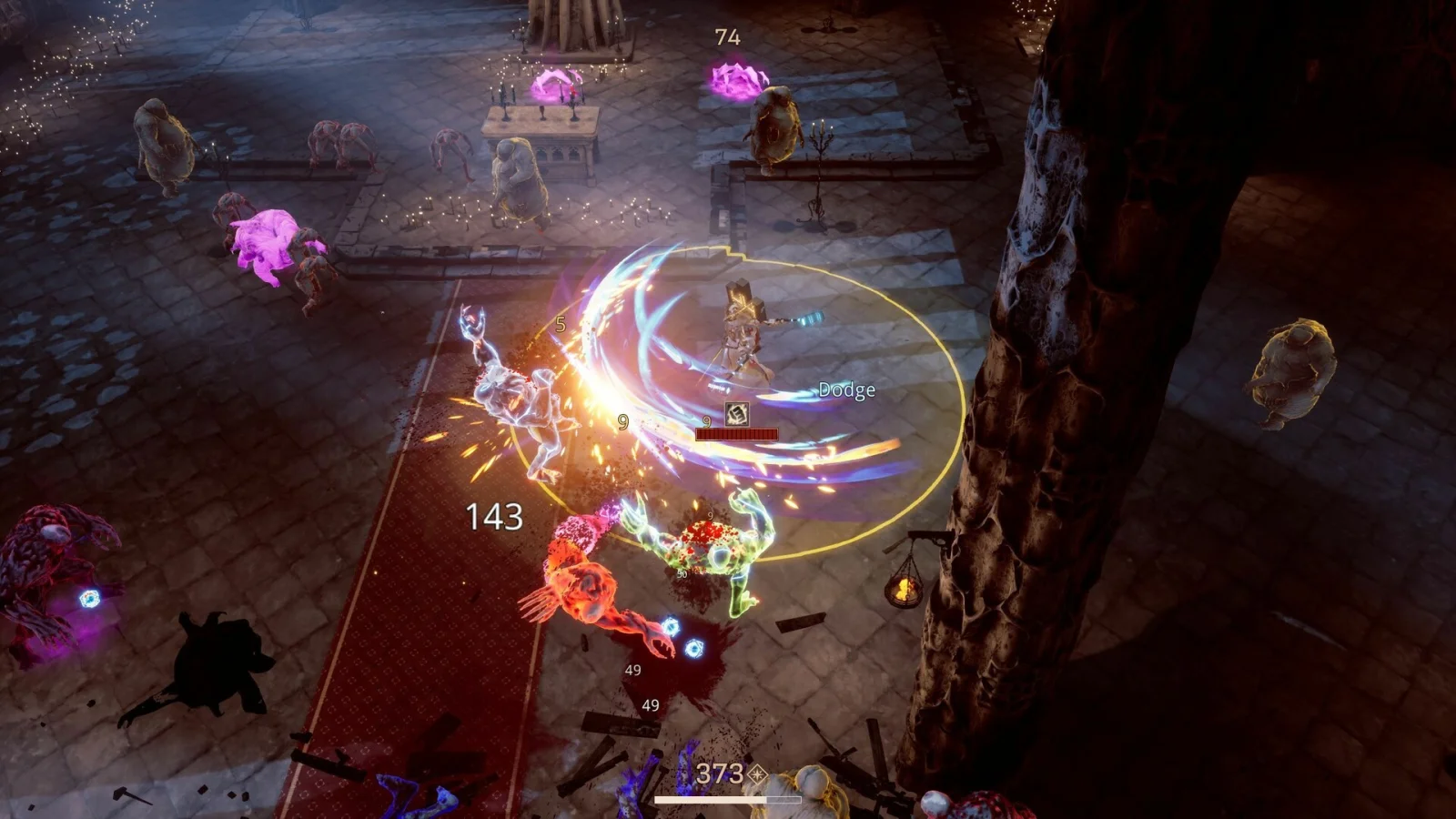
Out of Time immediately grabs attention with its main idea – the tether mechanic. Players are connected by an invisible energy rope and share statuses and bonuses as long as they stay close to each other. This way, cooperation is not just a recommendation, but a fundamental requirement. This results in dynamic moments where team coordination becomes crucial, and panic or one wrong move can easily ruin the entire round. As a concept, this is by far the strongest part of the game and the reason it stands out from most other roguelike titles.
However, the rest of the game does not always manage to keep up with that level of originality. After the initial enthusiasm, a sense of repetition soon sets in. Although battles take place in different time periods – from prehistory through the Middle Ages to futuristic cities – enemies quickly start to feel similar. The differences boil down to visual details, while behaviors and combat patterns repeat, diminishing the excitement after a few hours of play.
The loot system, which should provide variety and a sense of constant progress, often feels unfair. Since abilities depend on equipment, it all comes down to randomness. It is not uncommon for a weapon or item to look interesting, but its power or rarity makes it unusable. This results in a loss of control over one's own progress, and the grind that the game encourages becomes more of an obligation than a challenge. Additionally, short missions, although well-timed, begin to feel monotonous over time as they rarely bring unexpected situations or serious tactical variety.
Despite the mentioned flaws, Out of Time manages to offer fun in the right circumstances. The tether system can create tense and unforgettable moments, especially when the team manages to stay together and collectively overcome seemingly hopeless situations. It is in these moments that the game shows its full potential and reminds us why such design is interesting in the first place. Additionally, the visual diversity of the epochs gives the game personality, even when repetition lurks beneath the surface.
From a technical standpoint, Out of Time is mostly stable, but not completely without issues. Minor bugs and occasional balance problems remind us that the game lacks additional polishing. None of this ruins the experience, but combined with the repetition and reliance on RNG, it leaves the impression of a title that has potential but has not yet fully matured.
All in all, Out of Time can be described as a game with an excellent idea and average execution. The Tether system is innovative and at certain moments provides an experience that is hard to find elsewhere, but repetitive enemies, problematic loot, and reliance on grind dampen the impression. For fans of co-op games, it can be a worthwhile experience, at least while the novelty of the tether mechanic lasts. However, for those seeking long-lasting and diverse content, it probably won't last long enough to leave a deeper mark.
Conclusion: great idea, but execution that doesn't go further.
Game copy for review purposes provided by the development studio and publisher Manticore Games