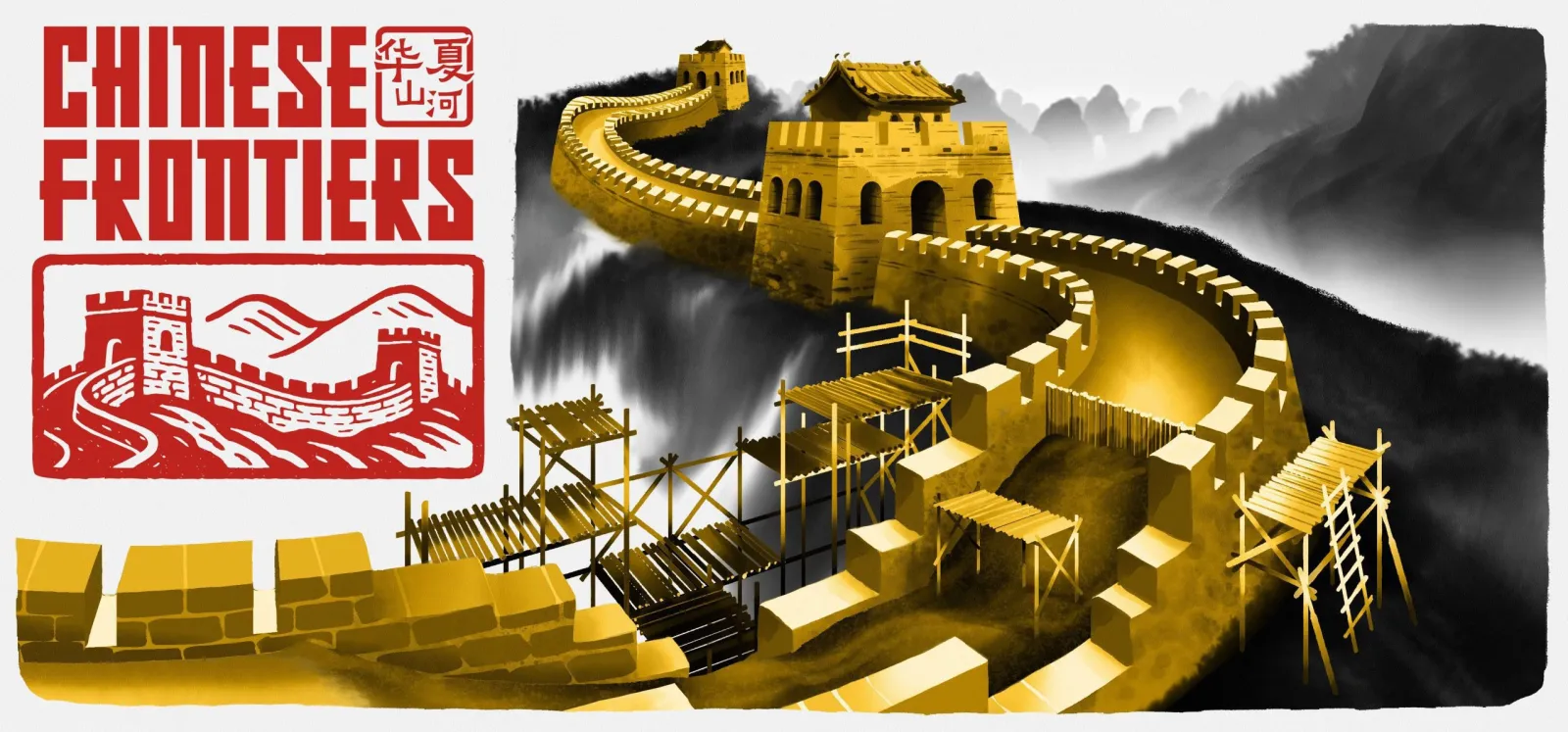
Chinese Frontiers is a first-person indie game that combines building survival with a slow, almost meditative pace of life on the Chinese frontier during the Middle Ages. The game comes from the workshop of SolidGames, known for its realistic yet somewhat clumsy attempts at simulating life in the past. This time, we are taken to a period when the Great Wall of China was still under construction, and villages and watchtowers were just embryos of civilization amidst natural wilderness. It sounds idyllic – and in many ways it is – but behind the atmosphere lies a game that balances between relaxing building and technically frustrating execution.
In Chinese Frontiers, the player takes on the role of a survivor who, along with other characters, tries to build and maintain life in a remote Chinese valley. The core mechanics include gathering resources such as wood, stone, clay, and food, and constructing buildings that are crucial for the community's survival. All of this takes place from a first-person perspective, which adds an extra sense of immersion. However, unlike more modern survival games that allow for task automation or at least speed up repetitive actions, Chinese Frontiers requires players to manually lift every stone, place each beam individually, and pour each brick themselves. At first, this is charming, but as the game progresses, the slow pace and repetitive nature of these tasks can become tedious.
The game takes place in beautifully designed environments. Snowy mountains, vast steppes, and dense bamboo groves look truly impressive, especially in combination with ambient music that relies on traditional Chinese instruments. In moments when you walk through a misty forest gathering mushrooms or while building a bridge over a river, the game manages to create a sense of tranquility that is rarely seen in the genre. However, this atmosphere is marred by technical issues. Upon release, the game had numerous bugs – from stuck quests and non-functional NPCs to pathfinding problems and inaccurate collision. Although the developers have already released several patches, the issues have not completely disappeared.
Special attention is given to the main characters, Jun and Mei, whose story slowly unfolds through dialogues, missions, and everyday interactions. Their emotional dynamics bring a dose of narrative depth, although it is not overly developed. Still, it is nice to see an attempt to inject humanity into a game that could easily remain a cold construction simulation.
For fans of games like Medieval Dynasty or Banished, Chinese Frontiers can be a real discovery, but only if they have the patience for its slow pace and current technical issues. It is a game that demands time, attention, and a certain tolerance for frustrations, but offers an authentic atmosphere and an unpretentious, almost therapeutic experience of life on the edge of civilization. It’s not for everyone, but those who approach it with the right expectations might find a hidden gem within.
A copy of the game for review purposes was provided by the publisher Big Cheese Studio