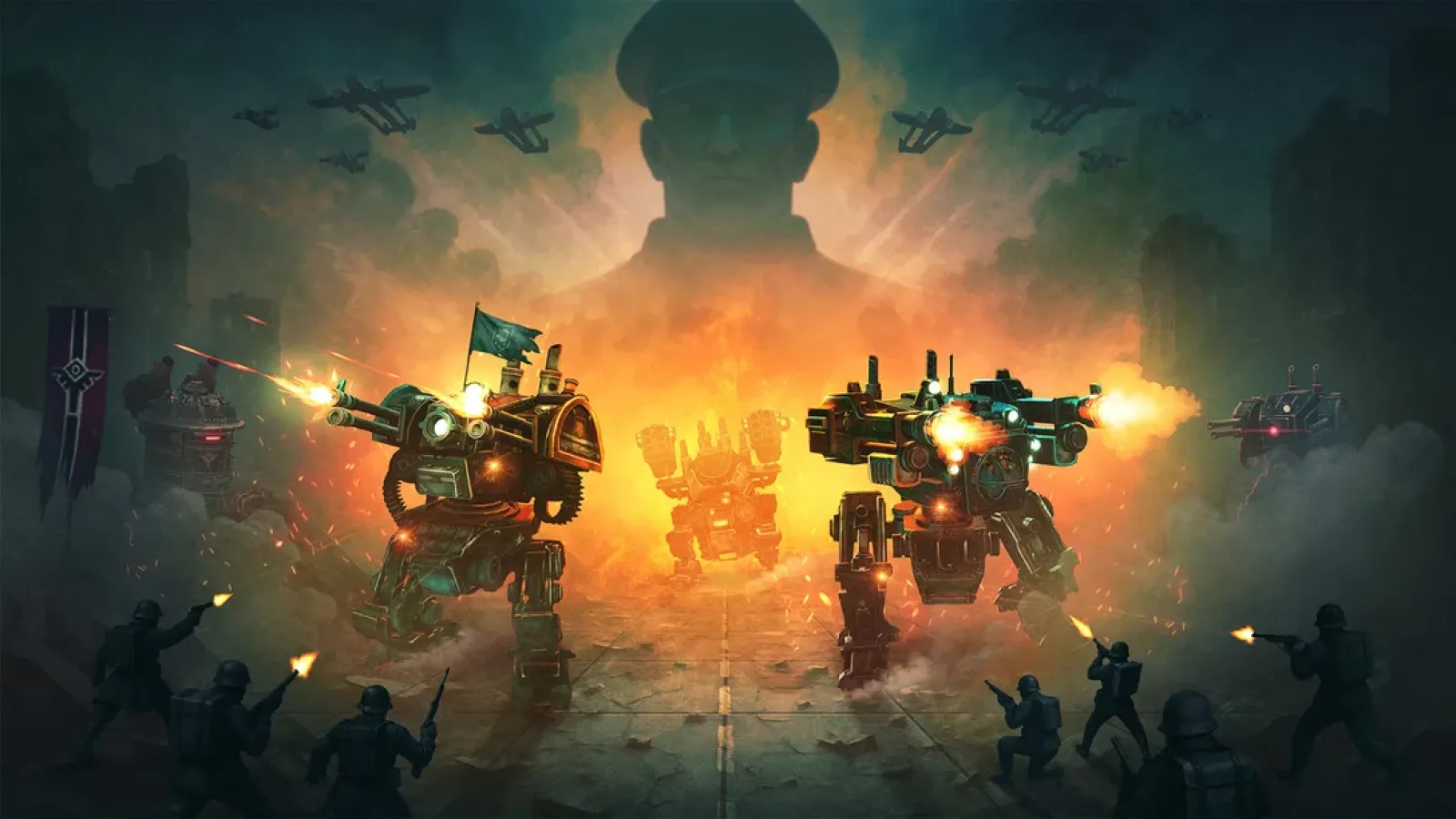
The year is 1949. In this alternate history of World War II, the Axis powers have occupied all of Europe with their enormous steel beasts. Only a handful of Allied forces, squeezed in Scotland, are resisting, ready for one last attempt to destroy their mechanized dominance.
Grit and Valor is a roguelite strategy game that puts us in the role of allied pilots on this mission. They must penetrate deep into the heart of "New Germany" with their mechs and bring down their dominance once and for all. Sounds epic enough? Let’s go to war.
Dieselpunk war future
Grit and Valor – 1949. with its style reminds of a comic from the fifties: dieselpunk aesthetics, dark tones of military equipment, and stylized drawings give the game its identity. Pilots, enemies, and the environment evoke old war-themed cartoons. The narrative is simple but provides enough context: liberate occupied Europe and sabotage enemy forces. The generals, mechanics, and pilots you will encounter are mostly forgettable, except for the comedic main antagonist, General Z, who brings a dose of humor and caricature.
Smart positioning without rushing into action means a lot
Tense, short, and tactical combat
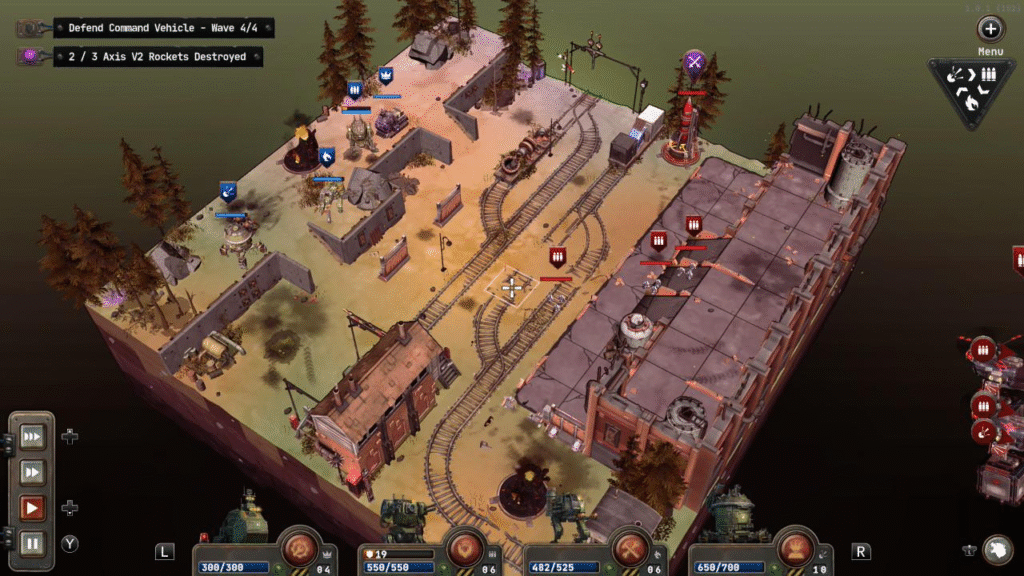
Battles take place on grid-based tactical maps. We take control of a team of four mech units. There are three classes: ballistics, stable fire support ideal for medium range, flame, which is short-range but good for crowd control, and explosive, with slow firing but devastating power against groups of enemy units.
Different pilots that we can assign to mechs have special skills (drop bombs, healing, buff), which opens up space for even more tactical depth. The fourth unit is the HQ mech. If it falls, the game is over. In the bottom right corner, a rock-paper-scissors reminder constantly tracks the power relationships among the units.
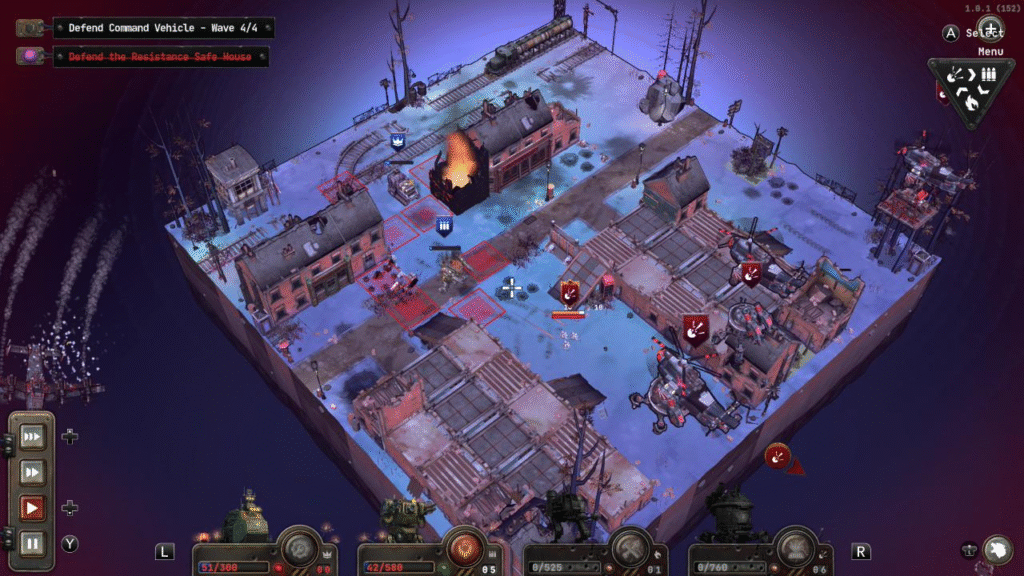
It's over, guys… Wrap the cables, we’re heading to base for a new run.
Enemies come in waves: tanks, infantry, drones, mechanical spiders… It's essential to position your troops well and smartly use cover, traps, and elevation differences. Pausing with the Y button quickly becomes your best friend, especially when things get chaotic and require micromanagement down to the last shot.
Secondary objectives and airdrops: Risk and reward
In addition to classic survival against 3-4 waves of enemies, each map offers additional objectives like defending a safehouse, destroying German rockets, or capturing points on the map. Completing these provides extra resources for upgrades.
During battles, airdrops with perks that enhance our mechs arrive between enemy waves: higher damage, faster cooldown, extra shield, more health... These packages are often welcome and make the difference between victory and defeat, especially when they bring a health pack. However, it lacks that “wild card” moment when you get something truly epic.
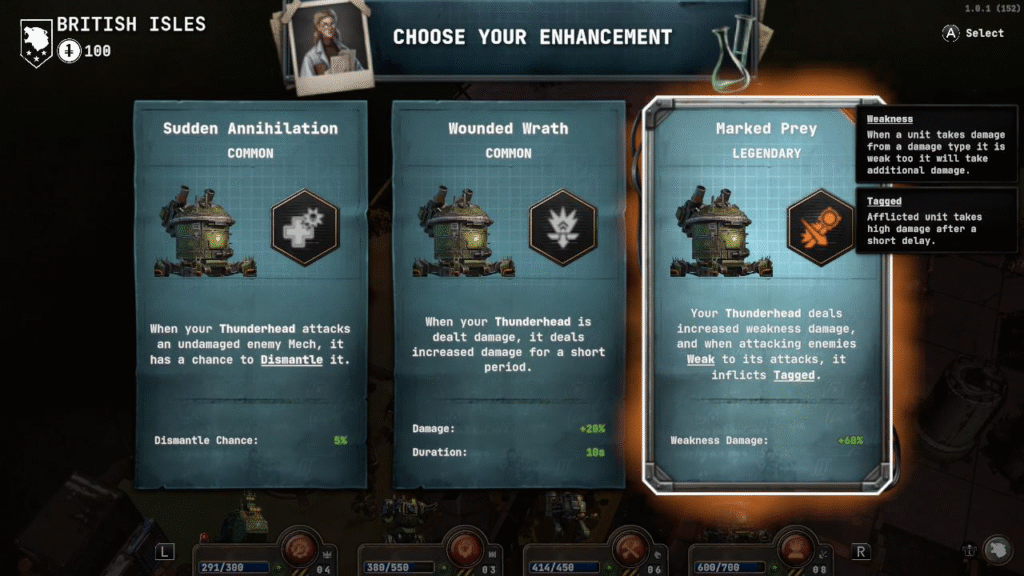
We’ll take, of course, the legendary perk… even though it doesn’t sound that legendary
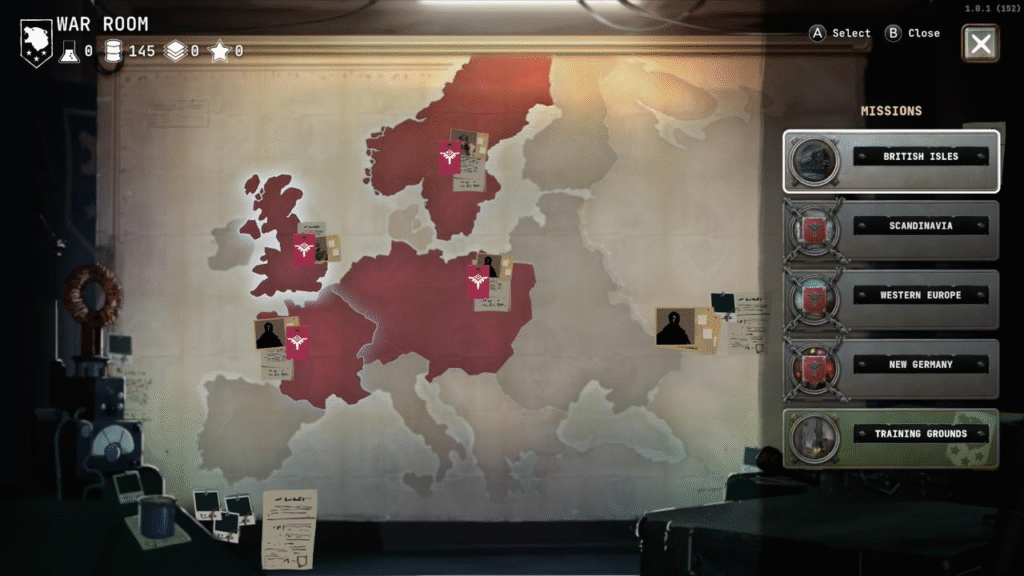
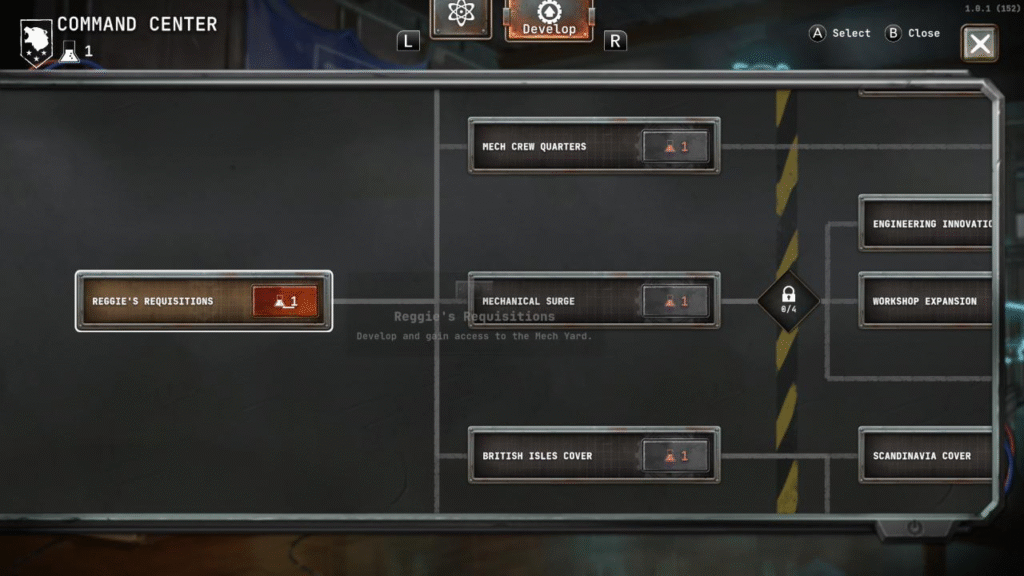
The game uses a “pick-a-path” mission system across the state map. Along the route, we encounter various battles, shops, and random events. When you eventually lose, you return to base where you invest the resources you’ve earned into permanent upgrades for pilots, mechs, and the base. Progress is felt; each subsequent run is a bit easier, more powerful, and more interesting. Why return? Because each attempt brings something new. The first time you’ll fall because you rushed too much. The second time you already have a better mech. The third time you’ll try a new path through the map, with a different combination of mechs or pilots.
Technical issues and predictability
However, not everything is smooth. Vehicles sometimes behave strangely – pathfinding can glitch, units can get stuck at the edge of the map or ignore commands. The camera can be stubborn, and controls imprecise, which can be painful in real-time strategy.
Maps and objectives become predictable after a while. The same structures, the same bunkers, the same objectives. Upgrades, although numerous, often feel like dry statistical boosts (+10% HP, -5% cooldown). It lacks that "wild card" moment that would make each run unique. Instead of building crazy synergies, I often just try to pull more of the same numbers, usually focusing on health or armor.
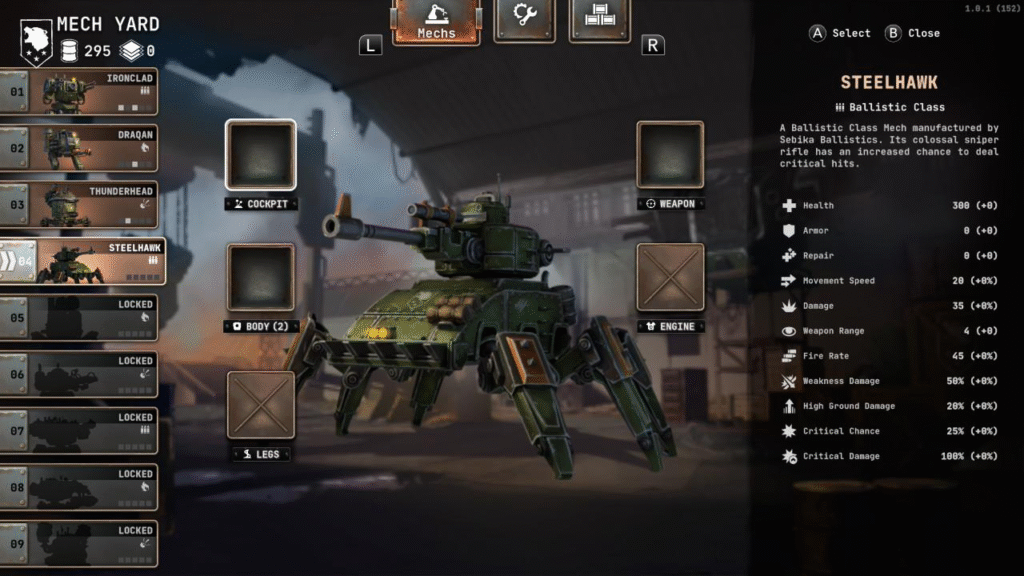
Finally… a new mech! Watch out, Germans! This one will surely be crucial for victory!
Brutal start, but worth it
The early game is brutally hard. The starting mechs are sluggish, weak, and the game doesn’t spare anyone. Forgetting that it’s a roguelite, I thought, “I’ll handle this easily.” After a few missions, I quickly lost. Again. And again, until I gathered some resources and unlocked new upgrades and mechs.
Only after you break through that barrier, when you assemble a better setup, learn when to pause and how to use the map and enemy behavior, does the game show its teeth. Despite all the complaints, Grit and Valor has that something. When your plan works, when enemies fall like dominoes, when you launch a mech and destroy 3 enemy units at once, you feel like a general.
A machine worth starting
Grit and Valor – 1949 is not a new classic, but it is a quality, challenging, and satisfying roguelite with mechs. This is a fast, tactical, and brutal real-time strategy that constantly keeps you on your toes. It’s not perfect, but when it works, it really pulls you in and makes you forget everything else. If you love strategy games and big mech beasts, and don’t mind the initial frustrating losses, give Grit and Valor a try. There will be blood and metal.
A copy of the game for review purposes was provided by the publisher Megabit Publishing