Tech Report is a new weekly overview of the most important hardware, technology, and gaming-tech news that doesn't necessarily fit into the daily rhythm of the portal, but can have a broader impact on players, the PC market, consoles, handheld devices, and the future of gaming equipment. In the first issue, we highlight five topics that marked the week from May 18 to May 22, 2026.
Microsoft tests significant game loading acceleration on PC
One of the most interesting technical news of the week comes from Microsoft. Advanced Shader Delivery, a technology that preloads shader data and thus reduces waiting time when launching a game for the first time, has now been expanded to AMD RDNA 3, RDNA 3.5, and RDNA 4 graphics cards. Microsoft cites the example of Forza Horizon 6, which launches in 4 seconds on a configuration with an AMD Radeon RX 7600 graphics card and an AMD Ryzen 7 5800 processor instead of approximately a minute and a half, representing a time saving of about 95 percent. The technology currently requires Xbox Insider access and is tied to games downloaded through the Microsoft Store or Xbox PC app, but if it expands, it could become an important step towards less stuttering and shorter waiting times in PC gaming.
AMD FSR 4.1 could bring a significant leap for current generation consoles
One of the more interesting technical topics of the week is related to AMD's image scaling technology. AMD reportedly plans to expand FSR 4.1 to RDNA 2 hardware, which is particularly interesting because the PlayStation 5 and Xbox Series X/S consoles are based on the RDNA 2 architecture. According to developer claims reported by GamingBolt and Wccftech, the Xbox Series X could benefit more from this than the PlayStation 5 due to SDK support and the way modern AMD tools are implemented. For gamers, this does not automatically mean "next-gen" graphics, but it could open up space for a cleaner image, more stable performance, and better use of upscaling in future games.
ASUS enters the RAM market, but the price is extreme
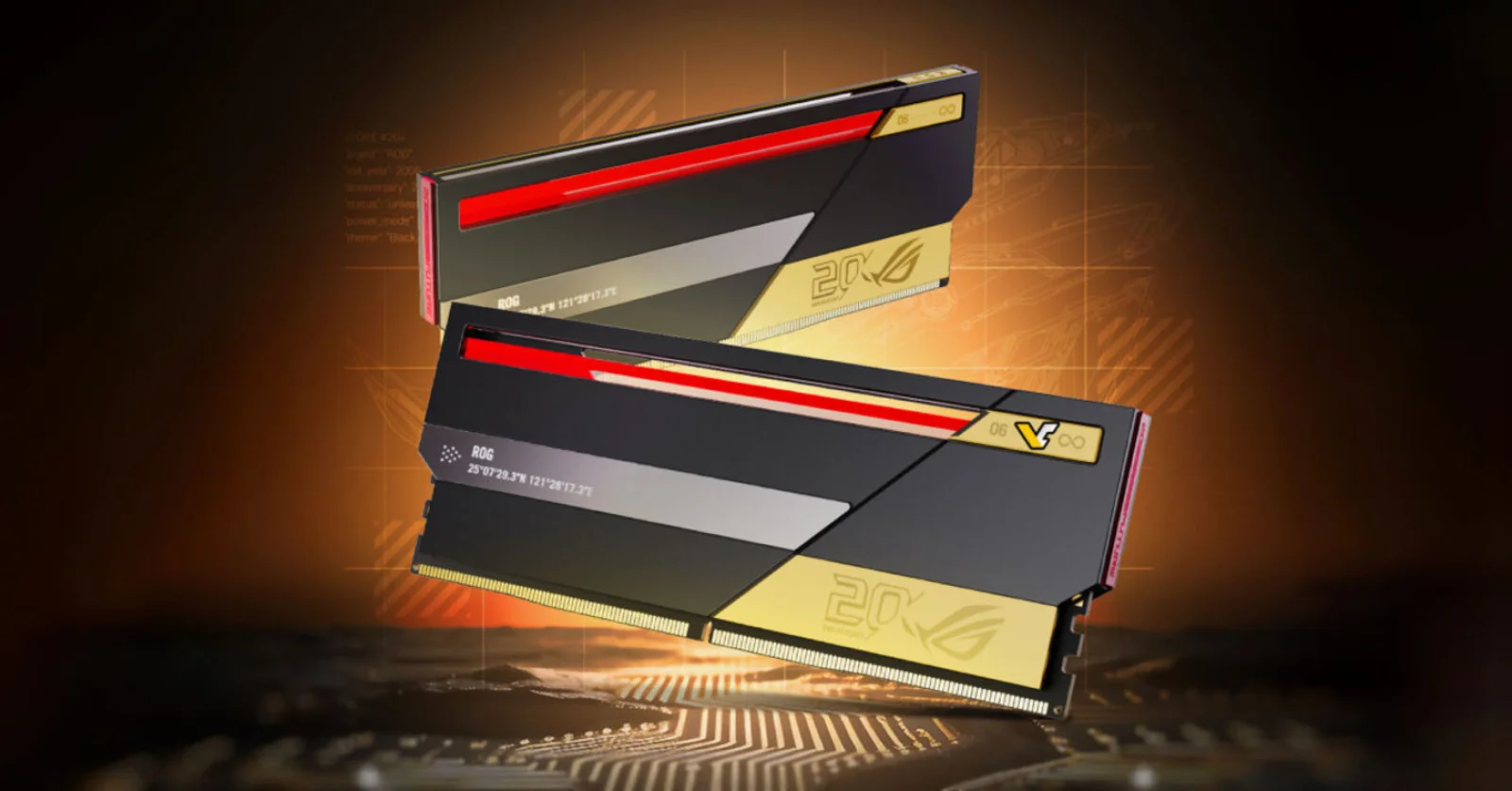
ASUS has introduced its first ROG DDR5 memory kit through its Republic of Gamers brand, and it comes at a very inconvenient time for buyers. This is a 48 GB DDR5-6000 kit with support for AMD EXPO and Intel XMP, and the special "ROG Mode" on compatible ROG motherboards allows for automatic overclocking up to DDR5-8000. The problem is the price: Tom’s Hardware reports that the kit costs around $880, putting it in the range of being more expensive than many graphics cards. The news is interesting as it shows how gaming brands are increasingly expanding into the entire PC ecosystem, but also how memory and components have become a sensitive area due to shortages and rising prices.
China reportedly banned Nvidia's RTX 5090D V2 card
Nvidia has once again found itself at the center of a geopolitical hardware story. According to reports from the Financial Times and Tom’s Hardware, China has reportedly banned Nvidia's RTX 5090D V2 graphics card, a customized version of the flagship model for the Chinese market. Although the card was formally aimed at gamers and 3D creators, the problem is that powerful consumer graphics cards are increasingly being used in AI development, especially under conditions of limited access to professional AI chips. For the gaming audience, this may not sound like direct news, but it has a broader impact: any disruption in large graphics card markets can affect availability, prices, and manufacturers' strategies.
Gaming laptops are getting thinner, but also more expensive
TechRadar tested the MSI Stealth 16 AI+ this week, a laptop that showcases where the premium gaming laptop market is heading. In a slim and relatively lightweight 16-inch chassis, it comes with configurations featuring an Intel Core Ultra 9 processor, Nvidia RTX 5080 graphics, and a 2.5K OLED display with a 240 Hz refresh rate. Such devices increasingly resemble powerful laptops for gaming, work, and creative tasks rather than traditional "thick" gaming laptops. The downside is expected: a high price. The range of around $2,099 to $3,299 indicates that premium mobile gaming is increasingly moving towards the luxury segment, while the mid-range must increasingly compete on the basis of price, performance, and long-term value.