Some games are there to impress us, while others are there to give us hours and hours of fun, and sometimes even last too long. Escape from Ever After on the other hand, he wants to throw us into a fairy tale with a nervous breakdown and quietly whisper: "Brace yourself. This is going to be weird."
How to explain this title? Best as a spiritual successor to Paper Mario with its own twist and original story, an RPG-lite with platformer and puzzle elements, a fairy tale that went quite a bit out of the ordinary. The game is well aware that classic stories and fairy tales are clichés, so it unapologetically turns them upside down, and it succeeds.
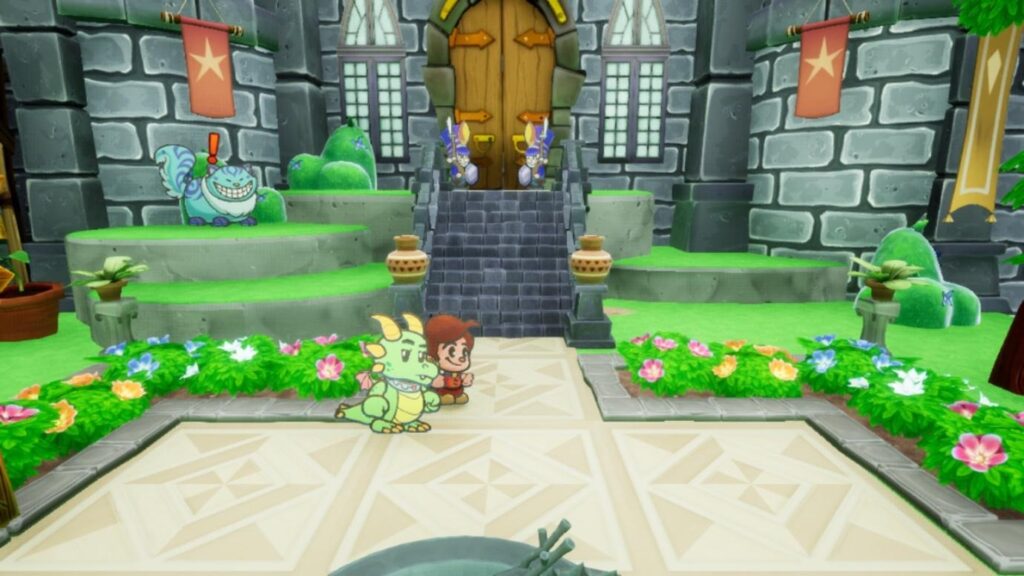
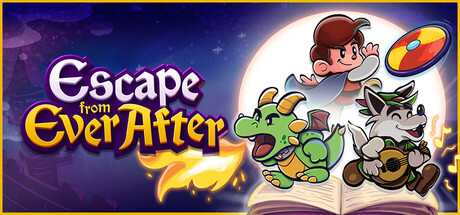
You play as Flynn, a hero who must free the village from an attack by a terrible dragon, with the help of his shield, which he throws fearlessly. However, things go downhill very quickly, and Flynn ends up in Ever After, confused and rather lost. We soon find out that Ever After is actually a big megalomaniac corporation because, of course, capitalism is everything. This company pulls the heroes out of their stereotyped fairy tales and employs them for their own benefit, and their base of operations is the very castle of the dragon that Flynn came to defeat.
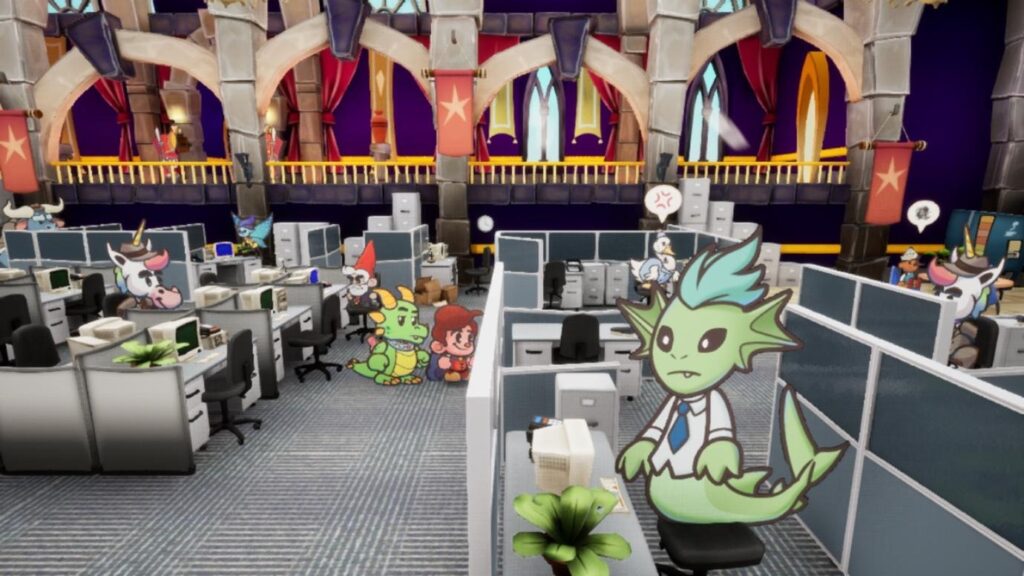
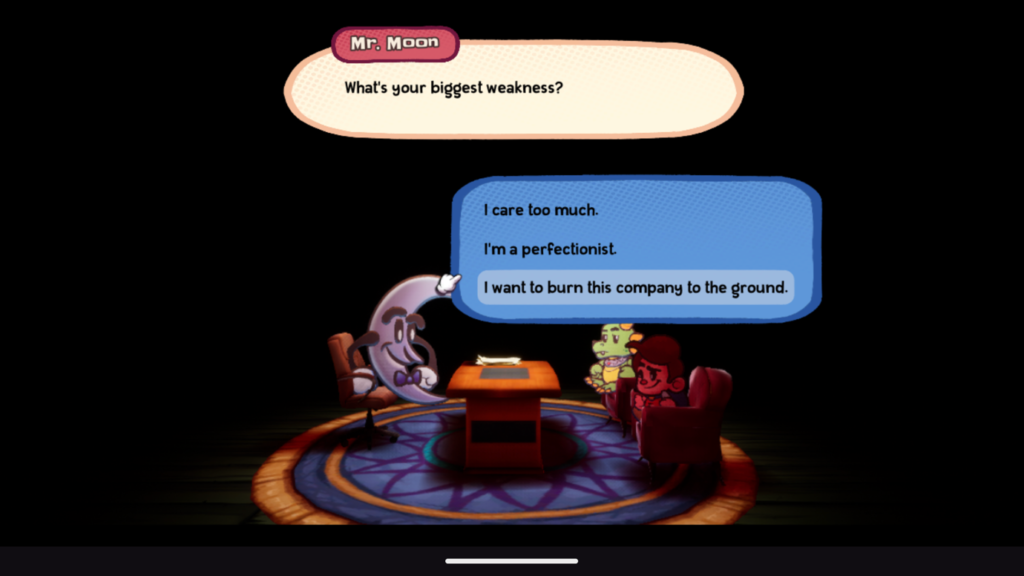
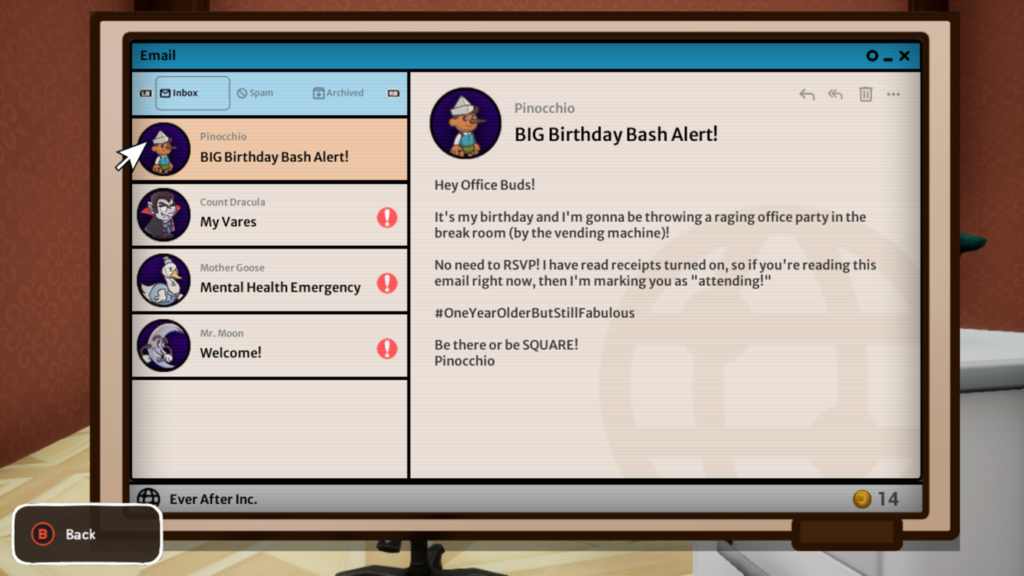
The irony is strong, so Pinocchio works in data processing, Dracula sells you outfits, and the three little pigs are serious businessmen and builders. Here, fairy tales are only raw material, and heroes are labor force. The narrative is strong and unusual. It mocks the stereotypes of fairy tales, fate, the "chosen ones" and the idea that personal fulfillment comes from completing the main quest. The dialogues are short, witty and precise, without stretching, and regularly bring a smile to your face. The game knows when to stop with the story, and when to give you the reins.
Gameplay and mechanics
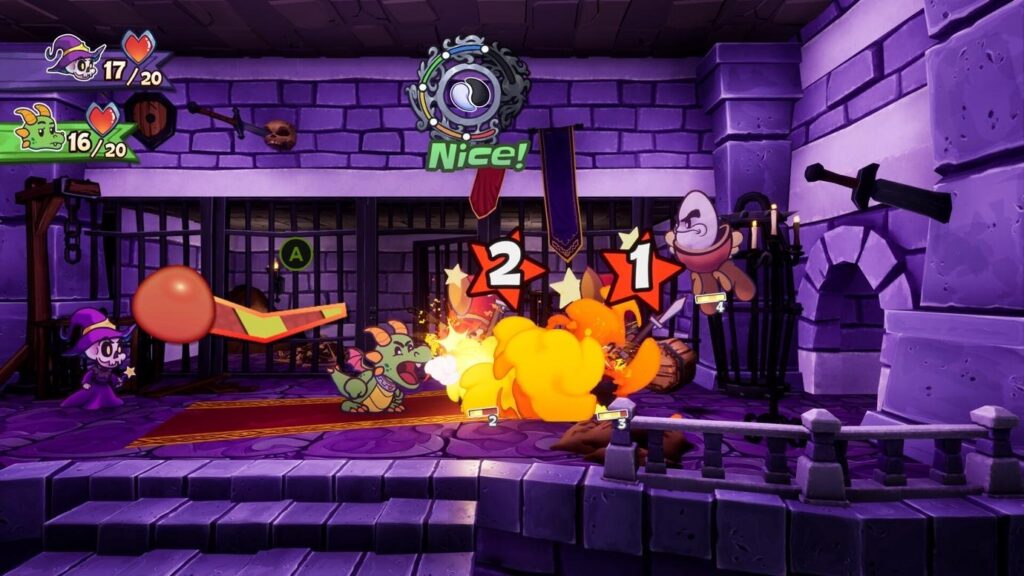
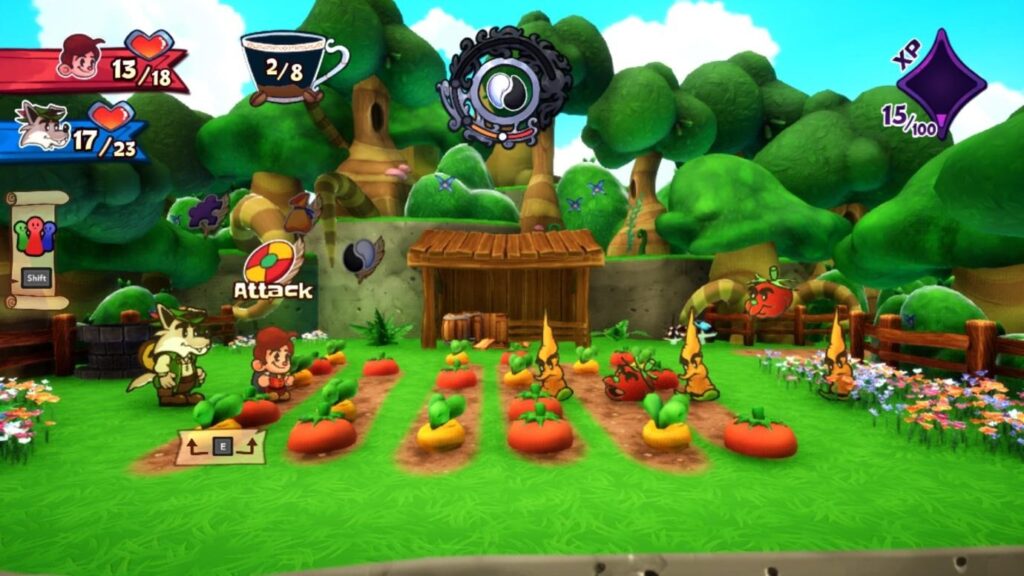
Escape from Ever After is primarily RPG-lite, but by no means passive. Battles are turn-based, but almost every action has timing elements, active defenses, reactions and small interactions that demand your attention, and each character has their own unique actions that you need to incorporate smartly. For example, he throws his shield like a boomerang, the dragon Tinder spits fire and melts enemy shields, and the wolf Wolfgang is a bard with buffs. If you just click attacks, the game will punish you. If you tune in, the fights become surprisingly dynamic.
Special emphasis is placed on the synergy mechanics between characters and abilities, and when you pull them off successfully, the results are comical and effective. Combining attacks, proper timing and smart use of skills makes a big difference. The system is easy to understand, but deep enough not to be reduced to automation. Outside of combat, the game combines platforming and puzzle sequences. They are not overly complicated, but they serve as a good break and further emphasize the sense of adventure. It's all strongly reminiscent of Paper Mario, but with enough of its own ideas that it doesn't feel like a mere imitation.
Boss fights are a particularly valuable part of the experience. Each has its own mechanic or rule that you must understand in order to win. There is no mere HP removal, but adaptation and thinking are required. The game respects your time, which is a rarity in RPGs these days. There are not too many random encounters, grind is not necessary, and frustration rarely appears. The calculations are just demanding enough to keep you awake, but never cross the line of fatigue.
Graphics and presentation
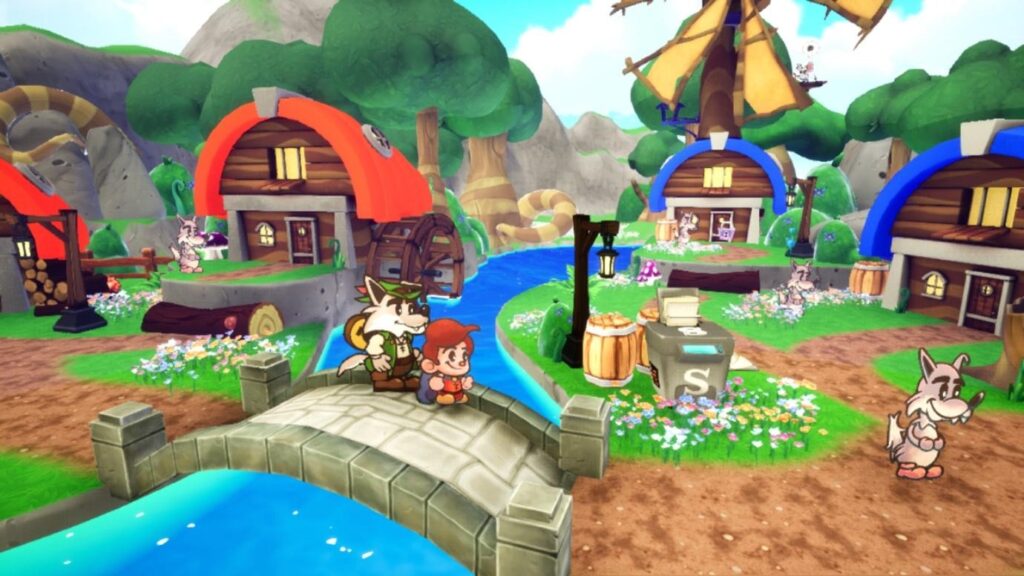
Escape from Ever After consciously and very successfully copies the Paper Mario visual style. The characters are flat, "paper", but extremely expressive. Animations are clear, emotions are readable, and humor often comes precisely through visual details. The environments are colorful, diverse and full of small animations that give them life. The world looks like a fairy tale, but a fairy tale that has passed through the corporate Human Relations Department.
The visual identity perfectly follows the tone of the game. The soundtrack is unobtrusive, but cleverly follows the mood, from light, almost fairy-tale melodies to more energetic themes during battles and boss fights. It doesn't try to steal the show, but it does exactly what it needs to do.
The interface and menus are clean, transparent and logical. There are no unnecessary submenus or confusing options. Everything is where you expect it to be. As far as performance is concerned, the game runs smoothly, without jerks and technical surprises. Loads are fast, controls are precise, and the whole experience feels polished and thoughtful.
Conclusion
Escape from Ever After doesn't try to play a huge RPG, it doesn't suffocate you with systems, and it doesn't waste your time with fake depth. Instead it offers a compact, smart and witty experience that isn't afraid to poke fun at its own genre roots. The satire is not only in the dialogues, but is embedded in the very design of the world, characters and mechanics.
If you like Paper Mario, smart RPGs without the grind, and games that don't take themselves too seriously but are very serious about what they do, Escape from Ever After is easy to recommend. I'm not exaggerating when I say that this is one of my biggest surprises lately. This is an original, self-aware and fun game that easily stands out in the sea of indie titles.
And perhaps most importantly: it doesn't try to sell you a fairy tale. It just goes to show you how absurd fairy tales, when stripped back, really are, and it does that surprisingly well.
★★★★ — "Very good"
A copy of the game was provided by publisher HypeTrain Digital for review purposes

Igra, piše i pokušava ne komplicirati. Ne uspijeva uvijek.